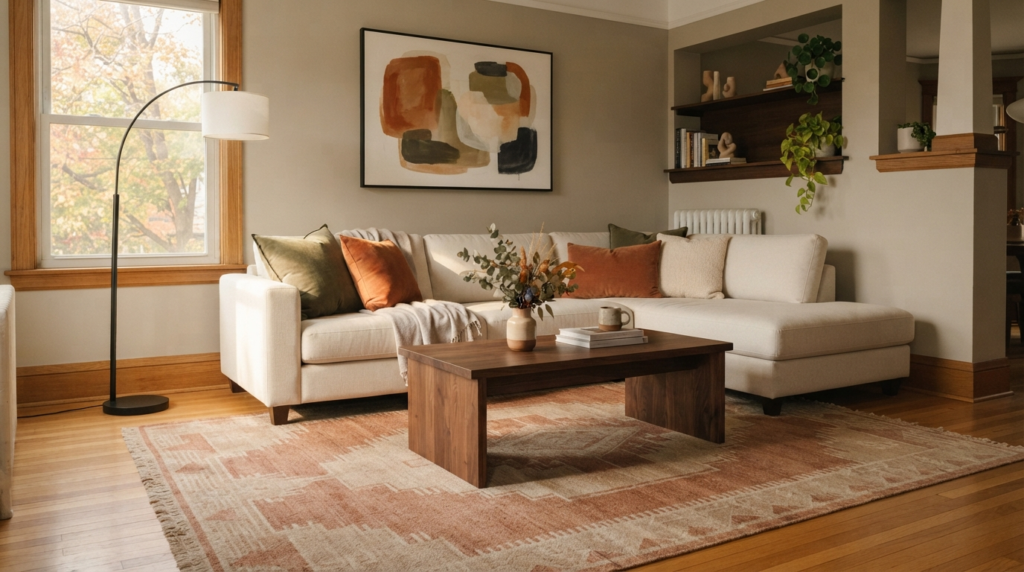
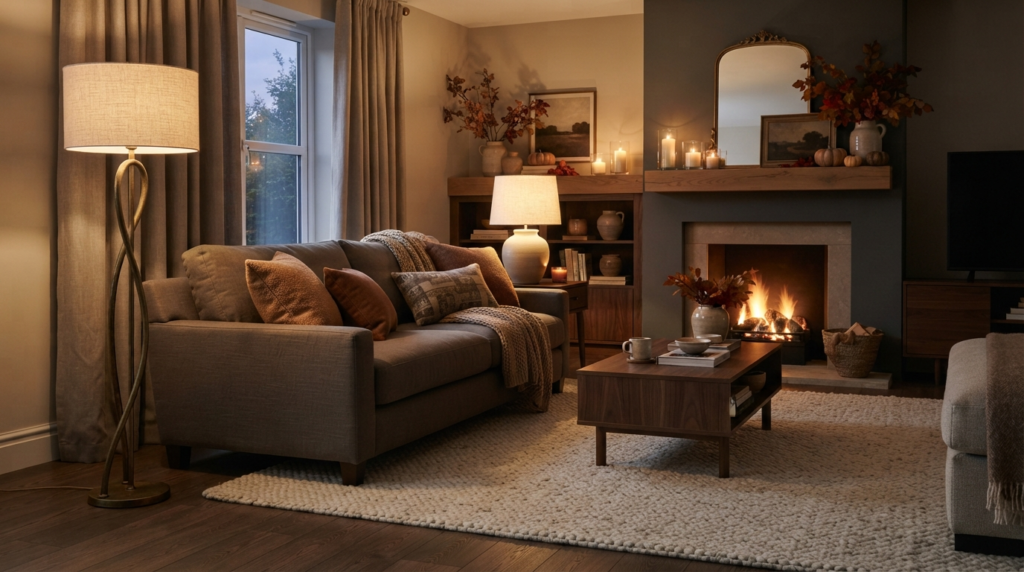
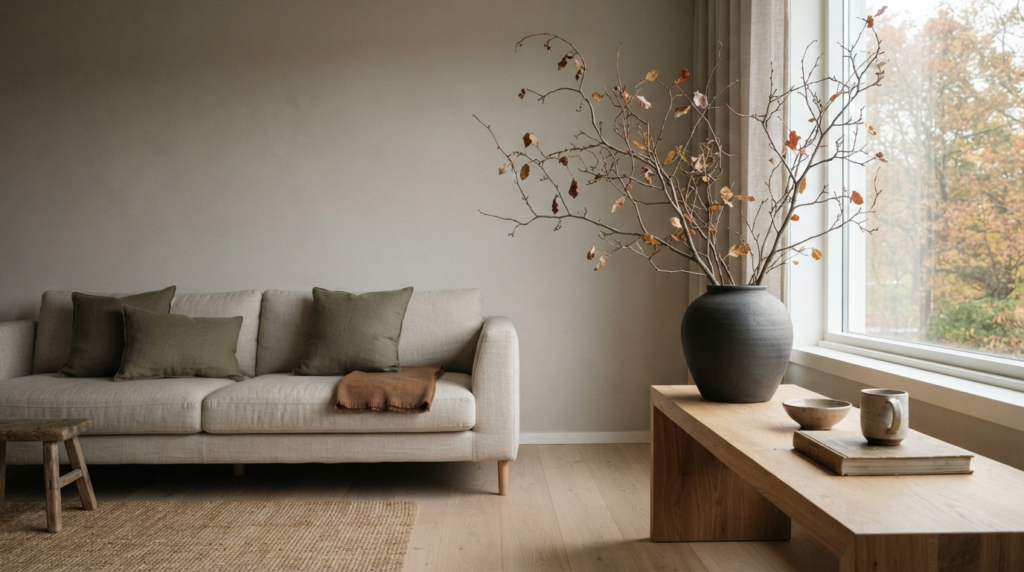
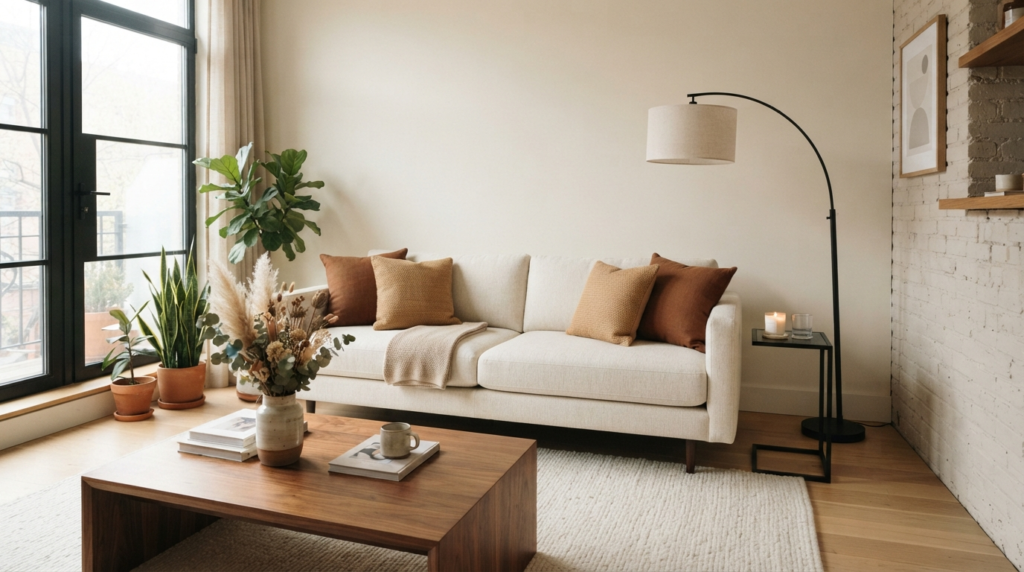
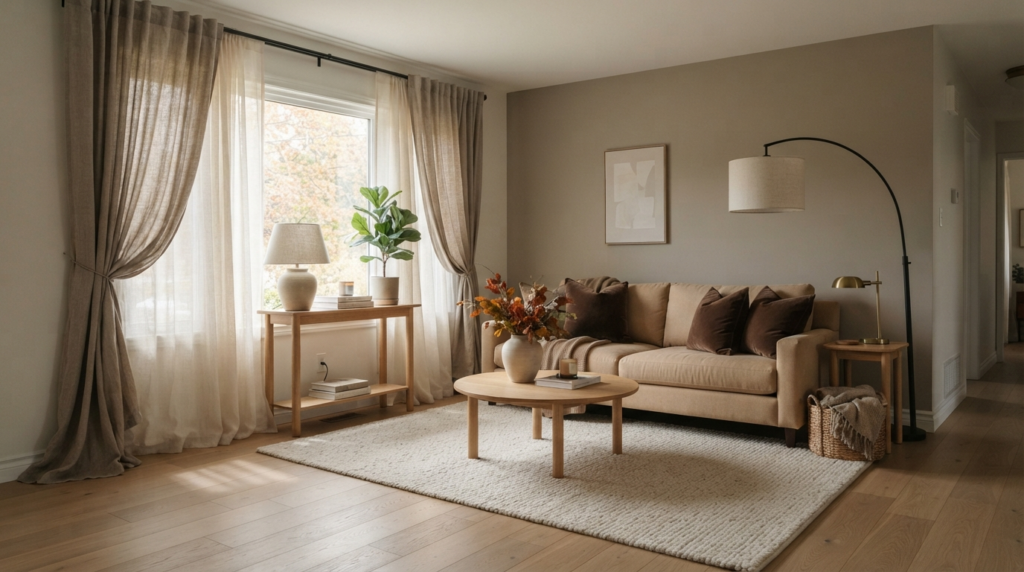
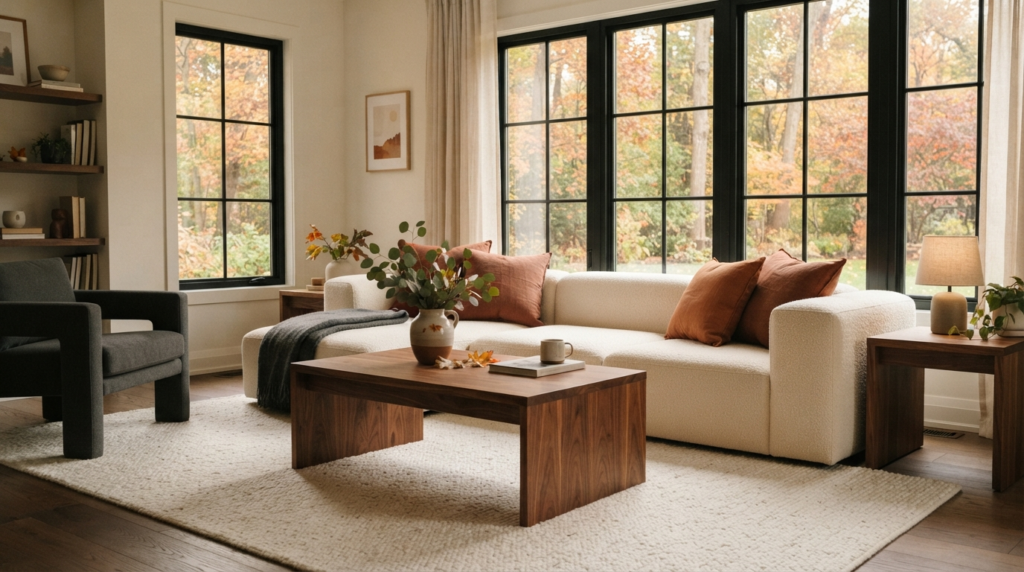
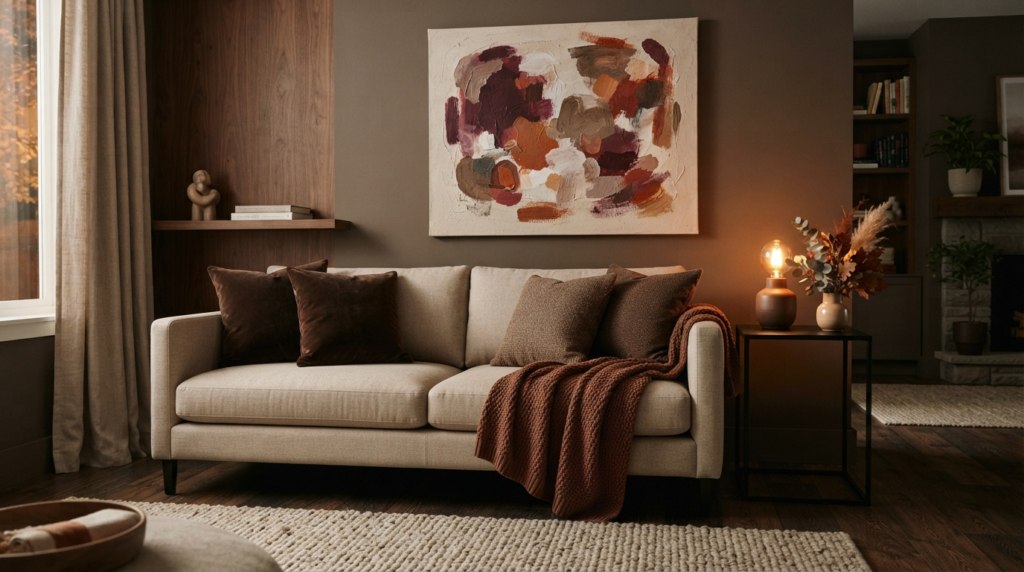
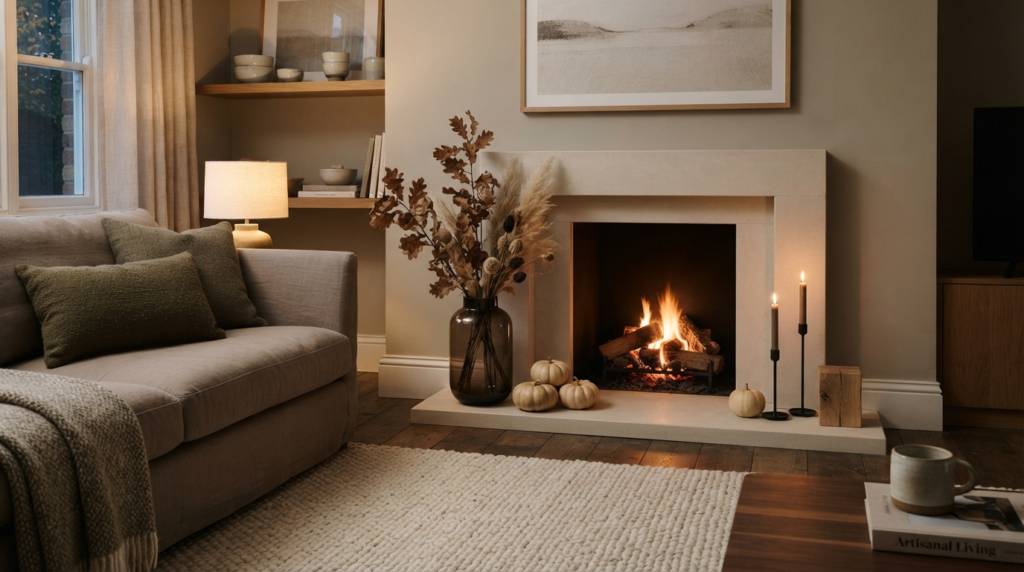
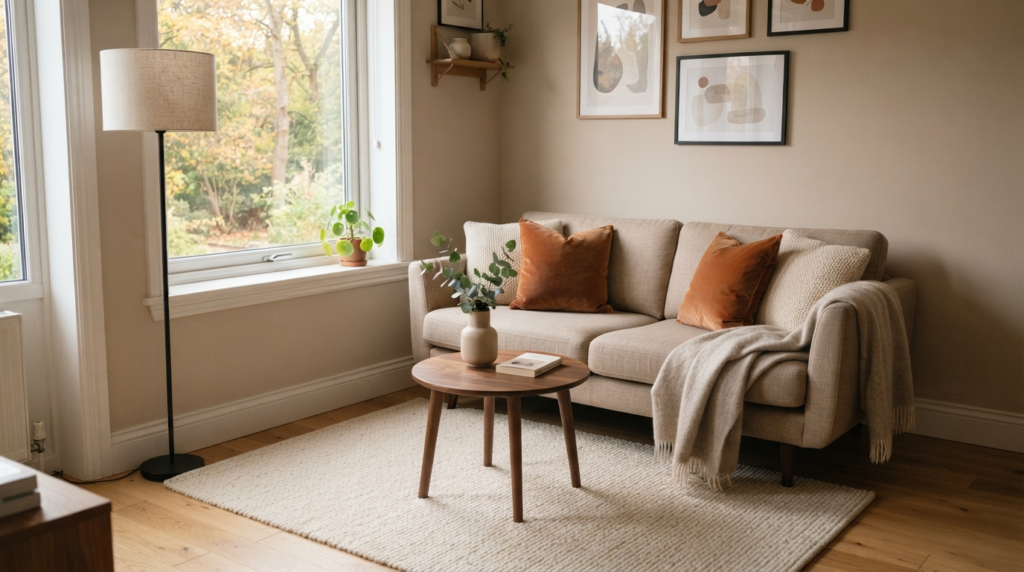
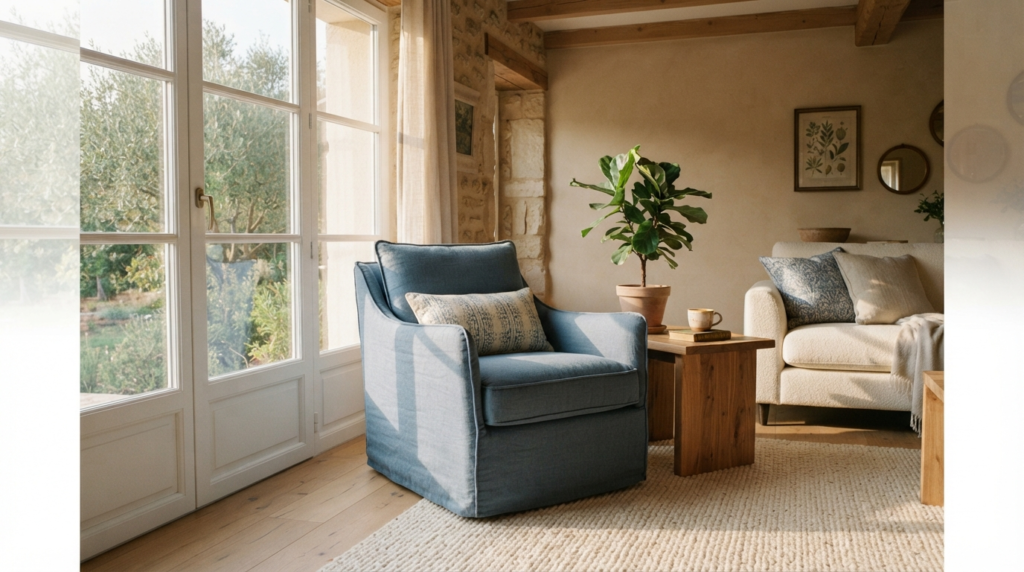
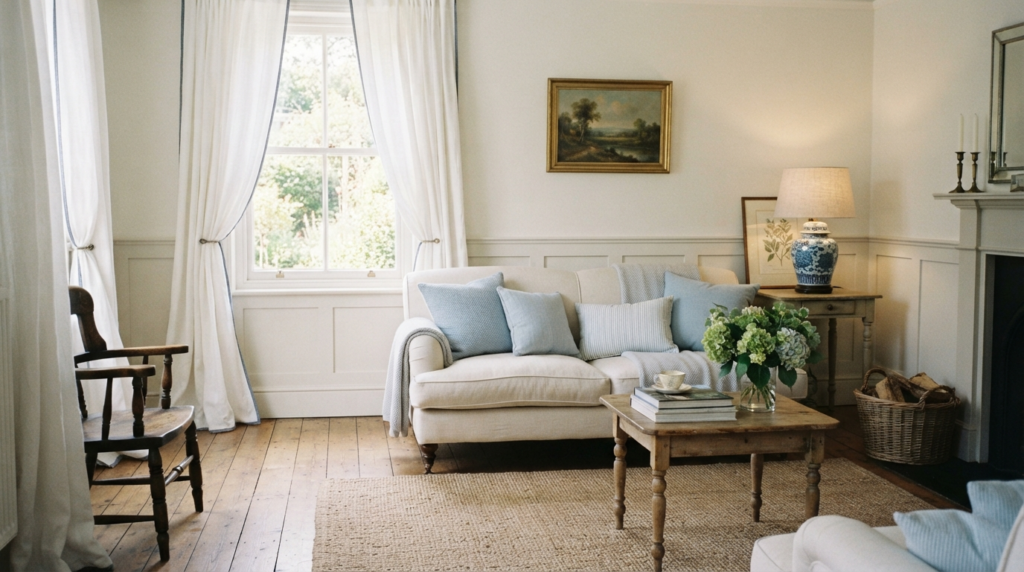
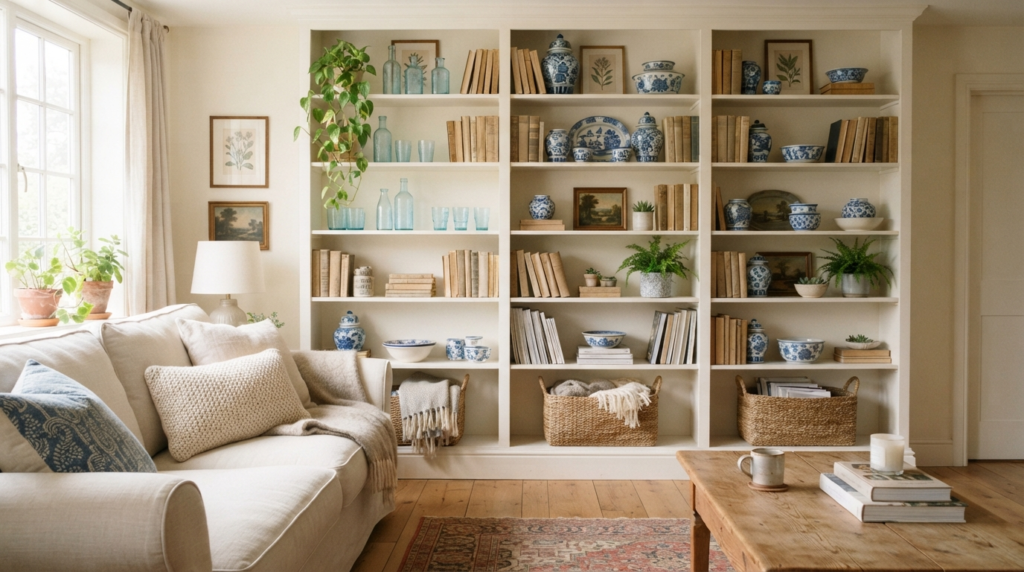
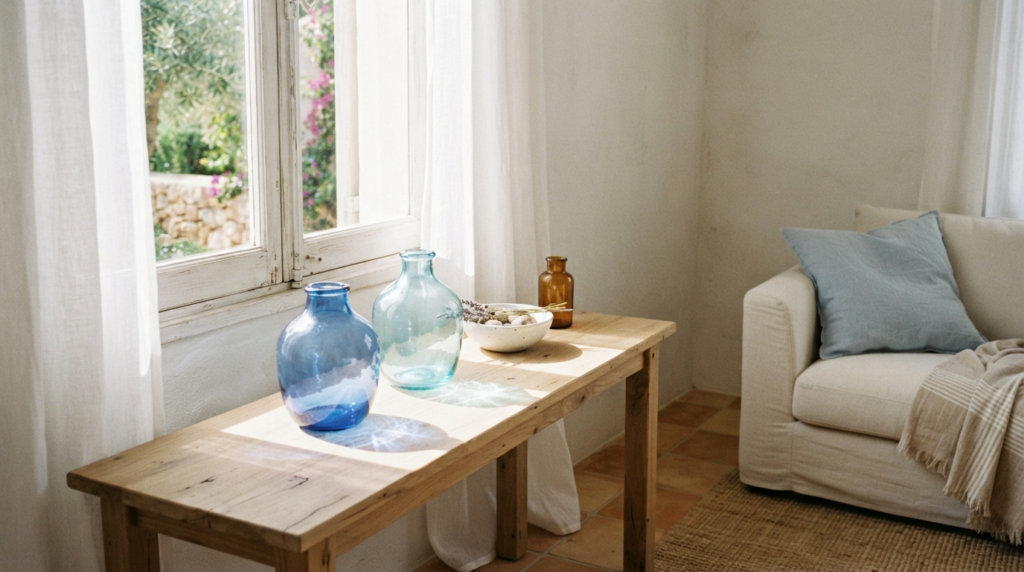
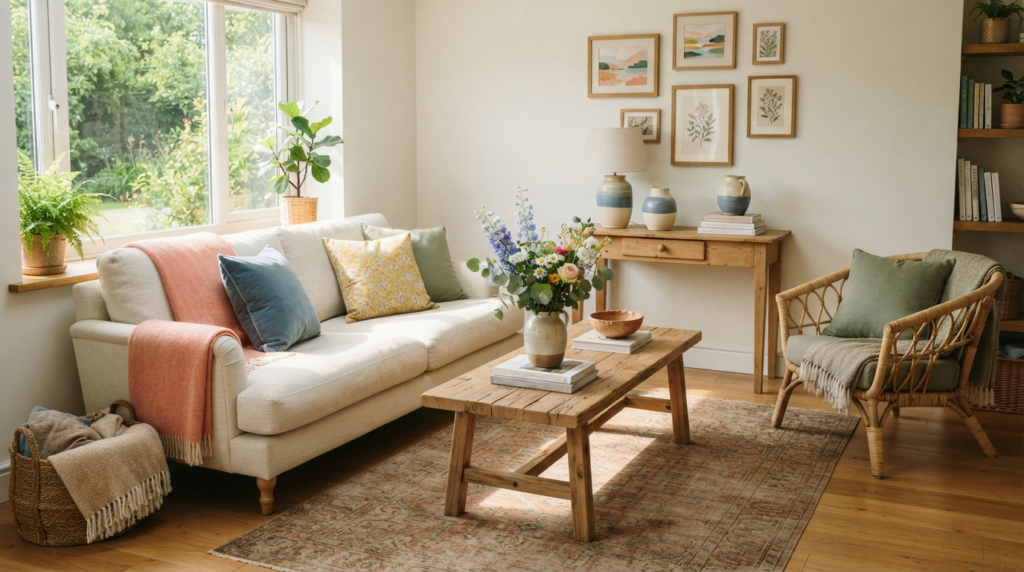
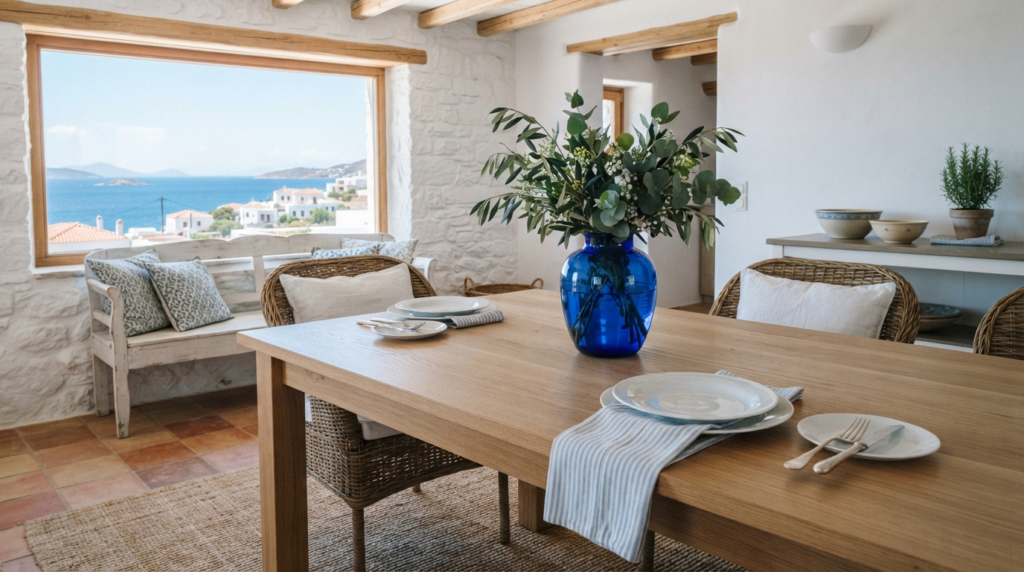
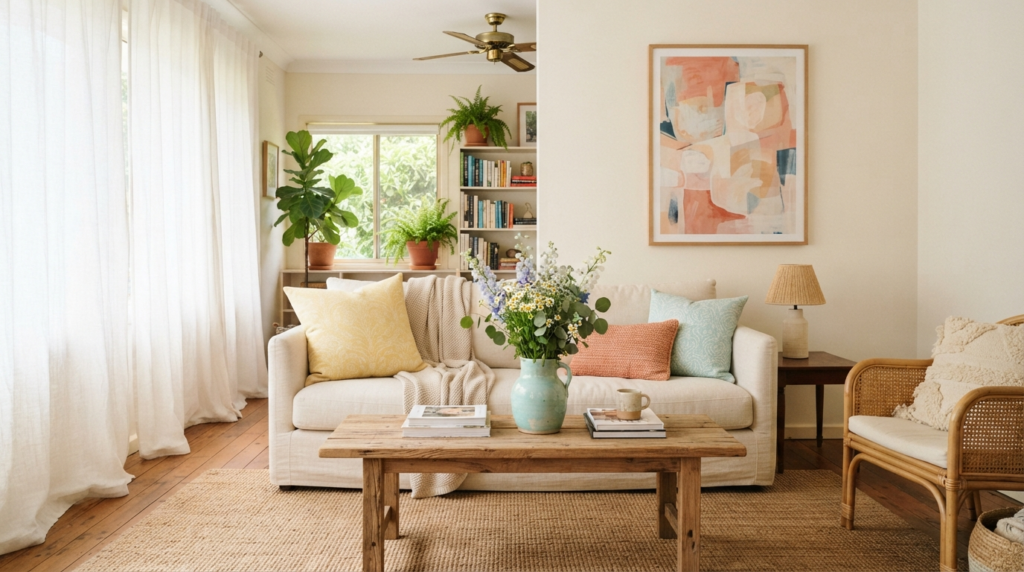
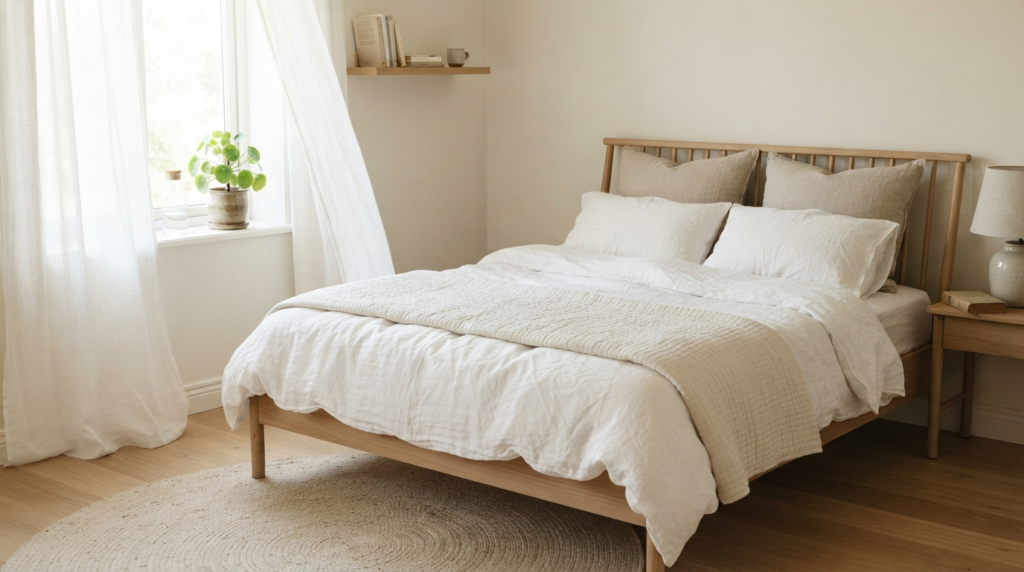
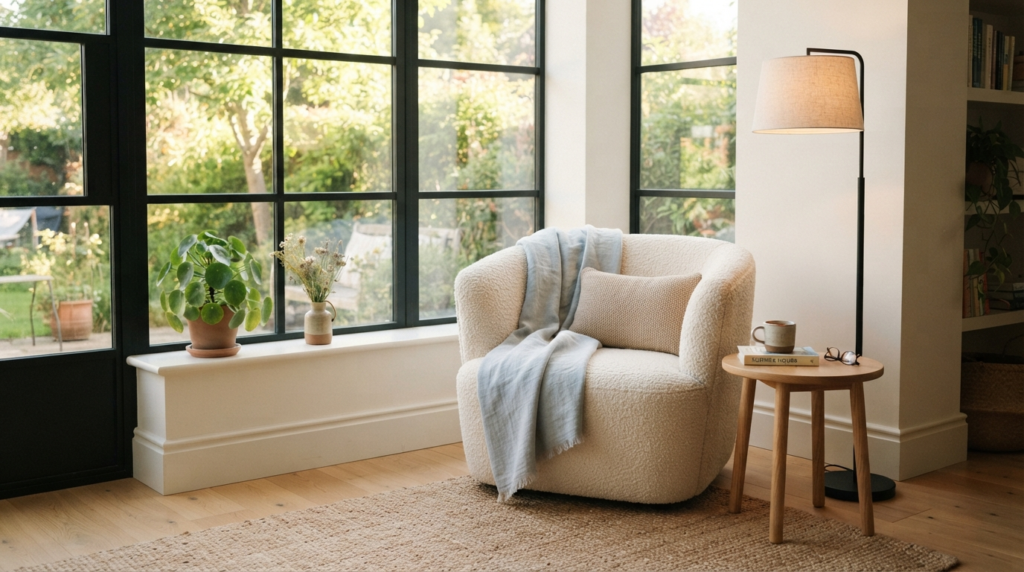
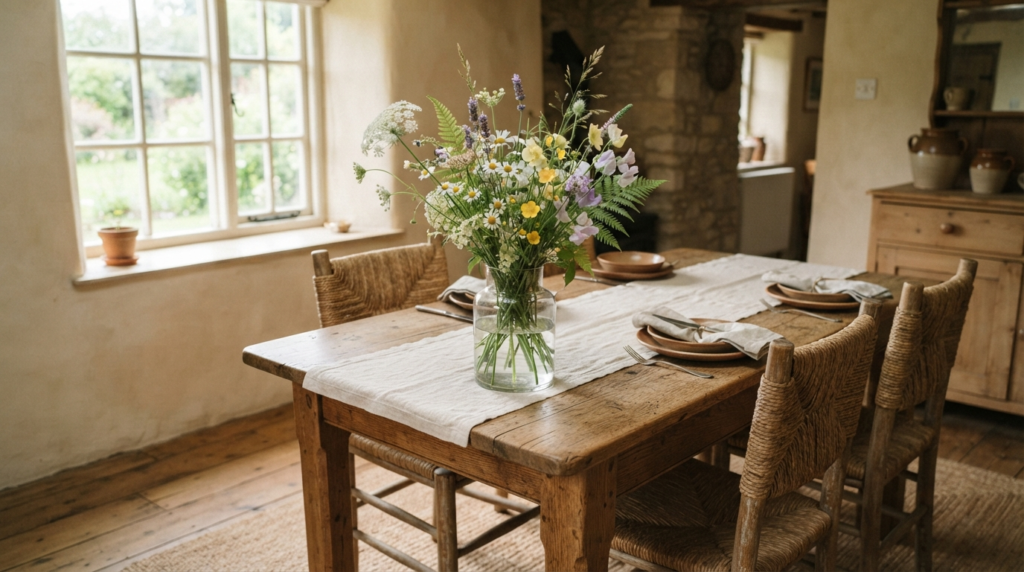
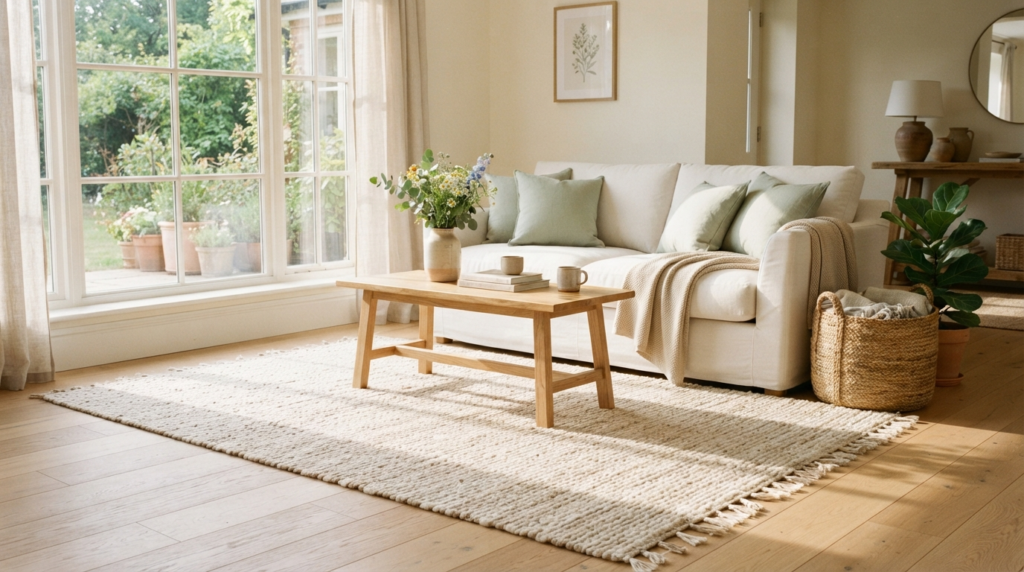
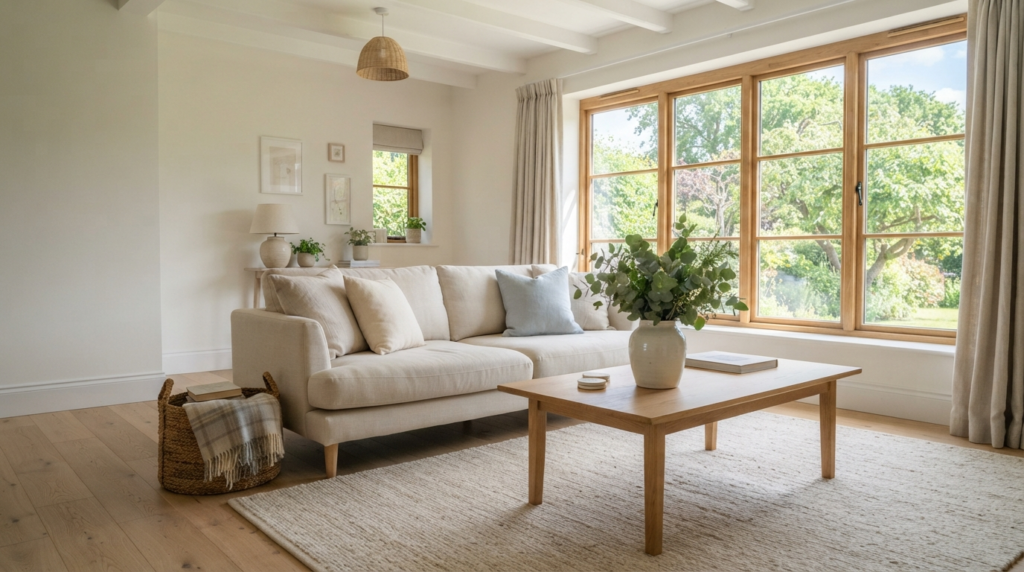
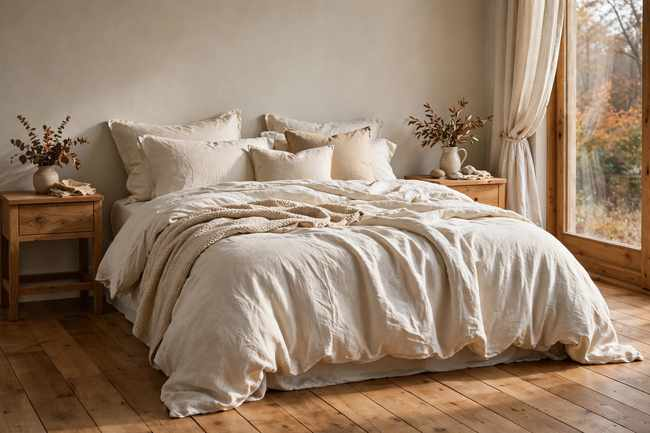
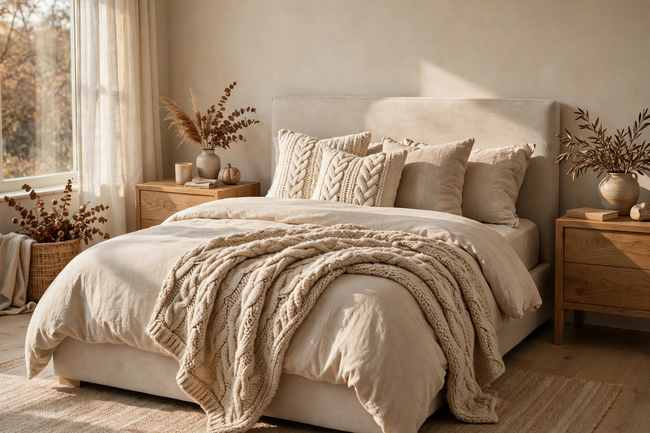
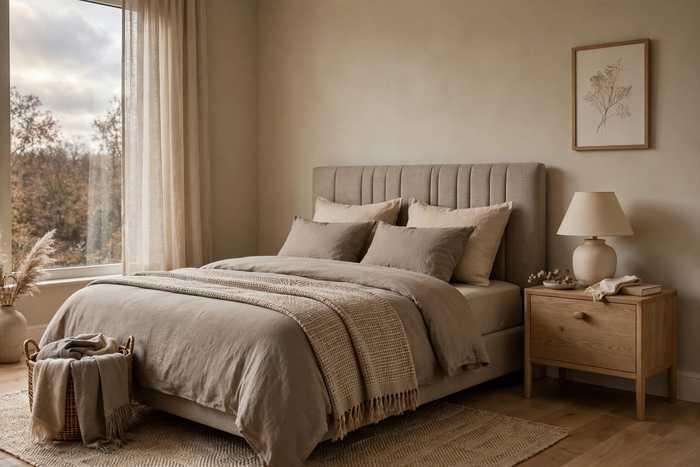
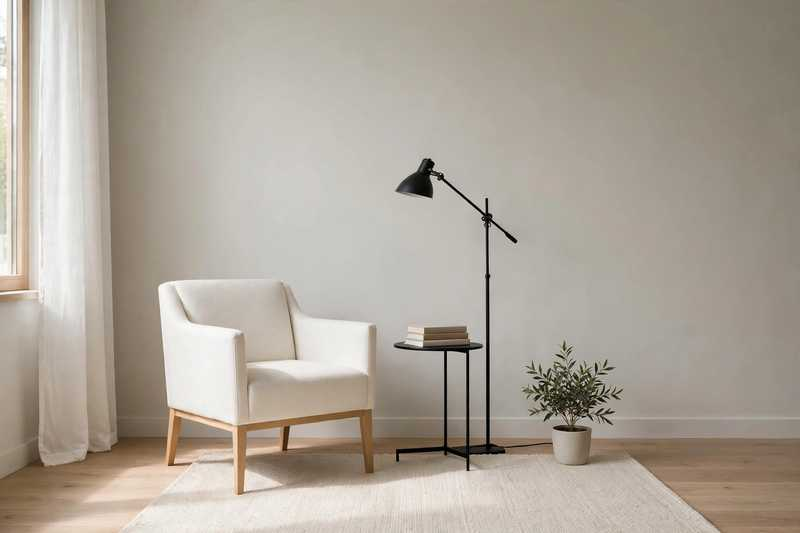
Fall is the perfect time to make your living room feel warmer, softer, and more inviting without losing its modern style. A few thoughtful changes, such as adding textured throws, introducing earthy colors, layering soft lighting, or bringing in natural materials, can make a contemporary space feel cozy for the season.
Modern fall decor does not have to rely on pumpkins everywhere, heavy rustic furniture, or traditional autumn patterns. You can create a beautiful seasonal look with clean lines, simple accessories, warm neutrals, and carefully chosen fall accents.
Whether you have a small apartment living room or a spacious open-plan home, these modern fall living room ideas can help you create a comfortable space that feels stylish, relaxed, and ready for cooler days.
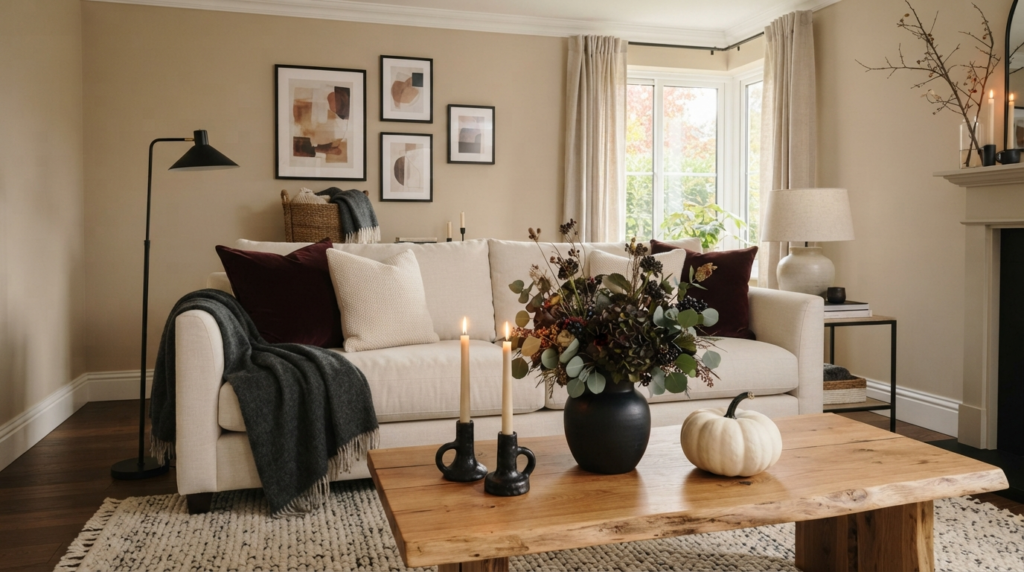
1. Layer Warm Neutral Textures
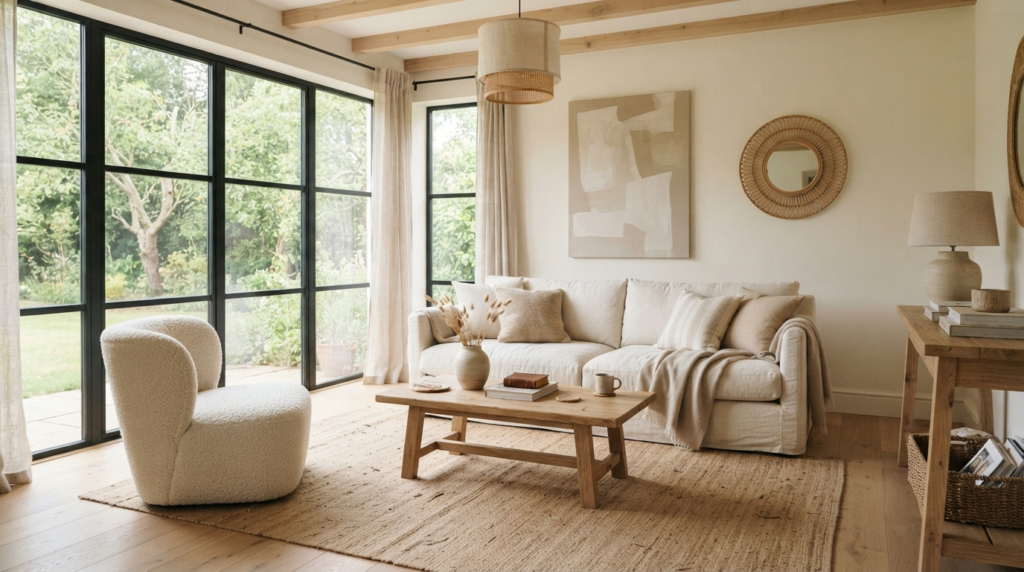
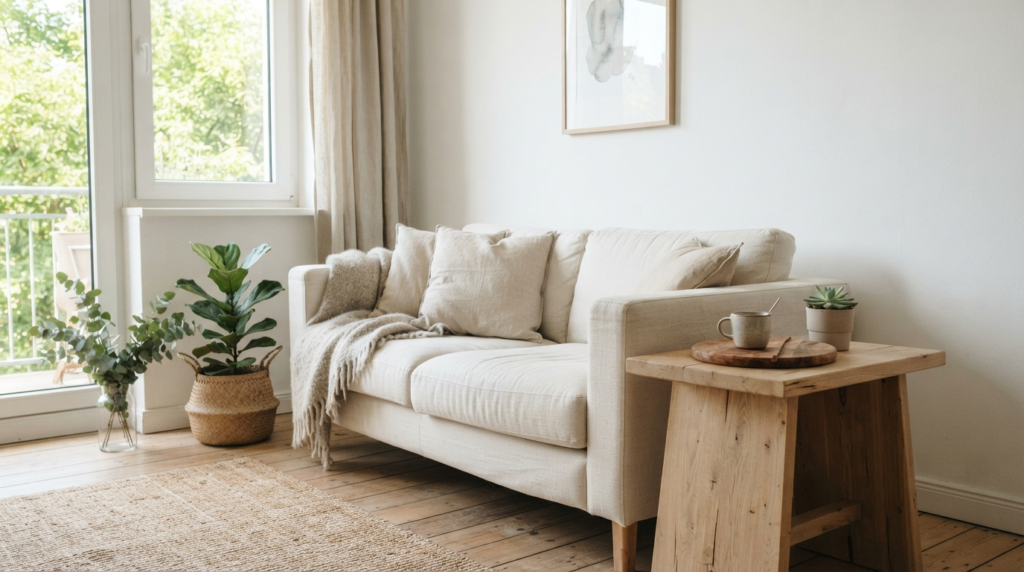
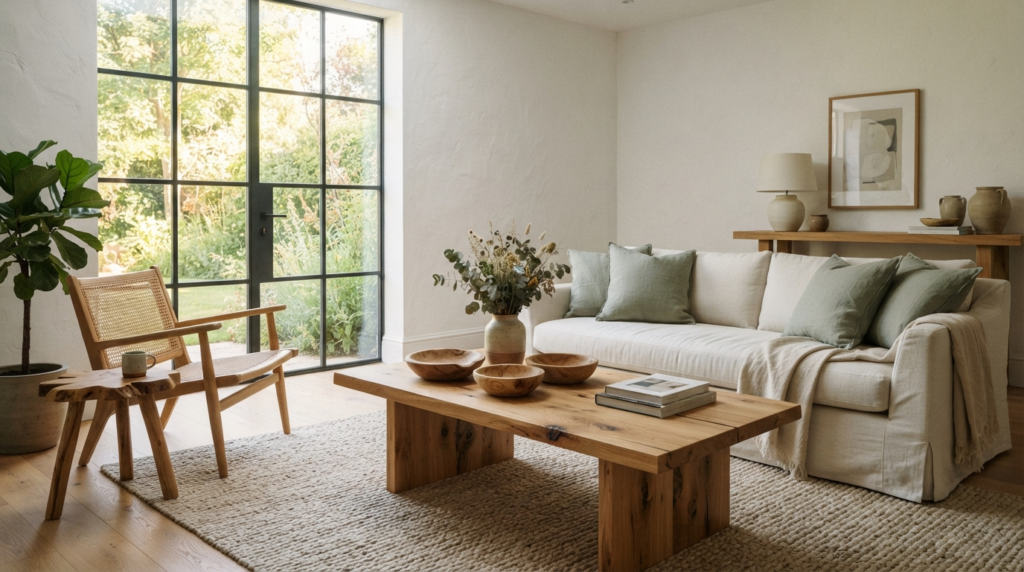
A warm neutral palette is an easy starting point for a cozy modern fall living room. Shades such as cream, oatmeal, taupe, warm beige, and soft brown create a welcoming atmosphere while keeping the space light and contemporary.
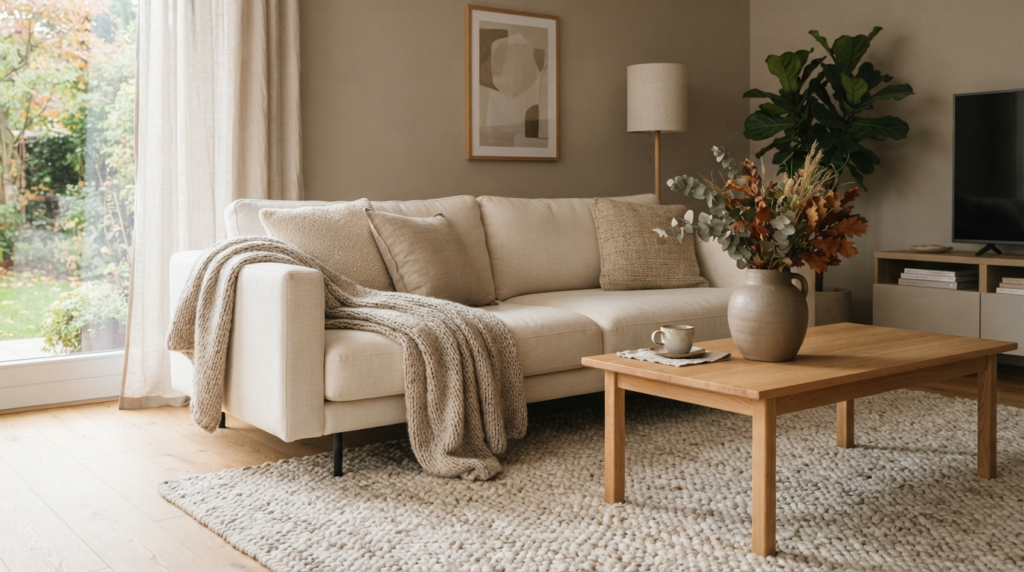
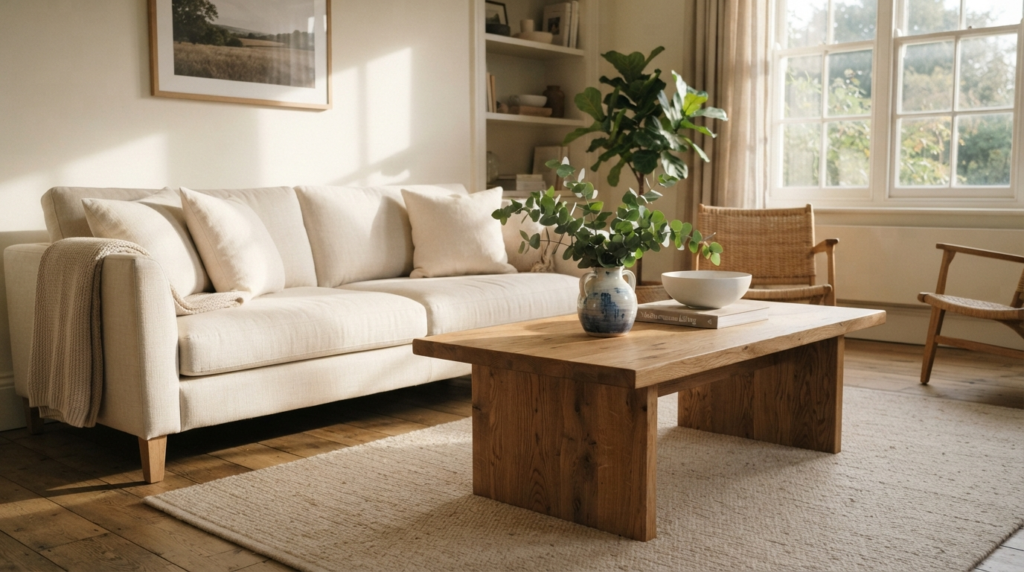
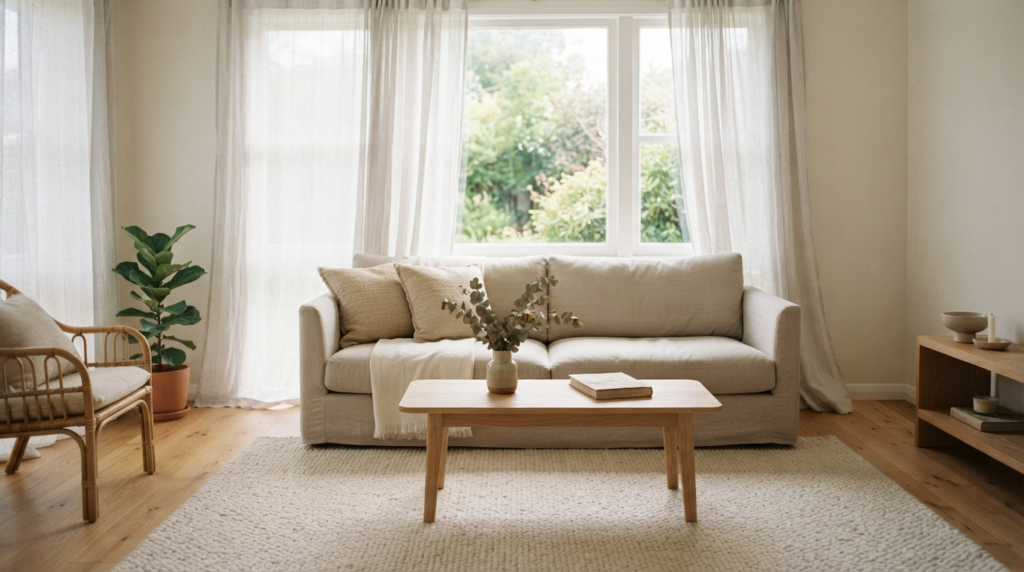
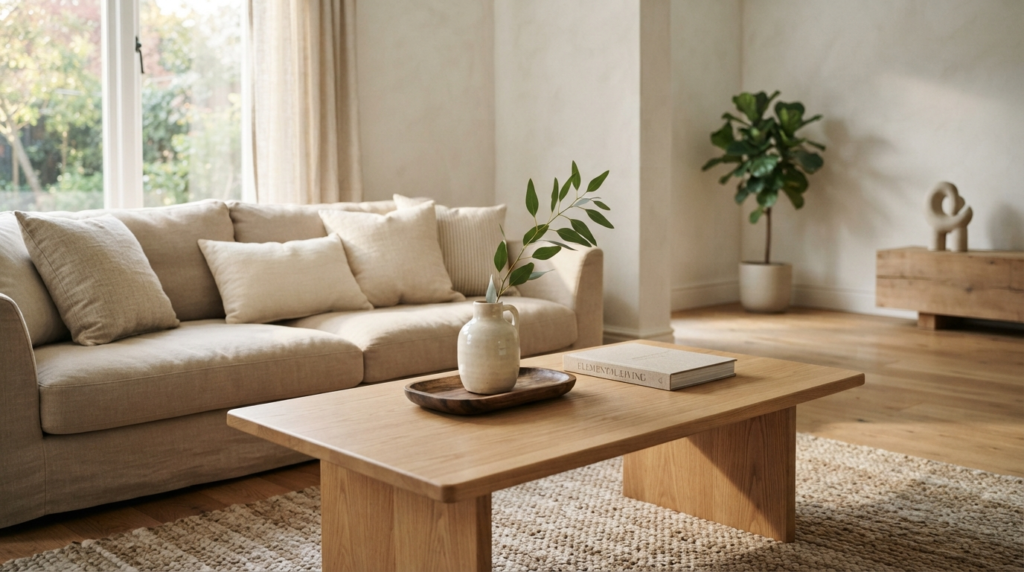
Layer different textures to make the neutral colors feel interesting. Pair a smooth linen sofa with a chunky knit throw, boucle cushions, a wool rug, or a textured ceramic vase. The contrast between materials adds depth without making the room feel cluttered.
If your living room already has white or gray furniture, introduce warmth through accessories rather than replacing larger pieces.
2. Add Rust and Terracotta Accent Cushions
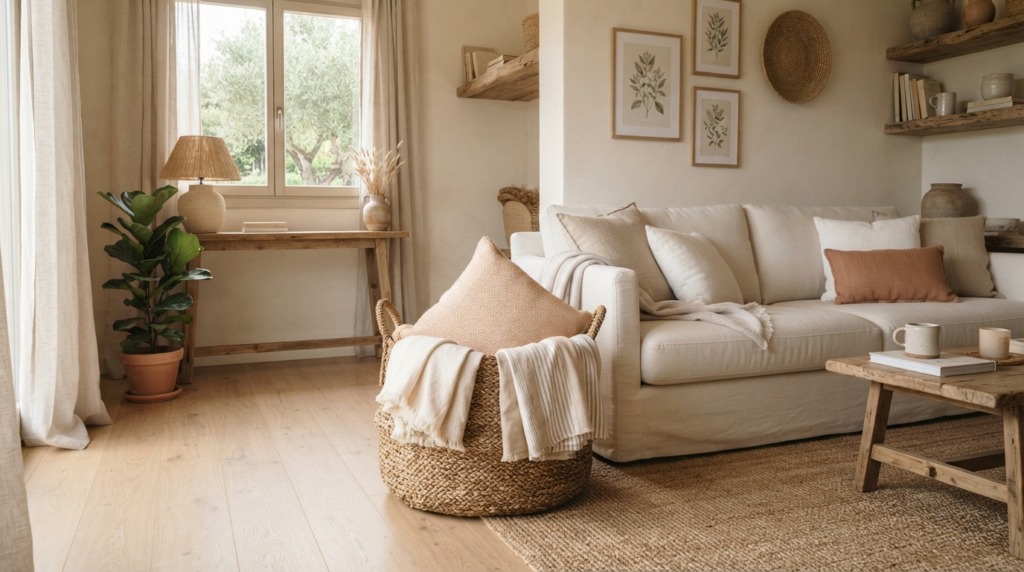
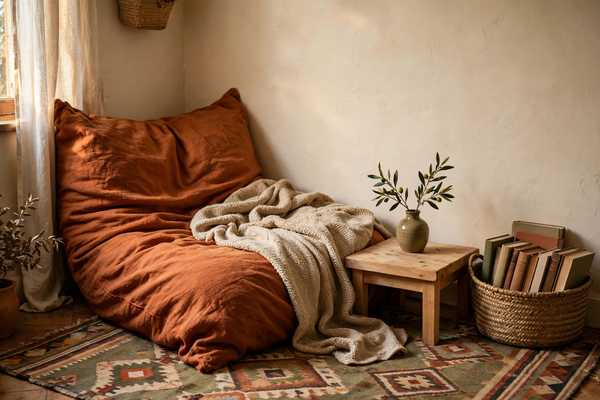
Rust and terracotta are classic fall colors that look especially good in modern interiors. They bring warmth to a neutral room without requiring a major change.
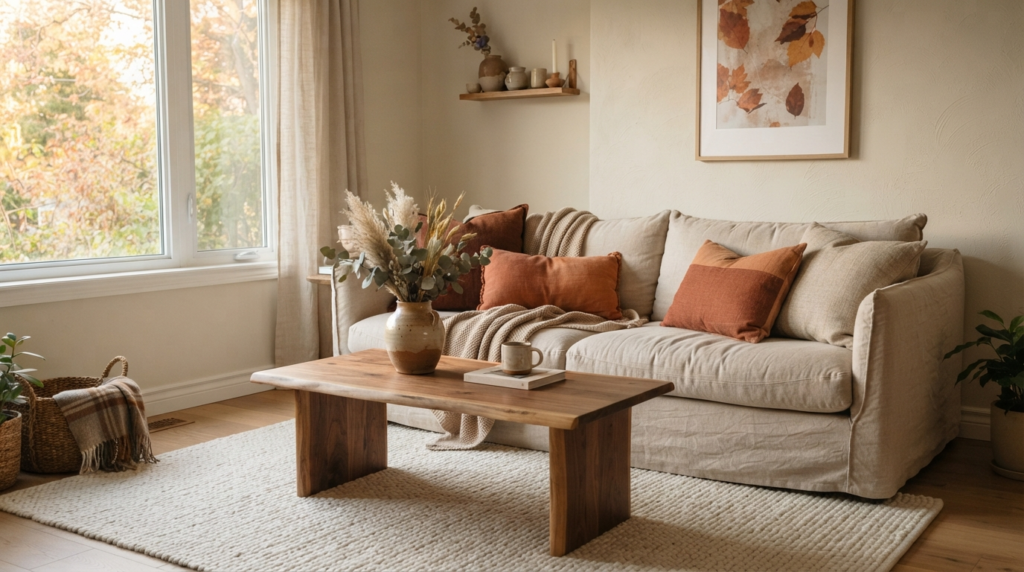
Add a few rust-colored cushions to a cream, beige, or light gray sofa. You can mix solid cushions with subtle woven patterns or textured covers for a more collected appearance.
Balance these stronger shades with ivory, natural wood, or soft beige so the room feels cozy rather than overly colorful.
3. Create a Contemporary Fall Mantel
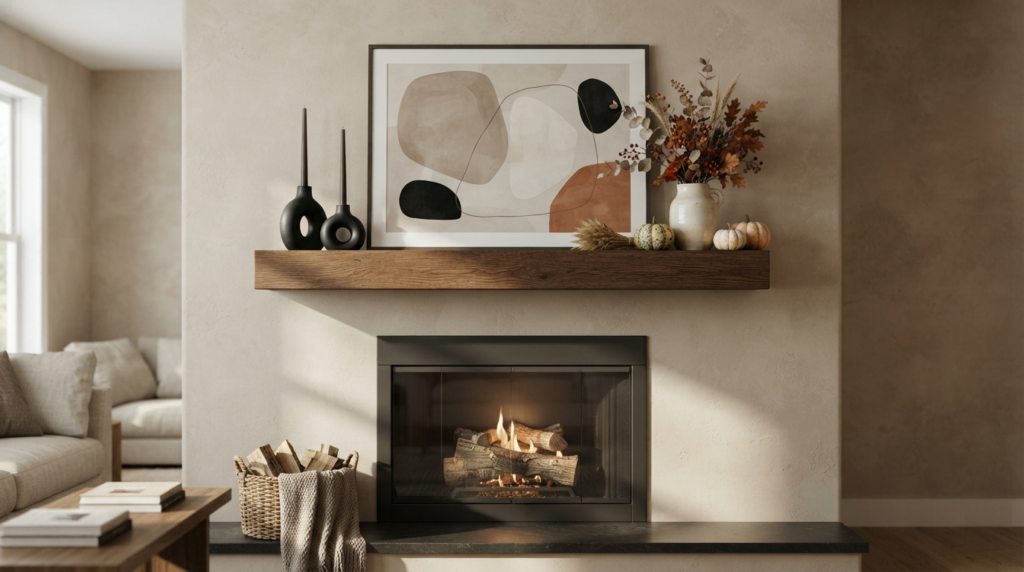
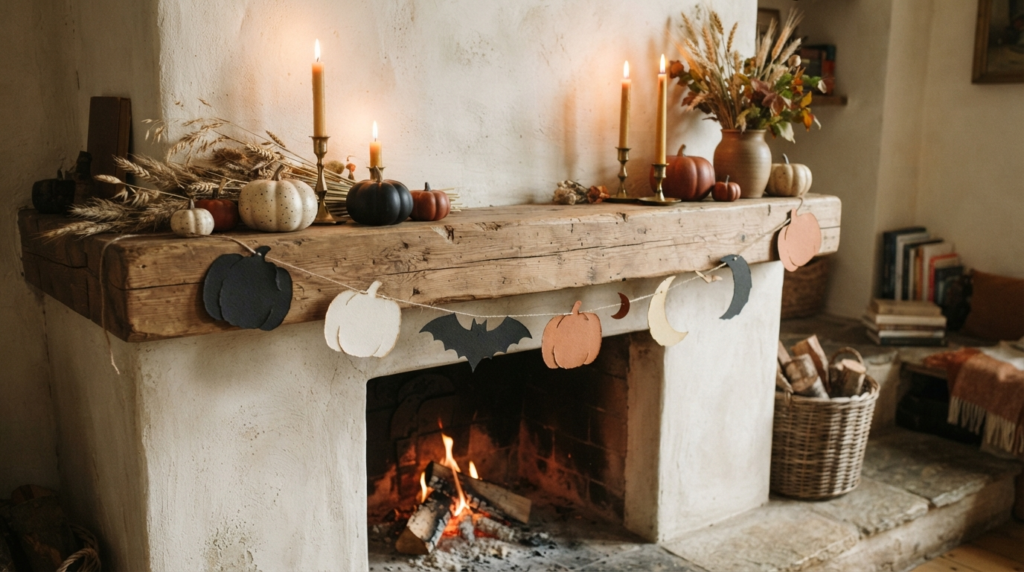
A fireplace mantel can become a natural focal point during fall. For a modern look, keep the arrangement simple and use a few carefully selected pieces.
Try a large neutral artwork or mirror, a pair of sculptural candleholders, a ceramic vase with dried branches, and one or two small seasonal accents. Black, cream, aged brass, and warm wood work particularly well together.
Leave some open space between objects. A little restraint helps the mantel feel contemporary and allows each piece to stand out.
4. Style the Sofa With a Chunky Knit Throw
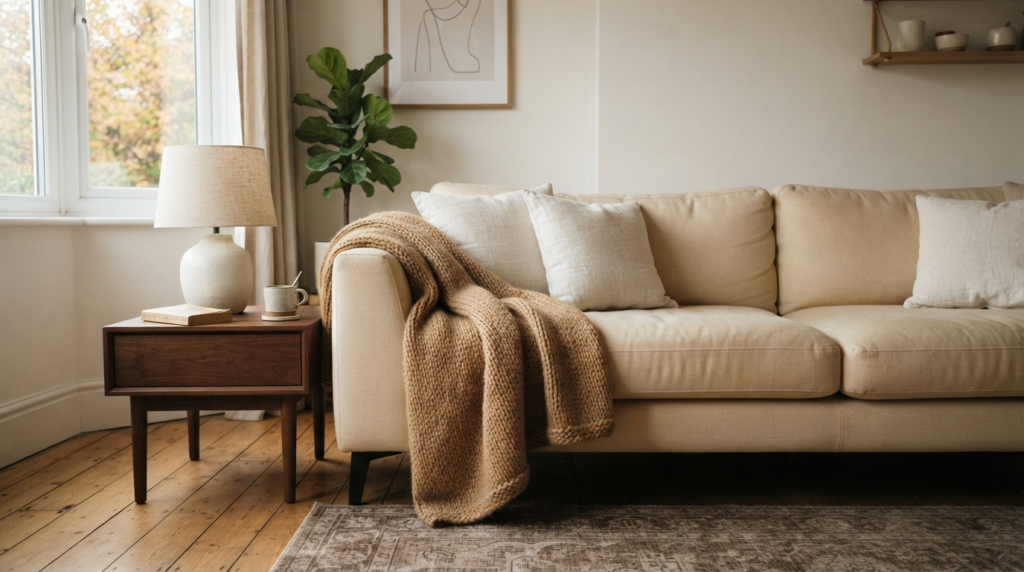
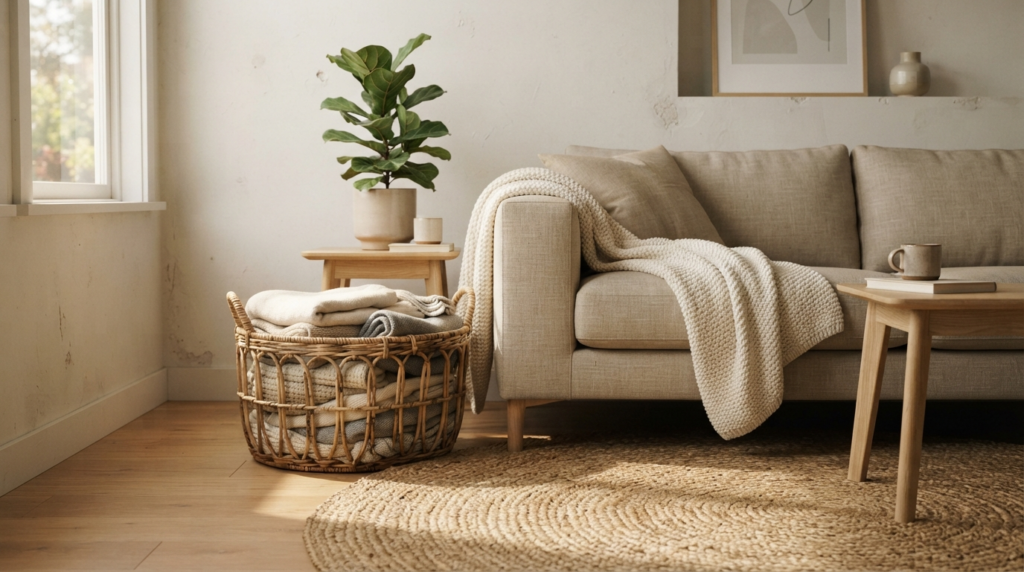
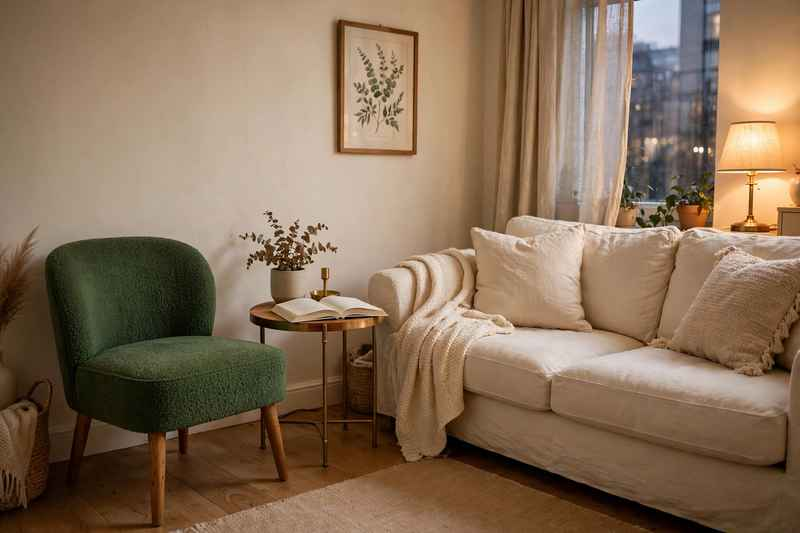
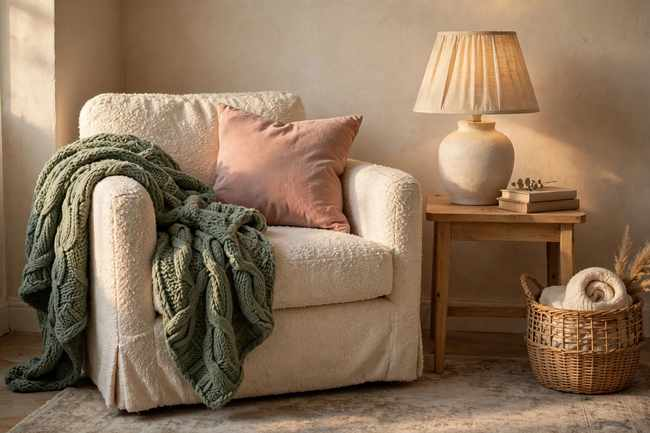
A chunky knit throw instantly adds a cozy feeling to a living room. Choose one in ivory, camel, oatmeal, chocolate brown, or muted olive to complement your existing furniture.
Drape it loosely over one arm of the sofa or fold it across the back of a chair. The relaxed arrangement feels more natural than carefully smoothing every fold.
For a contemporary touch, pair the chunky texture with streamlined furniture and simple cushions.
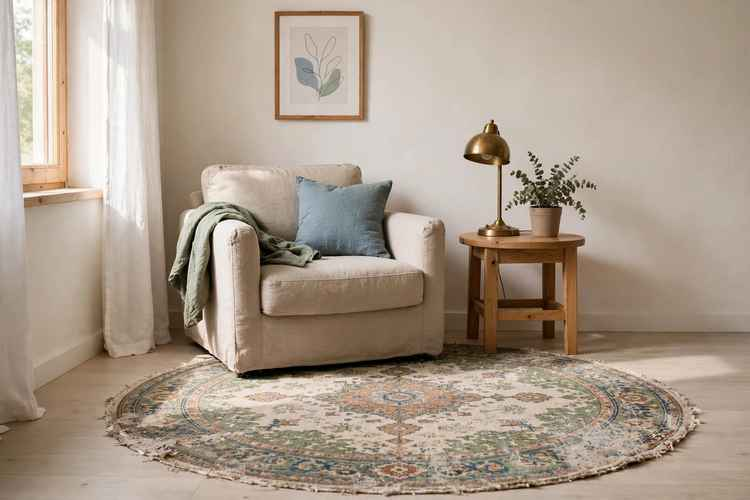
5. Bring in a Modern Earth-Tone Rug
A rug can change the mood of a living room without requiring any new furniture. For fall, consider earthy shades such as warm taupe, muted rust, sand, cocoa, or faded terracotta.
A low-contrast geometric pattern can add a modern detail, while a textured solid rug creates a quieter look. Choose a size that allows the front legs of your main seating pieces to rest on it, helping the arrangement feel connected.
If you already have a patterned rug, use simpler cushions and accessories to avoid visual competition.
6. Add Warm Ambient Lighting
As daylight becomes shorter, layered lighting can make your living room feel more comfortable in the evenings.
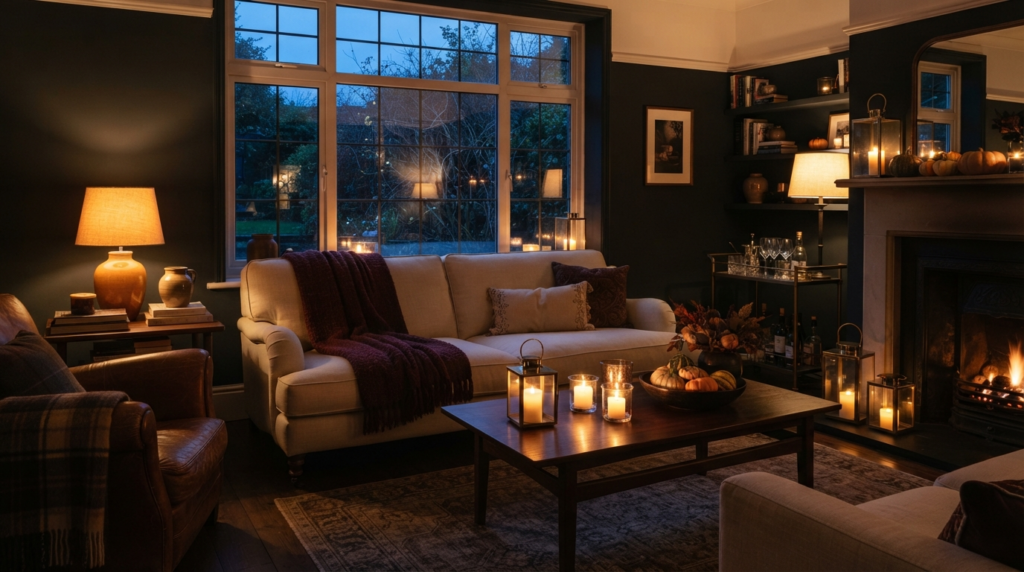
Use a combination of table lamps, floor lamps, wall lights, and candles instead of relying entirely on overhead lighting. Warm-toned bulbs create a softer atmosphere, especially when paired with linen shades or ceramic lamp bases.
A sculptural floor lamp can also act as a decorative feature while providing useful light beside a sofa or reading chair.
7. Decorate With Minimalist Fall Branches
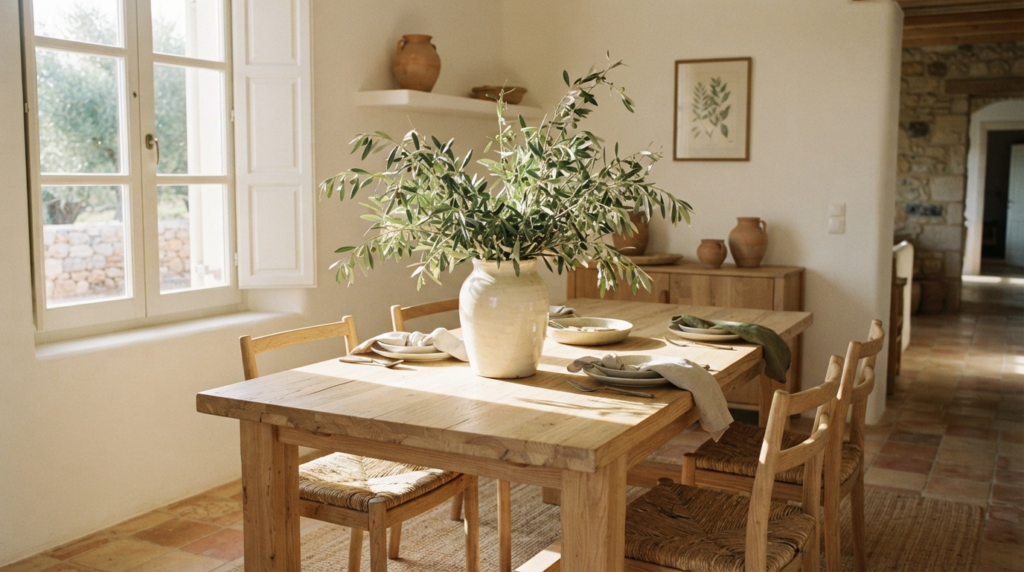
Branches are a simple way to bring seasonal nature indoors. Arrange dried branches, eucalyptus, or autumn-toned foliage in a tall ceramic or glass vase.
Choose a vase in matte white, charcoal, warm brown, or muted olive to suit your living room palette. Place the arrangement on a console, beside the fireplace, or in an empty corner.
Keep the branches loose and natural rather than arranging them into a perfectly symmetrical shape.
8. Mix Black Accents With Warm Fall Colors
Black accents can give a fall living room a sharper contemporary edge. A black floor lamp, picture frame, side table, or candleholder can create contrast against warmer seasonal shades.
Combine black with camel, rust, cream, and natural wood to prevent the room from feeling too stark. Even a few dark details can make soft fall colors look more defined.
This approach works particularly well in modern, industrial, Scandinavian, and minimalist interiors.
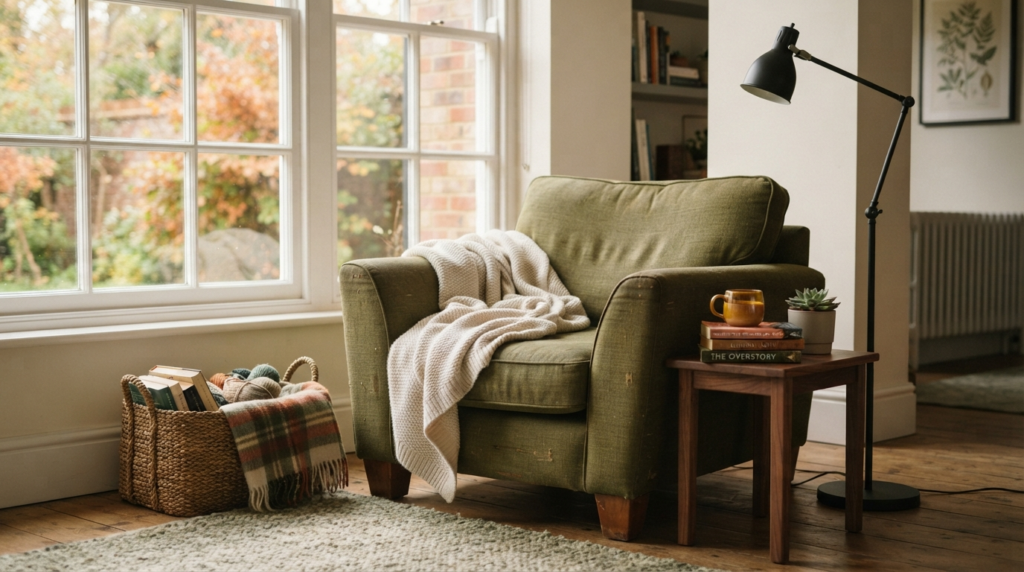
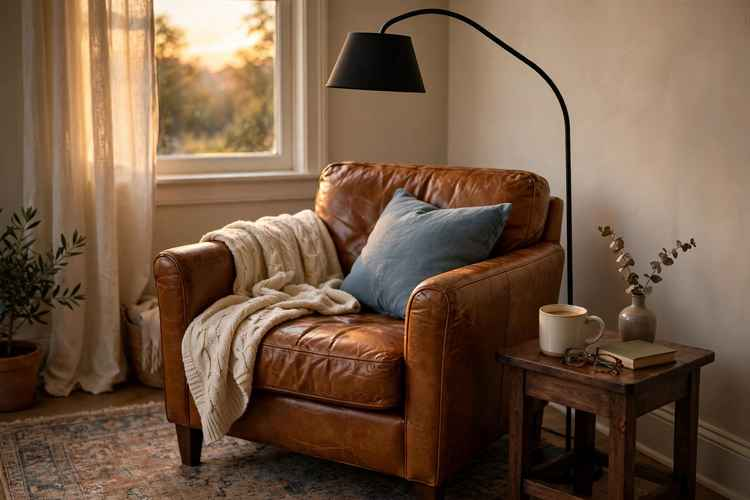
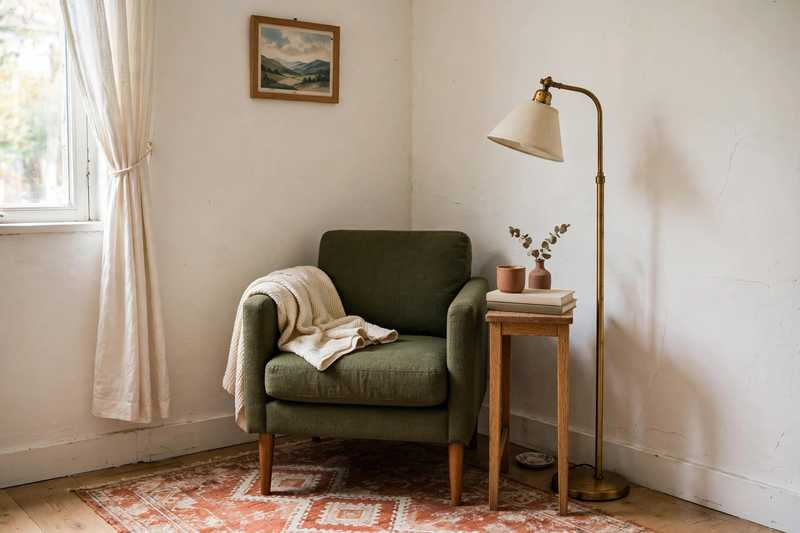
9. Create a Cozy Reading Corner
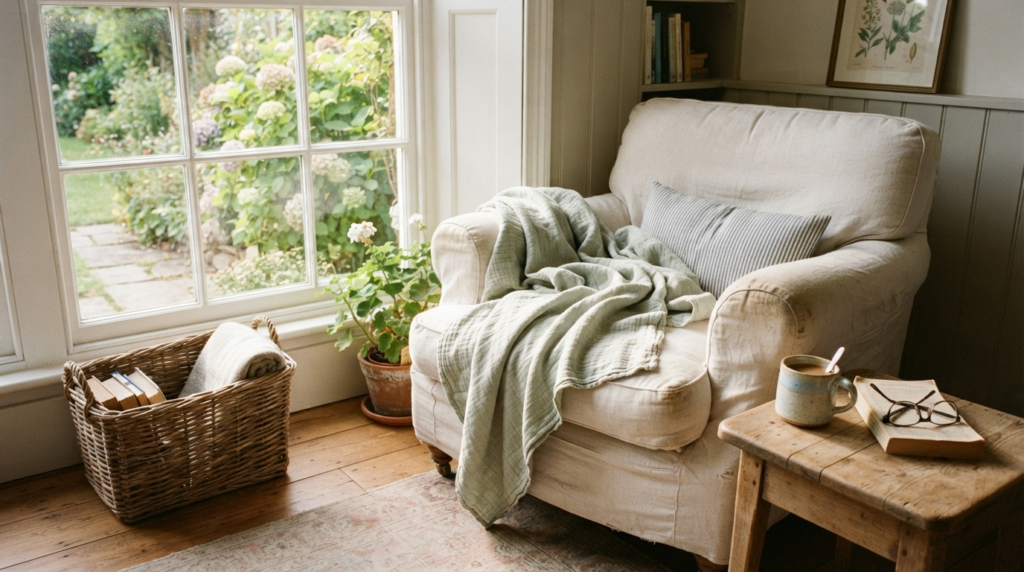
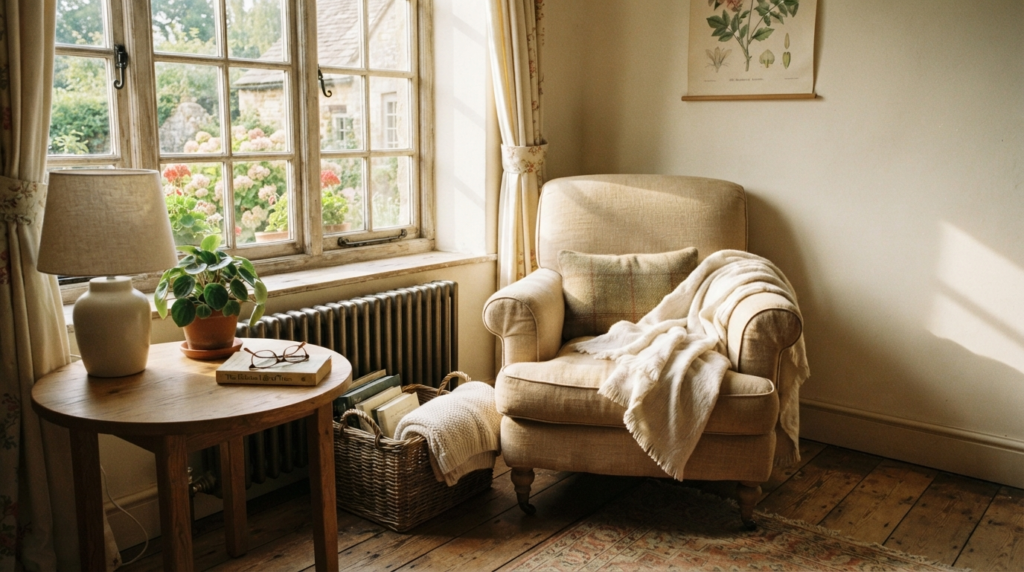
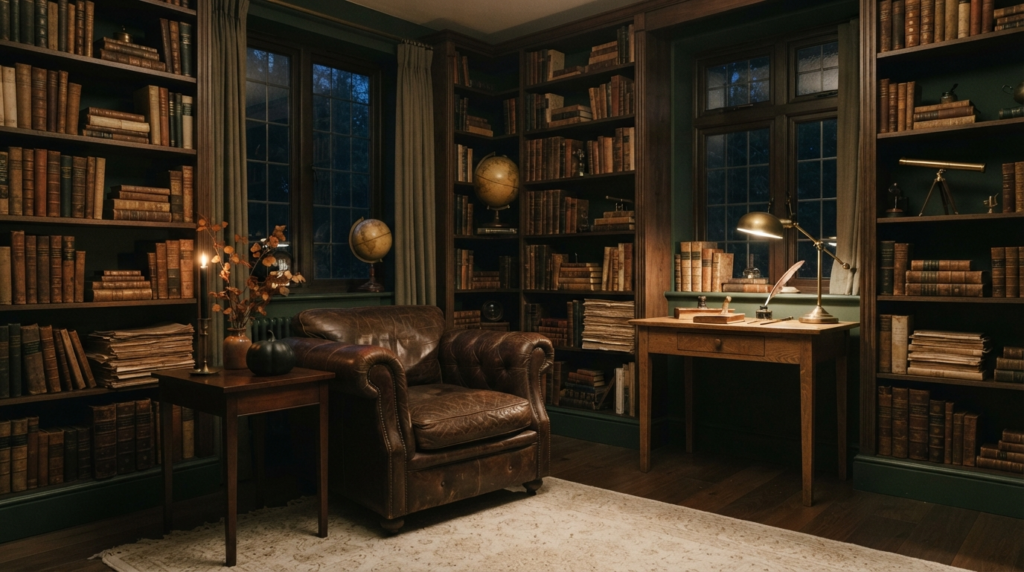
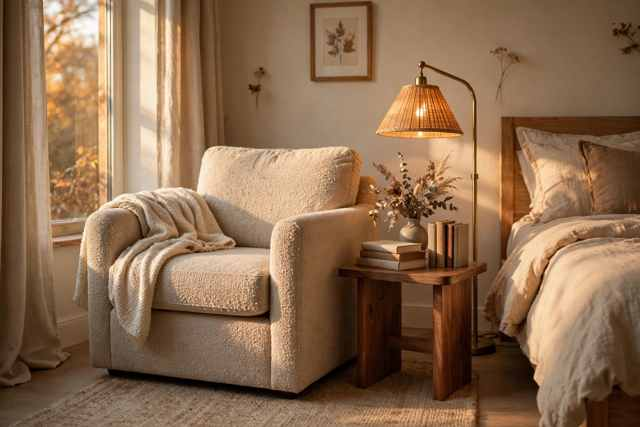
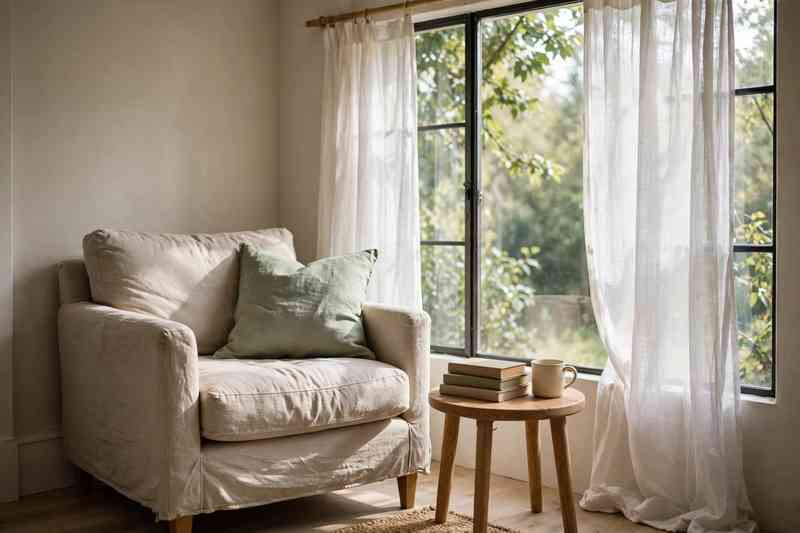
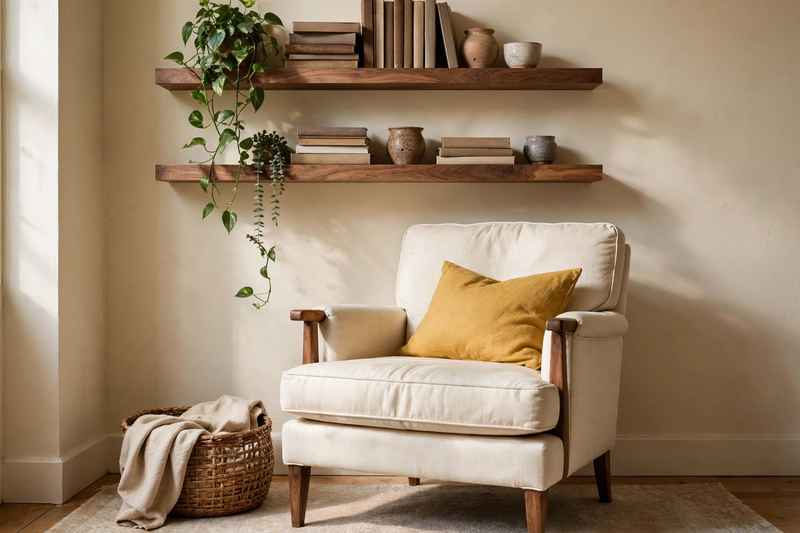
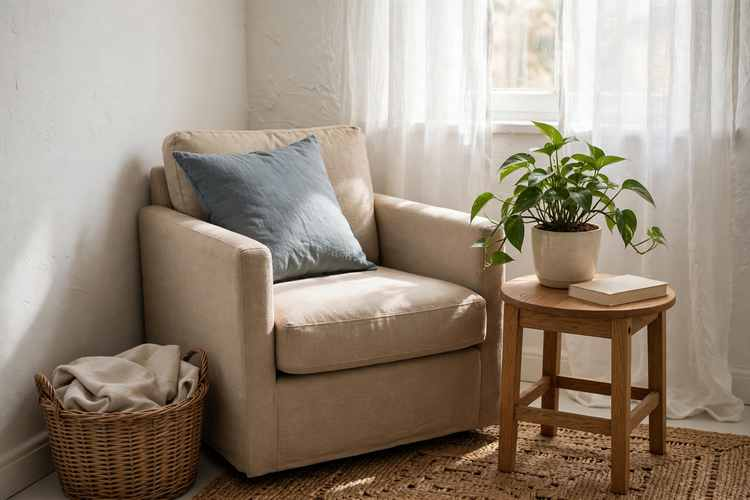
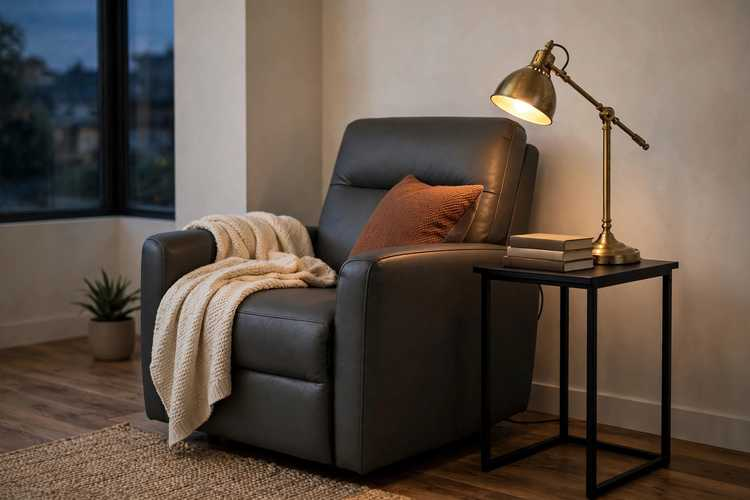
A small reading corner can make your living room feel more personal and useful during fall. Start with a comfortable armchair, a small side table, and a floor lamp that provides focused light.
Add a soft throw, one textured cushion, and a basket for books or blankets. If possible, position the chair near a window or in a quiet corner away from the main walkway.
Choose warm upholstery such as caramel, olive, cream, or muted brown to connect the corner with the rest of your fall decor.
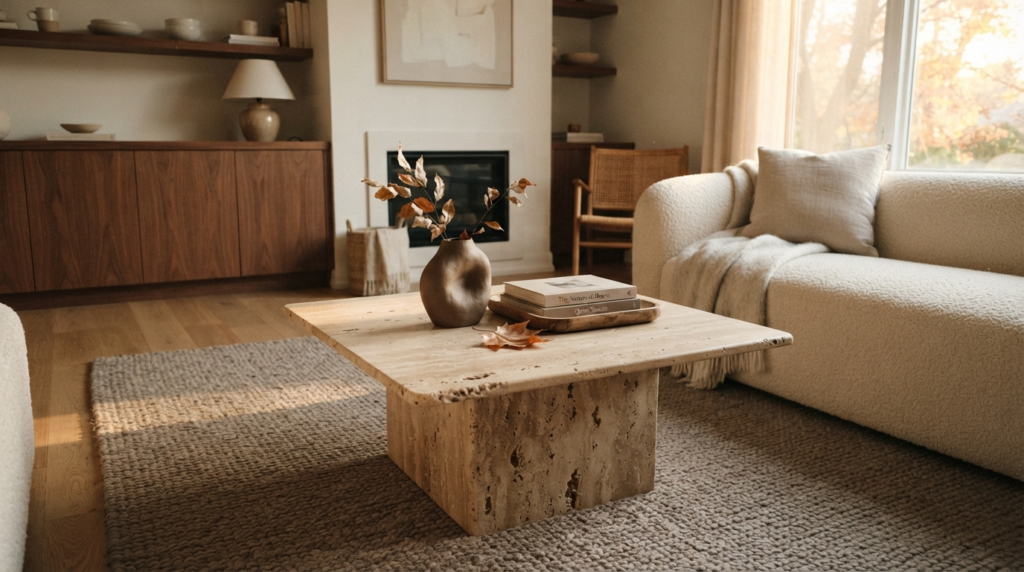
10. Style the Coffee Table With Natural Materials
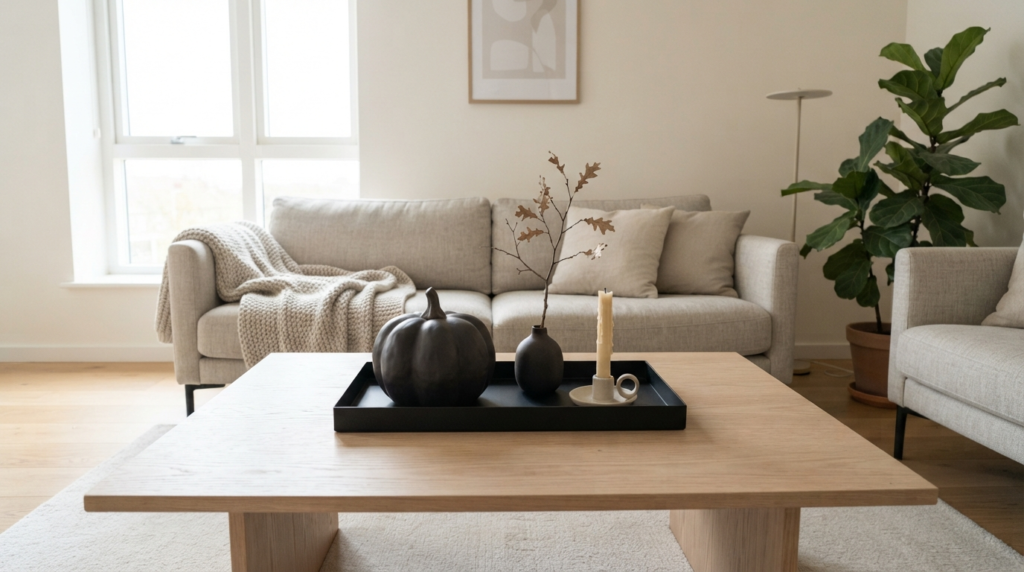
A coffee table is a useful place to introduce subtle fall details. Start with a wooden, stone, or dark metal tray and add a small ceramic vase, a candle, and a simple decorative bowl.
You can include a few seasonal elements, such as dried leaves or miniature gourds, but avoid filling every available space. Leave enough room for drinks, books, and everyday use.
A combination of smooth ceramics, natural wood, and soft candlelight gives the table a warm but contemporary appearance.
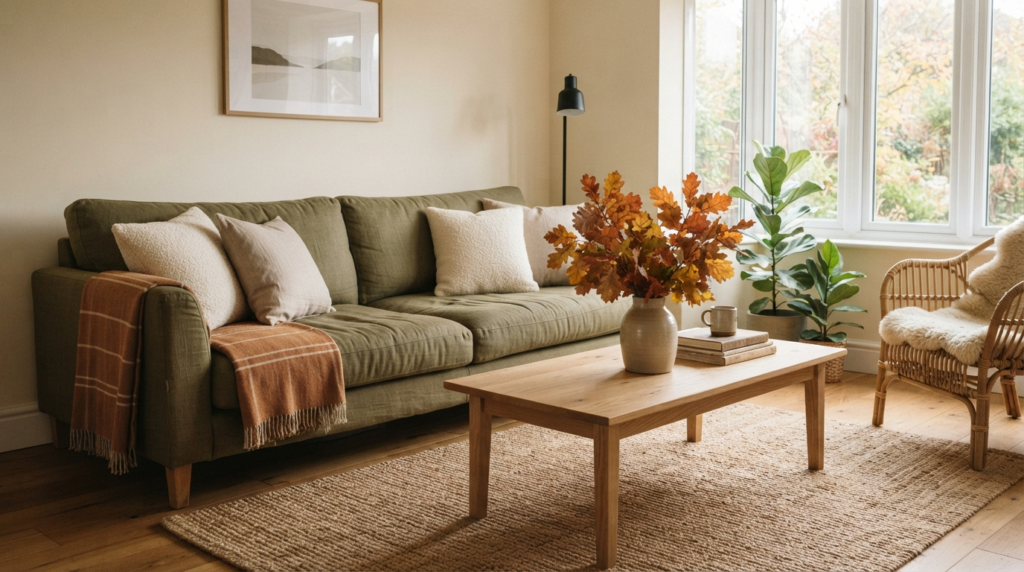
11. Use Olive Green for a Modern Fall Palette
Olive green is a versatile color for fall because it feels connected to nature while remaining understated.
Introduce it through cushions, a throw, artwork, a velvet accent chair, or a ceramic accessory. Olive works particularly well with cream, beige, warm wood, black, and muted terracotta.
For a subtle look, keep olive to small accents. If you want a stronger statement, use it on one larger upholstered piece and keep the surrounding decor simple.
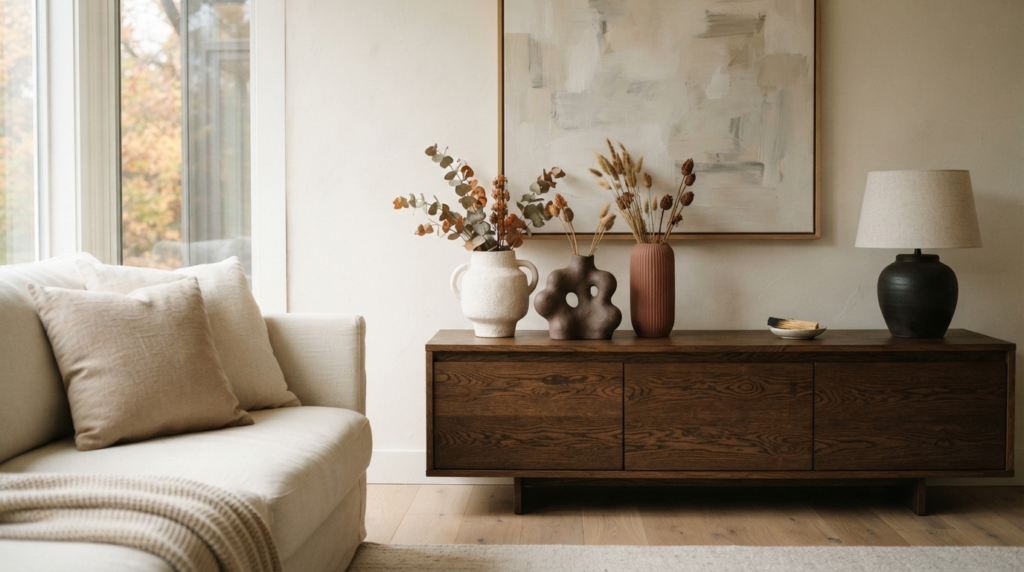
12. Add Sculptural Ceramic Decor
Sculptural ceramics can make a living room feel more considered without adding unnecessary clutter. Look for handmade-looking vases, rounded bowls, textured vessels, or abstract ceramic objects in earthy colors.
Warm white, charcoal, sand, rust, and chocolate brown are useful choices for a fall palette. Arrange one or two pieces on a coffee table, console, or bookshelf.
Their shape and surface texture provide visual interest, so you do not need many decorative items to make an impact.
13. Layer Curtains for a Softer Look
Layering curtains can make a living room feel warmer and more finished as the weather cools.
Pair lightweight sheer curtains with heavier linen or cotton drapes in a warm neutral shade. Cream, mushroom, taupe, or soft brown can complement a contemporary fall palette.
Choose simple curtain styles without elaborate trims or patterns to keep the look modern. Make sure the layers still allow enough daylight into the room during the day.
14. Bring in Warm Wood Furniture
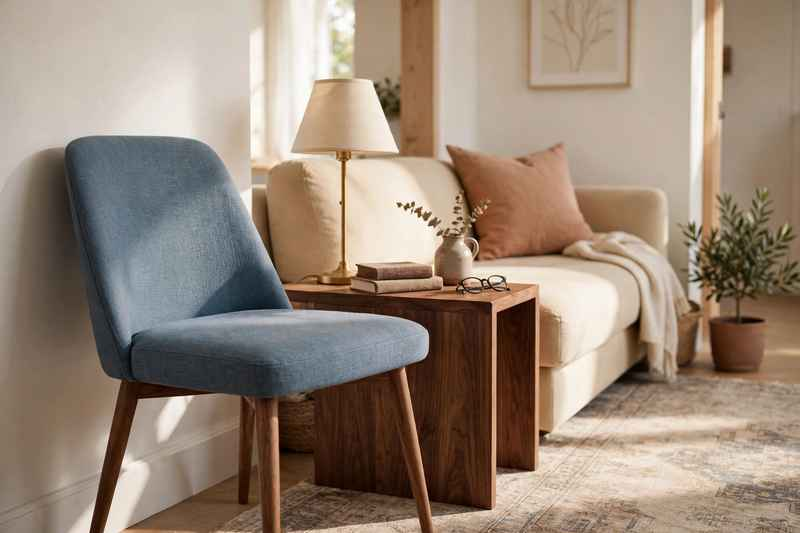
Natural wood adds an inviting quality to contemporary spaces. A walnut side table, oak coffee table, wooden stool, or simple console can bring warmth to rooms with white walls and sleek furniture.
You can mix different wood tones, but try to keep the overall combination balanced. Pair darker wood with lighter textiles or use pale oak alongside deeper fall colors.
The natural grain and slight variations in wood help the room feel less formal and more comfortable.
15. Decorate With Moody Fall Artwork
Artwork can introduce fall colors without the need for seasonal decorations on every surface.
Look for abstract pieces with burnt orange, deep burgundy, muted olive, warm brown, or soft cream. Minimalist landscapes and botanical prints can also work well in contemporary living rooms.
A single oversized artwork above the sofa can create a strong focal point. If you prefer a gallery wall, use a consistent frame style to keep the arrangement visually connected.
16. Create a Modern Fall Fireplace Display
If your living room has a fireplace, style the surrounding area with a mix of simple seasonal details and everyday decor.
Use a neutral vase with branches, a few candles, a dark metal accent, or a low arrangement of natural pumpkins. Choose accessories that complement the fireplace material rather than competing with it.
For a sleek contemporary finish, repeat two or three colors from the rest of the room and avoid overcrowding the hearth.
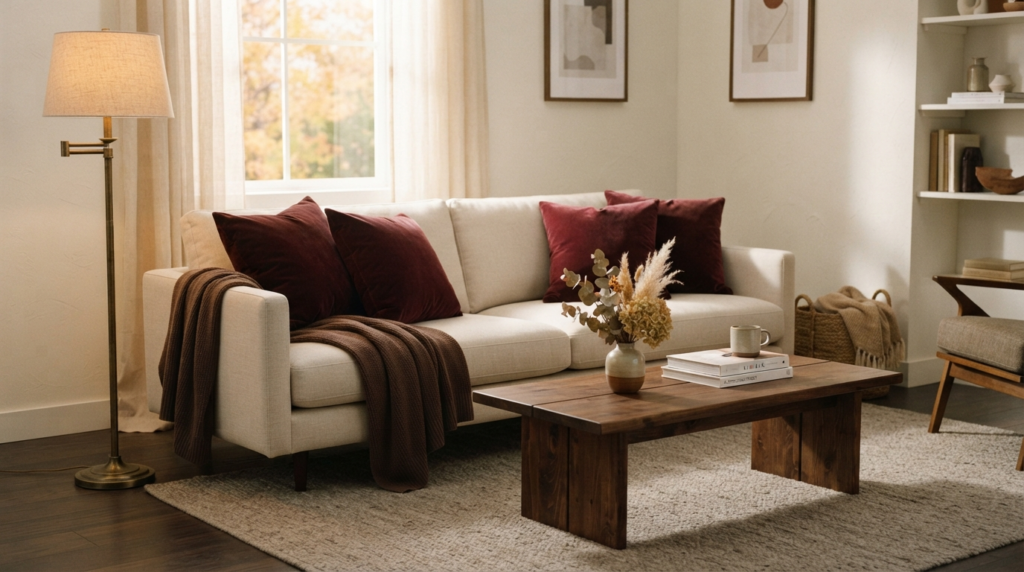
17. Add Burgundy and Chocolate Brown Accents
Burgundy and chocolate brown bring depth to a fall living room, particularly when paired with lighter neutral furniture.
Try burgundy cushions, a dark brown throw, a small velvet ottoman, or a decorative ceramic piece. These richer colors can make a cream or beige room feel more intimate without requiring a full redesign.
Use them in a few deliberate places and balance them with lighter textiles, warm wood, or soft lighting.
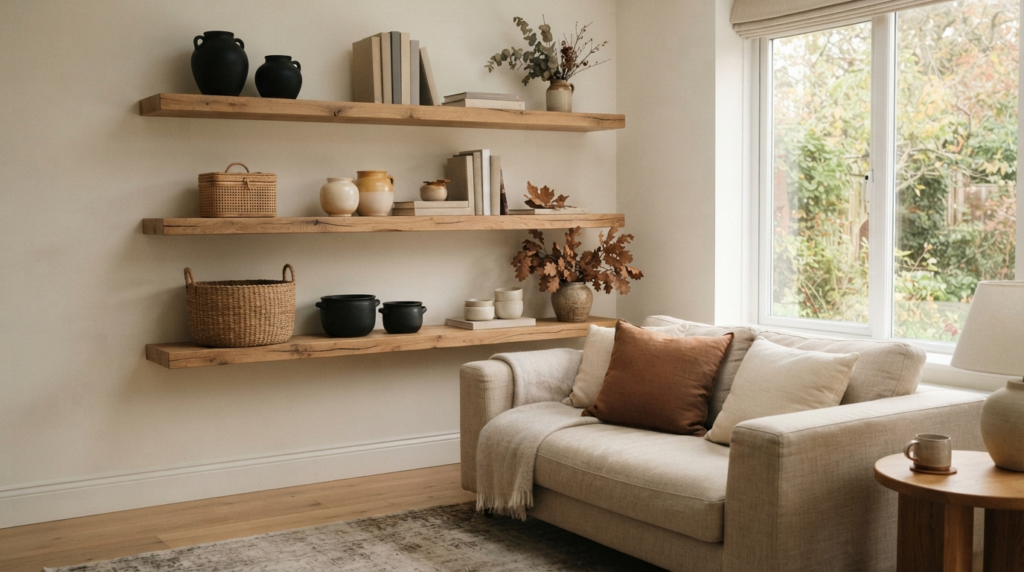
18. Style Open Shelves With Fall Decor
Open shelves provide an opportunity to refresh your living room for fall while keeping the overall style uncluttered.
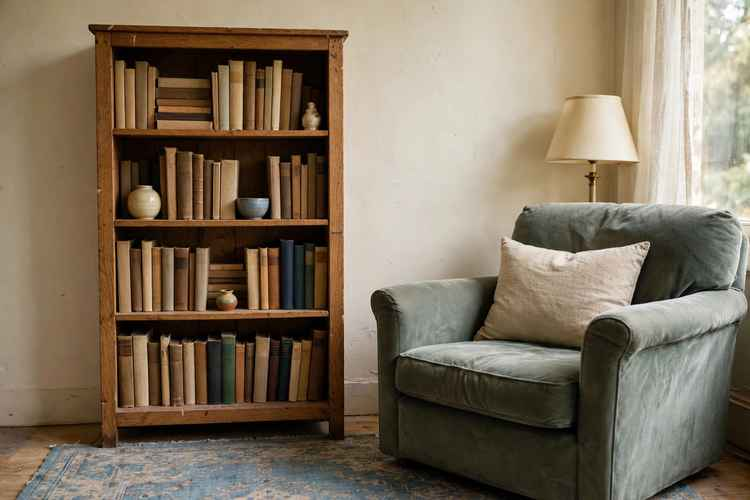
Mix books, ceramic vessels, framed prints, small baskets, and a few seasonal pieces. Choose a limited palette of cream, brown, black, olive, or rust so the shelves feel cohesive.
Vary the height and shape of objects, and leave some shelves partly empty. This creates breathing room and keeps the display from looking overly arranged.
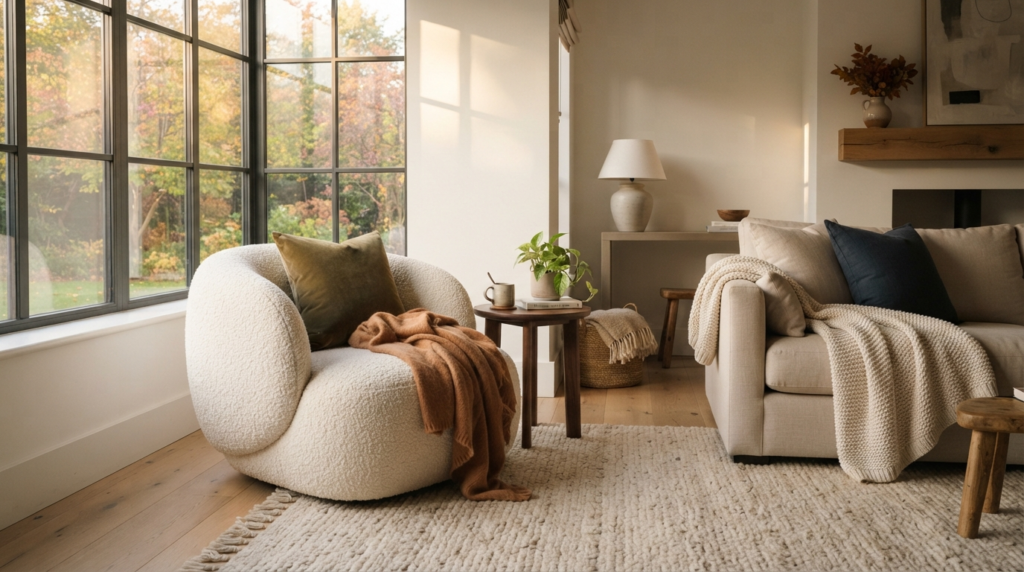
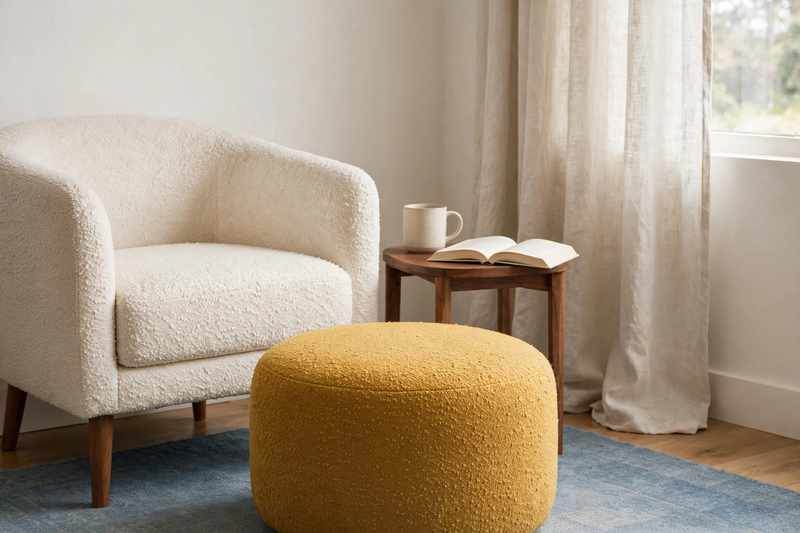
19. Add a Boucle Accent Chair
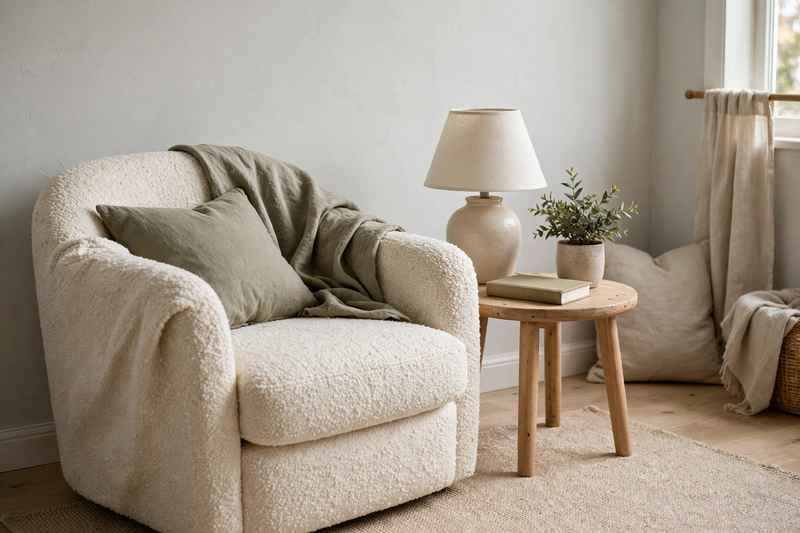
Boucle upholstery adds a soft, tactile quality that suits cozy modern fall decor. A cream, beige, or warm ivory boucle chair can bring texture into a room with clean-lined furniture.
Pair it with a dark wood side table, a small floor lamp, and a rust or olive cushion. The combination of soft upholstery and structured furniture keeps the room feeling balanced.
If space is limited, choose a compact chair with a simple silhouette rather than a bulky design.
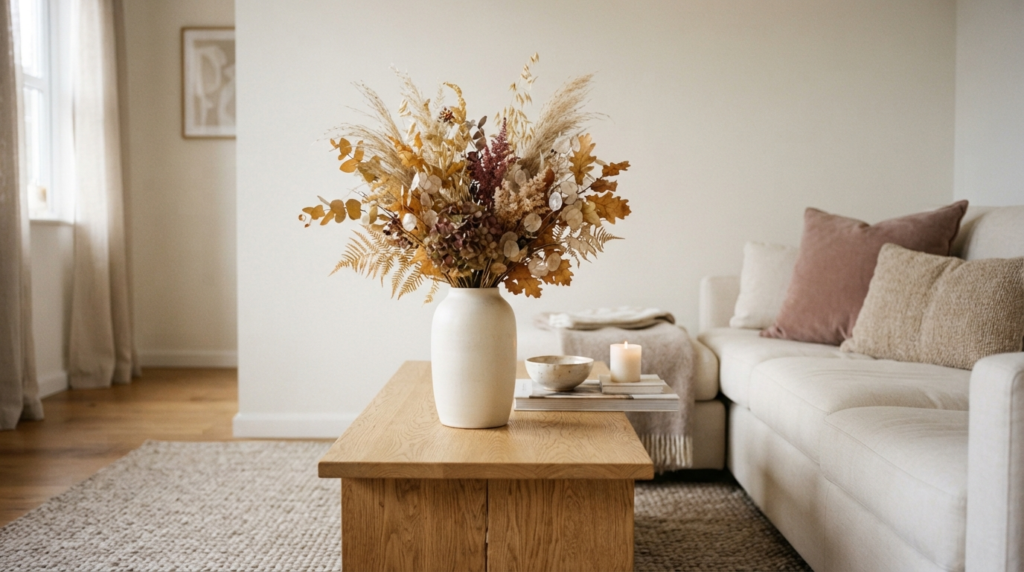
20. Bring Fall Florals Into the Living Room
Seasonal floral arrangements can add color and natural texture to a modern living room. Choose dried grasses, branches, muted chrysanthemums, or other flowers in earthy shades that suit your decor.
Place them in a simple ceramic vase or a clear glass vessel. A loose arrangement often feels more contemporary than a tightly packed bouquet.
For a more minimal look, use just a few stems on a console or coffee table rather than creating several large arrangements throughout the room.
21. Make a Small Living Room Feel Cozy With Layers
A small living room can feel especially inviting when the layers are chosen carefully. Use a soft rug, a lightweight throw, two or three cushions, warm lighting, and a few natural accessories.
Choose a consistent color palette, such as cream, camel, and olive, to make the room feel connected. Furniture with exposed legs and compact silhouettes can help preserve a sense of space.
Avoid adding too many small decorations. A few larger, well-placed elements can make the room feel more settled without creating clutter.
22. Keep Fall Decor Minimal and Intentional
A contemporary fall living room does not need seasonal decorations in every corner. Sometimes the most effective update is to remove a few items and make room for textures and colors that suit the season.
Choose a small group of details, such as a warm throw, textured cushions, a ceramic vase with branches, and soft lighting. Repeat a few colors across the room to create a cohesive appearance.
This approach allows your everyday decor to remain the foundation while giving the space a subtle seasonal refresh.
How Do You Make a Modern Living Room Feel Cozy for Fall?
Start with the pieces you already have and focus on the elements that affect the room’s atmosphere most.
Add soft textiles such as knitted throws, linen cushions, and textured rugs.
Introduce warm colors like rust, camel, olive, burgundy, and chocolate brown.
Use table lamps, floor lamps, and candles to create softer evening lighting.
Bring in natural materials such as wood, woven baskets, ceramics, and dried branches.
Keep the layout open and avoid filling every surface with seasonal decorations.
Even two or three thoughtful updates can make a modern living room feel more welcoming for fall.
What Colors Work Best for Modern Fall Living Room Decor?
Modern fall interiors often combine warm neutrals with a few deeper seasonal shades.
Cream and ivory: Keep the room bright and balanced.
Camel and beige: Add warmth without strong contrast.
Rust and terracotta: Introduce classic autumn color.
Olive green: Create a natural, muted accent.
Burgundy: Add richness and depth.
Chocolate brown: Make the palette feel grounded.
Charcoal and black: Provide contemporary contrast.
Choose two or three main colors and use the others sparingly. This helps the room feel coordinated rather than overly decorated.
How Can I Decorate a Modern Living Room for Fall on a Budget?
You can refresh your living room without buying new furniture or investing in a full seasonal collection.
Rearrange cushions and throws you already own.
Move a lamp or accent chair to create a cozier seating area.
Display branches or dried foliage in an existing vase.
Use a wooden bowl or tray to group a few everyday accessories.
Change cushion covers instead of purchasing new cushions.
Edit shelves and coffee tables to make existing pieces stand out.
If you decide to buy something new, prioritize items you can use throughout the year, such as a textured throw, neutral rug, or ceramic vase.
How Do You Make Fall Decor Look Modern Instead of Rustic?
Focus on clean silhouettes, restrained colors, and a mix of textures rather than traditional rustic accessories.
Choose simple ceramic pieces, contemporary lighting, neutral upholstery, abstract artwork, and natural wood with clean lines. You can still use pumpkins, branches, and other seasonal elements, but keep them minimal and style them alongside your everyday decor.
Avoid relying on too many signs, themed decorations, or matching seasonal sets. A more selective approach creates a modern look that still feels warm.
Modern Fall Living Room Decorating Checklist
Colors and Textures
Choose a warm neutral base
Add one or two autumn accent colors
Layer textured cushions and throws
Introduce a soft or patterned rug
Lighting
Add warm table or floor lamps
Use soft ambient lighting
Include candles where suitable
Natural Elements
Add branches or seasonal florals
Use natural wood accessories
Include woven or ceramic details
Styling
Refresh the coffee table
Style the mantel or shelves
Create a comfortable reading corner
Remove unnecessary clutter
Keep the overall look contemporary
FAQ
What is the modern fall decor style?
Modern fall decor combines contemporary furniture and clean lines with warm colors, soft textures, natural materials, and subtle seasonal details. It creates a cozy atmosphere without relying heavily on traditional rustic decorations.
How do I make my living room cozy for fall without changing furniture?
Update the textiles and lighting first. Add a warm throw, textured cushions, a soft rug, and a few table lamps. Natural accessories such as branches, wood, and ceramics can also make the room feel more inviting.
What are the best accent colors for a modern fall living room?
Rust, terracotta, olive green, burgundy, camel, and chocolate brown are popular choices. They pair well with cream, beige, gray, and natural wood, making them easy to introduce into many contemporary interiors.
Can a modern living room have traditional fall decorations?
Yes. Traditional fall details such as pumpkins, dried leaves, and seasonal branches can work in a modern space when used selectively. Choose simple shapes and natural colors, and avoid overcrowding the room.
How do I decorate a small living room for fall?
Use a limited color palette, lightweight layers, compact furniture, and warm lighting. Add a few cozy textures and seasonal accents while keeping pathways and surfaces clear. This makes the room feel inviting without making it seem smaller.
Final Thoughts
A cozy modern fall living room is all about balancing warmth with simplicity. Soft throws, textured cushions, earthy colors, natural wood, and warm lighting can make even a minimal contemporary space feel comfortable as the season changes.
You do not need to decorate every surface or replace your existing furniture. Start with the sofa, lighting, or coffee table, then add a few seasonal details that suit your personal style.
The best fall living rooms feel welcoming and lived-in while still reflecting the clean, contemporary look you enjoy throughout the year.
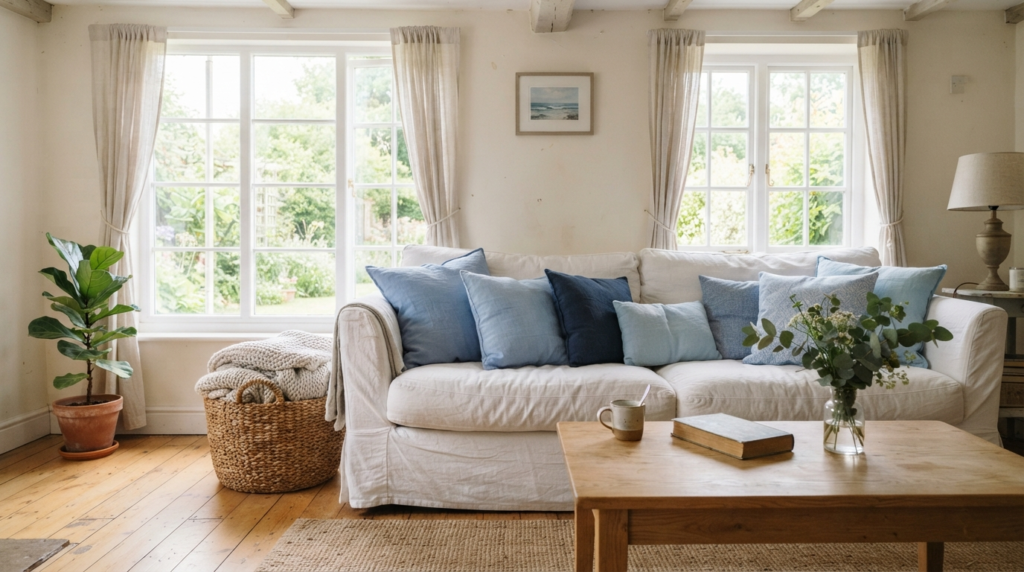
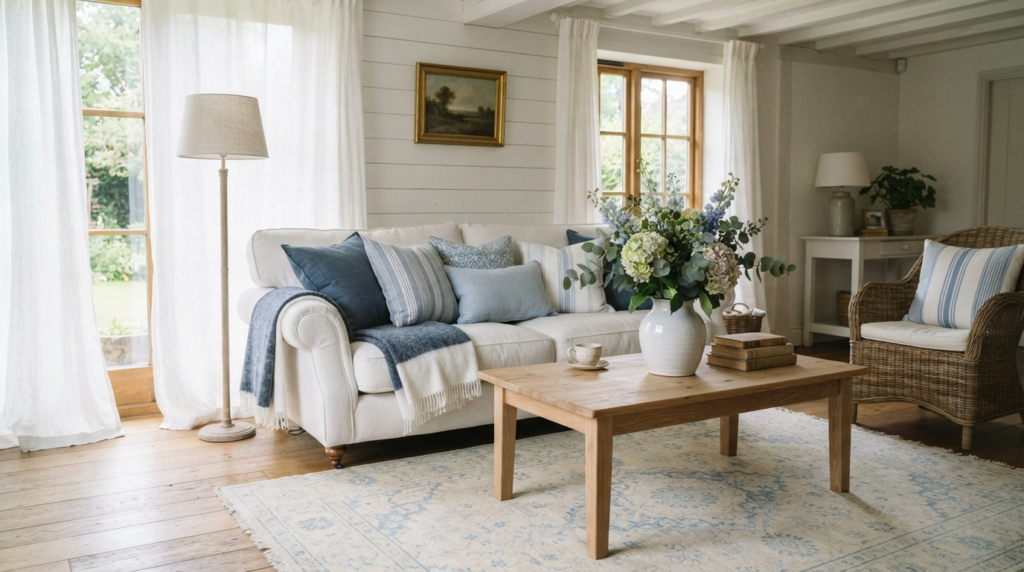
Blue and white is one of those color combinations that makes a living room feel instantly fresher. It can look coastal and relaxed, classic and traditional, or clean and modern depending on the shades, patterns, and materials you choose.
The best part is that you do not need to replace your furniture to create the look. A few blue cushions, white curtains, striped textiles, blue artwork, or natural woven accents can completely change the mood of the room.
If you are looking for blue and white summer living room decor ideas, these 23 simple ideas will help you create a space that feels bright, comfortable, and collected without looking overly themed.
1. Start With a White Sofa and Blue Cushions
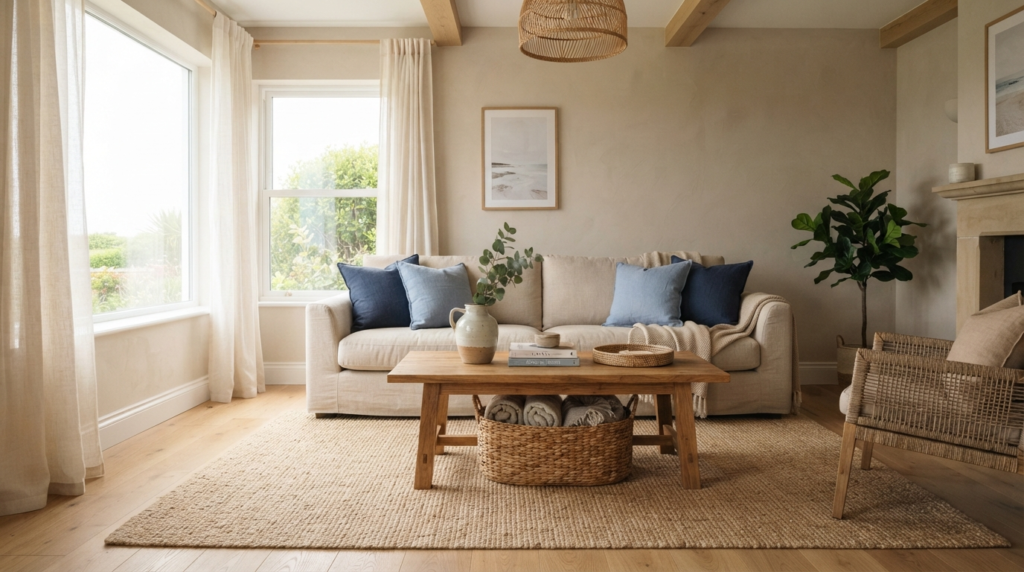
A white or cream sofa gives you the perfect base for blue and white summer decor.
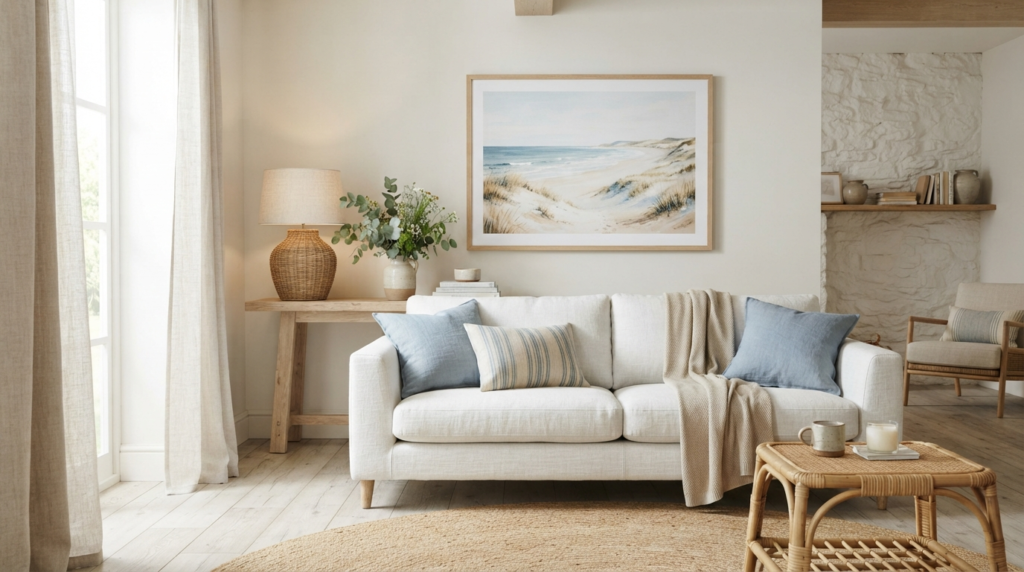
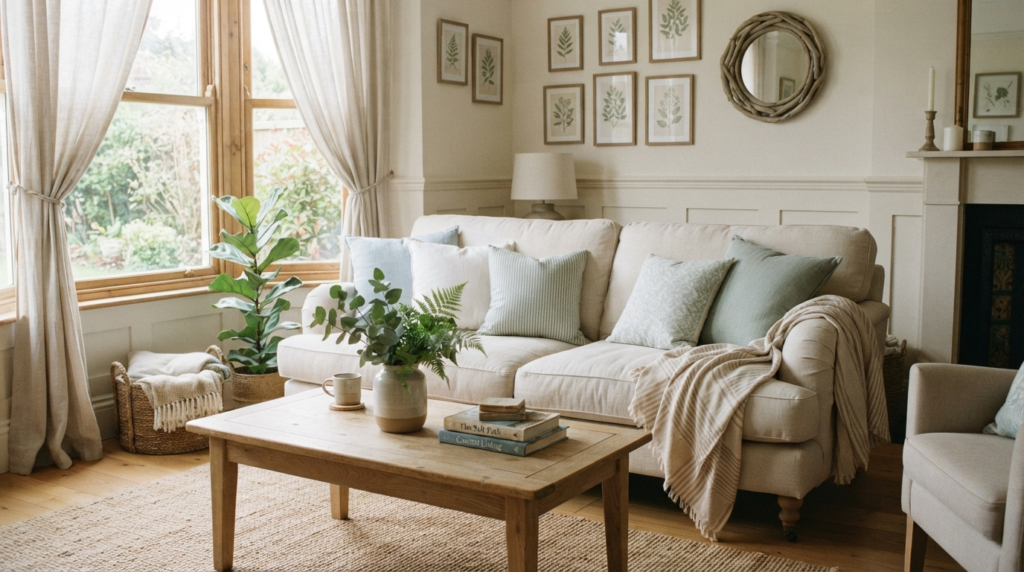
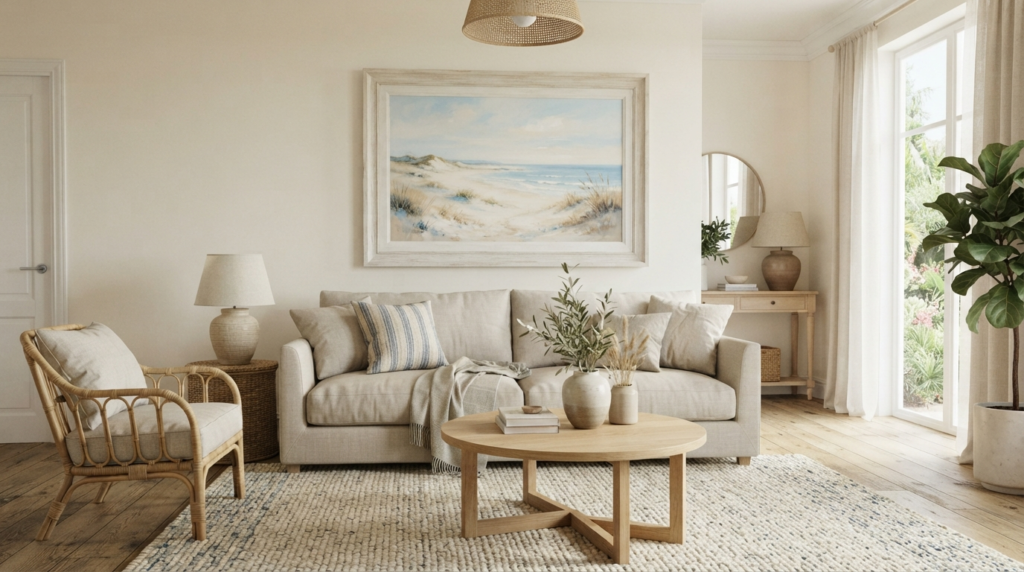
Add cushions in different shades of blue, such as navy, powder blue, denim, or soft aqua. Mixing several blue tones keeps the arrangement from looking too coordinated.
For a relaxed summer look, combine solid cushions with one subtle stripe or small geometric pattern.
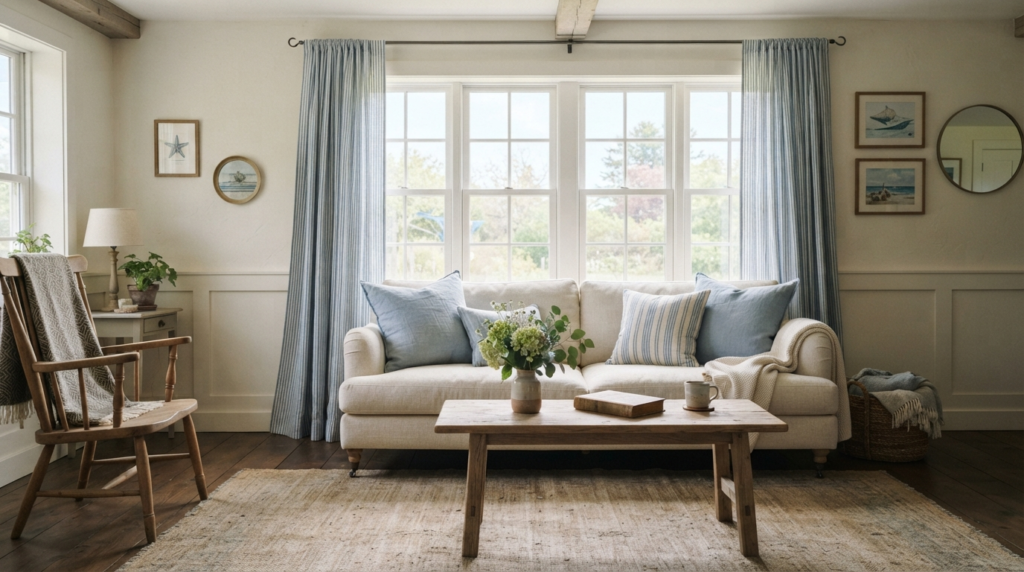
2. Add Blue and White Striped Curtains
Striped curtains are an easy way to bring the color palette into a living room without adding too many accessories.
Try narrow blue-and-white stripes for a traditional look or wider stripes for a more relaxed coastal feeling. Linen and cotton fabrics work especially well because they allow natural light to filter through the room.
Keep the rest of the window area simple so the curtains remain the main feature.
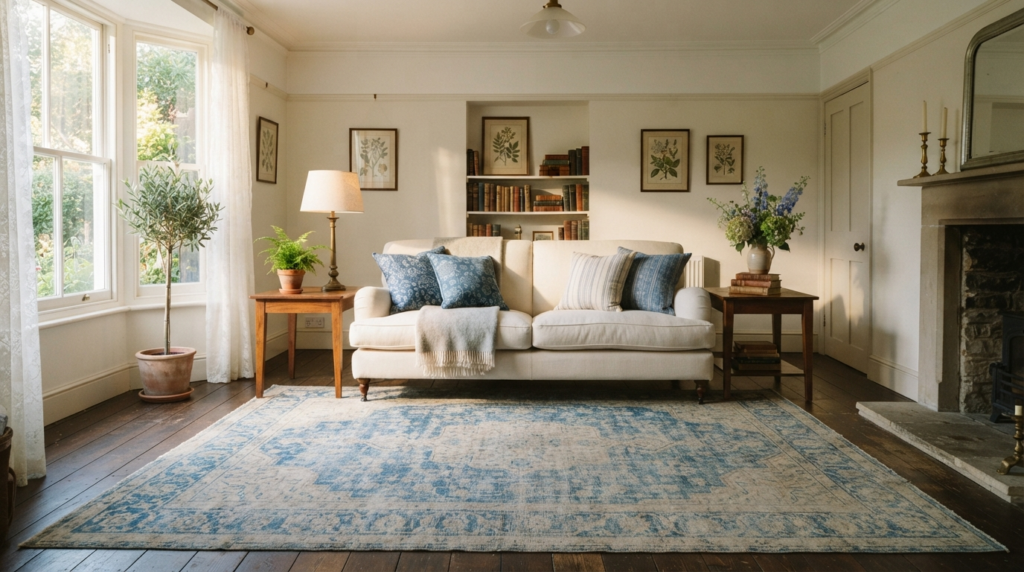
3. Use a Blue Area Rug
A blue area rug can anchor the entire living room while keeping the rest of the decor relatively neutral.
For summer, consider faded blue, soft navy, pale denim, or a blue-and-cream vintage pattern. A slightly worn-looking rug can add character without making the room feel heavy.
If your furniture is already colorful, choose a softer blue rug with plenty of cream or ivory.
4. Style the Coffee Table With Blue and White Ceramics
A few blue and white ceramic pieces can make a coffee table feel thoughtfully styled.
Try a small blue-and-white vase, a white ceramic bowl, or a decorative jar on a simple wooden tray. Add a small green branch for a natural touch.
Keep the arrangement low and leave plenty of empty surface around it so the table remains practical.
5. Bring in Blue Through Artwork
Artwork is one of the easiest ways to introduce blue into a living room.
Look for coastal landscapes, botanical prints, abstract paintings, blue-and-white still lifes, or traditional blue-and-white illustrations.
A large piece above the sofa can become the visual anchor, while smaller prints can be arranged on a nearby console or shelf.
6. Mix Navy Blue With Crisp White
Navy and white create a stronger contrast than pale blue and white.
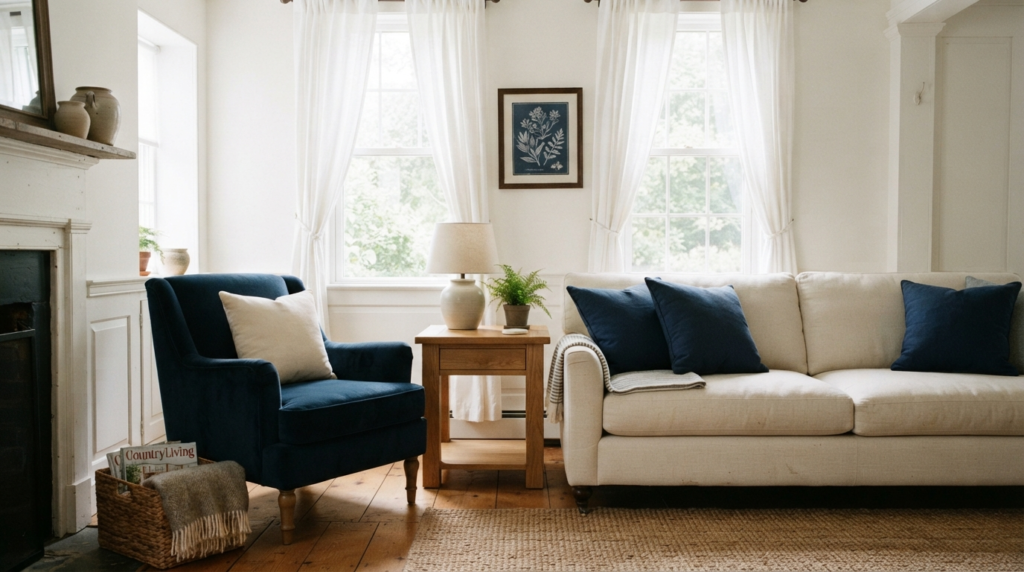
Use navy cushions, a navy accent chair, dark blue artwork, or a patterned rug against white walls and lighter furniture.
To prevent the combination from feeling too formal, add natural wood, woven baskets, linen, or rattan accessories.
7. Add Pale Blue Throw Pillows
If navy feels too dark for your living room, use pale blue instead.
Powder blue, sky blue, dusty blue, and soft aqua can make a room feel light and relaxed. Pair these shades with white, cream, beige, or light gray.
A mix of textures works particularly well. Try linen, cotton, boucle, or lightly woven covers rather than using identical fabrics.
8. Decorate With Blue-and-White Chinoiserie
Blue-and-white chinoiserie pieces can give a living room a classic summer look.
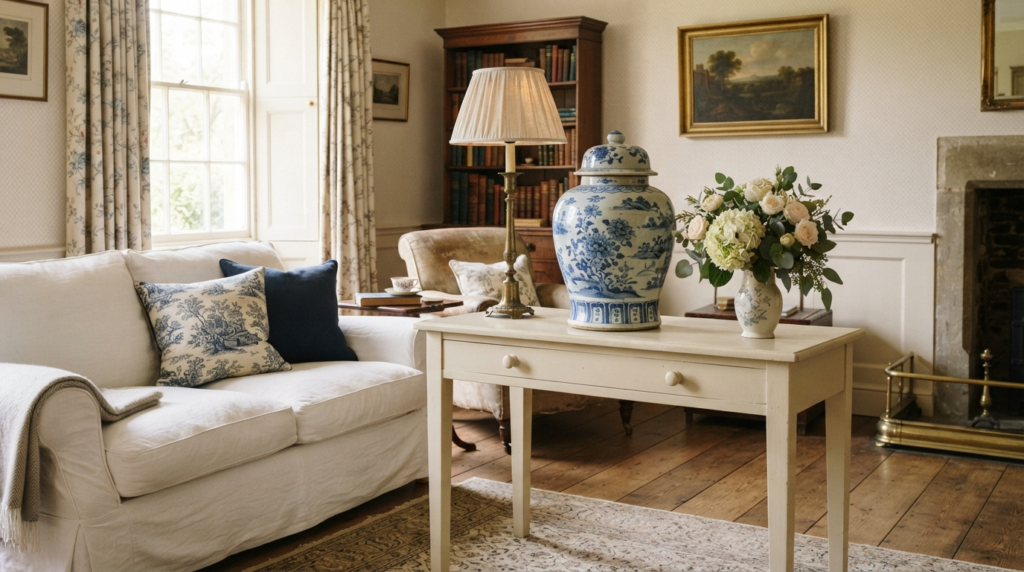
A decorative ginger jar, porcelain vase, or small blue-and-white vessel can work beautifully on a mantel, bookshelf, console, or coffee table.
You only need a few pieces. Too many matching porcelain accessories can make the room feel more formal than intended.
9. Add Natural Woven Textures
Blue and white look especially good when paired with natural materials.
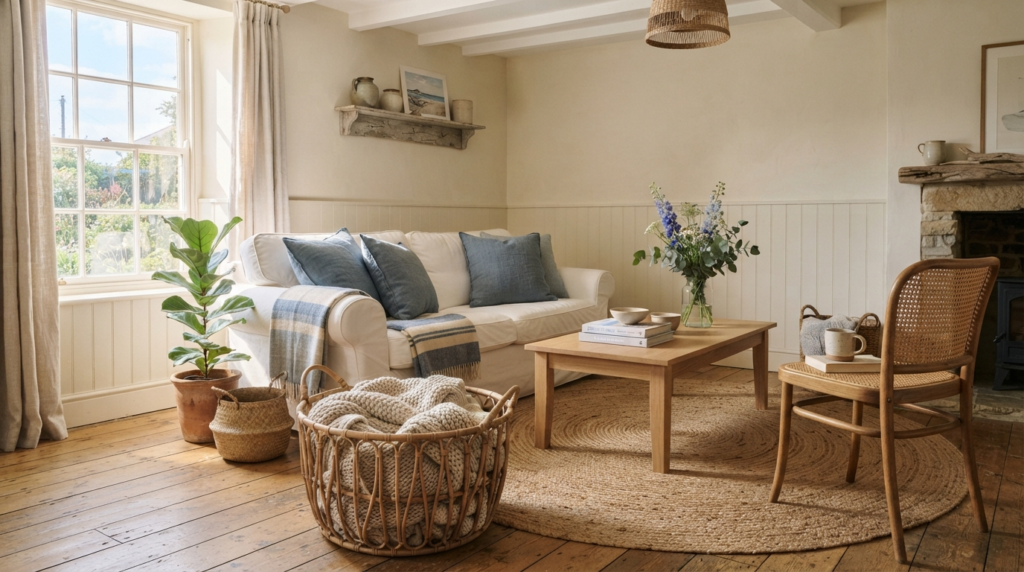
Add a rattan basket, jute rug, woven lampshade, seagrass tray, or cane accent chair. The warm texture balances the coolness of blue and keeps the room from feeling overly crisp.
This combination works beautifully for relaxed coastal, Mediterranean, farmhouse, and casual traditional interiors.
10. Create a Blue Accent Wall
If you want a bigger change, consider painting one living room wall blue.
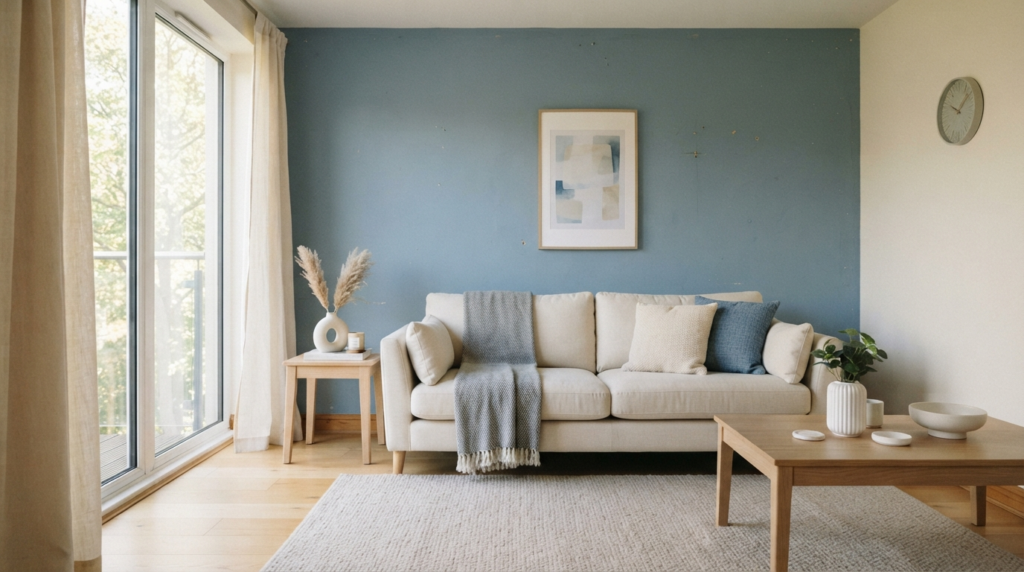
Soft dusty blue creates a quiet backdrop, while deeper navy creates a more dramatic effect. For a summer-friendly room, muted shades usually feel easier to live with than extremely bright blue.
Keep nearby furniture and textiles lighter so the wall becomes a deliberate focal point.
11. Use Blue and White Plaid
Plaid does not have to feel like a fall pattern.
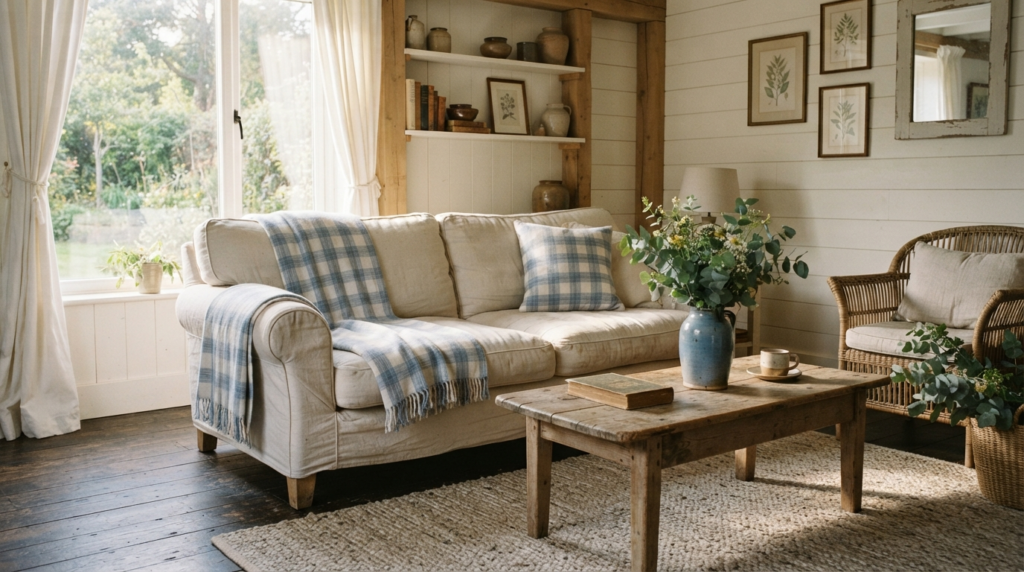
A lightweight blue-and-white plaid throw or cushion can work beautifully in a summer living room, especially when combined with white linen and natural wood.
Choose a softer, less dense plaid for a relaxed cottage or farmhouse feeling.
12. Add a Blue Accent Chair
A blue accent chair can add color without requiring a complete furniture makeover.
Try a linen chair in dusty blue for a casual look, navy velvet for a more traditional room, or soft denim upholstery for a relaxed family space.
Place it near a window, beside a bookshelf, or opposite the main sofa to create a useful secondary seating area.
13. Hang White Linen Curtains With Blue Trim
For a subtle blue-and-white look, keep your curtains white and introduce blue through the trim.
A narrow navy or soft blue border can add just enough contrast without overwhelming the windows.
This works particularly well in traditional and coastal living rooms where small details matter.
14. Style Built-In Shelves With Blue and White Decor
Built-in shelves are perfect for creating a blue-and-white display.
Mix white ceramics, blue glass, books, small framed artwork, natural baskets, and a few pieces of greenery. Avoid filling every shelf completely.
Leaving some empty space helps the collection look intentional rather than crowded.
15. Add Blue Glass Accessories
Blue glass adds color while still allowing light to move through the room.
Try a cobalt vase, pale blue bottle, blue glass candleholder, or small decorative vessel. Place these pieces where sunlight can highlight their translucent surfaces.
Pair them with clear glass and white ceramics for a fresh layered look.
16. Layer Blue and White With Beige
Blue and white do not have to be the only colors in the room.
Adding beige, sand, tan, or light natural wood can soften the contrast and make the living room feel warmer.
This is especially useful if an all-white-and-blue palette feels too cool. A beige linen sofa or natural jute rug can immediately make the space feel more comfortable.
17. Create a Coastal Blue and White Gallery Wall
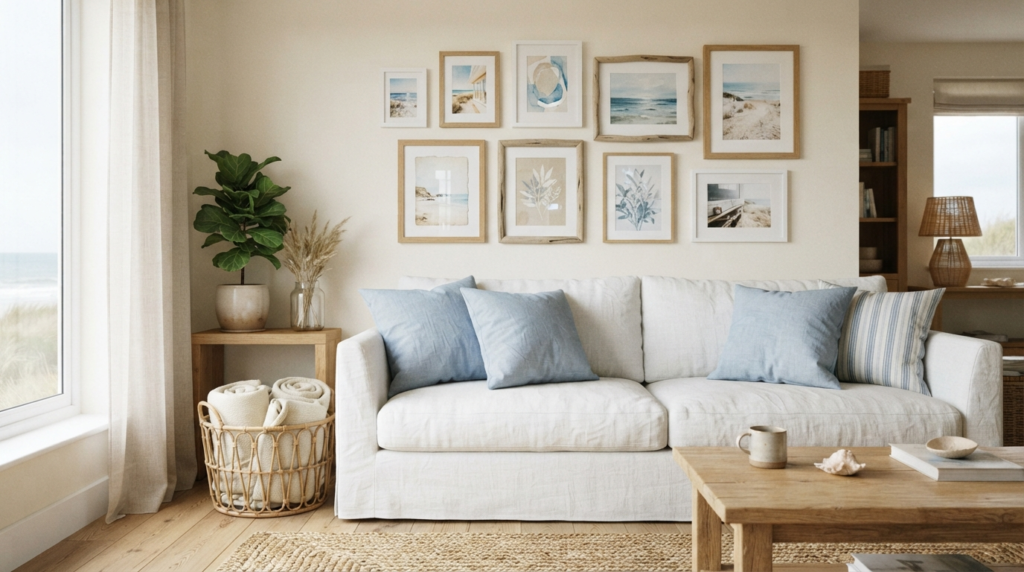
Create a relaxed gallery wall using artwork in different shades of blue, white, cream, and sandy neutrals.
Mix coastal photography, simple line drawings, vintage-inspired prints, and small landscapes rather than using identical frames and artwork.
Natural wood frames can make the display feel more relaxed and summery.
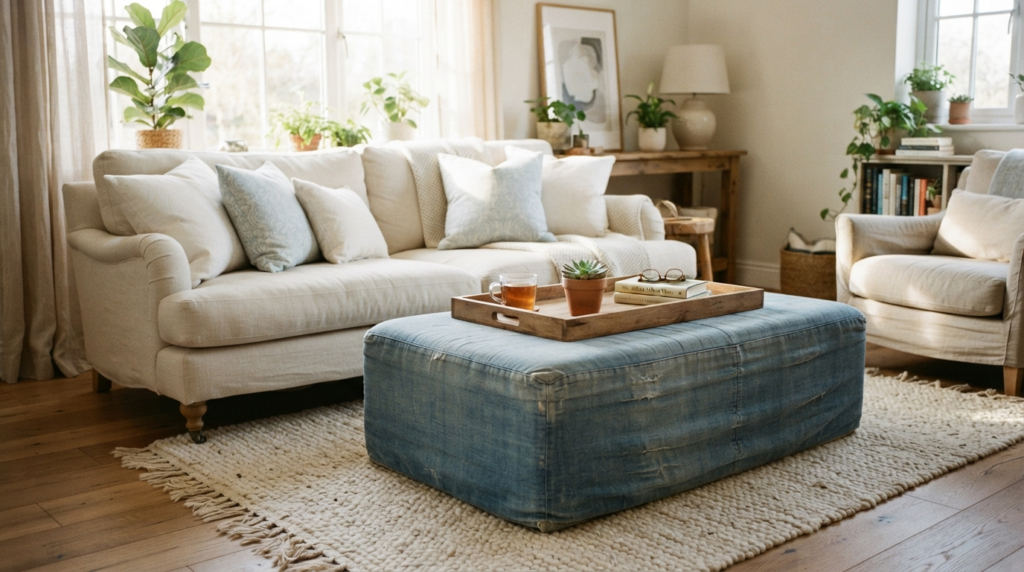
18. Add a Blue Ottoman or Pouf
A blue ottoman is both decorative and practical.
Use it as a footrest, extra seating, or a casual surface for a tray. Choose linen, cotton, woven fabric, or another breathable material for summer.
A soft denim or faded blue ottoman works particularly well with cream sofas and natural wood furniture.
19. Use Blue Floral Patterns
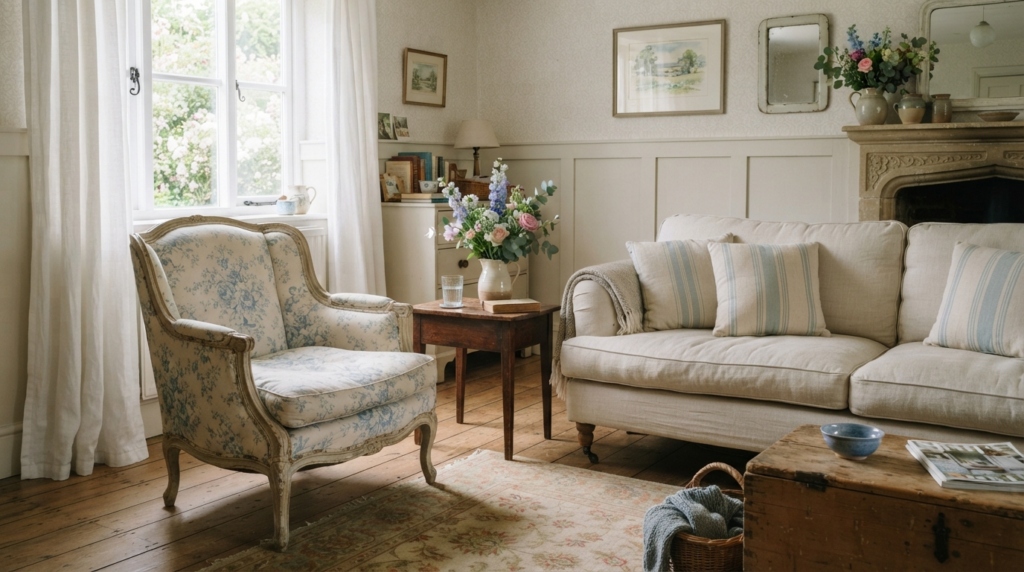
Blue floral fabrics can bring a traditional garden feeling into the living room.
Try a blue-and-white floral cushion, armchair, curtain panel, or small upholstered stool. Keep larger furniture relatively simple if the pattern is detailed.
For a more modern look, choose oversized or watercolor-style floral designs.
20. Add a White Slipcovered Sofa
A white slipcovered sofa gives the room a relaxed summer-house feeling.
Pair it with blue cushions, a faded blue throw, natural wood furniture, and woven accessories. The slightly casual appearance works especially well in family rooms and cottage-inspired spaces.
Choose washable covers if the living room receives heavy everyday use.
21. Bring in Fresh Greenery
Greenery is an easy way to keep blue and white from feeling too stark.
Place olive branches, eucalyptus, leafy stems, or a simple houseplant in a white or blue ceramic vase.
The green adds a natural middle tone between the cool blue and bright white, making the entire palette feel more organic.
22. Try a Blue-and-White Coastal Coffee Table
For a subtle coastal theme, style your coffee table with a blue-and-white ceramic bowl, a stack of neutral books, a small glass vase, and one natural element such as a shell-inspired object or piece of driftwood.
Keep the styling restrained. A few well-chosen pieces will feel more sophisticated than a table covered in nautical accessories.
23. Mix Different Shades of Blue
You do not have to choose just one blue.
Combine navy, denim, sky blue, powder blue, muted aqua, and faded blue throughout the room. Keep white, ivory, and natural wood as the grounding colors.
Using several related shades creates depth and makes the living room feel collected over time rather than decorated from a single matching set.
How Do You Decorate a Living Room With Blue and White for Summer?
Start with a light foundation such as white, cream, beige, or natural wood.
Then introduce blue through cushions, curtains, rugs, artwork, ceramics, or one larger accent piece. You can use one shade of blue for a clean look or combine several shades for more depth.
Natural materials such as rattan, linen, jute, cane, and light wood are particularly useful because they soften the contrast between blue and white.
What Shades of Blue Work Best for Summer Living Room Decor?
Several shades can work depending on the mood you want.
Powder blue: soft and airy
Sky blue: cheerful and light
Dusty blue: relaxed and sophisticated
Denim blue: casual and comfortable
Aqua: fresh and coastal
Navy: classic and dramatic
Faded blue: vintage and collected
For a brighter summer room, use pale and medium blues as the main colors and reserve navy for smaller accents.
How Can I Make Blue and White Decor Feel Warm?
Blue and white can sometimes feel cool, especially when there are many hard white surfaces.
Add warm materials such as oak, rattan, wicker, jute, cane, terracotta, and natural linen. Beige and sandy tones can also soften the palette.
Warm lighting in the evening helps too. Instead of relying only on ceiling lights, use table lamps and floor lamps with warm-toned bulbs.
How Do I Decorate a Small Living Room With Blue and White?
Keep the larger pieces light and introduce blue through smaller elements.
White or cream walls can help the room feel open, while pale blue cushions, a small patterned rug, blue artwork, and a few ceramic accessories add personality.
Avoid using too many different patterns in a small space. One striped element and one floral or geometric pattern are usually enough.
Blue and White Summer Living Room Decor Checklist
Color
White or cream foundation
One main blue shade
One or two supporting blue shades
Natural beige or wood accents
Textiles
Blue cushions
Lightweight throw
Linen curtains
Blue-and-white rug or runner
Optional patterned accent chair
Decor
Blue and white ceramics
Summer artwork
Woven basket
Fresh greenery
Glass accessories
Styling
Keep the coffee table simple
Leave space between shelf accessories
Mix textures
Avoid too many nautical decorations
Balance blue with warm natural materials
FAQ
Is blue and white good for summer living room decor?
Yes. Blue and white naturally create a fresh, bright feeling and can work with coastal, traditional, farmhouse, Mediterranean, cottage, and modern interiors.
What color goes well with blue and white?
Beige, tan, natural wood, sage green, soft gray, and muted terracotta all pair well with blue and white. Natural materials are especially useful for warming the palette.
How do I make a blue and white living room look expensive?
Focus on quality-looking textures rather than adding lots of accessories. Linen curtains, natural wood, woven materials, well-framed artwork, ceramic pieces, and a thoughtfully chosen rug can make the room feel more refined.
Can blue and white living room decor work without a coastal theme?
Absolutely. Blue and white can look traditional, French-inspired, English cottage, farmhouse, Mediterranean, or contemporary. The furniture, patterns, materials, and accessories determine the overall style.
What is the easiest way to add blue to a living room?
Start with cushions or artwork. They are easy to change and allow you to test different shades of blue before committing to a larger piece such as a rug, accent chair, or painted wall.
Final Thoughts
Blue and white summer living room decor works because it feels fresh without being difficult to live with.
You can keep the changes small with blue cushions, ceramics, artwork, or glass accessories, or make a stronger statement with a blue rug, accent chair, curtains, or feature wall.
For the most relaxed result, combine the crispness of white and blue with linen, natural wood, rattan, greenery, and warm neutral tones. The result is a living room that feels bright and summery while still being comfortable enough for everyday life.
Summer decorating does not have to mean completely redecorating your home. A few lighter fabrics, natural textures, fresh greenery, and small seasonal changes can make a room feel brighter and more comfortable.
The easiest summer updates are often the ones that work with what you already own. Swap heavy textiles for linen, bring in a little greenery, simplify your surfaces, and use lighter colors where they make sense.
If you are looking for simple summer decorating ideas that feel fresh without being complicated or expensive, these 23 ideas are easy to try throughout your home.
1. Switch to Lightweight Linen Curtains
Heavy curtains can make a room feel darker and warmer during summer.
Replace them with lightweight linen or cotton curtains in white, ivory, beige, or soft natural tones. The fabric allows more daylight into the room while still providing privacy.
For the freshest look, let the curtains hang slightly above the floor rather than bunching heavily at the bottom.
2. Add Fresh Greenery
A few leafy branches can instantly make a room feel more summery.
Place eucalyptus, olive branches, palm leaves, or simple green stems in a ceramic vase. You do not need a large arrangement. One substantial branch can work beautifully on a console, kitchen island, or dining table.
Choose greenery with naturally varied shapes rather than arranging every stem perfectly.
3. Use a Light Neutral Color Palette
Summer is a good time to simplify your color palette.
Cream, white, sand, beige, light taupe, and pale gray can make a room feel open and airy. You can keep darker furniture and add lighter accessories around it rather than replacing larger pieces.
A neutral base also makes it easy to introduce seasonal colors through small details.
4. Replace Heavy Throws With Cotton Blankets
You can still keep a throw blanket in the living room during summer, but choose a lighter material.
Cotton, linen, gauze, and lightweight woven blankets are comfortable without adding the visual heaviness of chunky winter throws.
Drape one casually over the arm of a sofa or the edge of a reading chair.
5. Create a Simple Summer Table Centerpiece
A summer centerpiece does not need to be elaborate.
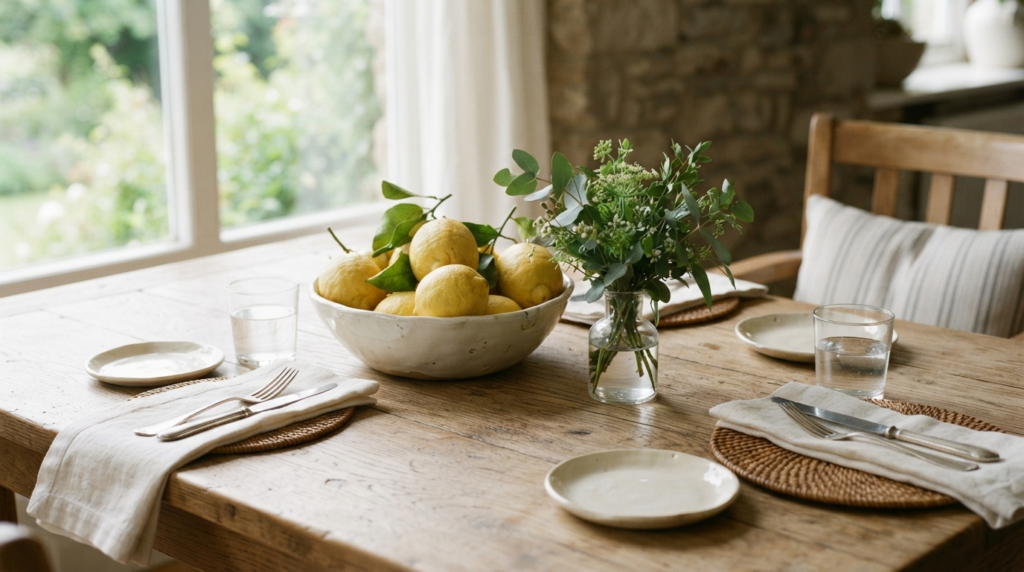
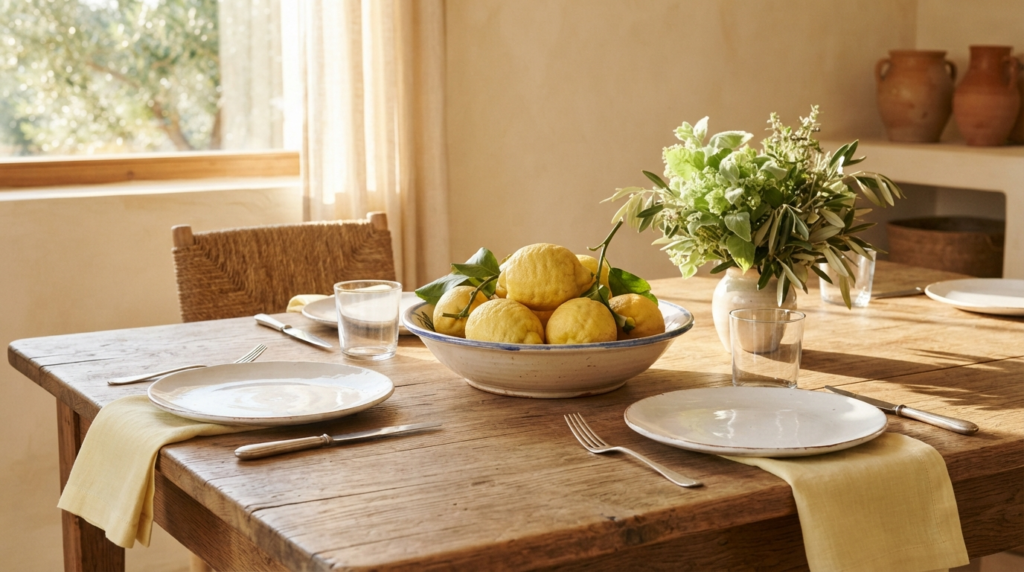
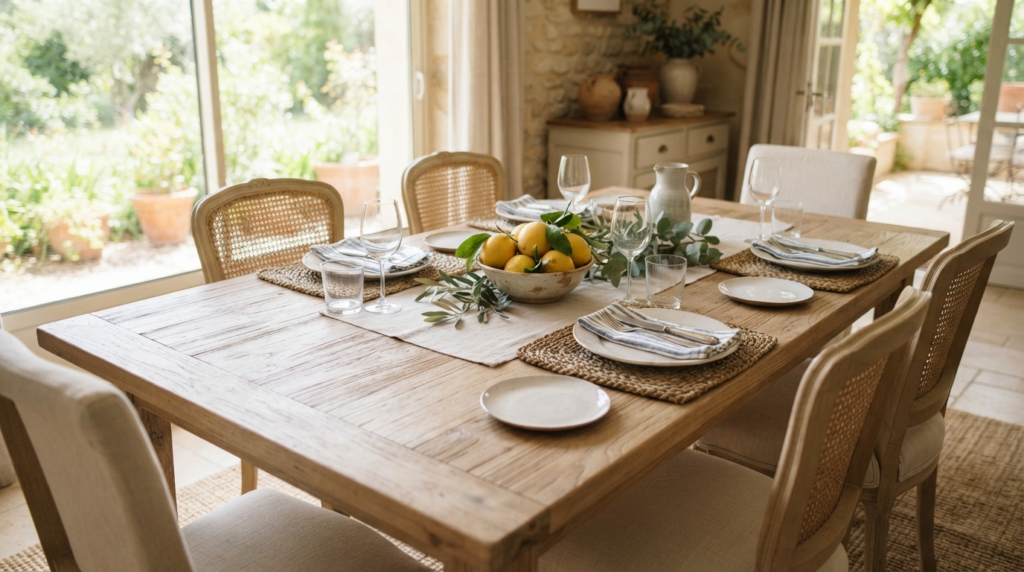
Place a low ceramic bowl filled with lemons, a few leafy branches in a glass vase, or a simple arrangement of seasonal flowers in the middle of the table.
Keeping the centerpiece low makes the dining area feel open and keeps conversation easy.
6. Bring Natural Wood Into the Room
Natural wood adds warmth to a light summer interior.
Try a wooden serving board, woven stool, side table, decorative bowl, or simple picture frame. Lighter woods such as oak, ash, and pine work particularly well with cream and white interiors.
The contrast between pale fabrics and warm wood keeps a neutral room from feeling flat.
7. Style the Sofa With Breathable Fabrics
Give your sofa a seasonal refresh with linen or cotton cushions.
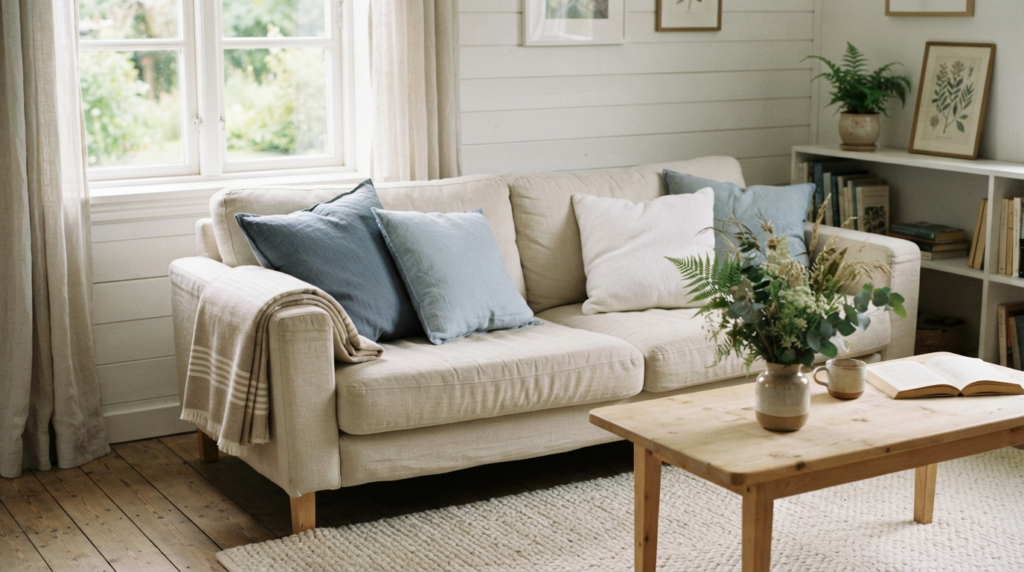
Try cream, white, pale blue, sage, sand, or subtle striped covers. Remove a few heavier cushions so the sofa feels less crowded.
A loosely folded lightweight throw can finish the arrangement without making it look overly styled.
8. Add a Woven Basket for Texture
Woven baskets are practical and decorative at the same time.
Use one beside the sofa for blankets, near the entryway for sandals, or in the bedroom for extra linens. Natural rattan, seagrass, jute, and wicker all add a relaxed summer texture.
Choose baskets with slightly different shapes and tones if you are using more than one.
9. Bring Summer Colors Through Small Accessories
You do not need to repaint a room to make it feel seasonal.
Introduce small touches of blue, green, yellow, coral, or soft terracotta through cushions, ceramics, artwork, candles, and table linens.
Keeping the brighter colors limited to accessories makes them easier to change later.
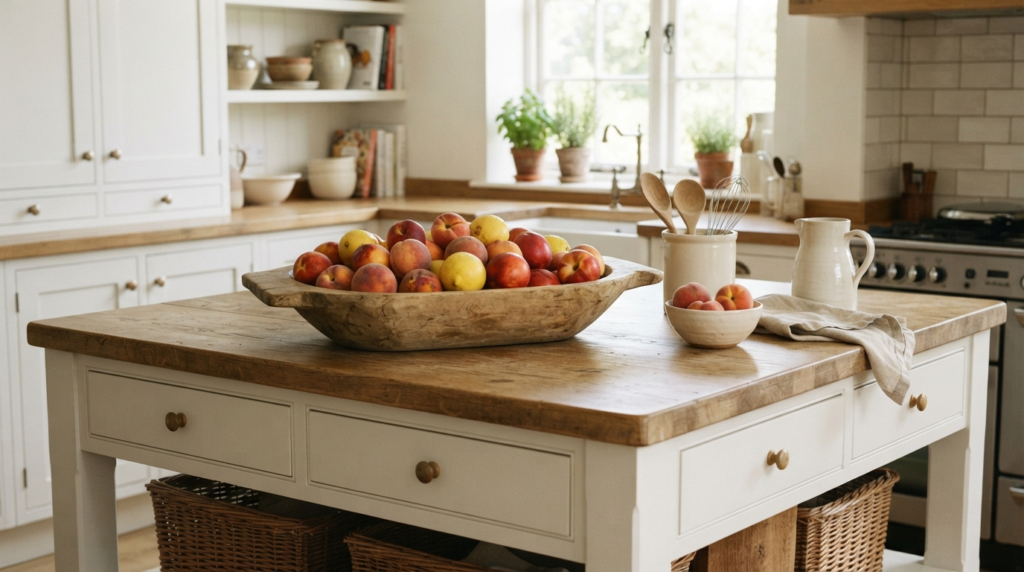
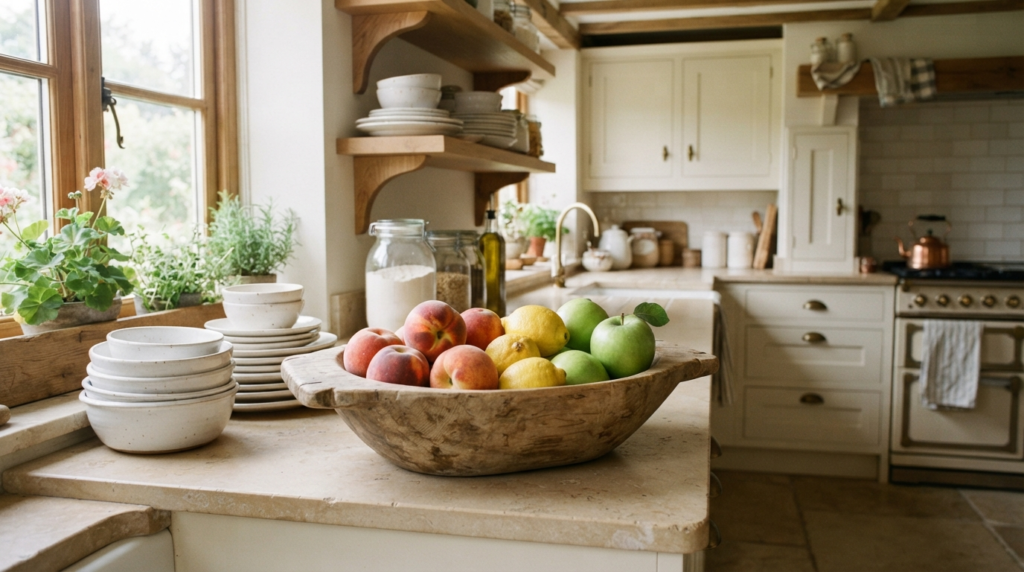
10. Display a Bowl of Seasonal Fruit
Fresh fruit can double as simple kitchen or dining room decor.
Place lemons, peaches, oranges, pears, or nectarines in a large ceramic or wooden bowl. The natural colors add a cheerful seasonal touch without looking overly decorative.
Keep the bowl somewhere convenient so the display remains useful rather than becoming something you have to work around.
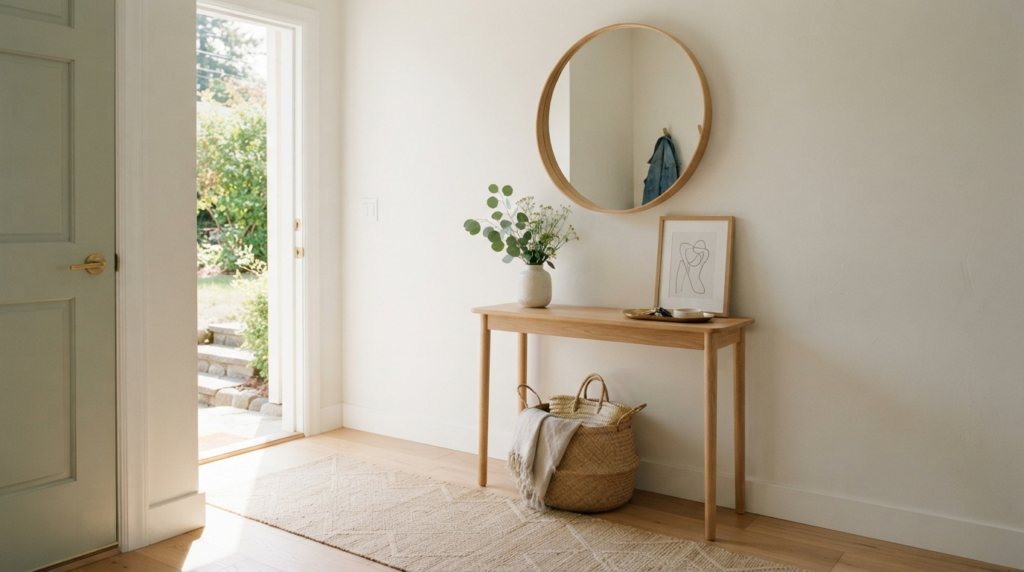
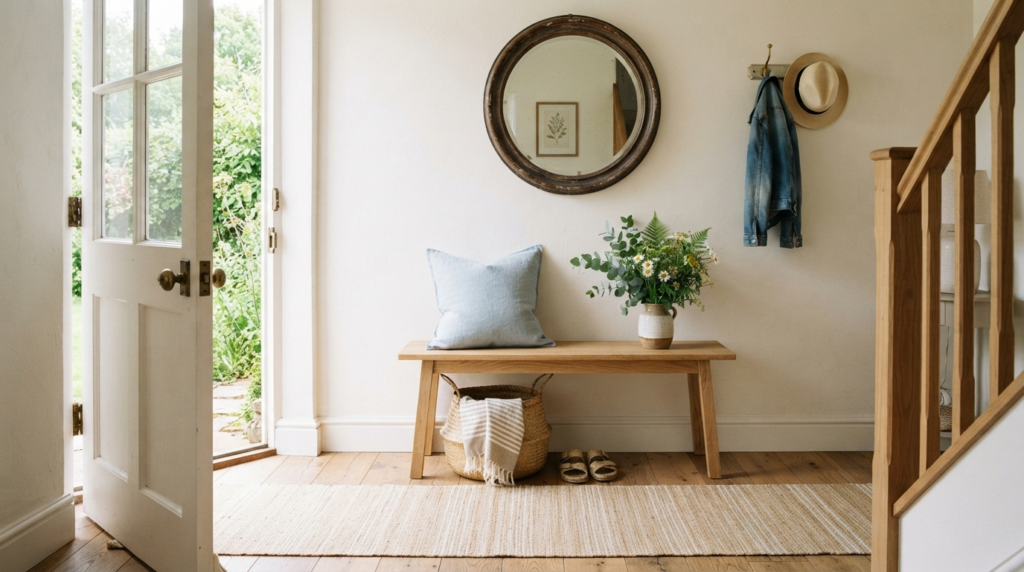
11. Create a Fresh Entryway
Give your entryway a lighter summer feeling by clearing away unnecessary winter accessories.
Add a small vase of greenery, a woven basket, a light runner, and one simple piece of artwork. A round mirror can also help reflect natural light and make the area feel more open.
The goal is to make the first few feet inside your home feel calm and uncluttered.
12. Use Blue and White Accents
Blue and white are classic summer colors for a reason.
Try blue striped cushions, white ceramics, blue glassware, or a simple patterned vase. Navy works well if you want stronger contrast, while pale blue creates a softer coastal feeling.
You only need a few blue accents to establish the palette.
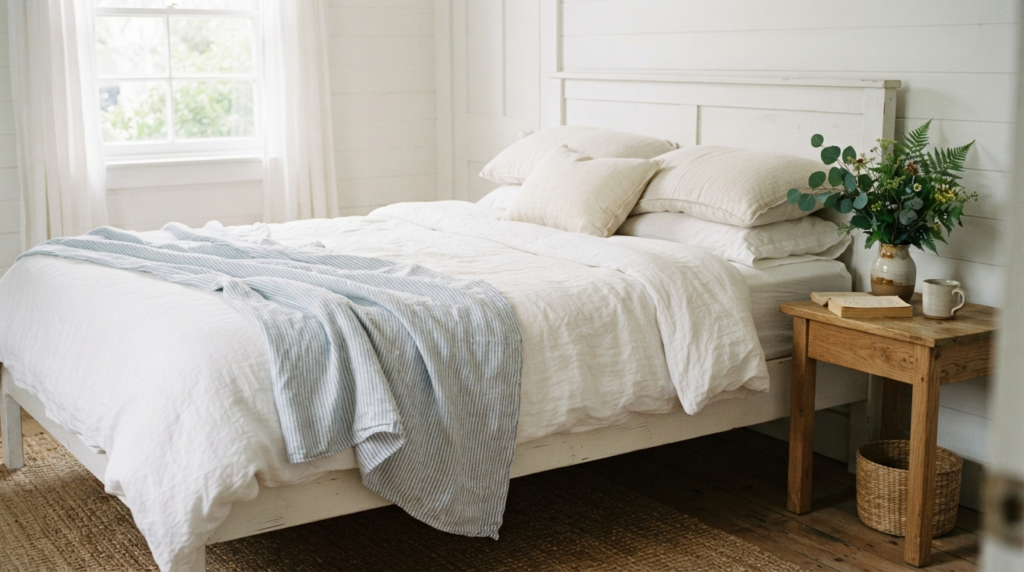
13. Refresh the Bedroom With White Bedding
Light bedding can completely change the mood of a bedroom.
Choose cotton or linen sheets in white, ivory, or very pale neutral tones. Add one or two textured cushions instead of layering the bed with heavy decorative pillows.
A simple wooden nightstand and small greenery arrangement can complete the relaxed summer look.
14. Add a Small Reading Corner
Create a comfortable summer reading spot using a chair, lightweight throw, small side table, and natural basket.
Place it near a window if possible so you can take advantage of daylight. A small plant or vase of greenery can make the corner feel even fresher.
Keep the styling simple so the chair remains comfortable enough for everyday use.
15. Bring Fresh Flowers Indoors
Fresh flowers are one of the quickest ways to make a home feel connected to summer.
Use seasonal flowers in a simple glass vase or ceramic pitcher. Wildflowers, daisies, hydrangeas, roses, and branches can all work depending on your interior style.
Instead of one enormous arrangement, consider placing smaller bouquets in several rooms.
16. Swap Dark Rugs for Lighter Styles
A dark rug can visually anchor a room, but lighter flooring textiles can make summer interiors feel more open.
Try cream, beige, faded blue, natural jute, or a light vintage pattern. You do not necessarily need to remove every dark rug. Focus on the rooms where you want the biggest seasonal change.
Choose washable options for high-traffic areas if you expect more summer activity.
17. Keep Coffee Table Decor Simple
Summer is a good time to reduce the number of objects sitting on your coffee table.
Use a simple wooden tray with a small ceramic vase, a coffee-table book, and one natural element such as greenery or a bowl of fruit.
Leaving plenty of visible table surface makes the room feel less crowded.
18. Add a Natural Fiber Pendant Light
Natural fiber lighting can bring a relaxed summer texture into a room.
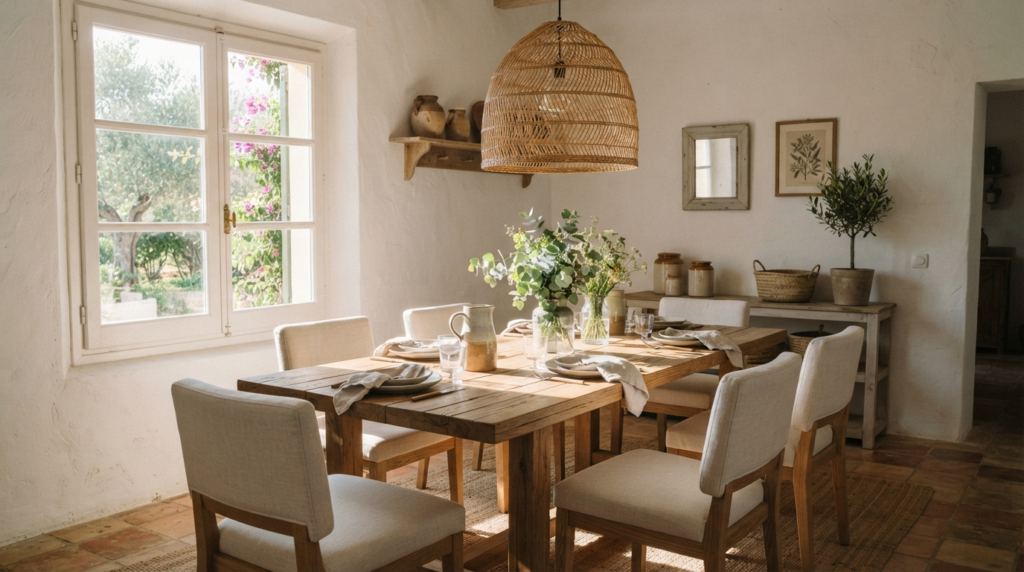
Look for rattan, woven grass, bamboo, or jute pendant shades. The filtered light creates soft shadows that work especially well in dining rooms, kitchens, bedrooms, and covered outdoor areas.
Pair the fixture with simple furniture so the natural texture remains the focal point.
19. Decorate With Summer Artwork
Artwork is an easy way to introduce a seasonal mood without changing furniture.
Try coastal landscapes, botanical prints, abstract pieces in blue and cream, sunny countryside scenes, or simple fruit illustrations.
You can also swap artwork seasonally if you have several prints stored away.
20. Create a Cozy Outdoor-Inspired Sitting Area
Bring the relaxed feeling of a summer patio indoors.
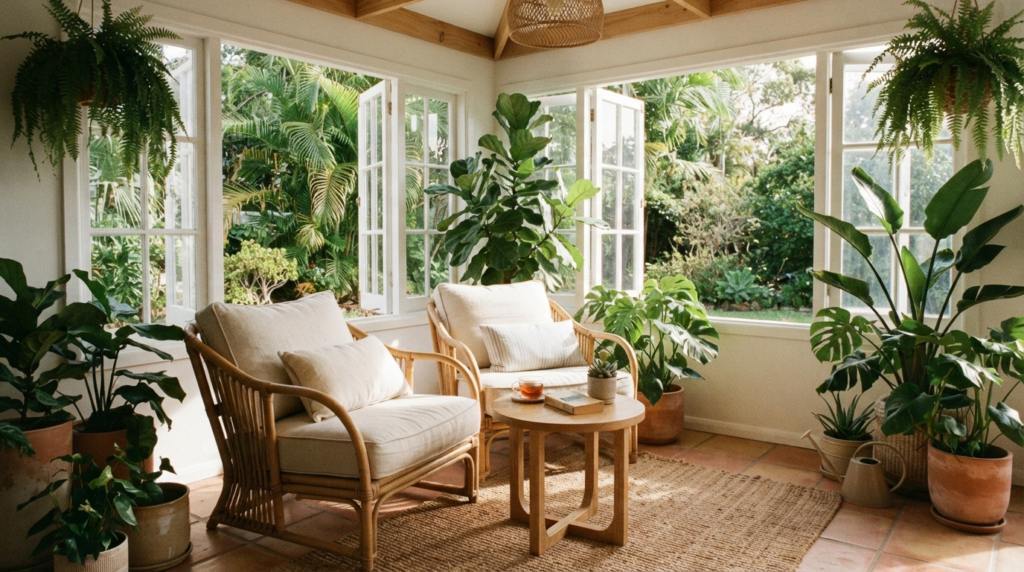
Use woven furniture, natural wood, linen cushions, leafy plants, and light-colored textiles. Position the seating near a sunny window if possible.
This approach works especially well in sunrooms, family rooms, and casual corners of larger living spaces.
21. Add a Light Summer Bedsheet Layer
Instead of using a heavy duvet during warmer months, layer a lightweight cotton or linen cover over the bed.
Choose white, cream, pale blue, sage, or a subtle stripe. Fold it loosely at the foot of the bed so the room still looks relaxed rather than overly arranged.
Natural fabrics also add texture without visual heaviness.
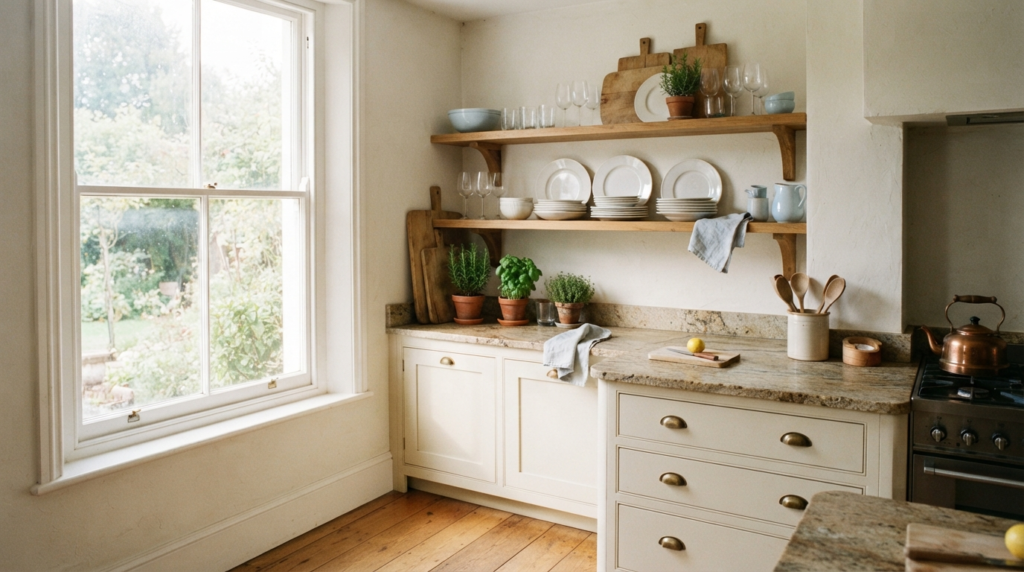
22. Refresh the Kitchen With Open Shelving
If you already have open shelves, summer is a good time to simplify them.
Display white ceramics, clear glassware, a few wooden boards, small potted herbs, and one or two blue accents. Remove anything that feels visually heavy or unnecessary.
Leave some empty space between objects so the shelves feel lighter.
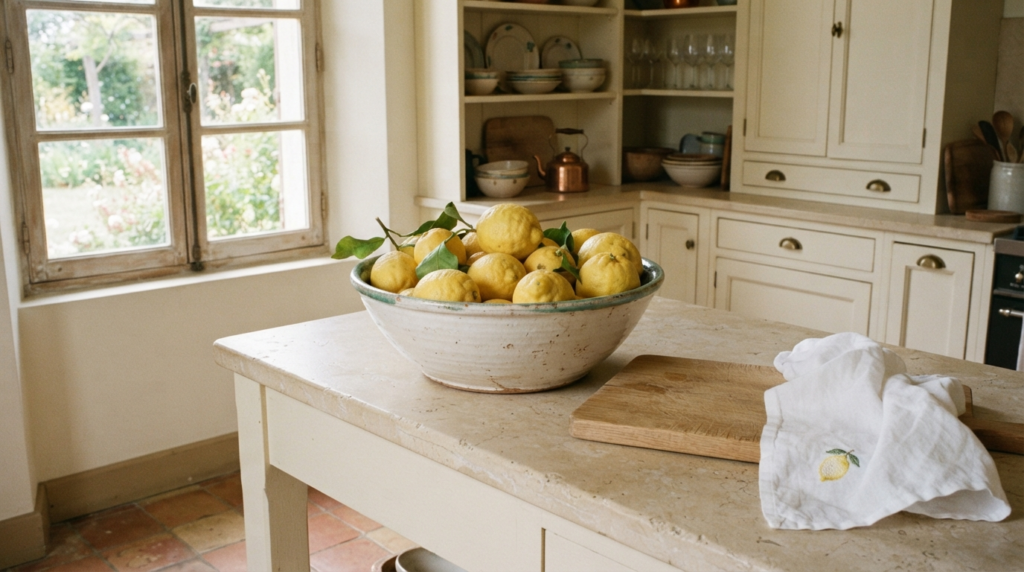
23. Use Lemons as a Simple Kitchen Accent
Lemons are an easy summer decorating detail because they are both useful and colorful.
Place a bowl of fresh lemons on a kitchen island, add a lemon-filled glass vase, or use a small lemon-patterned tea towel.
Keep the rest of the kitchen neutral so the bright yellow feels intentional rather than overwhelming.
How Do You Make Your Home Feel Fresh for Summer?
Start by removing visual and physical heaviness.
Store thick blankets, dark seasonal accessories, and unnecessary layers. Then introduce breathable textiles, natural materials, fresh greenery, lighter colors, and simple seasonal accents.
You do not need to change everything at once. Even replacing curtains, refreshing the sofa cushions, and adding greenery can make a noticeable difference.
What Colors Make a Home Feel Summery?
Light neutrals are an easy foundation for summer decorating.
Try:
White
Cream
Beige
Sand
Pale blue
Sage green
Soft yellow
Light terracotta
Faded coral
Blue and white create a classic coastal feeling, while cream, wood, and greenery create a warmer natural look.
How Can I Decorate for Summer on a Budget?
Focus on inexpensive changes that have a visible impact.
Move furniture to create more open space, rearrange accessories, bring in branches from your garden where appropriate, display seasonal fruit, use existing baskets, and switch pillow covers rather than buying new cushions.
Thrift stores can also be useful for finding ceramic vases, woven baskets, wooden bowls, artwork, and lightweight textiles.
How Do I Make My Living Room Feel Cooler and Lighter?
Use lightweight curtains, breathable cushion covers, a cotton throw, natural textures, and a lighter rug.
You can also reduce the number of decorative objects on the coffee table and shelves. More visible space often makes a room feel visually cooler and more relaxed.
Simple Summer Decorating Checklist
Textiles
Lightweight curtains
Cotton or linen throws
Breathable cushion covers
Light bedding
Seasonal rug
Natural Elements
Fresh greenery
Summer flowers
Natural wood
Woven baskets
Seasonal fruit
Color
Cream or white foundation
Blue accents
Green accents
One cheerful summer color
Styling
Simplify the coffee table
Refresh the entryway
Lighten the bedroom
Add summer artwork
Leave some surfaces open
FAQ
How can I decorate my home for summer without spending a lot?
Start with what you already have. Rearrange furniture, remove heavy accessories, change pillow covers, display fresh fruit, add greenery, and use lightweight textiles. Small changes can create a noticeable seasonal refresh.
What is the easiest summer decorating idea?
Adding fresh greenery or flowers is one of the simplest options. A single vase on a dining table, console, kitchen counter, or bedside table can instantly introduce a summer feeling.
What colors are best for summer home decor?
White, cream, beige, pale blue, sage green, soft yellow, faded coral, and light terracotta all work well. Choose a neutral base and add brighter colors through smaller accessories.
How do I make my house feel more airy in summer?
Use lightweight curtains, breathable fabrics, fewer decorative objects, natural textures, and lighter colors. Keeping pathways and surfaces relatively clear can also make rooms feel more open.
Can I decorate for summer without a coastal style?
Absolutely. Summer decor can be rustic, modern, farmhouse, traditional, minimalist, French country, or eclectic. Focus on lighter fabrics, natural materials, fresh greenery, and seasonal colors rather than relying on nautical decorations.
Final Thoughts
Simple summer decorating is really about making your home feel lighter, fresher, and easier to live in.
You do not need a major makeover. Swap heavy fabrics for linen and cotton, bring in greenery, simplify your surfaces, add a few summer colors, and let natural materials do some of the decorating.
Start with the room where you spend the most time. A few thoughtful changes there can make the entire home feel more relaxed for the season.
You do not need a house full of expensive decorations to make Halloween feel special. Some of the most charming Halloween pieces can be made at home with paper, thrifted finds, old jars, fabric scraps, dried branches, and a few basic craft supplies.
DIY Halloween decor also gives you more freedom to match your home’s style. You can make something spooky and playful for a family room, something moody for an entryway, or something simple and elegant for a dining table.
If you are looking for easy DIY Halloween decor ideas that are affordable, realistic to make, and worth saving for later, these projects are a great place to start.
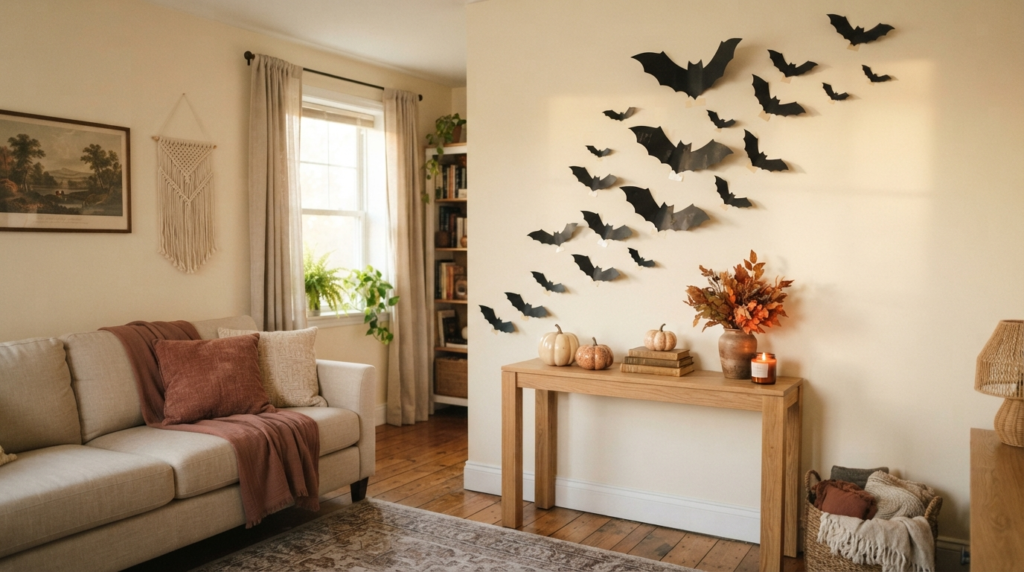
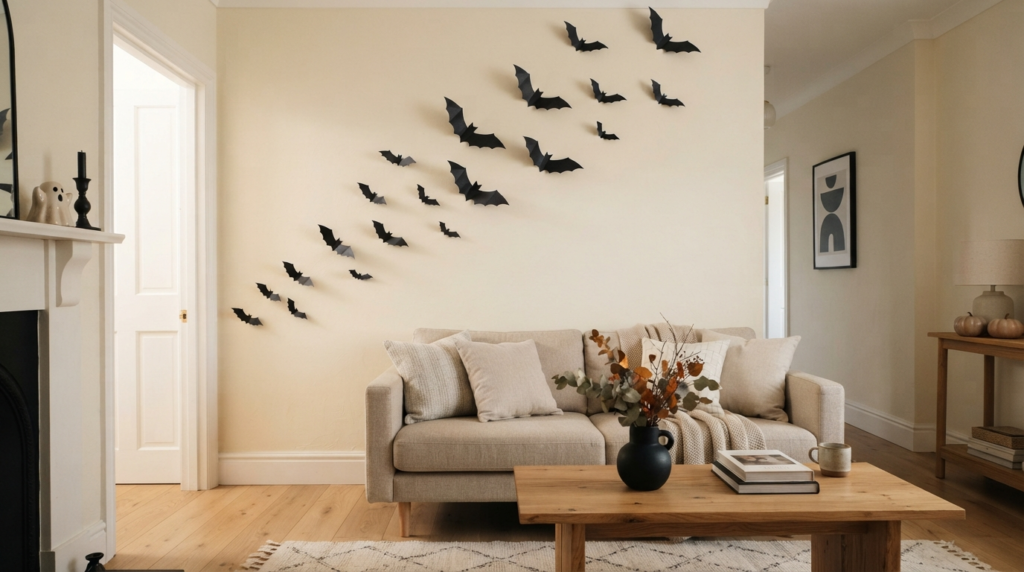
1. Make a Paper Bat Wall
Paper bats are one of the easiest Halloween decorations to make, and they can create a surprisingly dramatic effect.
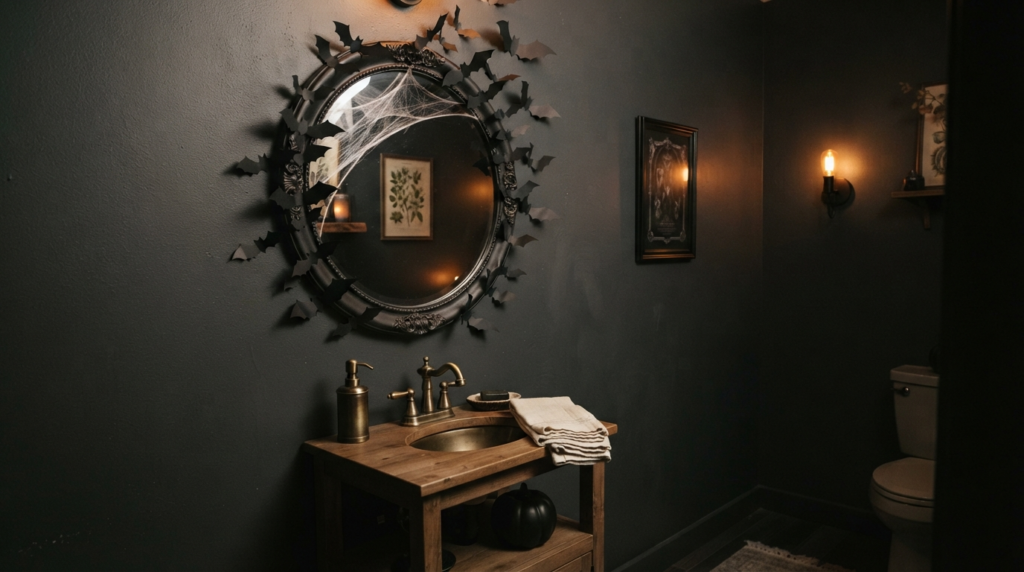
Cut bats from black cardstock in several different sizes. Fold the wings slightly in the middle so they have some dimension, then attach them to the wall with removable adhesive.
Start with a small group near a doorway or mirror and spread them outward to create the appearance of bats flying across the room.
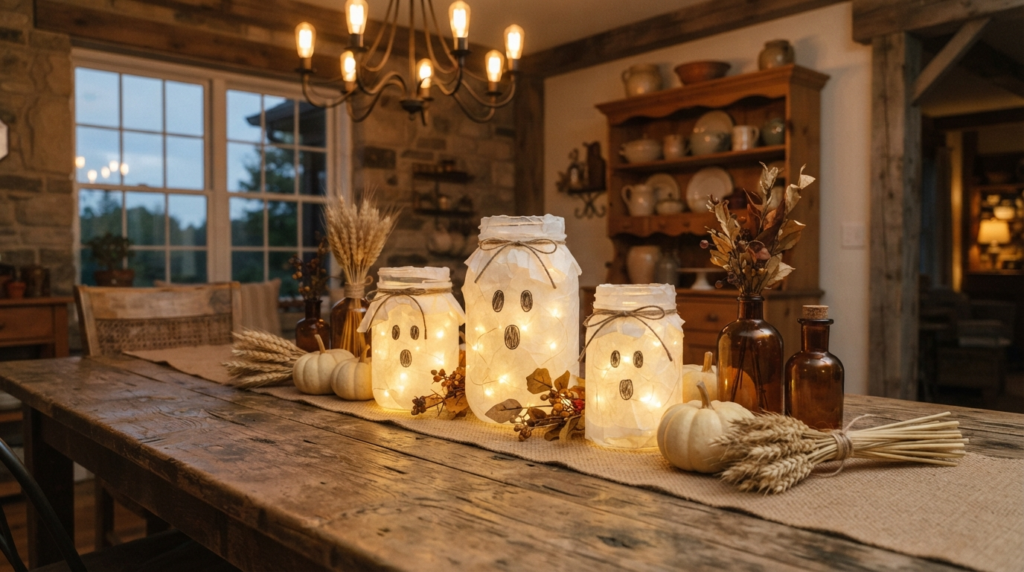
2. Create DIY Ghost Lanterns
Turn empty glass jars into simple glowing ghost lanterns.
Clean several jars and wrap them with white tissue paper or translucent fabric. Add simple ghost faces using black paper or removable marker, then place battery-operated tea lights inside.
Arrange three or four different sizes together on a shelf, porch table, or fireplace mantel.
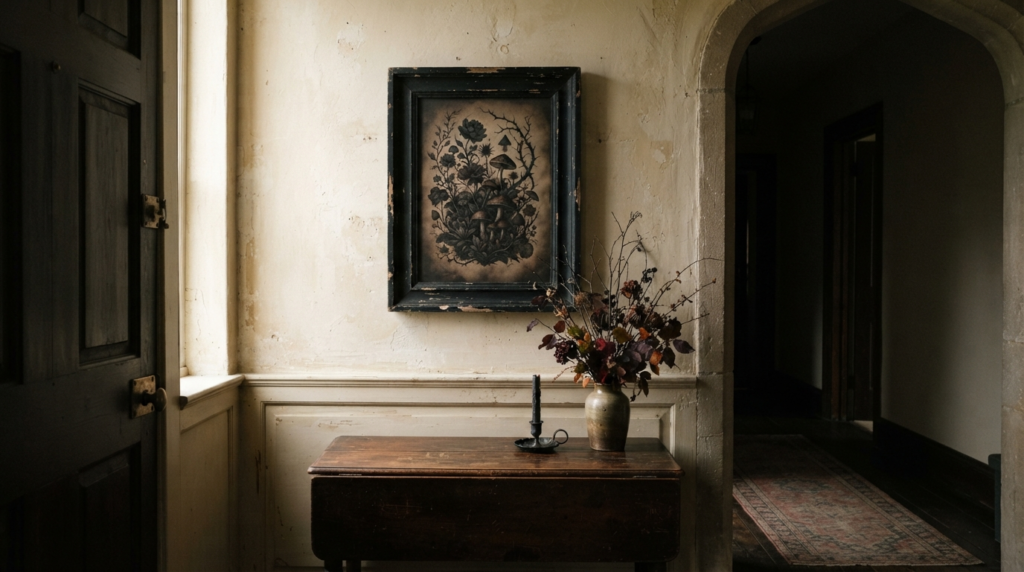
3. Make a Spooky Picture Frame
Give an inexpensive thrift-store frame a Halloween makeover.
Paint the frame matte black, charcoal, or aged white. Add a vintage-looking Halloween illustration, silhouette, botanical print, or old photograph.
For an extra weathered appearance, lightly sand the edges after the paint dries.
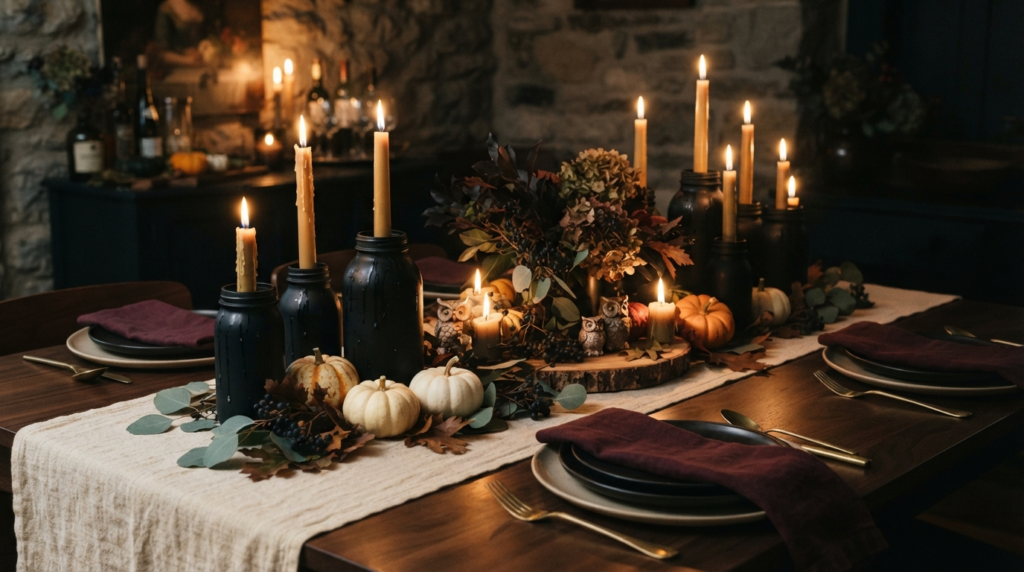
4. DIY Halloween Candle Holders
Turn ordinary glass jars, small bottles, or thrifted candleholders into Halloween accents.
Paint the outside matte black or wrap the base with dark fabric or ribbon. Add black taper candles or battery-operated candles.
For a more sophisticated look, combine several holders with different heights and finishes instead of making every piece identical.
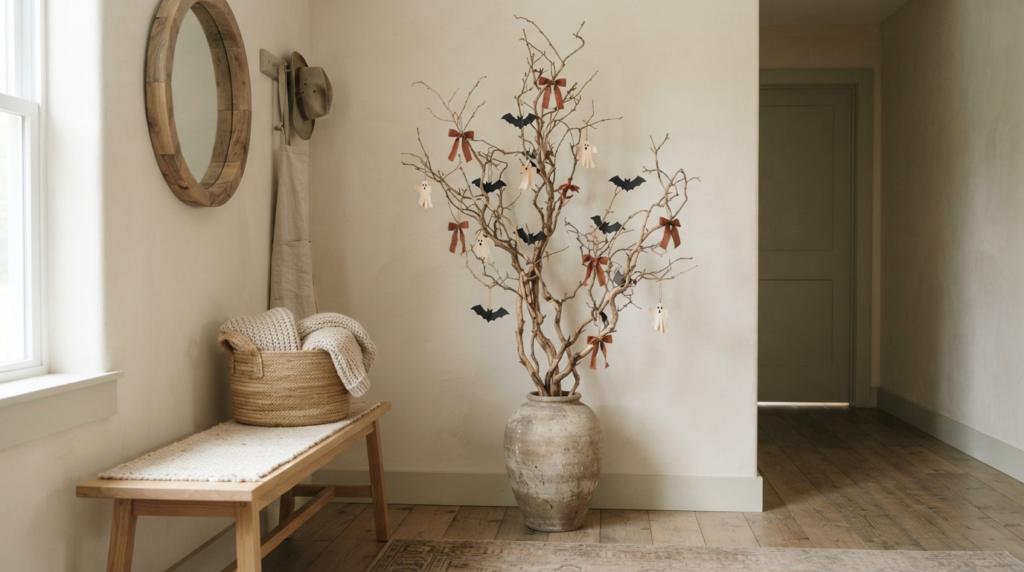
5. Make a Dried Branch Halloween Tree
Bring a few branches indoors and turn them into a simple Halloween display.
Place sturdy dried branches in a heavy vase and decorate them with paper bats, small ghosts, black ribbons, or miniature pumpkins.
Keep the branches mostly bare so the arrangement feels natural rather than overloaded.
6. Create DIY Halloween Garlands
A homemade garland can decorate a mantel, shelf, staircase, or doorway with very little effort.
Cut simple shapes from black, cream, burgundy, or orange cardstock. Try pumpkins, bats, ghosts, moons, leaves, or stars.
String the shapes together with twine and adjust the spacing so the garland feels relaxed.
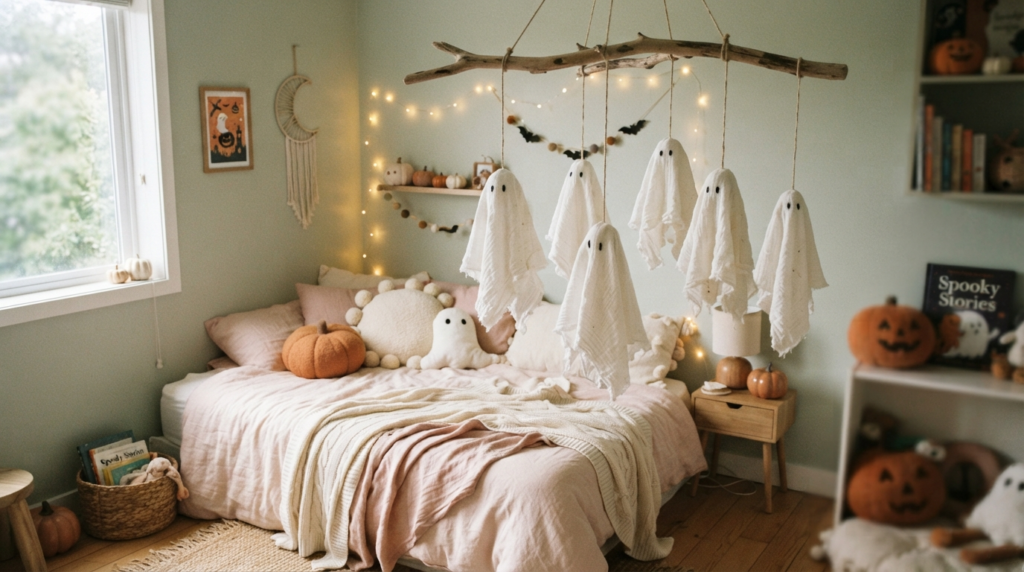
7. Make Mini Fabric Ghosts
Fabric ghosts are an easy project that can be reused year after year.
Use small pieces of white cotton, muslin, or an old white sheet. Place a little stuffing or crumpled paper underneath the center and tie the fabric beneath it with string.
Add tiny black eyes and hang the ghosts from branches, shelves, curtain rods, or a porch.
8. DIY Black Pumpkin Makeover
Give inexpensive pumpkins a completely different appearance with paint.
Paint real or faux pumpkins matte black, charcoal, deep green, cream, or burgundy. Once dry, arrange them in groups of different sizes.
For a more modern look, leave the stems natural or paint them in a contrasting metallic finish.
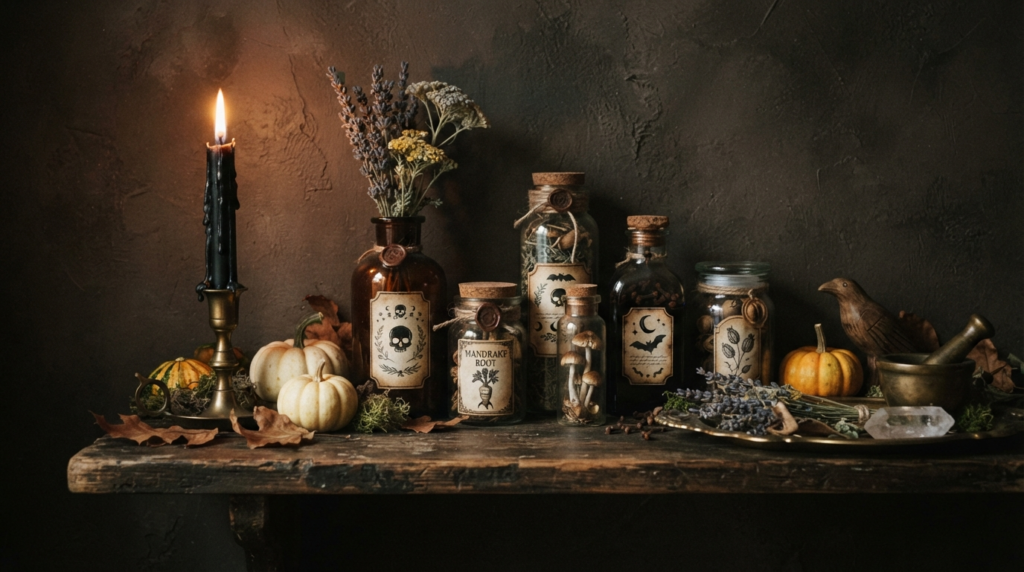
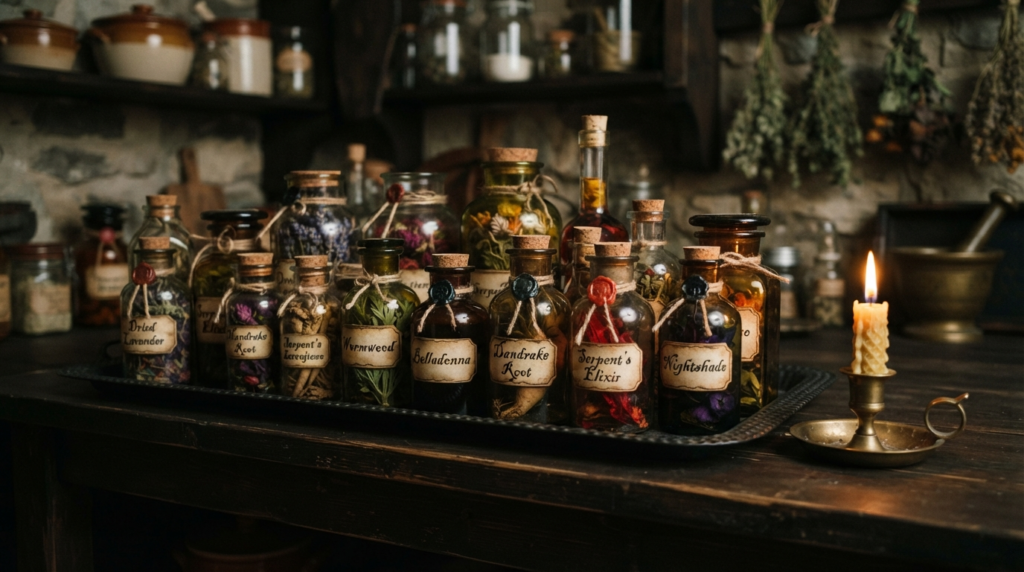
9. Turn Old Jars Into Halloween Apothecary Bottles
Save empty glass jars and bottles to create a vintage Halloween display.
Clean them thoroughly, then add simple homemade labels such as botanical names, fictional potion names, or decorative symbols. Use brown, cream, or black paper for an aged appearance.
Display the bottles together on a tray with dried herbs, candles, and small pumpkins.
10. Make a DIY Halloween Wreath
A wreath does not have to be complicated.
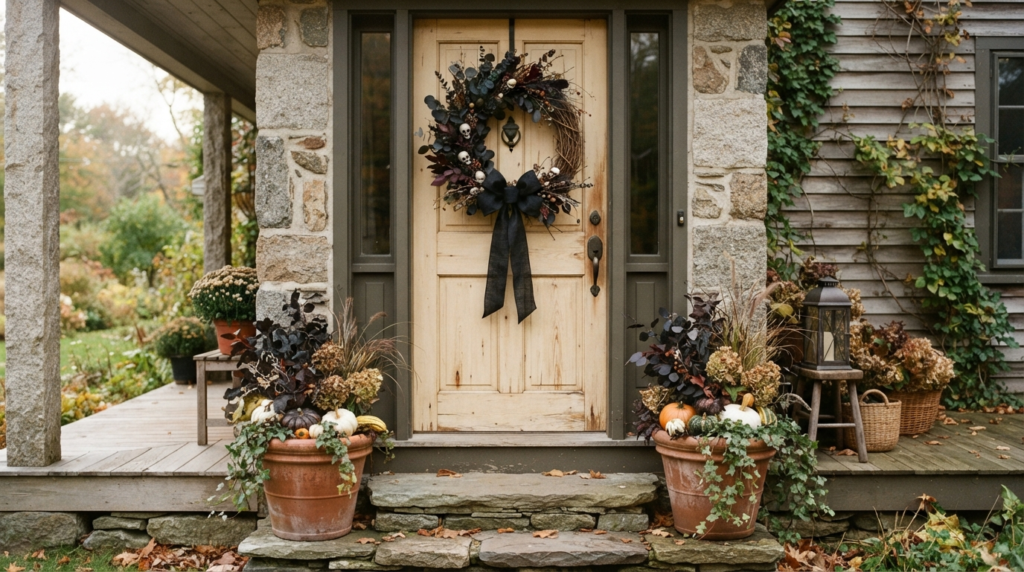
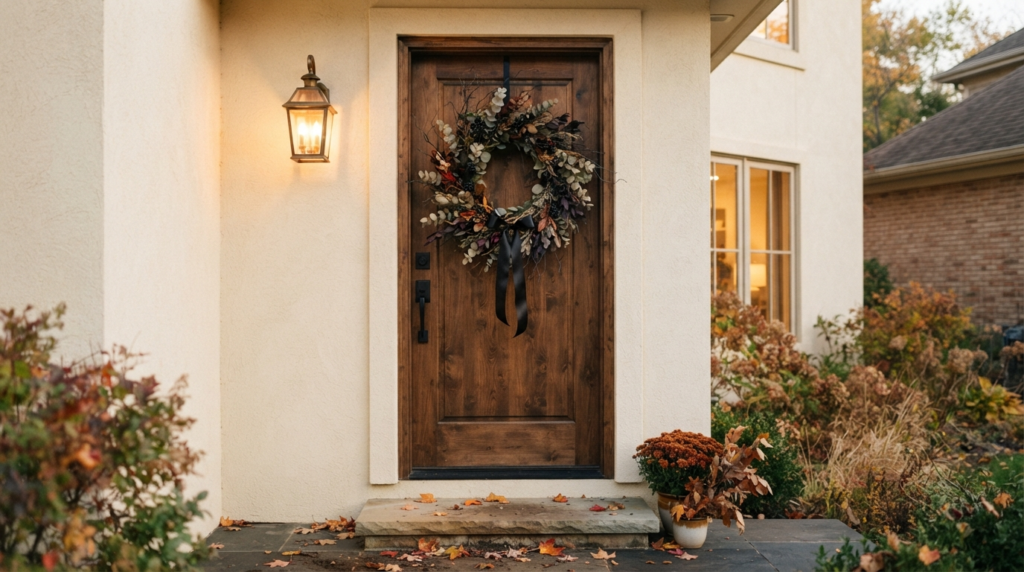
Start with a grapevine wreath or a simple cardboard ring. Add dried branches, eucalyptus, black ribbon, dark flowers, paper bats, or small artificial leaves.
For a modern look, keep most of the wreath natural and use one dark accent color.
11. Create a Haunted House Silhouette
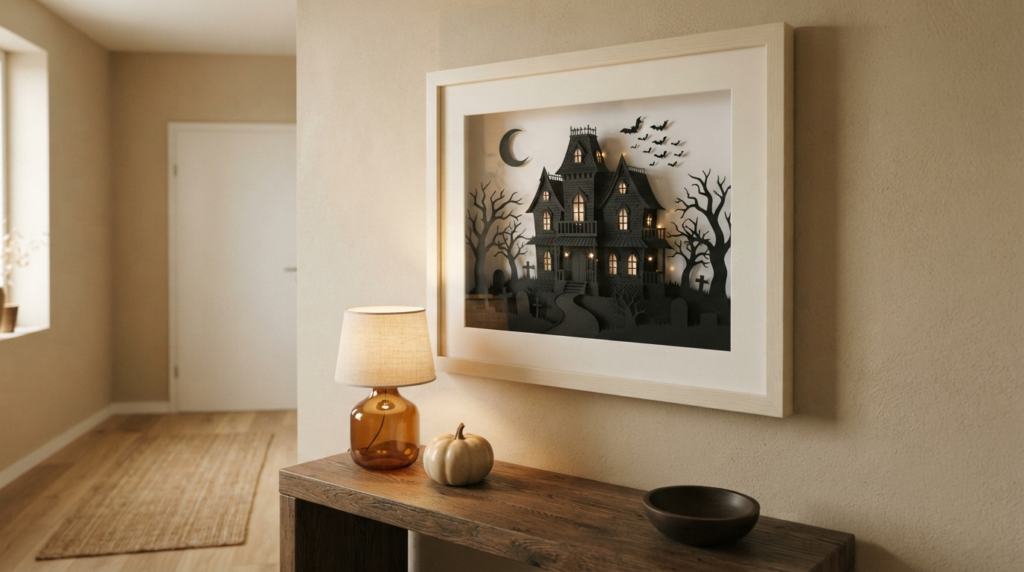
Make a simple haunted-house scene from black cardstock.
Cut out the outline of an old house, crooked trees, windows, and flying bats. Mount the shapes inside a white or cream frame to create a high-contrast piece of Halloween artwork.
This works especially well in hallways, entryways, and children’s craft areas.
12. DIY Halloween Mason Jar Luminaries
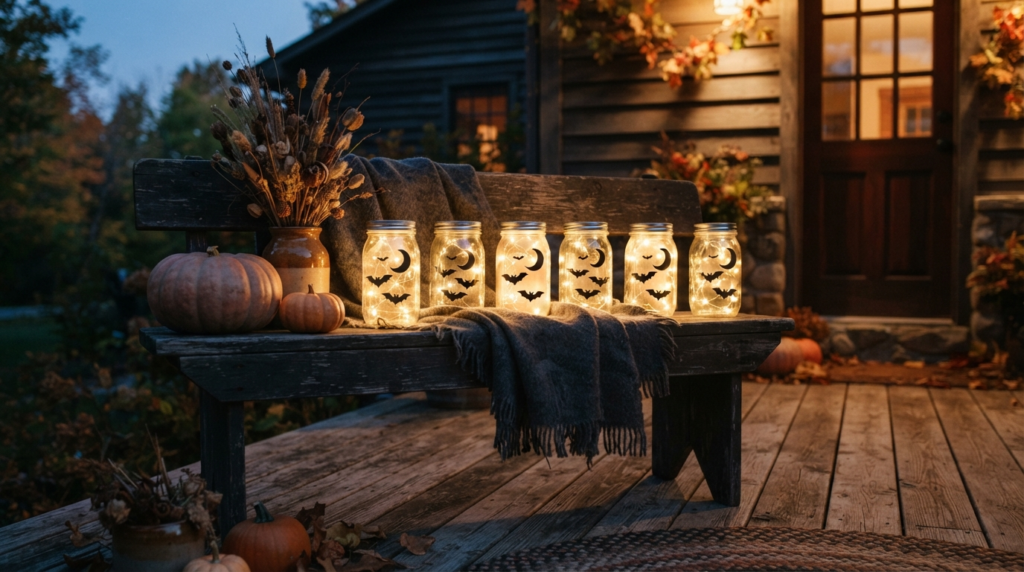
Turn mason jars into warm Halloween lights.
Paint simple silhouettes such as bats, pumpkins, moons, or haunted houses on the outside of the jars. Place battery-powered fairy lights or LED tea lights inside.
Use several jars together to create a glowing arrangement on a porch, windowsill, or dining table.
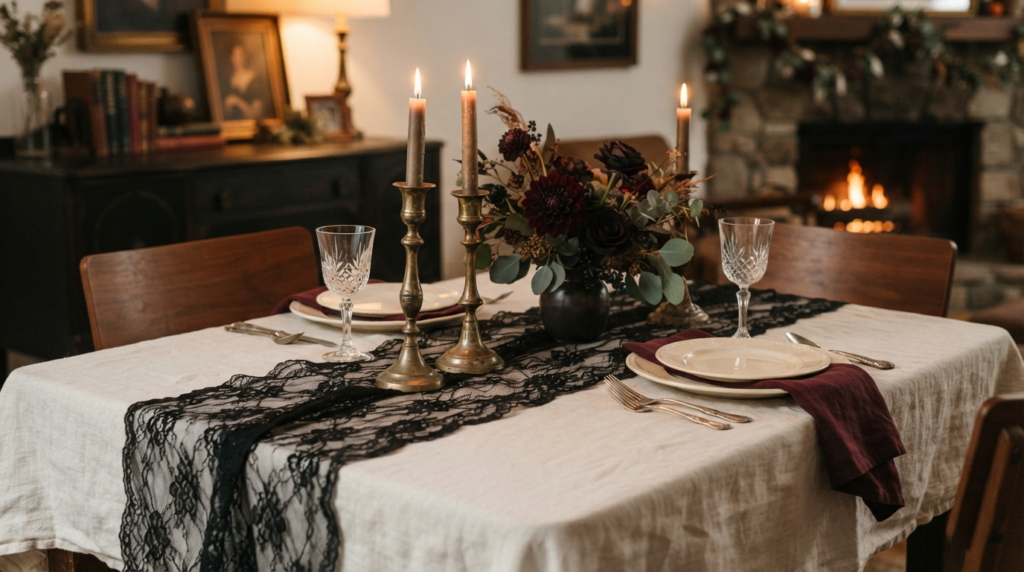
13. Make a Black Lace Table Runner
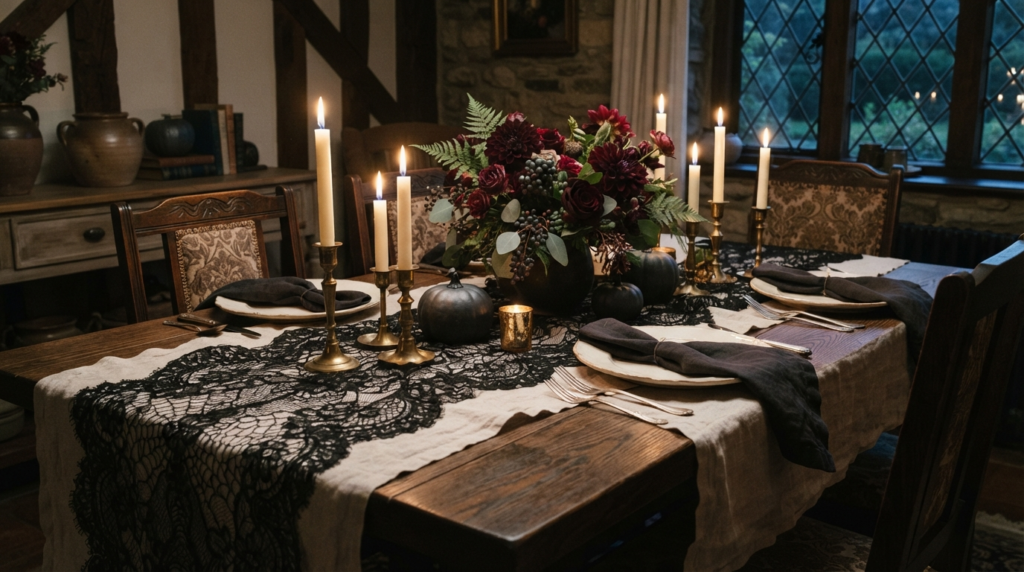
You can create a simple gothic table accent using inexpensive black lace fabric.
Cut the lace to the length of your table and leave the edges natural or trim them neatly. Layer it over a cream, beige, or natural linen tablecloth.
Add candles, pumpkins, and dark florals to complete the Halloween tablescape.
14. Create DIY Pumpkin Candle Holders
Turn small pumpkins into seasonal candle holders.
Choose sturdy pumpkins and carefully create an opening large enough for a suitable battery-operated candle. For real candles, use proper candle holders designed for the purpose and never leave them unattended.
Arrange several pumpkin holders down the center of a dining table or along a mantel.
15. Make a DIY Halloween Mirror
Transform an inexpensive mirror into a spooky focal point with removable decorations.
Add black paper bats around the edges, a simple spiderweb made from cotton or removable material, or a distressed-looking frame treatment.
Keep the center of the mirror clear so it remains practical while the surrounding details create the Halloween effect.
16. DIY Floating Witch Hats
Floating witch hats are surprisingly simple and make a great ceiling decoration.
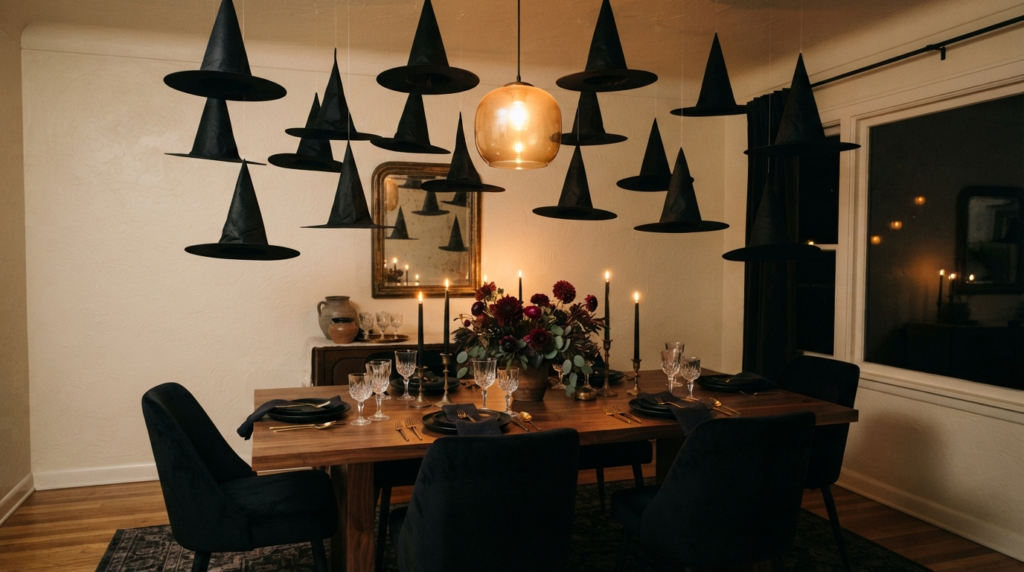
Use lightweight black witch hats and suspend them from the ceiling with clear fishing line or thin transparent thread.
Hang several at different heights above a dining table, entryway, or party area for a playful floating effect.
17. Make a DIY Halloween Sign
Create your own seasonal sign using scrap wood, cardboard, or an inexpensive canvas.
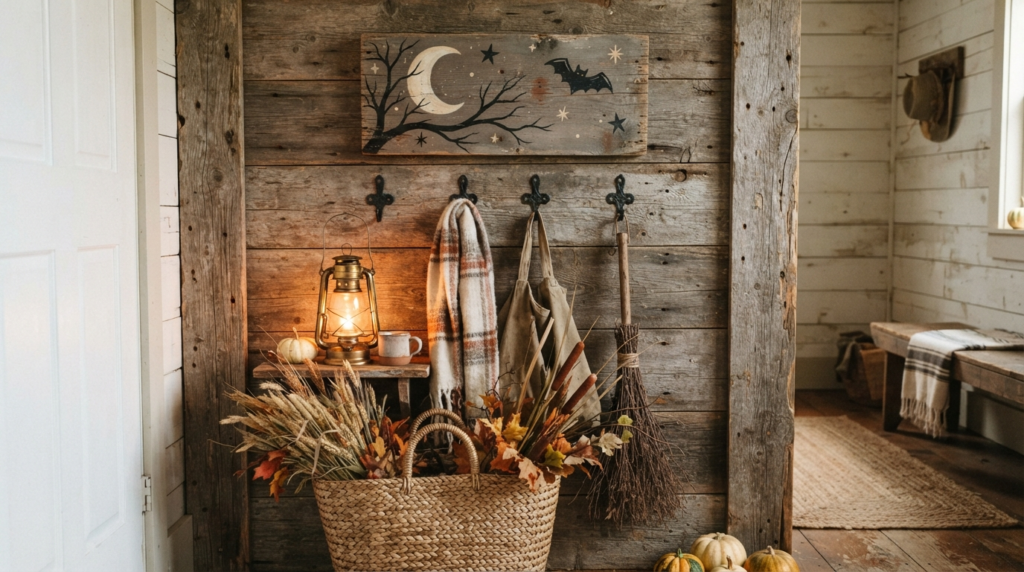
Paint the background in black, cream, dark green, or muted orange. Add a simple Halloween phrase, silhouette, moon design, or hand-painted illustration.
A distressed finish can make the sign feel more vintage.
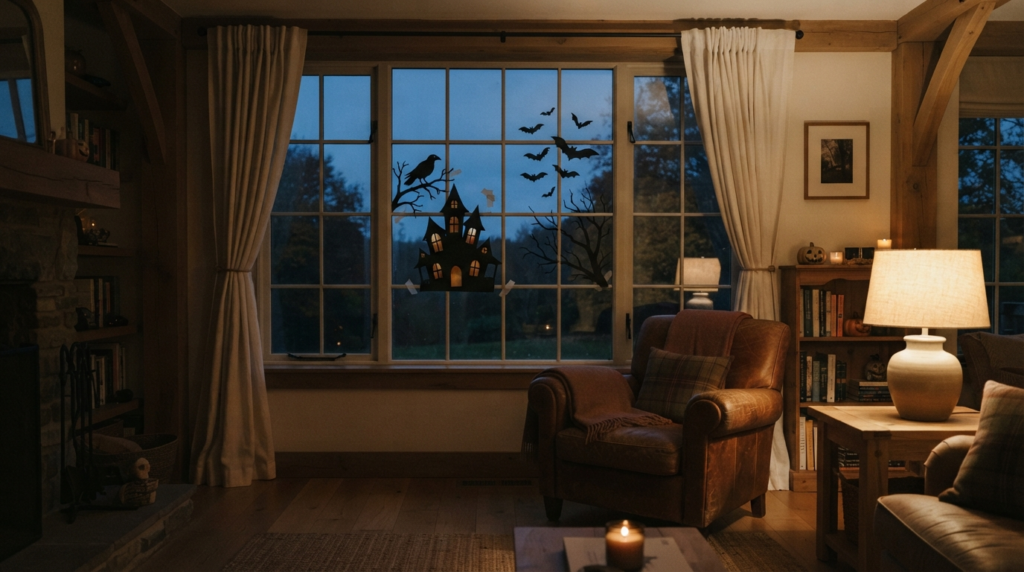
18. Create a Spooky Window Silhouette
Windows are perfect for simple DIY Halloween decorating.
Cut silhouettes of bats, cats, branches, ravens, or an old haunted house from black paper. Attach them to the inside of the window using removable materials.
When the room is lit after dark, the silhouettes become especially noticeable from outside.
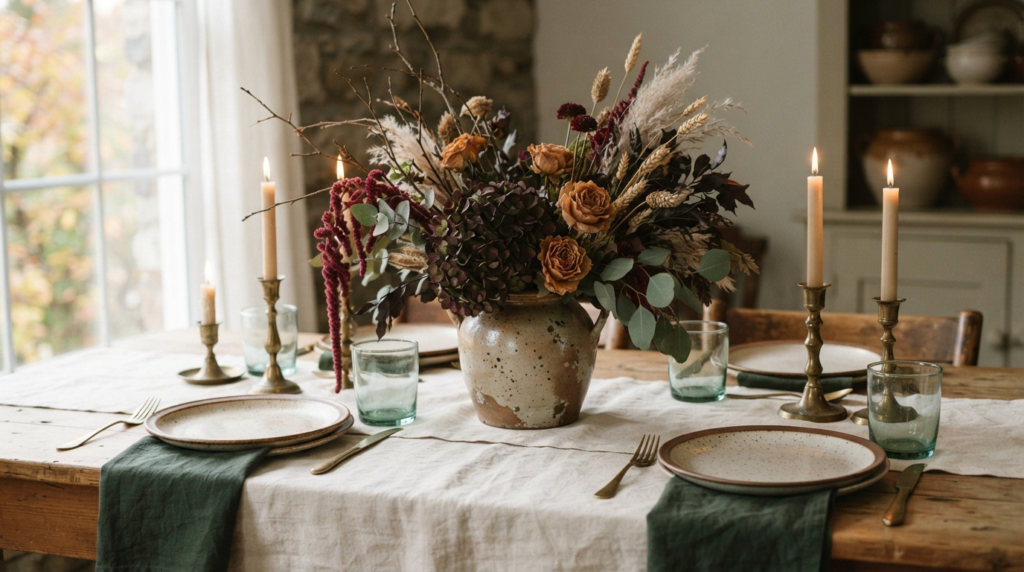
19. DIY Halloween Flower Arrangement
Create a seasonal arrangement using inexpensive flowers and materials you already have.
Combine dried branches, dark foliage, burgundy flowers, orange flowers, eucalyptus, or dried grasses. Place everything in an old vase, thrifted bottle, or painted ceramic container.
The arrangement can look Halloween-inspired without using traditional decorations.
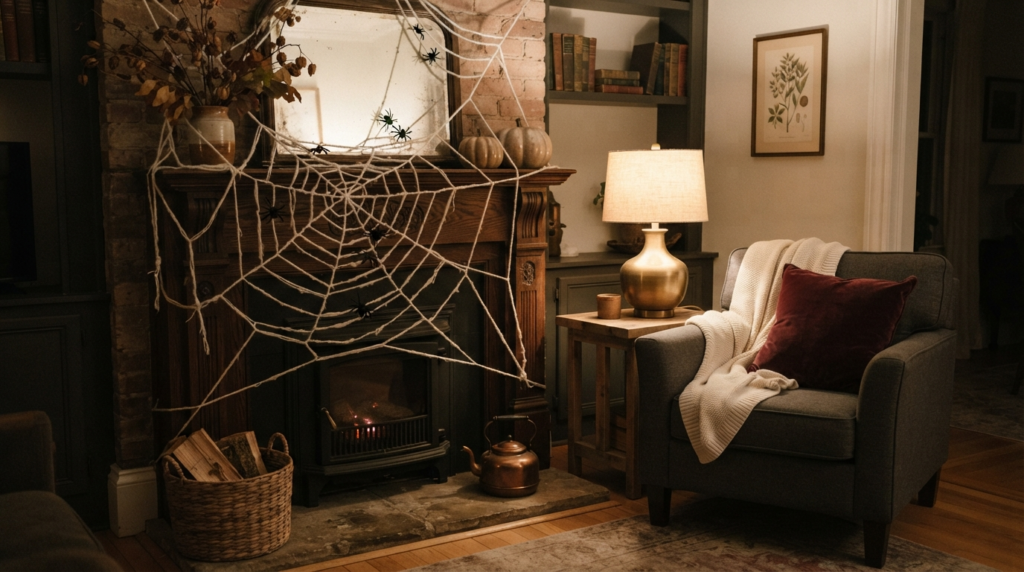
20. Make a DIY Spiderweb Corner
Create an oversized spiderweb for a wall, fireplace, porch, or staircase.
Use thick white yarn or cotton cord and stretch it between several points to form a simple web pattern. Add a few lightweight decorative spiders for detail.
Keep the web slightly irregular so it looks more natural.
21. Turn Cardboard Into Halloween Tombstones
Save large pieces of cardboard and turn them into lightweight decorative tombstones.
Cut the cardboard into rounded or irregular stone shapes, then paint them gray, charcoal, or weathered brown. Add simple lettering and cracks using black and white paint.
They work especially well for outdoor Halloween displays.
22. Make DIY Potion Bottles
Use small glass bottles, old spice jars, or empty cosmetic containers to create decorative potion bottles.
Fill them with colored water, dried flowers, herbs, beads, or other harmless decorative materials. Add handmade labels and arrange the bottles on a dark tray.
Keep all decorative bottles clearly separate from food, medication, and household products.
23. Create a DIY Halloween Mantel Display
Combine several homemade pieces into one cohesive mantel arrangement.
Start with a few painted pumpkins, homemade candleholders, paper bats, dried branches, vintage-style frames, and a simple Halloween garland.
Keep the tallest elements toward the sides and lower decorations toward the center so the display feels balanced.
Easy DIY Halloween Decor Tips
The easiest DIY projects usually begin with things you already have around the house.
Before buying supplies, check your storage areas for:
Glass jars
Old picture frames
Cardboard
Scrap fabric
Empty bottles
Dried branches
Old vases
Paper bags
Ribbon and twine
Unused candles
Small baskets and trays
Thrift stores can also be useful for finding inexpensive frames, glassware, baskets, candleholders, and mirrors that can be transformed with paint.
How Can I Make DIY Halloween Decor Look More Expensive?
Choose a limited color palette instead of mixing every Halloween color together.
Black and cream, charcoal and burgundy, brown and amber, or black and aged gold can make homemade decorations feel more intentional.
It also helps to repeat the same materials throughout the room. For example, use black-painted pumpkins, black frames, and black candleholders together rather than introducing many unrelated finishes.
What Are the Easiest DIY Halloween Decorations?
Paper bats, cardstock garlands, painted pumpkins, ghost jars, fabric ghosts, and simple candleholders are some of the quickest projects.
If you only have an afternoon, choose projects that require minimal drying time and use supplies you already have.
How Can I Decorate My House for Halloween Without Spending Much?
Focus on small areas rather than trying to decorate every room.
A decorated entryway, mantel, dining table, or porch can create a strong seasonal effect. Reusing jars, frames, cardboard, fabric, and branches can also keep costs low.
Thrifted objects are especially useful because they can become the base for several different DIY projects.
Easy DIY Halloween Decor Checklist
Supplies
Black cardstock
Glass jars
Paint
Ribbon or twine
Scrap fabric
Dried branches
Picture frames
Battery-operated lights
Small pumpkins
Projects
Paper bats
Ghost lanterns
Painted pumpkins
Halloween wreath
Fabric ghosts
Potion bottles
Window silhouettes
Halloween garland
Styling
Choose two or three main colors
Mix handmade pieces with existing decor
Create one main focal point
Leave some surfaces uncluttered
Use warm lighting
FAQ
What are some easy DIY Halloween decorations for beginners?
Paper bats, painted pumpkins, ghost lanterns, cardstock garlands, fabric ghosts, and decorated glass jars are all beginner-friendly projects that require relatively few supplies.
What can I make for Halloween with things I already have at home?
You can turn jars into lanterns or potion bottles, cardboard into signs or silhouettes, old frames into Halloween artwork, branches into a Halloween tree, and fabric scraps into small ghosts.
How can I make cheap Halloween decorations look good?
Stick to a consistent color palette and avoid overcrowding. A few handmade decorations arranged thoughtfully can look much better than a large collection of unrelated pieces.
What can I DIY for Halloween with kids?
Paper bats, simple garlands, painted pumpkins, fabric ghosts, window silhouettes, and Halloween signs are easy projects that can be adapted for different ages with appropriate supervision.
How early should I make DIY Halloween decorations?
Many simple paper and fabric projects can be made shortly before Halloween. If you are painting pumpkins, making wreaths, or creating several decorations at once, starting a few weeks early gives you time for drying, adjustments, and styling.
Final Thoughts
DIY Halloween decorating is less about making everything perfect and more about creating pieces that feel personal.
A handful of painted pumpkins, handmade ghosts, paper bats, glowing jars, or thrifted objects can completely change the mood of a room without requiring a large budget.
Start with one area of your home and choose two or three projects that work together. Once you have the basic pieces, add small details rather than trying to decorate every surface.
The result can be spooky, playful, elegant, or a mixture of all three, depending on your home’s style and the materials you choose.
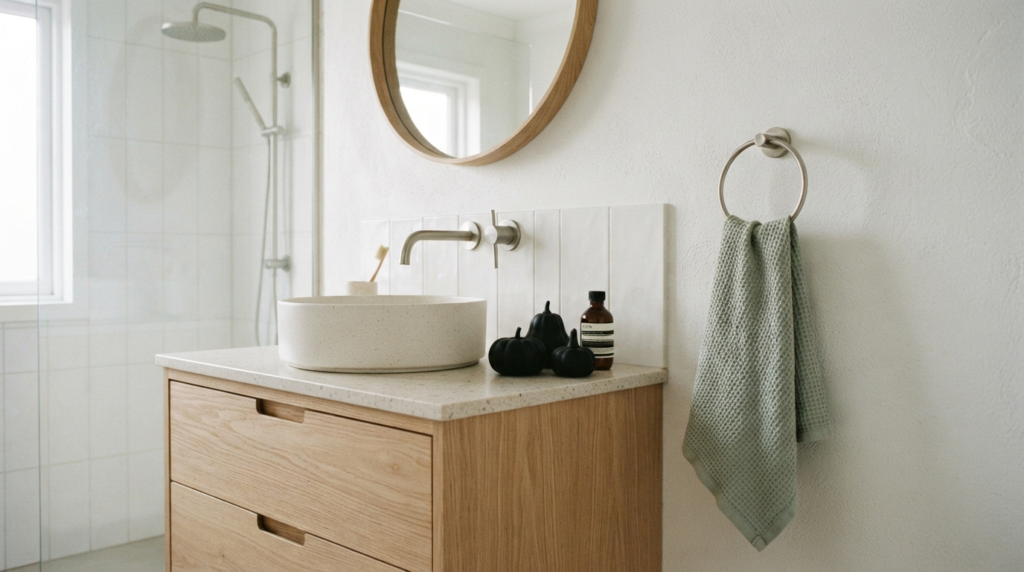
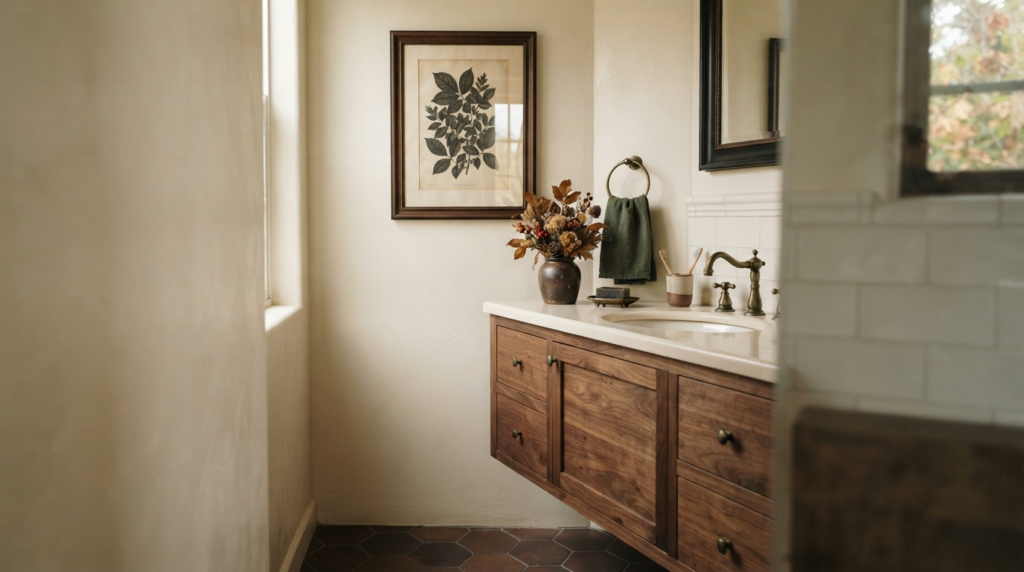
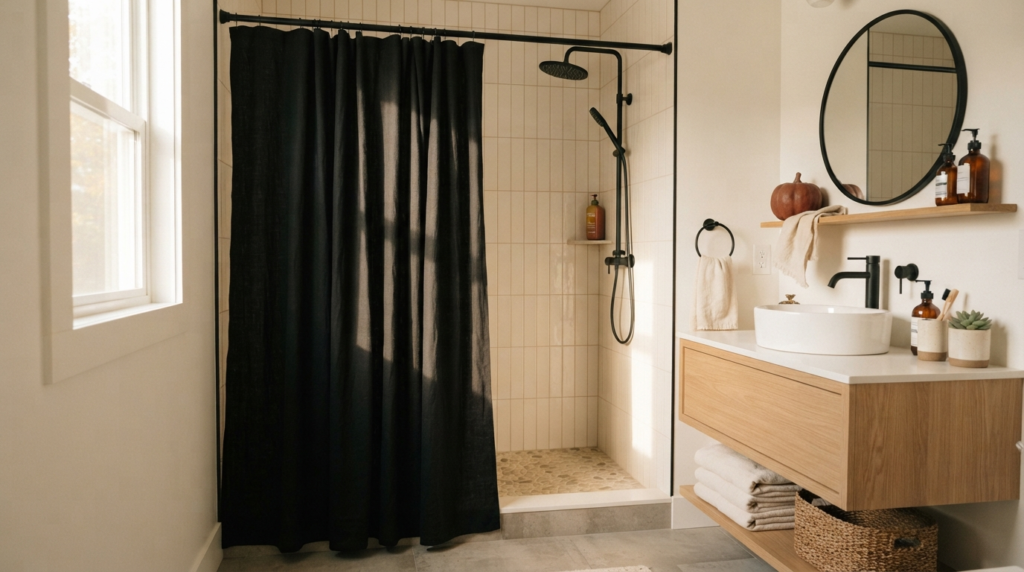
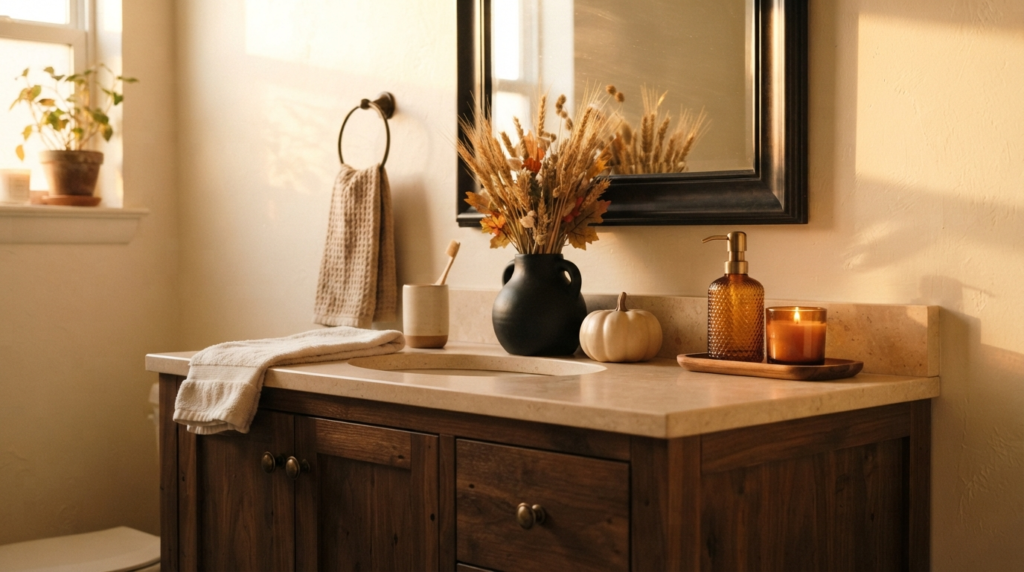
Your bathroom might not be the first room you think about when decorating for Halloween, but that is exactly what makes it such a fun place to experiment.
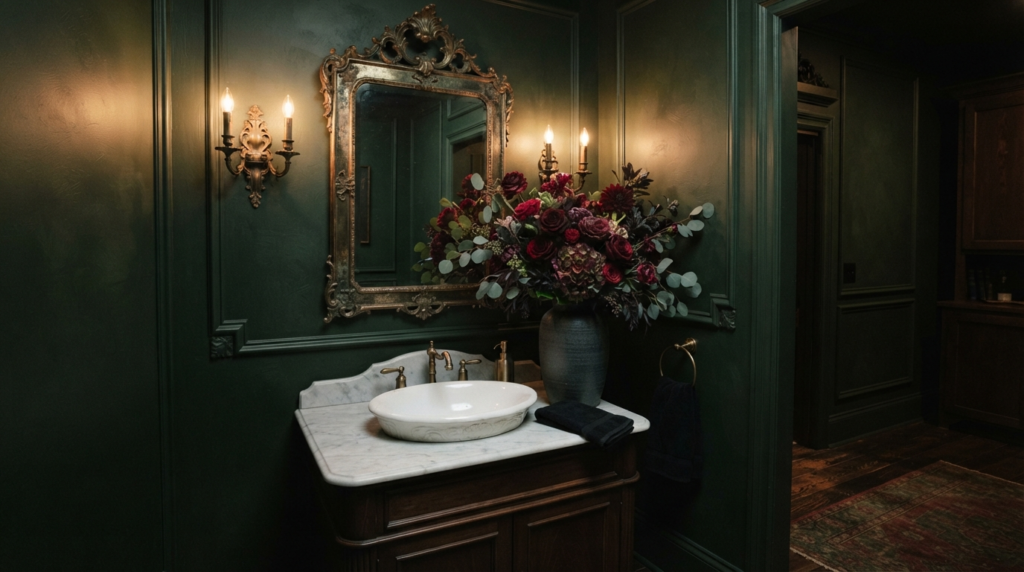
A few thoughtful details can turn an ordinary bathroom into a surprisingly spooky space without making it look like a costume shop. Think black candles, vintage mirrors, dark towels, moody florals, tiny pumpkins, eerie artwork, and warm lighting.
The best part is that you do not need to replace everything. Even a small powder room can get a Halloween makeover with a handful of inexpensive accessories.
If you want Halloween bathroom decor ideas that feel stylish, unexpected, and perfect for surprising guests, try these 23 ideas.
1. Add Black Hand Towels
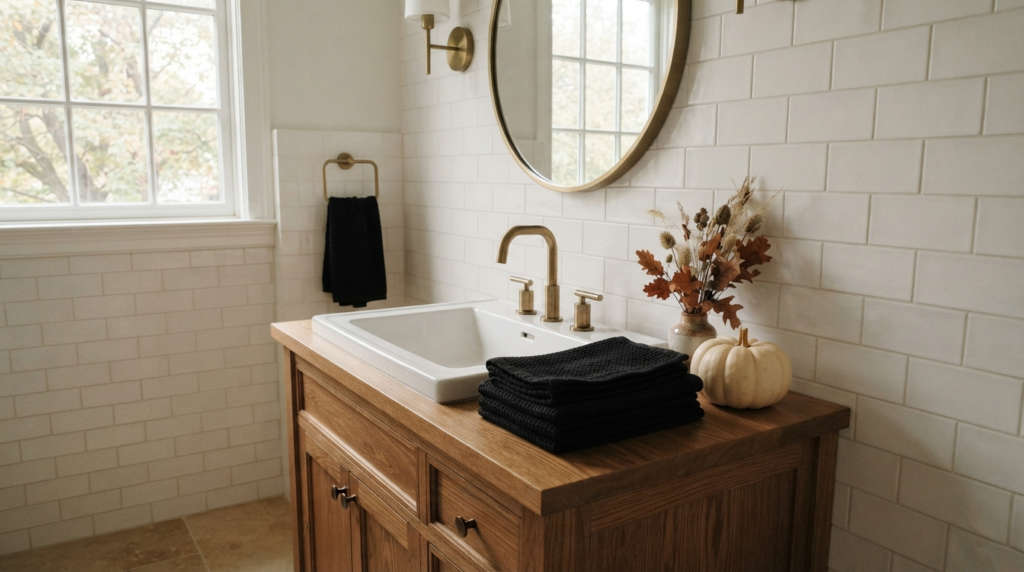
One of the easiest ways to give a bathroom a Halloween update is to swap your everyday hand towels for black ones.
Choose textured cotton, waffle weave, linen, or a simple embroidered style. Black towels work especially well with white tile because the contrast immediately makes the bathroom feel moodier.
For a softer look, pair black towels with cream or beige accessories rather than using black everywhere.
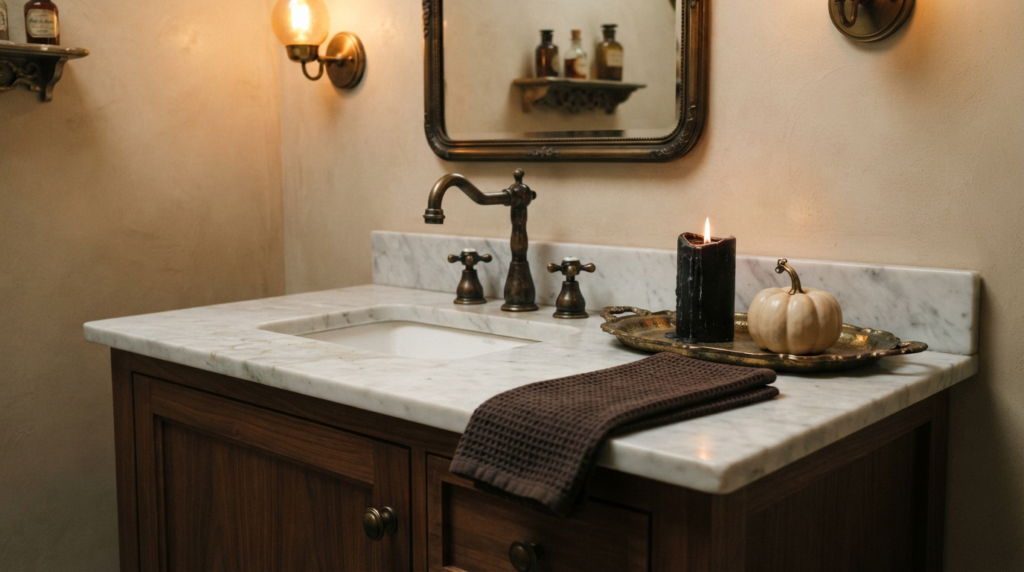
2. Create a Moody Bathroom Vanity Display
Your bathroom vanity is an ideal spot for a small seasonal arrangement.
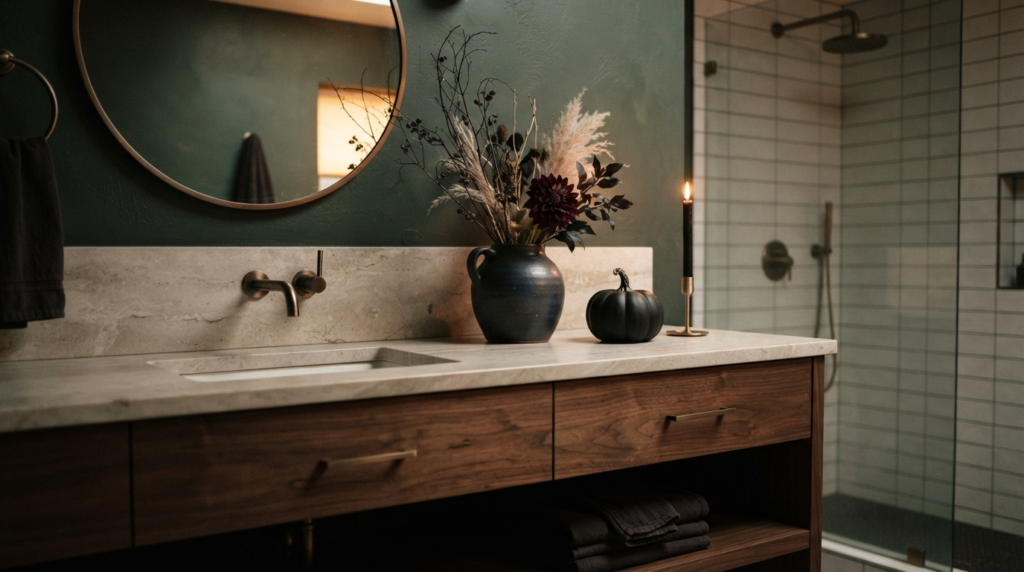
Place a dark ceramic vase beside the sink and fill it with dried branches, eucalyptus, or burgundy foliage. Add a small black candle and one miniature pumpkin.
Keep the countertop mostly clear so the display feels intentional rather than cluttered.
3. Use a Vintage Halloween Mirror
Give your bathroom an unexpected haunted-house feeling with a vintage-style mirror.
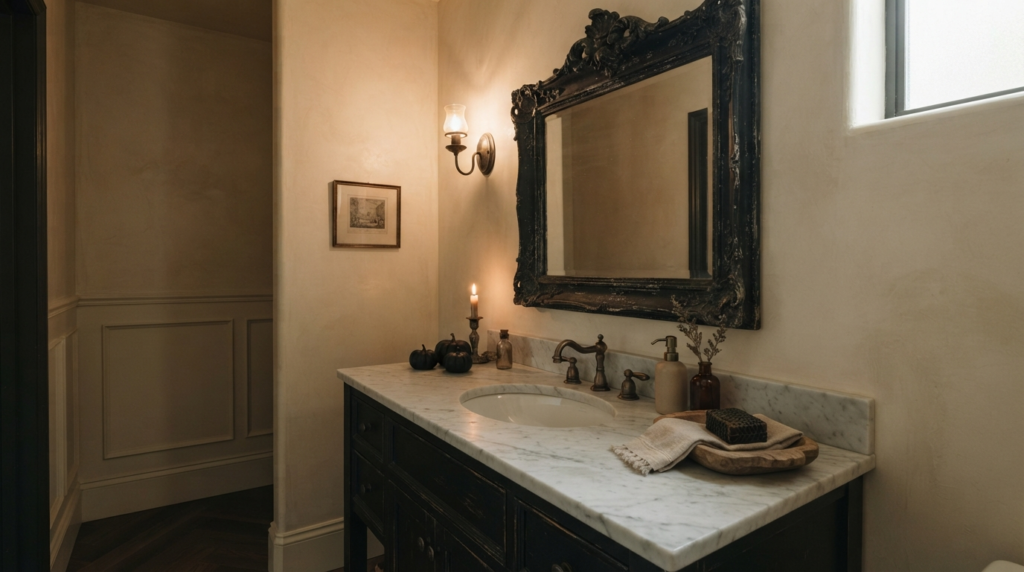
Look for an ornate black, aged bronze, dark wood, or distressed gold frame. The mirror can become the main Halloween feature without taking up additional counter space.
For extra atmosphere, place a warm lamp or candle nearby so the frame catches a soft evening glow.
4. Display Tiny Black Pumpkins
Small pumpkins are perfect for bathrooms because they do not require much space.
Arrange two or three miniature black pumpkins on a vanity, open shelf, toilet tank, or narrow ledge. Choose matte finishes for a more sophisticated appearance.
You can mix black pumpkins with cream ceramics or natural wood for contrast.
5. Hang a Spooky Botanical Print
Replace one piece of everyday bathroom artwork with a dark botanical print.
Black leaves, dried flowers, mushrooms, herbs, or vintage plant illustrations can create a subtle Halloween feeling without using obvious spooky imagery.
A simple black frame will make the artwork feel cohesive with other dark bathroom accents.
6. Add a Black Shower Curtain
A shower curtain can completely change the appearance of a bathroom.
Try a solid charcoal or black curtain for a dramatic modern look. If you prefer something softer, choose a black-and-cream pattern with botanical, floral, or vintage details.
Keep the rest of the bathroom lighter so the curtain becomes the focal point.
7. Style the Counter With Amber Glass
Amber glass works beautifully for fall and Halloween decorating.
Add an amber soap dispenser, glass jar, candleholder, or small vase to the vanity. The warm brown-orange tone introduces seasonal color without relying on bright Halloween orange.
Combine it with black accessories and white countertops for an easy contrast.
8. Use Dark Moody Florals
A small floral arrangement can make a bathroom feel surprisingly sophisticated.
Choose burgundy flowers, dried hydrangeas, dark foliage, eucalyptus, or dried grasses. Place the arrangement in a narrow ceramic vase where it will not interfere with everyday use.
For a small powder room, even three or four stems can make a noticeable difference.
9. Create a Halloween Shelf Vignette
If your bathroom has an open shelf, turn one section into a tiny Halloween display.
Layer a small vintage frame, black candleholder, miniature pumpkin, dark vase, and an old-looking book. Vary the heights so the arrangement does not look flat.
Leave the rest of the shelf for everyday necessities.
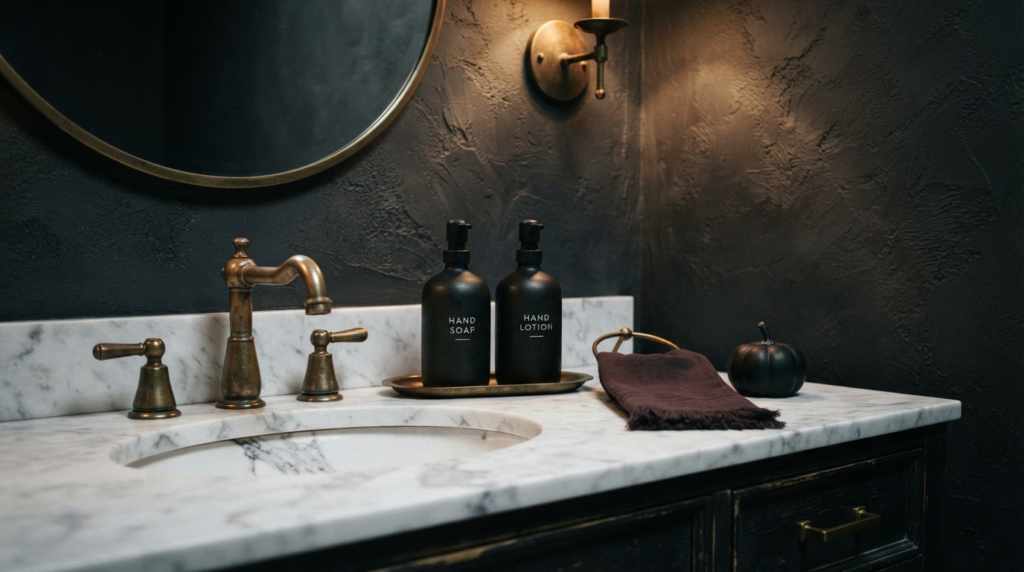
10. Add Gothic-Inspired Soap Dispensers
Small details can carry the entire theme.
Replace basic soap dispensers with black ceramic, dark glass, antique brass, or vintage-inspired containers. Choose simple shapes rather than novelty Halloween designs.
A matching lotion dispenser can make the vanity look more collected and polished.
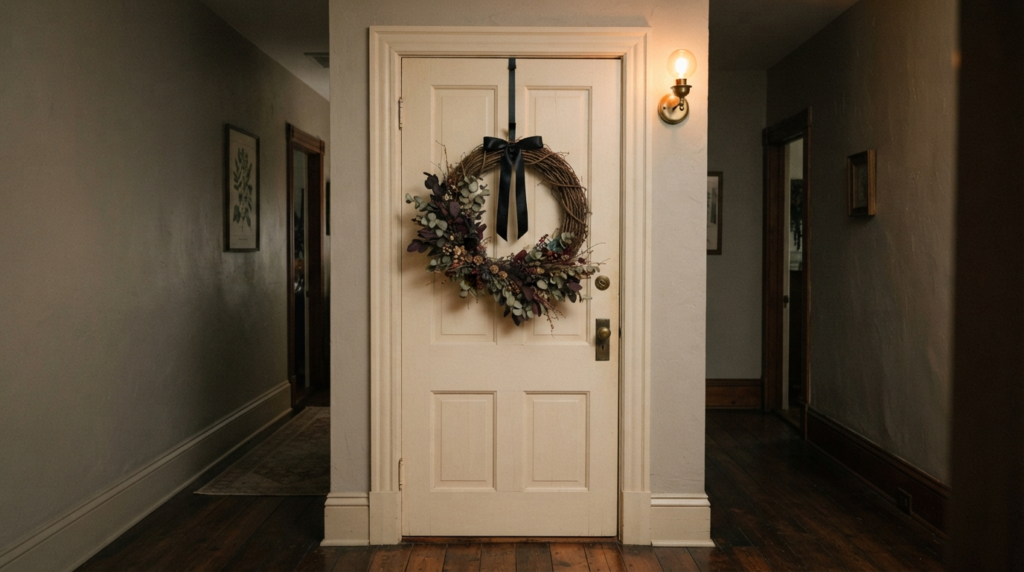
11. Hang a Small Halloween Wreath
A small wreath can work beautifully on the bathroom door.
Instead of a bright orange Halloween wreath, try dried branches, dark eucalyptus, black ribbon, burgundy foliage, or a simple grapevine design.
This is particularly effective for a powder room because guests see the decoration before they even enter.
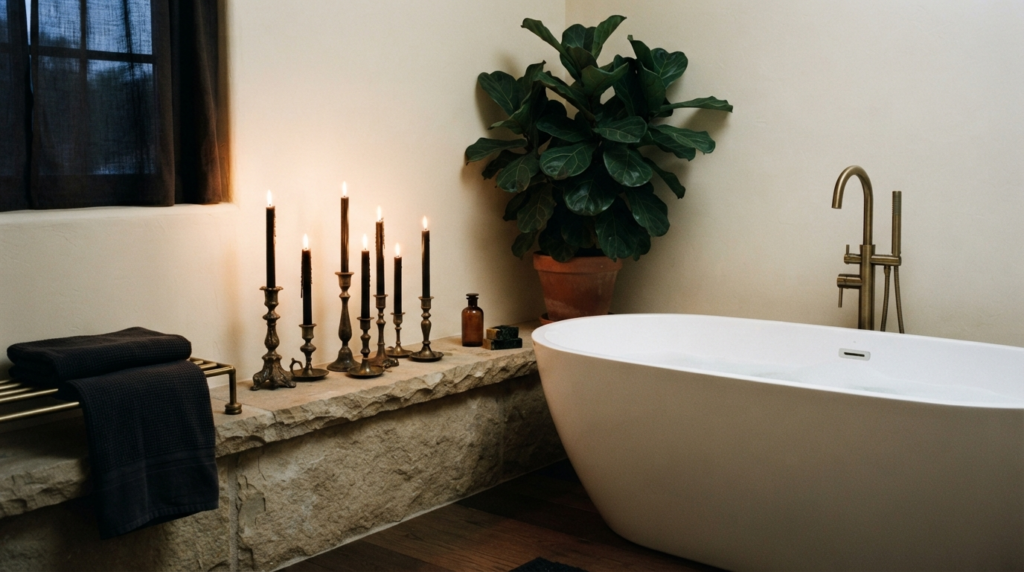
12. Use Black Candles Around the Tub
If you have a bathtub with a safe ledge or nearby shelf, add a few black candles for a dramatic Halloween atmosphere.
Use different heights to create visual interest. Flameless candles are a practical option, especially in a bathroom where water and open flames may be concerns.
Keep candles away from towels, curtains, and other flammable materials.
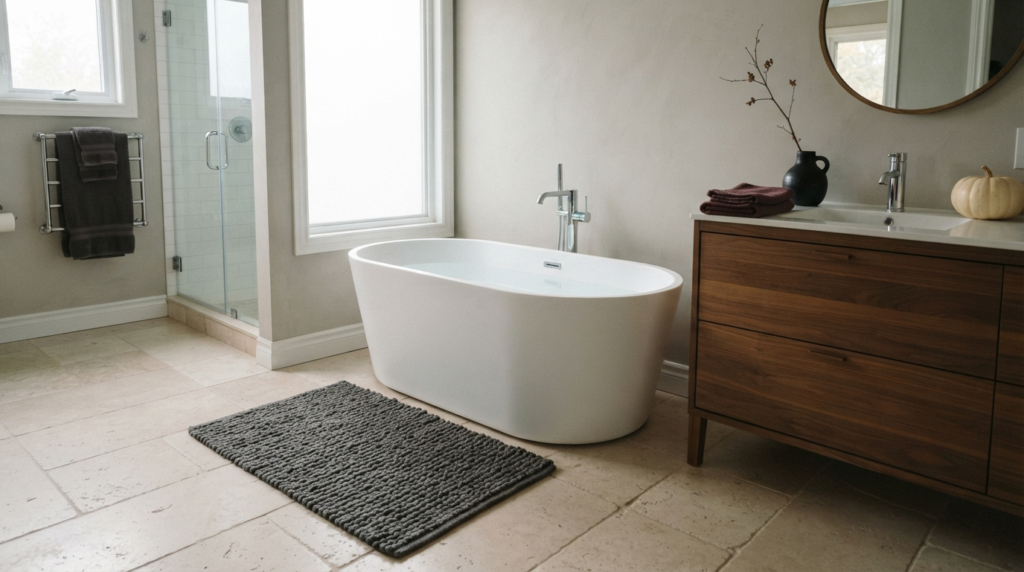
13. Add a Dark Bath Mat
A simple bath mat in charcoal, deep brown, black, or muted burgundy can ground the room.
Look for textured cotton or a vintage-style pattern rather than an overtly Halloween-themed mat.
This is an easy seasonal change because the mat can be switched back after October.
14. Decorate With Antique Brass Accents
Warm metal finishes can keep dark Halloween decor from feeling too cold.
Add an antique brass tray, small candleholder, mirror frame, soap dispenser, or decorative container.
Black and aged brass make a particularly striking combination against white bathroom tile.
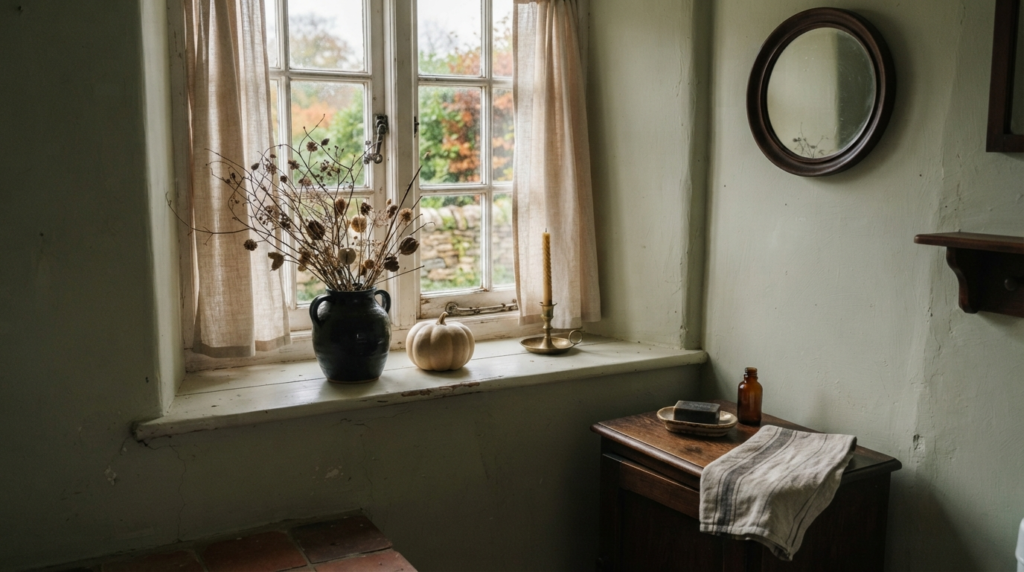
15. Create an Eerie Window Display
If your bathroom has a window ledge, use it for a subtle Halloween arrangement.
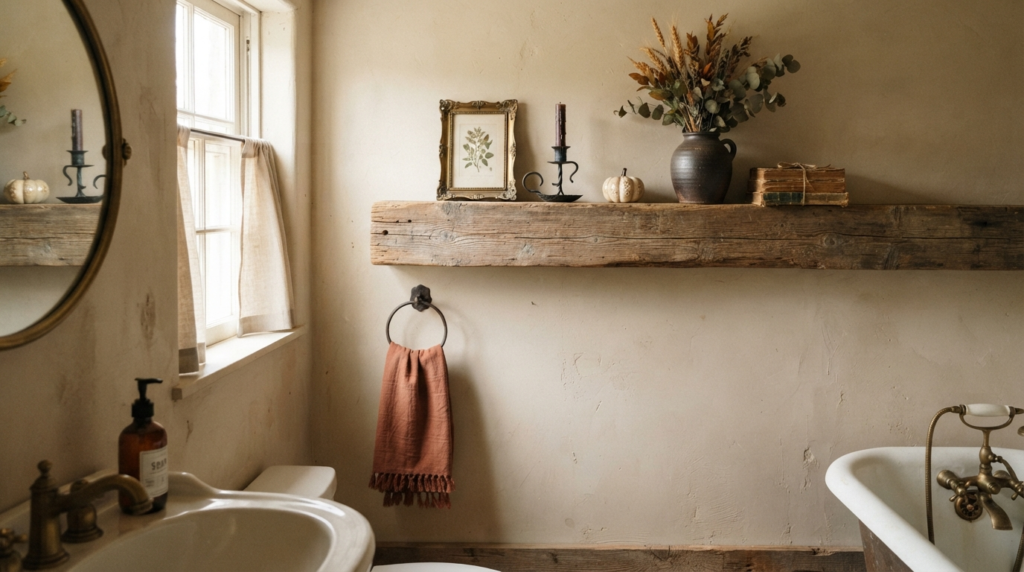
Place a small black vase with dried branches beside a cream pumpkin and a vintage-style candleholder. You can also add a small framed botanical print if there is enough space.
Keep the arrangement low enough that it does not interfere with natural light.
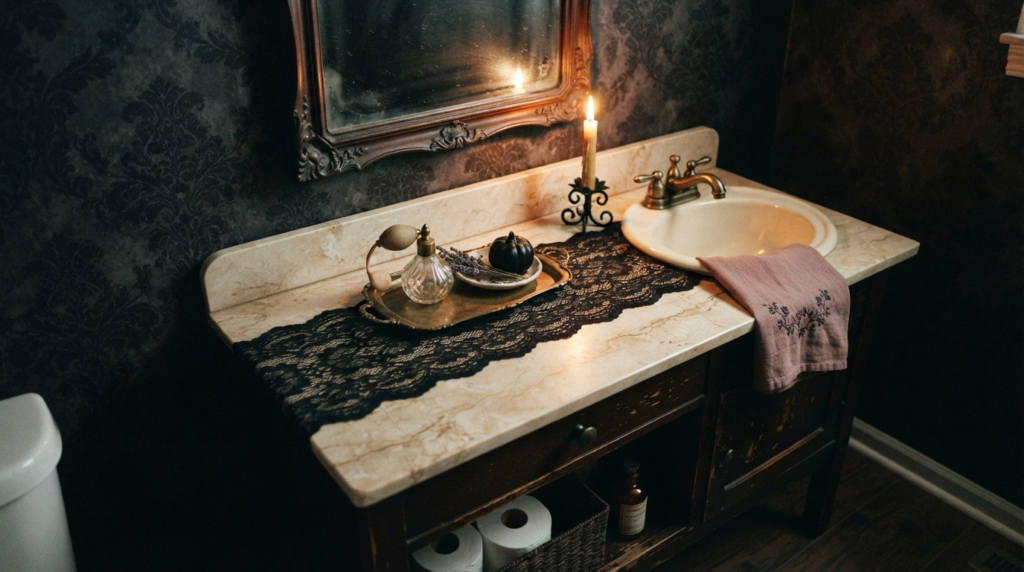
16. Use Black Lace as a Small Accent
Black lace can give a bathroom a vintage gothic touch without taking over the room.
Use a small lace cloth beneath a decorative tray or place a narrow lace accent on an open shelf.
Pair it with cream ceramics, glass, wood, or aged metal so the room still feels balanced.
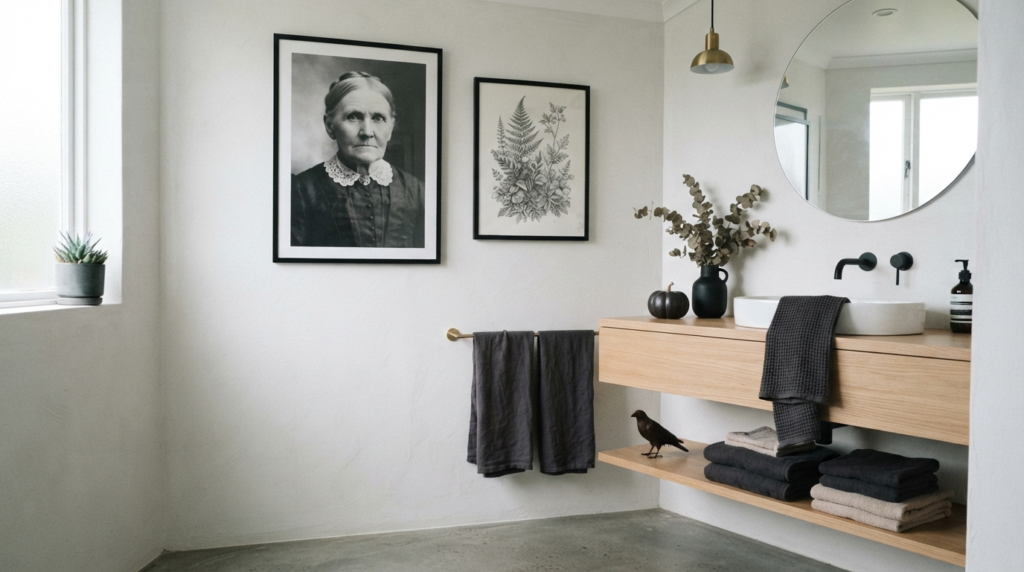
17. Add Eerie Black-and-White Artwork
Black-and-white artwork is a great choice if you want Halloween decor that feels modern.
Try vintage portraits, botanical drawings, architectural sketches, ravens, moths, old houses, or abstract monochrome artwork.
One or two carefully chosen prints are usually more effective than covering every wall.
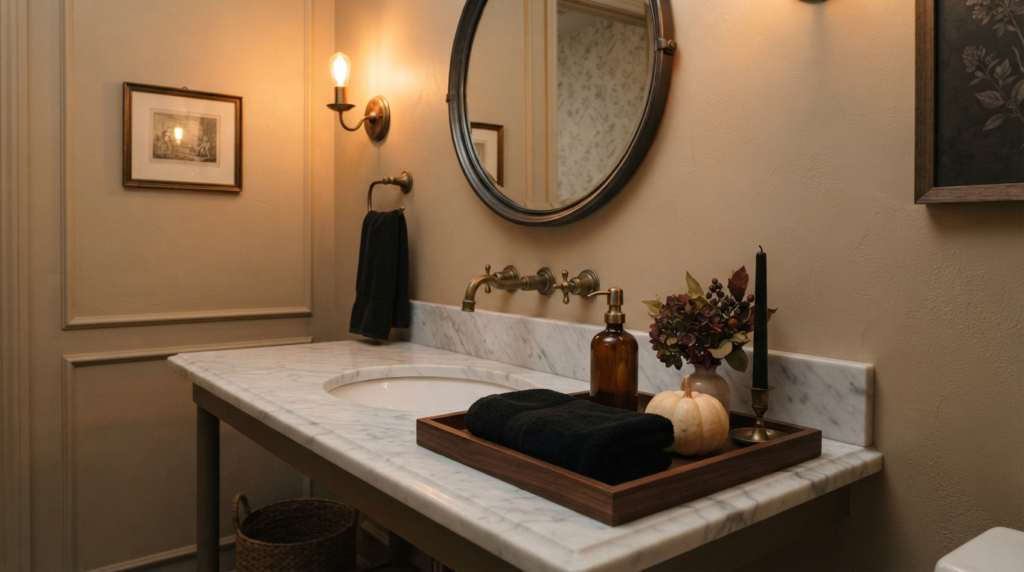
18. Style a Halloween Guest Bathroom Tray
Create a small guest-ready tray with both useful and decorative items.
Use a black or wood tray with a folded hand towel, elegant soap dispenser, small candle, tiny pumpkin, and a miniature vase.
Because everything is contained on one surface, the arrangement can feel special without making the bathroom harder to use.
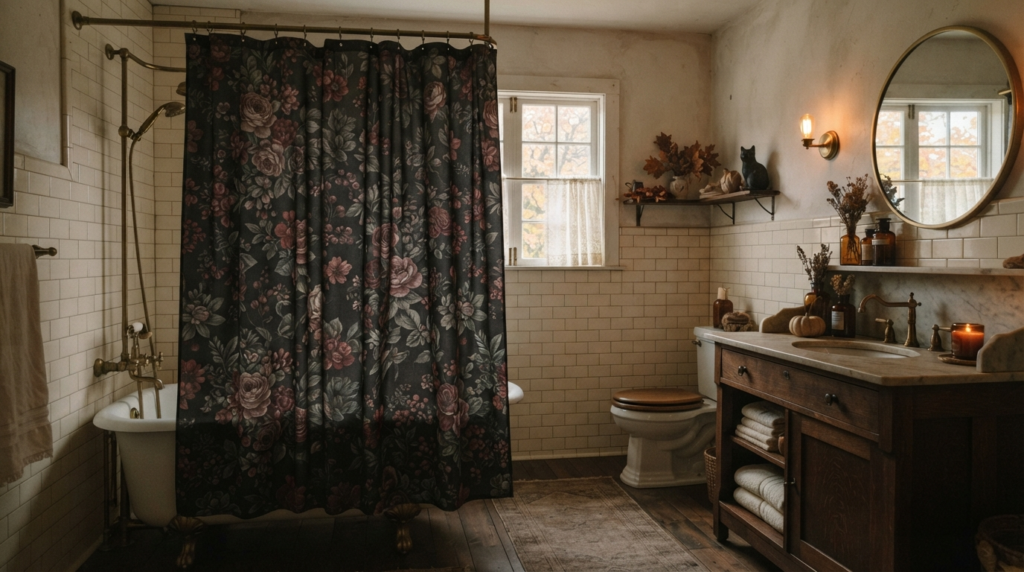
19. Add a Dark Floral Shower Curtain
For a bolder bathroom makeover, choose a shower curtain with a dark floral pattern.
Look for burgundy flowers, charcoal leaves, muted green foliage, or vintage botanical designs. This gives you the Halloween mood while remaining appropriate for the rest of autumn.
Keep towels and accessories simple so the pattern does not compete with everything else.
20. Create a Mini Haunted Apothecary Display
Give one bathroom shelf an old-fashioned apothecary feel.
Use amber bottles, dark glass containers, vintage labels, small ceramic jars, dried herbs, and an aged metal tray. Avoid anything that could be mistaken for a real medicine container.
The finished display can feel mysterious and Halloween-inspired without relying on plastic props.
21. Add a Black-and-Cream Halloween Color Palette
If bright orange is not your style, build the bathroom around black and cream.
Use black towels, a cream shower curtain, white ceramics, a dark vase, and one or two small black pumpkins. Add aged brass for warmth.
This combination feels modern and works particularly well in bathrooms with white tile or light walls.
22. Decorate the Toilet Tank With a Small Seasonal Arrangement
The toilet tank can provide a little extra decorating space in a guest bathroom.
Place a shallow tray or small arrangement on top with a miniature pumpkin, tiny vase, and dark foliage. Keep everything compact and away from plumbing fixtures.
For a more minimal look, one sculptural pumpkin may be all you need.
23. Create a Full Moody Halloween Powder Room
If you really want to surprise your guests, bring several small ideas together in one powder room.
Start with black hand towels and a dark bath mat. Add a vintage mirror, black soap dispenser, amber glass, dark florals, a few miniature pumpkins, and warm lighting.
Keep the walls and major fixtures relatively simple so the accessories create the atmosphere.
What Are the Best Colors for Halloween Bathroom Decor?
Black is an obvious choice, but you do not have to stop there.
Try combinations such as:
Black and cream
Charcoal and white
Burgundy and black
Brown and amber
Deep green and black
Plum and cream
Rust and beige
Black and aged brass
A neutral bathroom gives you plenty of freedom to introduce darker seasonal colors through towels, artwork, accessories, and textiles.
How Do You Decorate a Small Bathroom for Halloween?
Small bathrooms usually look better with a few carefully selected decorations rather than lots of small objects.
Choose one main focal point, such as a vintage mirror or dark shower curtain. Then add two or three smaller accents around the sink or on a shelf.
Use vertical space when possible. Wall artwork, a small wreath, or a decorative mirror can create Halloween atmosphere without taking up valuable counter space.
How Can I Make Halloween Bathroom Decor Look Elegant?
Skip most novelty decorations and focus on materials and color.
Black ceramic, aged brass, amber glass, linen, natural wood, dried flowers, vintage-style artwork, and textured towels can all create a sophisticated seasonal look.
You can still use pumpkins, bats, or spooky artwork, but keeping them limited will help the bathroom feel more like a decorated home and less like a Halloween display.
How Do You Decorate a Bathroom for Halloween on a Budget?
You can create a noticeable change without buying a large collection of decorations.
Try:
Black hand towels
Paper bats
Thrifted frames
Small pumpkins
Dried branches
Amber jars
Black candles
Existing trays
Dark fabric
Printable black-and-white artwork
Changing textiles and adding a few small accessories can make a bigger difference than purchasing large decorations.
Halloween Bathroom Decor Checklist
Textiles
Black or charcoal hand towels
Dark bath mat
Seasonal shower curtain or accent
Decor
Mini pumpkins
Dark florals
Vintage-style artwork
Small wreath
Black candles
Dried branches
Finishing Details
Amber glass
Aged brass accents
Dark soap dispenser
Small decorative tray
Warm lighting
Safety
Keep decorations away from plumbing
Keep candles away from towels and curtains
Avoid blocking mirrors, windows, or ventilation
Keep countertops functional for guests
FAQ
How can I make my bathroom look spooky for Halloween?
Use dark towels, black candles, vintage artwork, dried branches, miniature pumpkins, moody florals, and warm lighting. A few atmospheric details can make the room feel spooky without filling it with novelty decorations.
What can I put on my bathroom counter for Halloween?
Try a small black vase, miniature pumpkins, an amber glass container, a candle, dark florals, or a decorative tray. Keep everyday essentials accessible so the countertop remains functional.
Can Halloween bathroom decor look elegant?
Absolutely. Black, cream, burgundy, aged brass, amber glass, vintage mirrors, and dark botanical artwork can create an elegant Halloween look without relying on bright colors or plastic decorations.
How do you decorate a tiny bathroom for Halloween?
Focus on vertical surfaces and small accessories. Hang a spooky print, add a small wreath to the door, switch to dark hand towels, and place one or two miniature pumpkins on a shelf or vanity.
What Halloween decor can I leave up through fall?
Black towels, amber glass, dried branches, dark florals, vintage artwork, aged brass, and neutral pumpkins can easily transition from Halloween into general autumn decorating.
Final Thoughts
A bathroom may be one of the smallest rooms in your home, but that does not mean it has to be overlooked during Halloween.
The most memorable Halloween bathroom decor ideas often involve simple details: a black hand towel, an old-fashioned mirror, a few miniature pumpkins, dark flowers, amber glass, or a warm candle glow.
You can keep the rest of the room neutral and let these small changes create the surprise. Whether you are decorating a tiny powder room or a spacious primary bathroom, choose a few details that work with the room you already have.
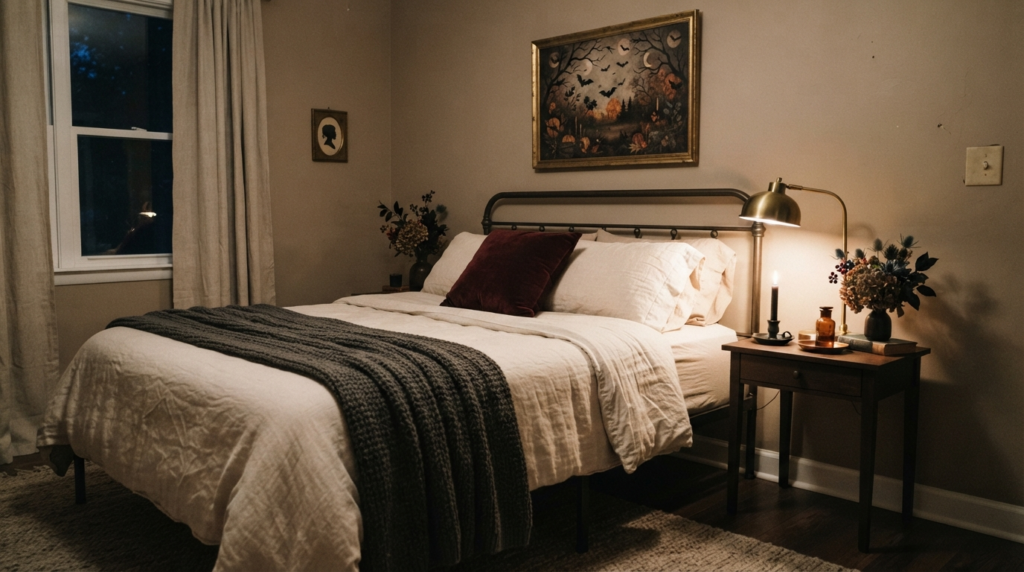
Halloween decorating does not have to mean plastic spiders, cartoon pumpkins, or a house covered in orange and black. For 2026, a more grown-up approach is all about atmosphere: moody lighting, vintage-inspired pieces, dark florals, sculptural pumpkins, antique finishes, and subtle spooky details.
The key is to make Halloween feel like part of your existing home rather than a completely separate theme. A black taper candle here, a dramatic floral arrangement there, or a collection of vintage-looking objects can create the mood without making your living room feel like a costume shop.
If you want modern Halloween decorating ideas for adults in 2026, these ideas offer plenty of inspiration for a stylish, slightly mysterious home.
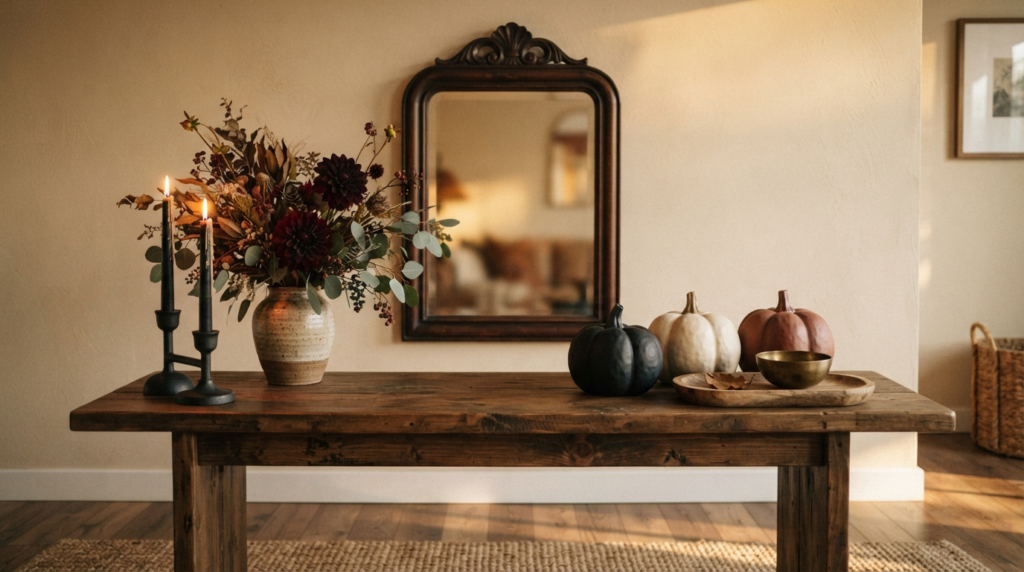
1. Create a Moody Black-and-Cream Entryway
Start your Halloween decorating at the front door with a sophisticated black-and-cream palette.
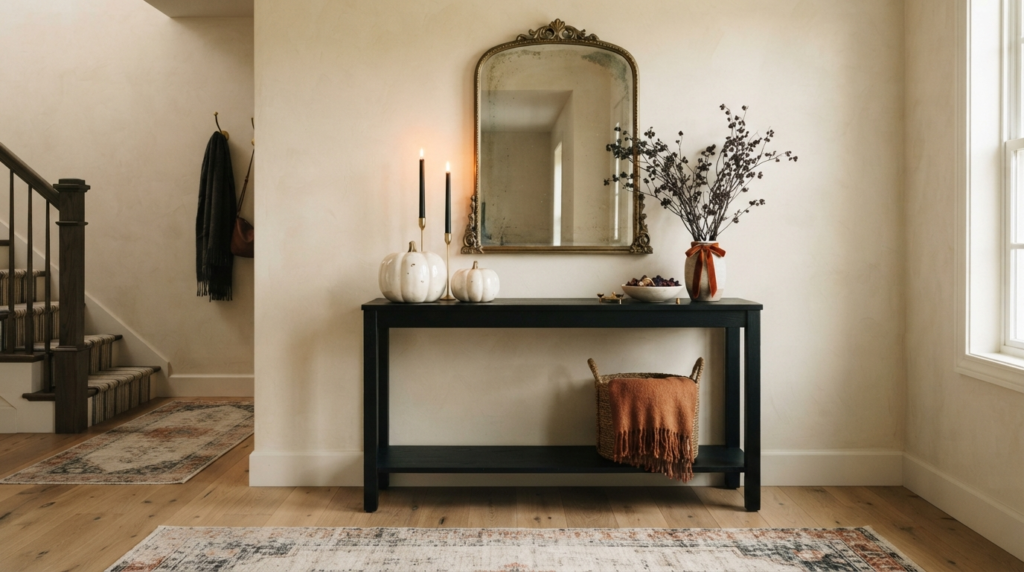
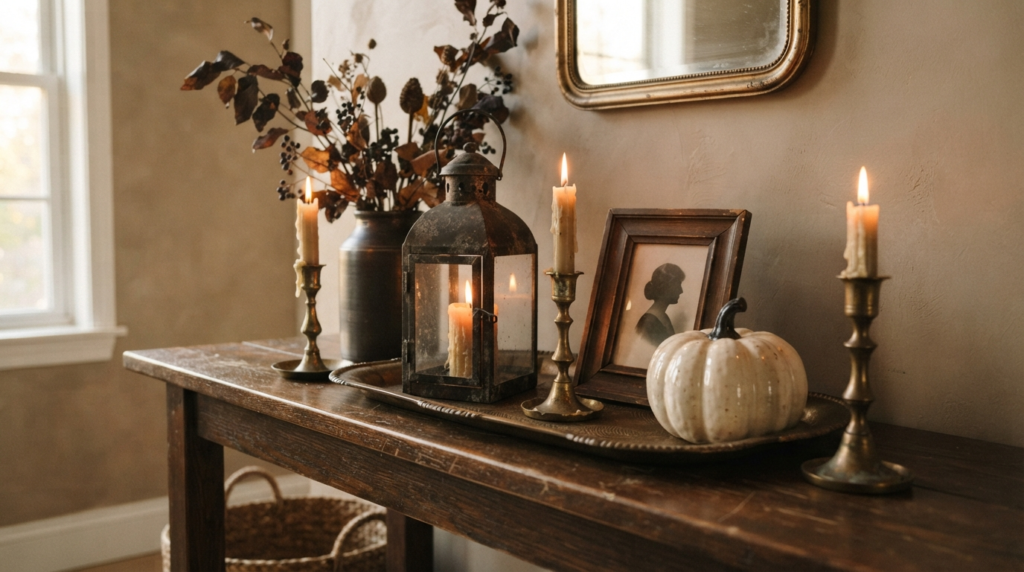
Try a black console table, antique-style mirror, cream ceramic pumpkins, dark branches, and a few black candleholders. Instead of using bright orange everywhere, introduce one small rust or burnt-orange accent.
The result feels seasonal while still working with modern farmhouse, traditional, or contemporary interiors.
2. Style a Dramatic Halloween Mantel
The fireplace mantel is perfect for creating a sophisticated Halloween focal point.
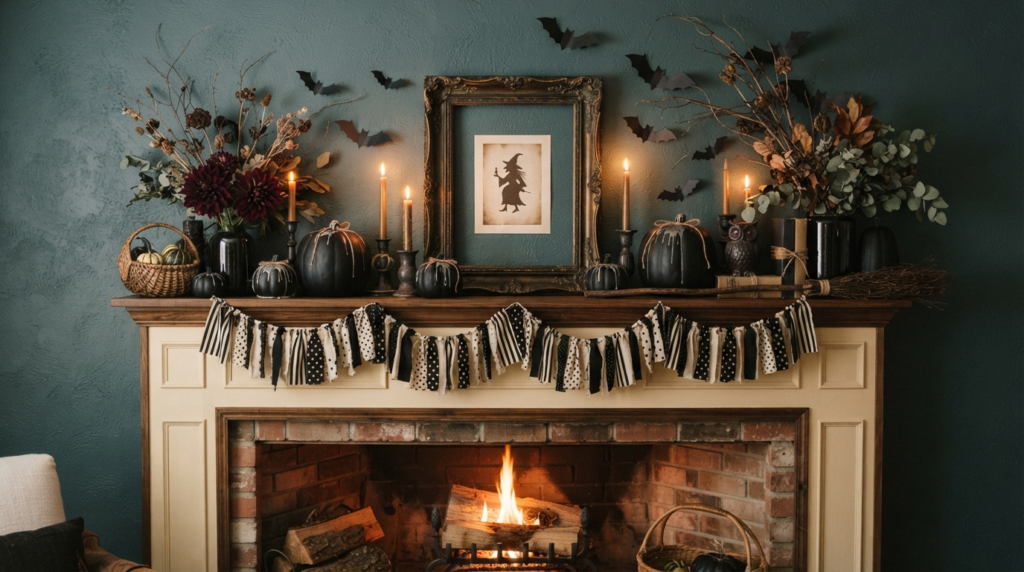
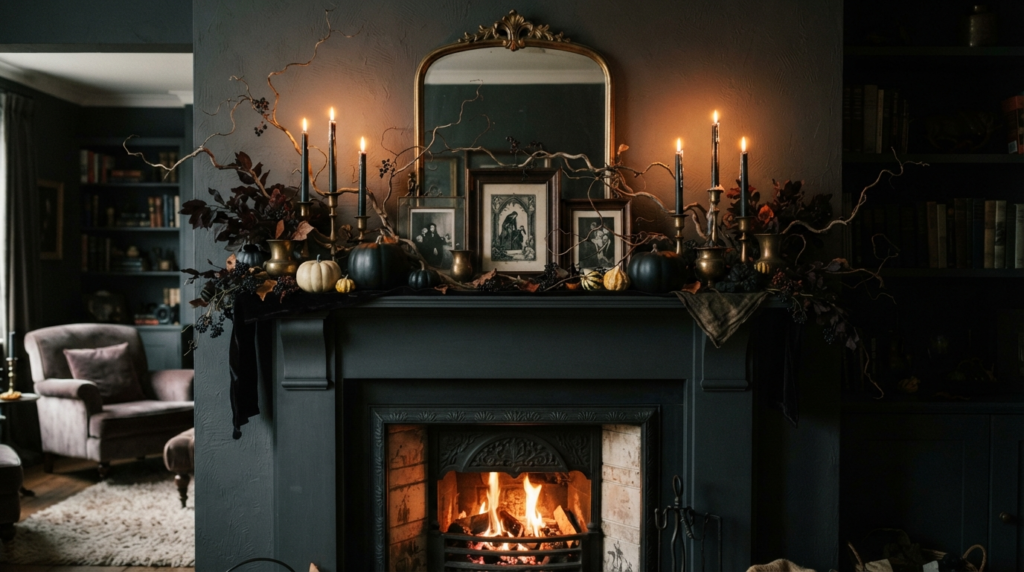
Layer black candlesticks, vintage-style frames, dried branches, dark foliage, and a few sculptural pumpkins across the mantel. Let some of the branches extend upward for a slightly wild appearance.
You can keep the rest of the room relatively neutral so the mantel carries most of the Halloween atmosphere.
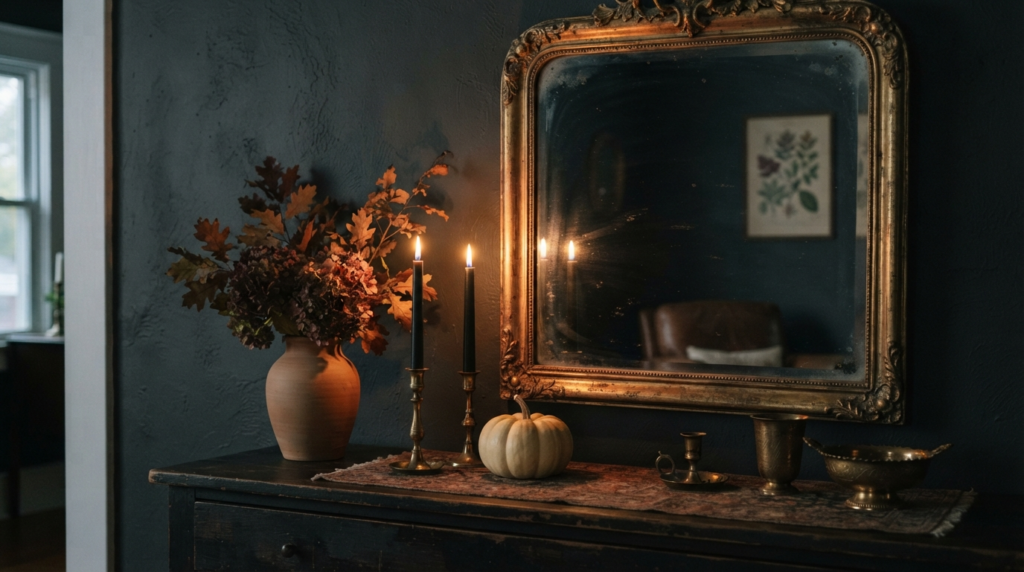
3. Use Black Taper Candles
Black candles instantly create a darker Halloween mood without requiring obvious Halloween decorations.
Place them in brass, antique bronze, ceramic, or clear glass candleholders. Group several different heights together on a dining table, fireplace mantel, or console.
For everyday use, flameless candles can give you a similar visual effect without an open flame.
4. Decorate With Dark Moody Florals
Swap traditional bright bouquets for deep, dramatic flowers and foliage.
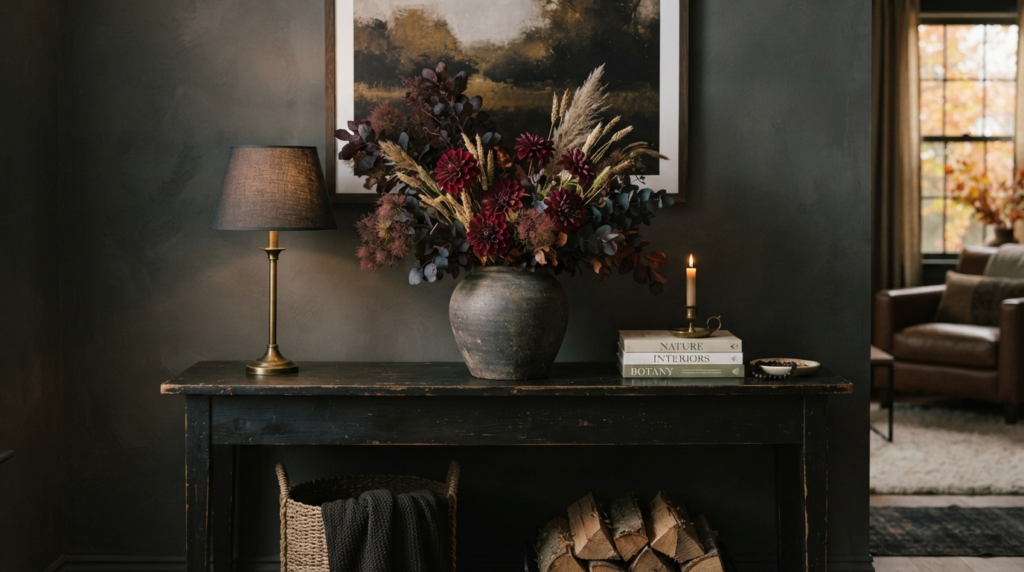
Burgundy flowers, dried hydrangeas, dark foliage, branches, and muted brown grasses can create a slightly gothic arrangement. Put everything in an aged ceramic vase or vintage glass vessel.
This is one of the easiest ways to make Halloween decorating feel elegant rather than themed.
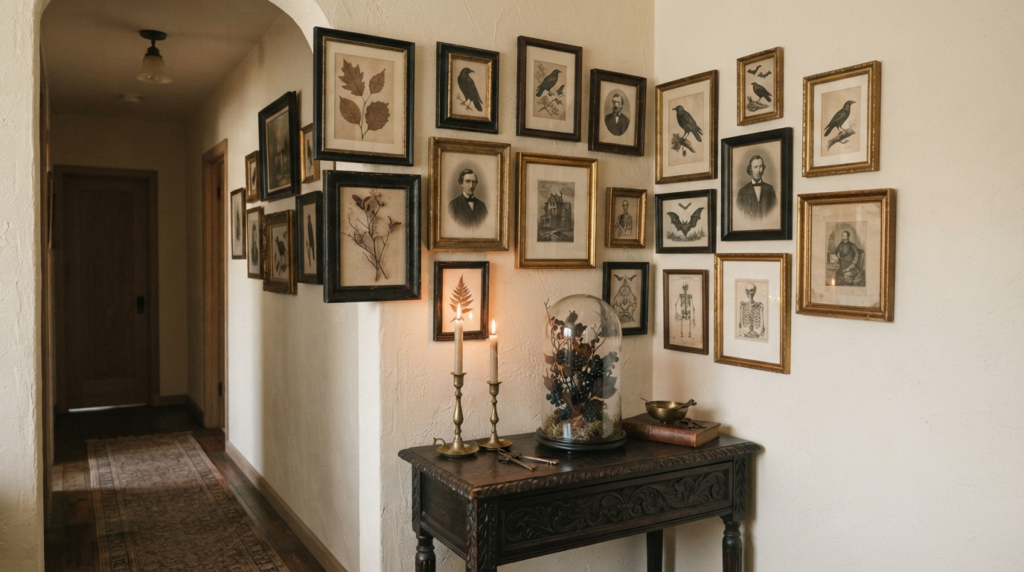
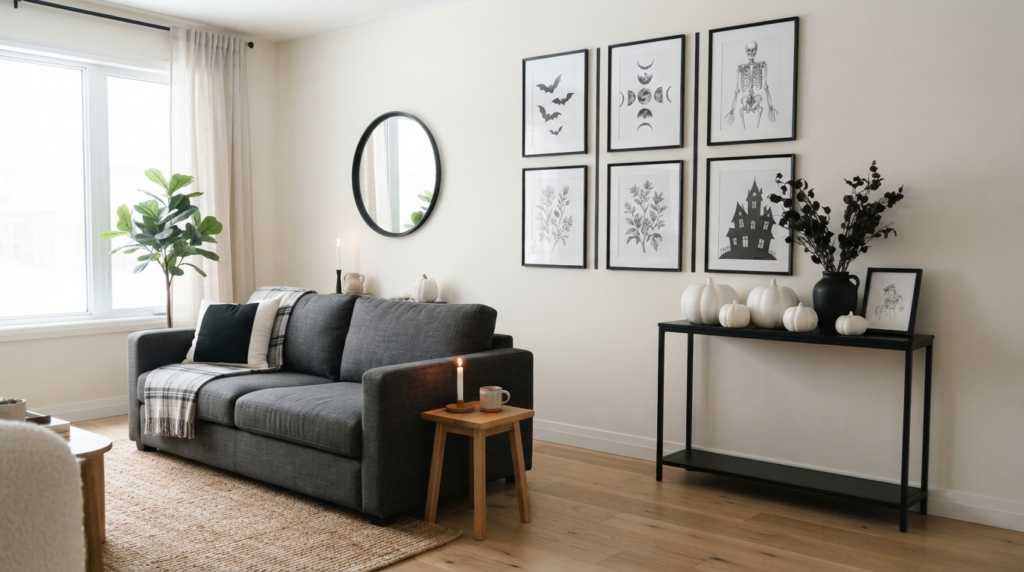
5. Create a Vintage Halloween Gallery Wall
Give a hallway or living room wall a temporary Halloween makeover with vintage-inspired artwork.
Use different frame shapes and finishes so the display feels collected over time instead of perfectly coordinated.
6. Add Oversized Black Bats to a Wall
For a more playful modern look, create a swarm of black paper or lightweight decorative bats.
Start with a small cluster near a doorway or mirror and gradually spread them upward across the wall. The varying sizes make the arrangement feel more natural.
Keep the surrounding decor simple so the bats remain the main feature.
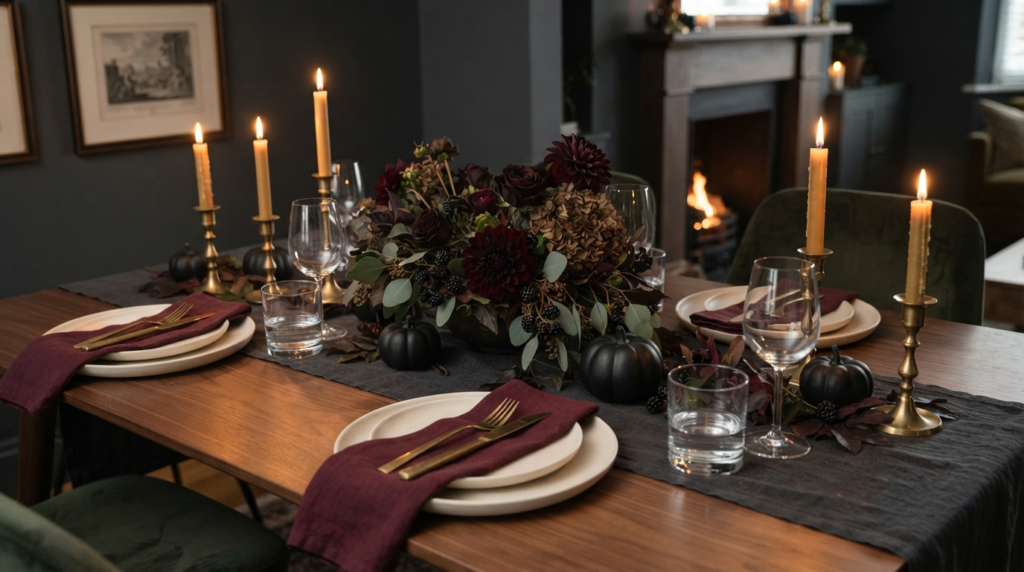
7. Style a Halloween Dining Table in Black and Burgundy
A sophisticated Halloween tablescape can completely skip the novelty decorations.
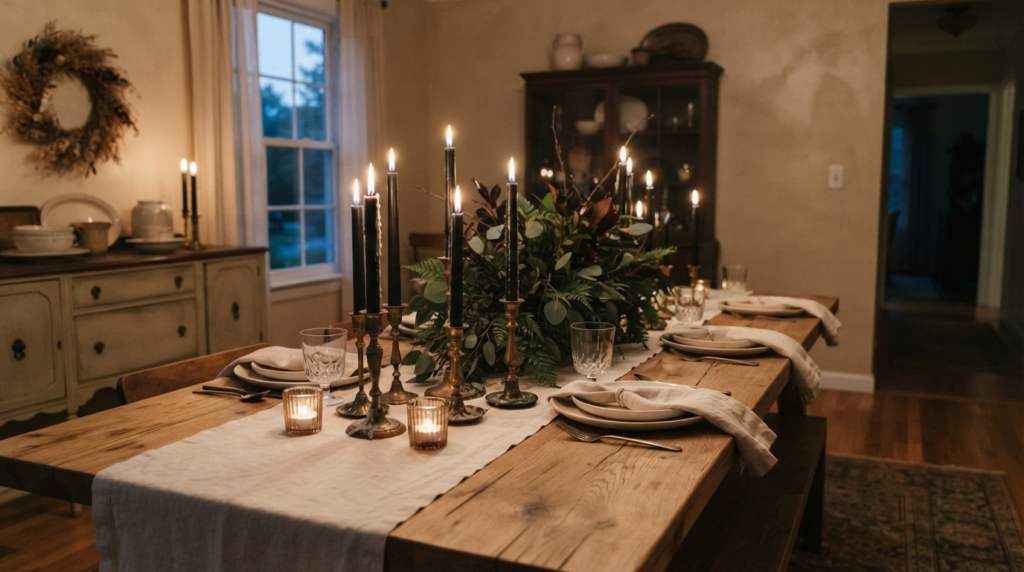
Use a black or charcoal runner, dark burgundy napkins, vintage brass candleholders, clear glassware, cream plates, and a low arrangement of dark flowers.
Add a few small pumpkins in matte black, cream, or deep burgundy for a subtle seasonal reference.
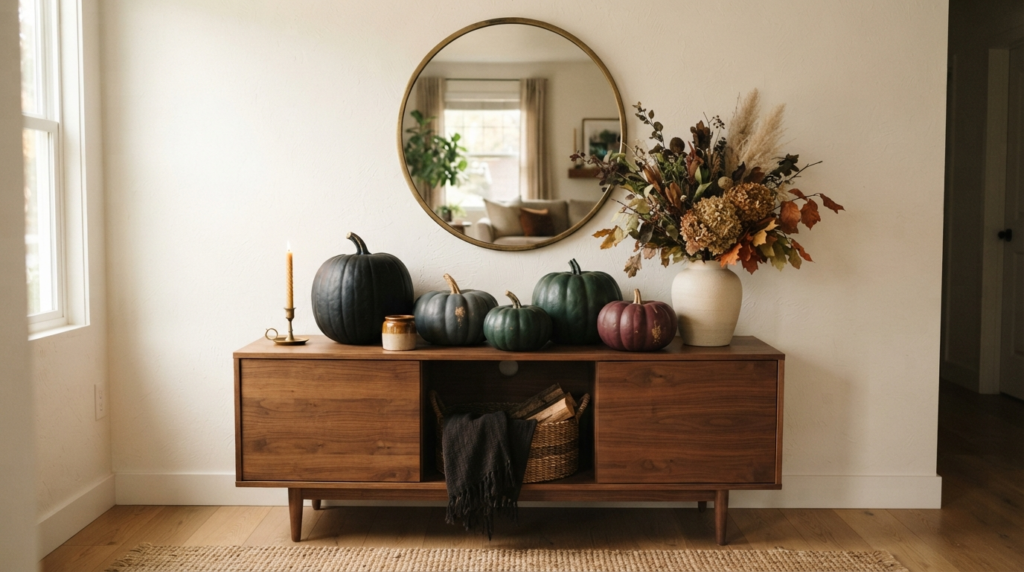
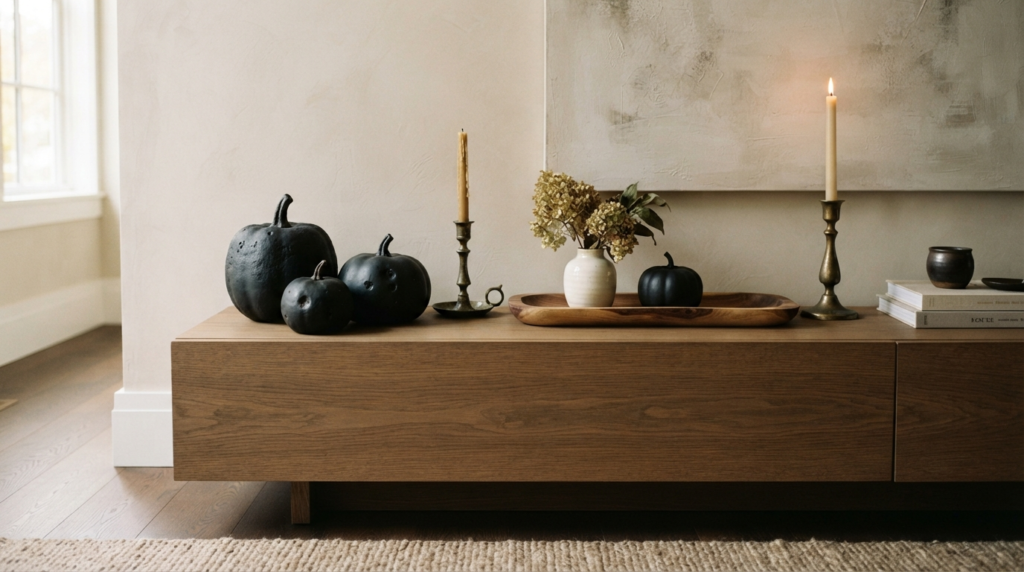
8. Use Sculptural Black Pumpkins
Black pumpkins can look surprisingly elegant when they have simple shapes and matte finishes.
Arrange a few on a console, shelf, mantel, or staircase. Mix different sizes and silhouettes rather than using a large matching set.
Pair them with cream ceramics, natural wood, or aged brass for contrast.
9. Create a Gothic-Inspired Bookshelf
Turn an existing bookshelf into a moody Halloween display without changing the entire room.
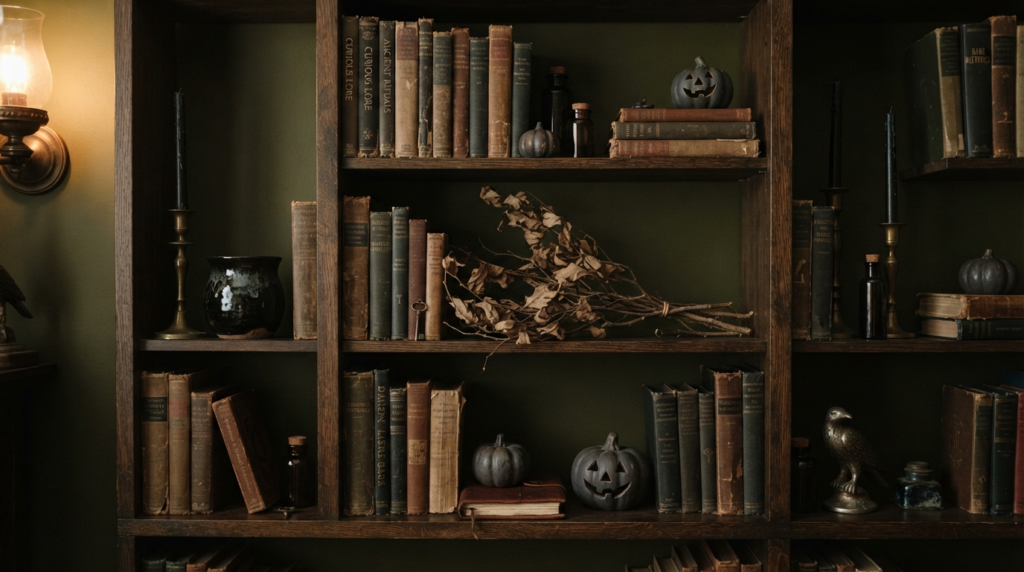
Add old-looking books, brass candlesticks, dark pottery, dried branches, small black pumpkins, and antique-style objects between your everyday books.
Leave some of your normal decor in place. The combination feels more natural than replacing everything with Halloween pieces.
10. Add Aged Brass and Antique Metal Accents
Halloween pairs beautifully with aged metallic finishes.
Use antique brass candlesticks, bronze trays, old-style picture frames, or dark metal lanterns to add warmth to a moody space.
These pieces also have value beyond October, making them more useful than decorations that can only be used once a year.
11. Make a Dark Kitchen Countertop Display
Your kitchen does not need a complete Halloween makeover.
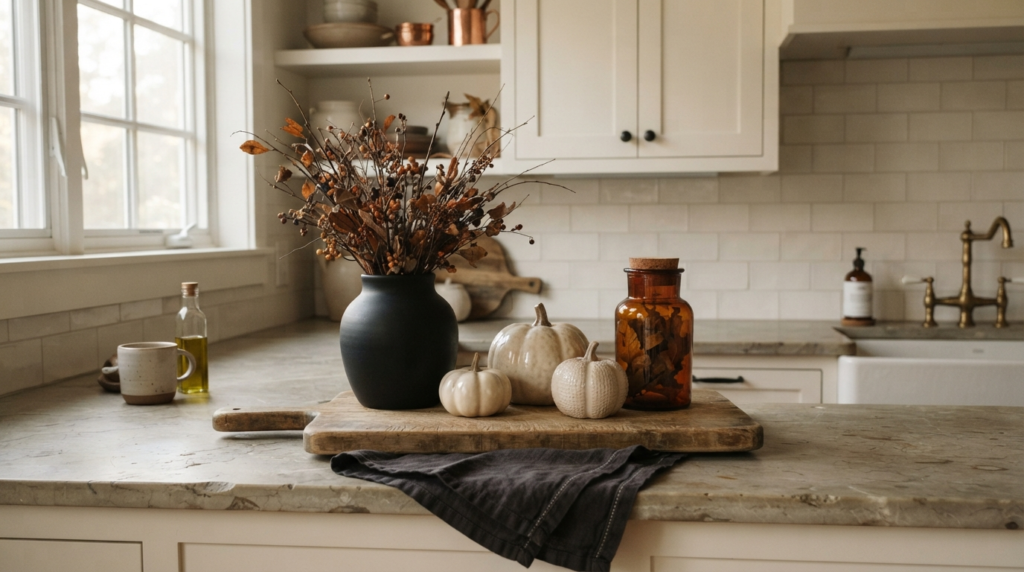
Place a black ceramic vase filled with dried branches beside a small group of cream pumpkins. Add an amber glass jar, dark tea towels, or an aged wood cutting board nearby.
Keeping the display compact allows the kitchen to remain practical while still feeling seasonal.
12. Decorate the Staircase With Dried Branches
A staircase can become a dramatic Halloween feature with very little decoration.
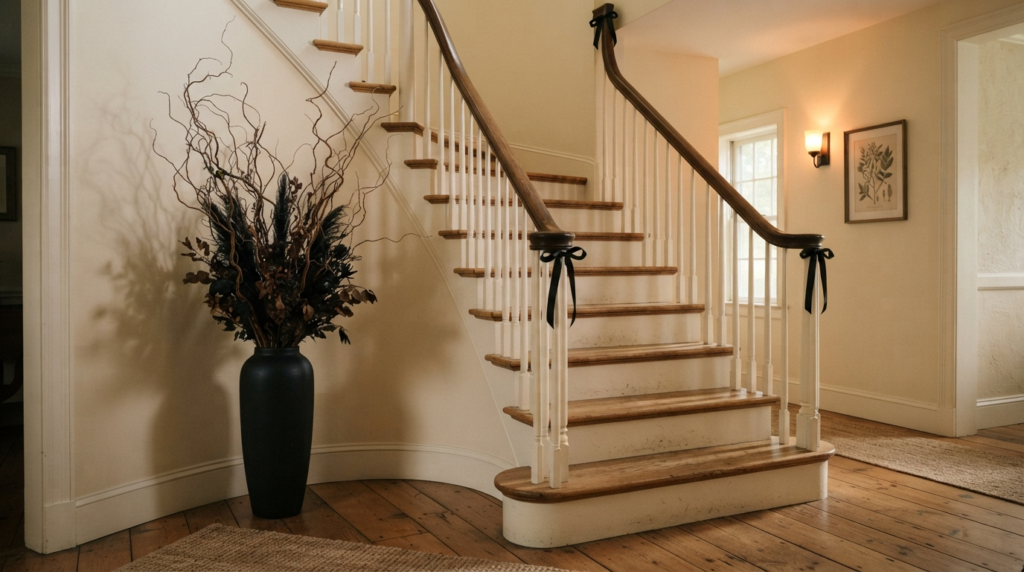
Place tall dried branches in a narrow floor vase at the bottom or landing of the stairs. Add a few small black ribbons, dark foliage, or subtle hanging ornaments.
Choose an arrangement that stays safely away from the walking path.
13. Use Black Lace as a Table Accent
Black lace can add a vintage, slightly gothic feeling without overwhelming the table.
Layer a narrow lace runner over a neutral linen tablecloth or use small lace pieces beneath candles and decorative objects.
Pair the lace with warm wood, cream ceramics, and brass rather than combining it with too many other dark materials.
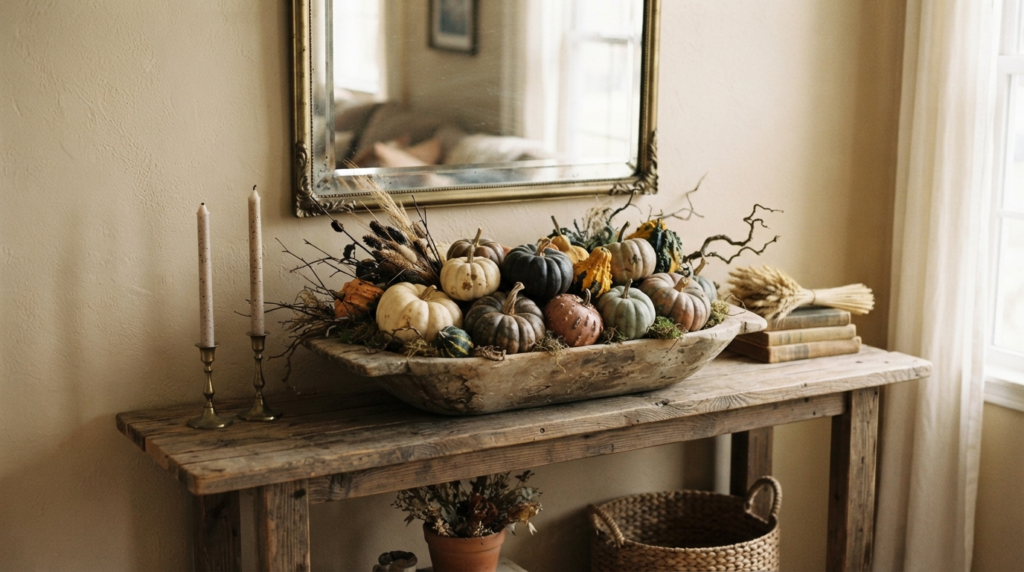
14. Create an Elegant Pumpkin Arrangement
Forget perfectly matching pumpkins and create a more collected display.
Combine cream, charcoal, dusty orange, muted green, and natural pumpkins in different shapes. Add dried grasses, moss, branches, or small antique-style objects between them.
A shallow wooden bowl or vintage crate can help contain the arrangement on a console or coffee table.
15. Decorate With Vintage-Style Mirrors
Old-looking mirrors can make a Halloween room feel mysterious without using overtly spooky objects.
Try an ornate black, dark wood, or aged gold frame. Place it above a console with candles, dried branches, and one or two pumpkins.
The reflection of candlelight can add a dramatic effect in the evening.
16. Add a Dark Accent to the Living Room
You do not need to redecorate the entire living room for Halloween.
Change just a few accessories: swap cream cushions for charcoal or burgundy ones, add a dark throw, introduce black candleholders, and place a small seasonal arrangement on the coffee table.
A restrained palette helps the room remain sophisticated.
17. Create a Minimalist Halloween Coffee Table
For a modern home, less can be more.
Use a simple black tray with one sculptural pumpkin, a small dark ceramic vase, and a short candle. Keep the surrounding coffee table mostly clear.
This works particularly well in contemporary spaces where excessive seasonal accessories can feel out of place.
18. Hang a Modern Halloween Wreath
A Halloween wreath does not have to be orange and covered in plastic spiders.
Try a wreath made from dried branches, dark eucalyptus, burgundy foliage, black ribbon, or preserved grasses. A simple grapevine base can give it an organic appearance.
Hang it on a dark or natural wood door for a sophisticated entrance.
19. Use Warm Amber Lighting
Lighting can completely change the atmosphere of a Halloween room.
Use warm table lamps, amber glass candleholders, lanterns, or small warm-white lights to create a soft glow after sunset.
Avoid relying entirely on bright overhead lighting. Layered light creates much more atmosphere for evening gatherings.
20. Create a Subtle Haunted Library Look
Turn a reading corner or home office into a sophisticated Halloween setting inspired by an old library.
Use dark wood, leather textures, vintage books, brass lighting, framed artwork, and a few dried branches. Add one or two subtle Halloween details such as a black candle or sculptural pumpkin.
The idea is atmospheric rather than theatrical.
21. Decorate With Black-and-White Halloween Art
For a clean modern approach, stick to black and white.
Use monochrome prints, abstract Halloween artwork, black frames, white ceramic pumpkins, and simple black accessories.
This palette works especially well in contemporary homes where traditional orange decorations may clash with the existing interior.
22. Add a Moody Bedroom Halloween Accent
Halloween can work in the bedroom too, but keep it subtle.
Add a charcoal throw, burgundy cushion, dark floral arrangement, black candleholder, or vintage-style artwork. Keep bedding mostly neutral so the room still feels restful.
A few darker accents can create an autumnal mood without making the bedroom feel overly themed.
23. Build a Sophisticated Halloween Vignette
If you want Halloween decor that feels intentional, create one small vignette instead of decorating every room.
Choose a console, sideboard, shelf, or corner and combine a vintage mirror, black candles, dark flowers, a few sculptural pumpkins, and one aged metallic object.
Repeating a few colors and materials will make the display feel cohesive. The rest of your home can remain almost completely unchanged.
What Are the Modern Halloween Decorating Trends for 2026?
Modern Halloween decorating is moving toward more atmospheric and design-focused looks rather than relying entirely on traditional novelty decorations.
Popular directions include:
Moody black and cream palettes
Burgundy and deep brown accents
Vintage and antique-inspired pieces
Dark floral arrangements
Sculptural pumpkins
Aged brass and bronze
Warm atmospheric lighting
Gothic-inspired interiors
Natural dried branches
Minimalist Halloween displays
Black-and-white decorating
Vintage-style artwork
The common thread is using Halloween as a mood rather than covering every surface with recognizable Halloween symbols.
How Can I Make Halloween Decor Look More Elegant?
Start with a limited color palette. Black, cream, brown, burgundy, muted orange, and aged brass are easy to combine.
Then choose a few materials that add depth, such as velvet, linen, wood, glass, metal, dried foliage, and ceramics.
Instead of buying dozens of themed decorations, invest in a handful of pieces that look good alongside your normal home decor.
What Colors Are Best for Modern Halloween Decor?
Traditional orange and black can still work, but modern Halloween decorating gives you plenty of alternatives.
Try:
Black and cream
Charcoal and ivory
Burgundy and brown
Black and aged brass
Rust and beige
Deep green and black
Plum and cream
Terracotta and charcoal
A neutral foundation makes darker colors feel intentional rather than overwhelming.
How Do You Decorate for Halloween Without Making Your Home Look Childish?
Avoid relying entirely on cartoon characters, novelty signs, plastic decorations, and bright colors.
Instead, use objects that could almost pass as normal home decor: black candles, vintage frames, dark flowers, antique-style mirrors, sculptural pumpkins, dried branches, and aged metal.
You can still include traditional Halloween elements, but use them sparingly.
How Can Adults Decorate for Halloween on a Budget?
You can create an atmospheric Halloween home without buying an entirely new collection.
Try:
Black taper candles
Dried branches
Thrifted frames
Old books
Glass jars
Secondhand brass candleholders
Paper bats
Small pumpkins
Dark fabric
Existing vases and trays
A few inexpensive changes can have more impact than filling the room with decorations.
Modern Halloween Decorating Checklist
Color
Choose two or three main colors
Add one darker accent shade
Keep the base palette neutral
Texture
Add linen or velvet
Use wood or aged metal
Include dried foliage
Mix matte and reflective surfaces
Decor
Sculptural pumpkins
Black candles
Dark florals
Vintage-style artwork
Seasonal wreath
Atmosphere
Use warm lighting
Keep some surfaces clear
Create one or two focal points
Avoid overcrowding
FAQ
How do you decorate for Halloween in 2026?
Focus on atmosphere rather than novelty decorations. Dark florals, black candles, sculptural pumpkins, vintage pieces, warm lighting, dried branches, and sophisticated color palettes can create a modern Halloween look.
What is the most popular Halloween decorating color besides orange?
Black remains a natural choice, but burgundy, cream, brown, deep green, rust, and aged metallic tones can create a more sophisticated autumn palette.
How can I make my house look spooky but elegant?
Use low lighting, dark florals, antique-style mirrors, black candles, vintage artwork, dried branches, and a restrained color palette. The combination creates a mysterious mood without relying on excessive Halloween props.
Can Halloween decor be minimalist?
Absolutely. A single black vase, sculptural pumpkin, candle arrangement, or dark floral display can be enough to make a room feel seasonal.
What Halloween decorations can I reuse after October?
Choose neutral pieces such as black candleholders, vintage frames, aged brass objects, dark vases, dried branches, linen textiles, and simple ceramic pumpkins. Many of these can transition into general autumn decorating.
Final Thoughts
Modern Halloween decorating for adults is less about filling every room with spooky objects and more about creating the right atmosphere.
A few dark candles, vintage-inspired pieces, dramatic flowers, sculptural pumpkins, warm lighting, and rich autumn colors can make a home feel mysterious and seasonal while still looking stylish.
Whether you prefer a minimalist black-and-cream room, a moody gothic library, or a warm modern tablescape, the best approach is to choose details that complement your existing home. That makes the decorations feel intentional rather than temporary.
A small entryway can still feel warm, welcoming, and beautifully decorated for fall. Farmhouse style works especially well in compact spaces because it relies on practical furniture, natural textures, muted colors, and simple seasonal details rather than lots of accessories.
You do not need a large foyer to create a cozy fall entrance. A narrow bench, a few hooks, a woven basket, or a small seasonal arrangement can completely change the feel of the space without making it difficult to walk through.
If you are looking for farmhouse fall entryway ideas for small spaces, these simple decorating ideas can help you create a welcoming entrance while keeping the area functional.
1. Add a Narrow Wooden Bench
A slim wooden bench can give a small entryway both farmhouse character and everyday function. Choose one with a simple plank top, turned legs, or a lightly distressed finish.
Place a folded plaid throw or small cushion on one end for a subtle fall touch. Keep the rest of the bench open so it does not visually overwhelm the entrance.
For very narrow spaces, choose a bench that sits close to the wall and leaves enough room for comfortable movement.
2. Hang a Small Fall Wreath on the Door
A fall wreath is one of the easiest ways to bring seasonal color into a small farmhouse entryway.
Try a wreath made with dried leaves, wheat stems, eucalyptus, cotton stems, or muted berries. A simple grapevine base works particularly well with farmhouse interiors.
If your front door is already dark, a wreath with warm tan, cream, and rust tones can provide enough contrast without looking overly colorful.
3. Use a Vintage-Style Wall Mirror
A small vintage-inspired mirror can make a narrow entryway feel brighter and more open.
Look for a wood frame, antique-style finish, or simple black metal frame. Hang it above a narrow console or bench where it can reflect natural light from a nearby window or doorway.
The mirror also gives you a practical spot for a quick appearance check before leaving home.
4. Create a Mini Fall Entryway Shelf
No room for a console table? Use a small floating shelf instead.
Style it with two or three carefully chosen pieces such as a tiny ceramic pumpkin, a small vase of dried stems, and a candle in a neutral container.
Keep the arrangement low and uncluttered. In a small entryway, a few fall accents usually look better than filling the entire shelf.
5. Add Woven Baskets for Storage
Woven baskets bring natural texture into farmhouse spaces while helping control everyday clutter.
Place one underneath a bench for shoes, scarves, or seasonal accessories. A smaller basket can hold dog leashes, gloves, or reusable shopping bags.
Choose natural seagrass, rattan, or water hyacinth finishes to keep the look warm and relaxed.
6. Style a Small Farmhouse Console
If your entryway has enough width, a narrow console can become the main decorating feature.
Choose a simple wood console with open shelving or slim legs. Decorate the top with a small lamp, ceramic vase, fall stems, and one seasonal object.
Leave some empty space between each piece. That negative space helps a compact entryway feel intentional instead of crowded.
7. Decorate With Miniature Pumpkins
You do not need a large pumpkin display to create a fall atmosphere.
Place two or three small pumpkins on a shelf, console, or bench. White, cream, muted orange, and sage green pumpkins can work beautifully with farmhouse colors.
For a softer look, mix pumpkins with natural wood or woven accessories rather than using several bright orange decorations together.
8. Hang Farmhouse Hooks for Fall Essentials
Wall hooks are especially useful when floor space is limited.
Install a simple row of black metal or wooden hooks for coats, hats, scarves, and bags. Add one seasonal item, such as a plaid scarf or woven fall hat, to make the storage area part of the decor.
This approach keeps frequently used items within reach while making the wall useful.
9. Use a Rustic Wood Sign
A small rustic wood sign can add farmhouse personality without taking up valuable floor space.
Choose a simple fall message or a classic farmhouse-style design in neutral colors. Hang it above a bench or beside the front door.
Keep the sign relatively small. Oversized wall art can make a narrow entryway feel visually tighter.
10. Add a Neutral Plaid Runner
A runner can bring warmth and pattern into a small entryway without requiring additional furniture.
Look for plaid in combinations such as cream and brown, charcoal and beige, or muted rust and ivory.
Choose a washable, low-pile runner if the entryway receives heavy foot traffic. A practical rug can still be an important part of the seasonal design.
11. Decorate With Dried Wheat Stems
Dried wheat is a natural fit for farmhouse fall decorating.
Place a small bundle in a narrow ceramic vase on a console or shelf. The soft golden color adds seasonal warmth while keeping the overall palette neutral.
If your entryway is extremely small, use a short arrangement rather than tall stems that could make the ceiling feel visually lower.
12. Combine Black, White, and Warm Wood
A black-and-white farmhouse palette becomes especially cozy when paired with warm natural wood.
Try a black-framed mirror above a white bench, then add a wooden basket and a small brown or rust-colored fall accent.
This combination gives the entryway contrast while maintaining the simple farmhouse feeling.
13. Create a Cozy Bench Corner
Turn one unused wall into a tiny fall seating area.
Place a narrow bench against the wall and add one textured cushion, a small basket underneath, and a few hooks above it.
A muted plaid cushion or warm beige throw can provide just enough autumn character without taking over the space.
14. Add a Small Lantern
A lantern can bring a warm, rustic touch to a farmhouse entryway.
Place one on the floor beside a bench if you have enough space, or use a smaller lantern on a console shelf.
For safety, choose an LED candle instead of an open flame, especially in a busy entrance where coats, bags, and other items are nearby.
15. Use a Tiny Galvanized Metal Accent
Galvanized metal adds a classic farmhouse texture and works nicely with autumn colors.
A small galvanized bucket can hold dried branches, wheat stems, or faux fall foliage. You can also use a small metal container on a shelf for keys or other everyday items.
Pair it with wood and woven textures so the space feels warm rather than overly industrial.
16. Decorate a Small Corner With a Tall Branch Arrangement
A narrow corner can become a seasonal focal point with a simple branch arrangement.
Use a slim floor vase filled with dried branches, eucalyptus, or autumn foliage. Keep the arrangement relatively narrow so it does not interfere with the walking path.
This is particularly useful when you have vertical space but very little room for furniture.
17. Layer a Small Rug Over a Larger Mat
Layering rugs can make a small farmhouse entryway feel more finished without adding furniture.
Start with a practical neutral doormat or larger woven mat, then place a smaller patterned rug near the doorway.
Choose complementary colors rather than competing patterns. Warm beige, brown, cream, muted black, and rust are easy combinations for fall.
18. Add a Simple Cotton Stem Arrangement
Cotton stems bring a soft farmhouse texture that works especially well with neutral fall decorating.
Place several stems in a ceramic pitcher or old-style glass bottle. The combination of white cotton, warm wood, and creamy textiles creates a relaxed autumn look.
This idea is also easy to leave in place beyond the fall season.
19. Use a Small Round Mirror to Soften the Space
A round mirror can add shape to an entryway filled with straight lines from doors, benches, shelves, and hooks.
Choose a wood-framed design for a traditional farmhouse look or a simple black frame for a more modern farmhouse feel.
Add a tiny fall wreath or dried stem arrangement nearby rather than decorating the mirror itself if you want to keep the look clean.
20. Keep Fall Decor on One Small Surface
One of the easiest ways to decorate a tiny entryway is to choose a single surface for seasonal styling.
A console top, floating shelf, or small bench can hold a miniature pumpkin, vase, and candle. Everything else can remain functional and uncluttered.
This creates a seasonal focal point without making the entire entrance feel decorated.
21. Mix Fall Colors With Natural Farmhouse Textures
For a finished look, combine a few autumn colors with materials that already feel natural and rustic.
Try rust-colored leaves with cream ceramics, brown wood with muted orange pumpkins, or sage greenery with woven baskets.
The goal is not to use every traditional fall decoration. A small entryway usually looks better when the seasonal palette is repeated through two or three accents and balanced with plenty of neutral space.
How Do You Decorate a Small Entryway for Fall?
Start with the items your entryway actually needs, such as a bench, hooks, mirror, storage basket, or rug. Then add a small number of fall accents.
A simple combination could be:
A narrow wooden bench
A woven basket underneath
Three wall hooks above
A small round mirror
One fall wreath or dried arrangement
A neutral plaid runner
Two miniature pumpkins
This gives you seasonal character without sacrificing useful floor space.
What Colors Work Best for a Farmhouse Fall Entryway?
Traditional farmhouse fall colors tend to work best when they are slightly muted rather than extremely bright.
Consider:
Warm white
Cream
Beige
Natural wood brown
Soft black
Muted rust
Terracotta
Sage green
Warm tan
Soft charcoal
You can use one stronger autumn shade, such as rust or burnt orange, while keeping the larger furniture and textiles neutral.
How Do You Make a Small Entryway Look Bigger?
Use light colors, mirrors, slim furniture, and clear walking paths.
A wall-mounted shelf can replace a bulky console. A narrow bench can provide seating without taking up much floor space. A mirror can also help bounce available light around the room.
Most importantly, avoid decorating every available surface. Leaving some areas visually open can make a small entrance feel considerably less cramped.
How Can You Decorate a Farmhouse Entryway on a Budget?
You can create a farmhouse fall look without buying a complete collection of seasonal decorations.
Try using:
Branches from your garden in a vase
Existing baskets for storage
A thrifted wooden bench
DIY dried wheat arrangements
Small pumpkins from a local market
An old pitcher as a vase
A simple plaid scarf as a seasonal accent
A secondhand mirror with a wood frame
The easiest budget approach is to decorate around pieces you already own and add only a few seasonal details.
Small Farmhouse Fall Entryway Checklist
Before finishing your decorating, check that your entryway still has enough room for everyday use.
Furniture
Narrow bench or slim console
Wall-mounted shelf if needed
Storage
Woven basket
Wall hooks
Simple tray for keys
Fall Decor
Small wreath
Mini pumpkins
Dried stems or wheat
Plaid textile
One lantern or candle
Finishing Touches
Mirror
Neutral runner
Warm wood accents
Clear walking path
FAQ
What should I put in a small farmhouse entryway?
Focus on useful pieces first. A narrow bench, wall hooks, mirror, basket, and runner can create a functional foundation. Add a few fall accents such as pumpkins, dried stems, or a wreath.
How do I make my entryway feel cozy for fall?
Use warm textures and a restrained autumn palette. Woven baskets, wood, plaid, dried foliage, and small pumpkins can make the space feel cozy without requiring much furniture.
Can farmhouse decor work in a very small entryway?
Yes. Farmhouse decorating often works well in compact spaces because many of its most recognizable elements can be added vertically. Think wall hooks, mirrors, floating shelves, and small wall art instead of bulky furniture.
What can I use instead of a console table?
A floating shelf, narrow bench, wall-mounted cabinet, or slim entryway shelf can provide storage and decorating space while taking up less floor area.
How many fall decorations should I use in a small entryway?
There is no fixed number, but start with three to five seasonal pieces and add only what the space can comfortably handle. A small wreath, two pumpkins, a dried arrangement, and one textile may be enough.
Final Thoughts
A small entryway does not need a lot of decoration to feel ready for fall. The most successful farmhouse spaces usually combine practical furniture with natural materials and a few carefully chosen seasonal accents.
Start with the essentials, then add warmth through wood, woven textures, dried foliage, plaid, and muted autumn colors. Whether you have a narrow hallway, tiny foyer, or just a small wall beside the front door, these farmhouse fall entryway ideas for small spaces can help you create an inviting entrance without making it feel crowded.
A small dining table can still look beautiful for fall without being covered in pumpkins, candles, and oversized centerpieces. In fact, a smaller table often looks better with a simple arrangement that leaves plenty of room for plates, drinks, and conversation.
The easiest approach is to work with what you already have and bring in a few seasonal details through natural textures, warm colors, flowers, fruit, and table linens. A narrow runner, a few small candleholders, or individual bud vases can make a noticeable difference without taking over the table.
If you are looking for fall dining table decor ideas for small spaces, these ideas will help you create a cozy autumn tablescape that feels seasonal, practical, and easy to recreate.
1. Use a Narrow Fall Table Runner
A narrow table runner is one of the easiest ways to add fall color without making a small dining table feel crowded.
Choose linen, cotton, or another lightweight fabric in warm beige, rust, olive, caramel, or muted plaid. Keep the runner relatively narrow so you still have enough usable space around it.
For a simple look, pair a rust-colored runner with white plates and natural wood serving pieces.
2. Create a Simple Pumpkin Centerpiece
You do not need a large pumpkin arrangement to make your dining table feel ready for autumn.
Place three or four small pumpkins in different sizes along the center of the table. Mix cream, muted orange, sage, or pale brown pumpkins for a softer look.
Leave space between the pumpkins instead of creating one large pile. This makes the centerpiece easier to move when you are setting the table.
3. Decorate With Fall Leaves
Fresh or dried leaves can create a beautiful seasonal centerpiece with almost no expense.
Arrange a handful of colorful branches in a small glass bottle or low ceramic vase. Look for shades of amber, golden yellow, faded green, and burnt orange.
If your table is very small, use a low arrangement that does not block the view across the table.
4. Use Individual Bud Vases
Instead of one large centerpiece, place several tiny bud vases down the center of the table.
Each vase can hold one or two stems of dried flowers, eucalyptus, baby’s breath, or seasonal foliage. The small scale keeps the arrangement airy and makes it easy to move individual pieces when needed.
Clear glass vases also work especially well when you want the table to feel visually light.
5. Add Warm Plaid Napkins
Plaid instantly brings a cozy fall feeling to a dining table.
Choose napkins in combinations such as rust and cream, brown and ivory, olive and beige, or burgundy and tan. Fold them simply and place them directly on the plates.
If your tableware is neutral, plaid napkins can provide most of the seasonal color without needing many additional decorations.
6. Style the Table With Natural Wood
Natural wood adds warmth without requiring much decoration.
Use wooden chargers, serving boards, small bowls, or candleholders as part of your tablescape. Their organic texture works beautifully with linen, ceramics, and autumn foliage.
For a small table, choose one or two wood elements rather than using every wooden accessory you own.
7. Create a Neutral Fall Tablescape
A neutral fall table can feel just as seasonal as one filled with orange decorations.
Start with ivory plates, beige linen napkins, cream candles, and natural wood. Add a few dried grasses or small white pumpkins for subtle autumn character.
This palette is particularly useful in small dining areas because light colors help maintain an open and uncluttered appearance.
8. Add Small Amber Glass Candleholders
Amber glass brings a warm autumn color to the table while keeping the centerpiece compact.
Use two or three small candleholders arranged down the center. Combine them with cream taper candles or LED alternatives.
The transparent glass keeps the arrangement visually light, while the amber tone adds warmth.
9. Decorate With Seasonal Apples and Pears
Fall fruit can double as simple table decor.
Place apples, pears, or small pumpkins in a shallow wooden bowl or ceramic dish. Choose fruit in colors that complement the rest of your table.
This approach is inexpensive, practical, and easy to refresh throughout the season.
10. Use a Low Ceramic Bowl as a Centerpiece
A low bowl is a useful centerpiece for a small dining table because it adds height without blocking anyone’s view.
Fill it with mini pumpkins, pears, pinecones, dried leaves, or a small amount of seasonal greenery.
Choose a handmade-looking ceramic bowl in cream, taupe, brown, or soft gray for a relaxed fall farmhouse feel.
11. Add Dried Wheat in a Small Vase
Dried wheat brings natural golden color to an autumn tablescape.
Place a small bundle in a narrow vase or vintage-style bottle. Keep the stems trimmed so the arrangement remains proportional to your table.
Pair the wheat with neutral ceramics and linen for a simple rustic look.
12. Create a Rustic Farmhouse Tablescape
For a farmhouse fall table, combine natural wood, cream ceramics, woven textures, and muted autumn colors.
A simple wood table can be styled with linen napkins, stoneware plates, small pumpkins, and a few dried branches.
Avoid filling every inch of the table. The relaxed, collected feeling is part of what makes farmhouse decorating work.
13. Use a Simple Linen Tablecloth
A lightweight linen tablecloth can soften a small dining area and create a clean foundation for fall decor.
Choose ivory, oatmeal, warm beige, or soft taupe rather than a busy seasonal print.
Add a few rust or olive accents through napkins, flowers, or small pumpkins to keep the look seasonal.
14. Add Mini Candles Along the Center
Small candles can create a cozy atmosphere without requiring a large centerpiece.
Use short glass votives or tiny ceramic candleholders and place them in a loose line down the middle of the table.
For everyday dining, flameless candles are an easy option. Their small size also makes them simple to move when the table needs to be cleared.
15. Mix Cream and Terracotta Accents
Cream and terracotta make a warm combination for fall dining decor.
Start with cream plates and neutral linens, then introduce terracotta through small bowls, pumpkins, napkins, or ceramic pieces.
Because terracotta is a strong warm color, you only need a few accents to give the table an autumn feel.
16. Add a Small Seasonal Floral Arrangement
A compact floral arrangement can become the main focal point without taking over the table.
Use seasonal flowers in muted colors such as burgundy, dusty orange, cream, or golden yellow. Place them in a low ceramic vase or small pitcher.
Trim the stems so guests can comfortably see across the table.
17. Use Woven Placemats
Woven placemats bring texture to a small table while also protecting the surface.
Natural jute, seagrass, rattan, or woven cotton styles work well with fall colors. Pair them with white or cream stoneware for contrast.
If the table is very small, use placemats only when you need them rather than layering them with a runner, chargers, and multiple decorative pieces.
18. Create a Moody Fall Table With Burgundy
For a richer autumn look, bring in burgundy through napkins, flowers, glassware, or candles.
Keep the rest of the table relatively neutral with cream plates, dark wood, and simple ceramics. This prevents the deep color from making the small dining area feel too heavy.
A few burgundy accents can create plenty of visual impact.
19. Decorate With Small Pinecones
Pinecones are an easy seasonal detail for a natural fall tablescape.
Scatter a few small pinecones along the center of the table or place them inside a shallow bowl with dried leaves.
Combine them with wood and linen rather than shiny decorations if you want a relaxed, organic look.
20. Use One Statement Centerpiece
Sometimes the best choice for a small dining table is one beautiful centerpiece and nothing else.
Try a low ceramic vase filled with autumn branches, a wooden bowl of seasonal fruit, or a compact arrangement of flowers.
Keep the place settings simple so the centerpiece remains the main visual feature.
21. Keep the Fall Table Simple and Functional
The most practical small dining tables are decorated with everyday use in mind.
Choose a few seasonal pieces that can stay on the table without getting in the way. A narrow runner, small vase, two candleholders, and a few mini pumpkins may be all you need.
Before adding another decoration, ask whether it improves the table or simply fills empty space. Leaving some of the tabletop visible can make the entire arrangement feel more intentional.
How Do You Decorate a Small Dining Table for Fall?
Start with one foundation piece, such as a runner or linen tablecloth. Then choose one focal point, such as a low floral arrangement, pumpkin grouping, or wooden bowl.
Finish with two or three smaller details like candles, napkins, or seasonal fruit.
A simple formula is:
Foundation + centerpiece + texture + one fall color
For example, try an oatmeal runner, a small ceramic vase with dried branches, woven placemats, and rust-colored napkins.
What Looks Good on a Small Dining Table?
Low centerpieces, narrow runners, small vases, candles, fruit bowls, and compact floral arrangements tend to work well.
Avoid very tall flowers, oversized lanterns, or large decorative objects that make it difficult to see across the table. The best pieces are attractive but easy to move when you need the full table for a meal.
What Colors Are Best for Fall Dining Table Decor?
Classic autumn colors include:
Burnt orange
Rust
Burgundy
Mustard yellow
Olive green
Warm brown
Terracotta
Cream
Beige
Caramel
For a small dining space, consider using mostly neutral colors with one or two richer fall shades. This keeps the table warm without making it visually busy.
How Can I Decorate a Small Dining Table Without Making It Look Crowded?
Keep the centerpiece low and limit the number of decorative objects.
Instead of using a large centerpiece, try three small bud vases. Instead of several large pumpkins, use two or three miniature ones. Instead of multiple layers of table linens, choose one runner and simple napkins.
Also leave enough room for plates, glasses, serving dishes, and comfortable movement.
Small Fall Dining Table Decor Checklist
Choose a narrow runner or simple tablecloth
Pick one low centerpiece
Add one or two fall colors
Use natural textures such as wood or woven materials
Add small pumpkins or seasonal fruit
Include candles if practical
Keep floral arrangements low
Leave enough room for place settings
Remove anything that makes the table difficult to use
FAQ
How do you decorate a small table for fall?
Use a narrow runner, low centerpiece, small pumpkins, candles, seasonal foliage, or a few bud vases. Keep the arrangement compact and leave plenty of visible tabletop.
What is a good centerpiece for a small dining table?
A low ceramic bowl filled with mini pumpkins, a small vase of dried flowers, or a shallow wooden bowl of seasonal fruit can all work well.
Can I decorate a small dining table for fall on a budget?
Yes. Use seasonal fruit, branches, leaves, pinecones, existing glass jars, thrifted ceramics, and simple cloth napkins. You can create a seasonal table without buying a full set of decorations.
How do I make my fall tablescape look elegant?
Stick to a limited color palette and repeat the same materials throughout the table. Cream ceramics, linen, natural wood, and one rich autumn shade can create a polished look without excessive decoration.
Should a centerpiece be high or low on a small dining table?
A low centerpiece is usually more practical. It keeps sightlines open and leaves enough space for conversation, serving dishes, and everyday dining.
Final Thoughts
Decorating a small dining table for fall is mostly about choosing the right scale. You do not need a large centerpiece or dozens of seasonal accessories to create a warm autumn atmosphere.
Start with a simple foundation, add one low focal point, and bring in fall through texture and color. A few pumpkins, dried stems, warm napkins, candles, or seasonal fruit can completely change the table while keeping it comfortable for everyday meals.
The best fall dining table decor for small spaces should look beautiful but still leave you plenty of room to actually use the table.
A summer table does not need an elaborate centerpiece or a perfectly matched collection of dishes. The prettiest tables often start with a simple foundation, then add a few seasonal details such as fresh flowers, fruit, linen, natural wood, or soft colors.
Whether you’re decorating a dining table for everyday meals, preparing for a summer dinner party, or simply want your home to feel a little fresher, small changes can make a big difference.
These summer table decor ideas range from casual and natural to elegant and colorful, so you can find a look that fits your home without making the table feel overdone.
1. Create a Fresh Greenery Centerpiece
A vase filled with fresh greenery is one of the easiest ways to decorate a summer table.
You can use leafy branches, eucalyptus, olive branches, or whatever greenery is readily available. Place the arrangement in a simple ceramic vase or glass vessel to keep the look relaxed.
For everyday dining, keep the arrangement low enough that it does not block conversation.
2. Decorate With Fresh Summer Fruit
Fruit can become part of your table decor without looking overly decorative.
Fill a shallow bowl with lemons, peaches, cherries, apricots, or green apples. The natural colors add an instant seasonal touch while keeping the centerpiece practical.
A wooden bowl gives the table a rustic feel, while white ceramic creates a cleaner and more contemporary look.
3. Use Blue and White Tableware
Blue and white is a classic combination for summer tables.
Try white plates with blue-rimmed bowls, striped napkins, blue glassware, or a patterned serving platter. You do not need every item to match perfectly.
Mixing several shades of blue, from pale blue to faded navy, can make the table feel collected rather than overly coordinated.
4. Add a Linen Table Runner
A lightweight linen runner can instantly soften a dining table.
Choose natural beige for a relaxed look, white for something crisp, or pale blue for a distinctly summery touch. Let the fabric fall naturally rather than trying to create perfectly straight folds.
For rustic or farmhouse tables, an intentionally casual linen runner works especially well.
5. Use Woven Placemats
Woven placemats bring natural texture to the table while protecting the surface.
Rattan, jute, seagrass, and woven cotton all work beautifully for summer dining. Pair them with simple white plates and linen napkins for an easy combination.
If your table is already made from natural wood, woven placemats can reinforce that warm, organic feeling.
6. Style a Simple White Table
You do not need colorful tableware to create a beautiful summer setting.
A white tablecloth, white plates, clear glasses, and a few fresh green branches can look incredibly fresh and elegant.
Add natural wood or woven details to prevent the table from feeling too formal or stark.
7. Create a Coastal-Inspired Table
A coastal summer table can feel relaxed without relying on obvious beach decorations.
Use sandy beige, soft white, pale blue, and natural wood. Add linen napkins, simple glassware, woven placemats, and perhaps a bowl of lemons or fresh greenery.
Skip excessive seashells and nautical accessories if you want a look that can remain useful throughout the season.
8. Add Colorful Summer Flowers
Summer flowers can turn a simple table into a cheerful focal point.
Use a loose arrangement of flowers in colors such as yellow, coral, pink, lavender, or white. Instead of one oversized bouquet, consider several smaller vases spaced along the table.
This arrangement makes the table feel relaxed and allows guests to see across it.
9. Use Clear Glassware
Clear glassware works particularly well when you want your table to feel light and open.
Simple water glasses, wine glasses, or vintage-style tumblers can add sparkle without introducing another strong color.
Pair clear glass with white ceramics, linen, and natural wood for an easy summer combination.
10. Add Lemon-Themed Table Accents
Lemons are an easy way to introduce cheerful yellow into a summer tablescape.
You can use a bowl of real lemons, yellow linen napkins, a small lemon-patterned serving plate, or a simple yellow flower arrangement.
Keep the lemon theme subtle. One or two references usually look more sophisticated than decorating every item around the same pattern.
11. Create a Rustic Farmhouse Table
For a relaxed farmhouse look, start with a natural wood table and layer in linen, handmade ceramics, and fresh greenery.
Choose imperfect-looking pottery rather than highly polished tableware. A few wooden serving boards can also add warmth.
The goal is a table that feels comfortable enough for everyday meals, not something that looks too precious to use.
12. Use a Long Greenery Runner
Instead of a traditional floral centerpiece, create a loose greenery runner down the center of the table.
Use olive branches, eucalyptus, herbs, or other leafy stems. Keep the arrangement relatively low and informal.
This works especially well for long dining tables and outdoor summer dinners.
13. Mix Natural Wood and White Ceramics
The contrast between warm wood and crisp white ceramics is simple but effective.
Use wooden serving bowls, cutting boards, or chargers alongside white plates and neutral linen napkins. The combination feels fresh while still retaining plenty of warmth.
This approach works in modern farmhouse, Scandinavian, rustic, and organic interiors.
14. Add Soft Pastel Colors
If you enjoy a more delicate summer table, introduce pastel shades.
Soft pink, pale blue, butter yellow, lavender, and mint can all work beautifully. You can use these colors through napkins, glassware, flowers, or small dishes.
Keep the main table neutral so the pastel accents do not become overwhelming.
15. Decorate With Individual Bud Vases
Instead of one large centerpiece, place several tiny bud vases along the table.
Add one or two stems to each vase and vary the flowers slightly. The result feels casual, collected, and easy to recreate.
This is also practical for dinner parties because small arrangements take up less visual space than a large bouquet.
16. Use Candles for Evening Dining
Candles can completely change the atmosphere of a summer table once the sun starts to go down.
Place small pillar candles, taper candles, or simple glass votives among greenery or flowers. Warm candlelight works particularly well with natural wood and neutral linen.
For outdoor dining, use stable candle holders and keep flames away from loose fabrics or greenery.
17. Create an Elegant Neutral Tablescape
A neutral summer table can be just as interesting as a colorful one when you layer different textures.
Combine ivory linen, cream ceramics, beige woven placemats, clear glassware, and natural wood. Add greenery for a small amount of color.
The result feels sophisticated without looking formal.
18. Add Striped Summer Napkins
Stripes are an easy way to bring a casual summer feeling to the table.
Blue and white stripes create a classic look, while beige and white feel more understated. For something warmer, try muted terracotta or olive stripes.
Fold the napkins simply or tie them loosely with a small piece of natural twine.
19. Use Handmade Ceramic Pieces
Handmade ceramics bring character to a summer table.
Look for plates, bowls, pitchers, and vases with subtle variations in shape or glaze. These little imperfections make the table feel more personal.
Pair them with linen and natural wood rather than matching every material.
20. Create a Garden-Inspired Table
Bring the feeling of a summer garden to the dining table with fresh flowers, leafy branches, botanical colors, and natural materials.
Use green, cream, soft yellow, and dusty pink as your main colors. A simple floral arrangement can sit in the center while smaller greenery accents appear around the place settings.
This style works particularly well for brunches, afternoon gatherings, and outdoor meals.
21. Use Seasonal Herbs as Table Decor
Fresh herbs can serve double duty as decoration and an ingredient for the meal.
Place rosemary, basil, mint, or thyme in small pots or tiny ceramic containers. Their greenery adds texture, while their fragrance creates another layer to the dining experience.
Small herb pots also work well on kitchen tables where space is limited.
22. Add Natural Stone and Earthy Details
For a more refined summer table, combine natural stone with earthy materials.
A marble serving board, limestone-colored ceramics, linen napkins, wooden utensils, and olive branches create a calm, organic arrangement.
Keep the colors restrained with cream, sand, warm gray, and muted green for a sophisticated look.
23. Keep the Summer Table Simple and Collected
Sometimes the most beautiful summer table is the least complicated.
Start with your everyday plates, add linen napkins, one or two serving pieces, fresh greenery, and a small bowl of seasonal fruit. Mix materials instead of trying to match everything.
Leave some empty space on the table. That breathing room makes the arrangement feel relaxed and allows the natural beauty of the individual pieces to show.
How Do You Decorate a Table for Summer?
Start with a light foundation such as linen, cotton, natural wood, or simple white tableware. Then choose one seasonal element to become the focus.
Fresh greenery, flowers, fruit, blue accents, or woven materials are all easy options.
From there, add only what the table actually needs. A beautiful summer table should still leave enough space for plates, serving dishes, and comfortable conversation.
What Colors Are Best for a Summer Tablescape?
There is no single summer color palette, but some combinations work particularly well:
White and natural wood
Cream and sage green
Blue and white
Pale yellow and ivory
Soft pink and beige
Lavender and cream
Terracotta and warm white
Sand and muted blue
Choose one main combination rather than trying to use every summer color at once.
How Can I Decorate a Summer Table on a Budget?
You can create a beautiful table without buying a complete new dinnerware collection.
Use what you already own and add inexpensive seasonal elements such as greenery, flowers from your garden, fresh fruit, simple linen napkins, or natural branches.
Moving decorative pieces from other rooms can also give your table a new look without spending anything.
What Should You Put in the Center of a Summer Table?
Low arrangements are usually the most practical choice.
Try:
Fresh greenery
Seasonal flowers
A bowl of fruit
Small bud vases
Candles
A greenery runner
A ceramic vase
Potted herbs
A simple serving bowl
For a dining table, avoid very tall arrangements that make it difficult for people to see each other.
Summer Table Decor Checklist
Before your next summer gathering, check that you have:
A lightweight table runner or placemats
Simple plates and glassware
Linen or cotton napkins
A low centerpiece
Fresh greenery or flowers
Seasonal fruit
Natural wood or woven details
Candles for evening meals
Enough open space for serving dishes
A color palette that works with your dining room
You do not need every item on the list. Pick the pieces that fit your table and the occasion.
FAQ
How can I make my summer table look elegant?
Keep the color palette simple and focus on texture. Linen napkins, clear glassware, fresh greenery, natural wood, and quality-looking ceramics can create an elegant table without excessive decoration.
What is an easy summer table centerpiece?
A bowl of seasonal fruit or a simple vase filled with greenery is one of the easiest choices. Both are inexpensive, practical, and easy to refresh.
What flowers are good for summer table decor?
Choose flowers that are naturally available during summer in your area. Wildflower-style arrangements, garden roses, daisies, hydrangeas, zinnias, and sunflowers can all create beautiful seasonal displays.
Should a summer centerpiece be tall or short?
For a dining table, a low centerpiece is usually easier to live with because guests can see across the table. Tall arrangements can work in certain settings, but they need careful placement so they do not interfere with conversation.
Can I use summer table decor every day?
Yes. The easiest everyday tablescapes use practical items such as fruit bowls, greenery, linen napkins, simple ceramics, and woven placemats. Save more elaborate arrangements for dinners and special occasions.
Final Thoughts
Beautiful summer table decor does not require a perfectly matched collection or an elaborate centerpiece. A few natural materials, fresh colors, and seasonal details can completely change the atmosphere of your dining space.
Try starting with what you already own. Add a bowl of fruit, some greenery, linen napkins, or a few flowers, then step back before adding anything else.
A little restraint often makes a summer table feel more inviting. The finished table should look good enough for guests but comfortable enough for an ordinary meal at home.
Summer decorating does not have to mean filling your home with bright colors, seashells, or obvious seasonal decorations. Sometimes the easiest update is simply making the rooms feel lighter, fresher, and more comfortable for warm weather.
Swap heavy fabrics for linen, bring in a little greenery, clear crowded surfaces, and let more natural light into the room. A few small changes can make your home feel noticeably different without requiring a complete makeover.
If you’re looking for simple summer decor ideas that feel cozy rather than overly themed, these 25 ideas are easy to recreate and work across different decorating styles.
1. Switch to Lightweight Linen Curtains
Heavy curtains can make a room feel closed in during summer. Replacing them with lightweight linen or cotton curtains allows more natural light to filter through while still giving the room softness and privacy.
Choose ivory, warm white, oatmeal, or another pale neutral if you want an airy look. Hang the curtains slightly wider and higher than the window frame to make the room feel more spacious.
2. Add Fresh Greenery
A few plants can instantly make a summer room feel more alive.
You do not need a jungle of houseplants. A leafy branch in a ceramic vase, a small potted plant on a shelf, or a larger floor plant in an empty corner can be enough.
Choose greenery based on the amount of natural light your room receives. The goal is to add freshness without creating extra visual clutter.
3. Use a Light Neutral Color Palette
Summer is a good time to simplify your color scheme.
Cream, white, beige, soft gray, pale blue, sage, and natural wood create a relaxed backdrop that works well with warm weather. You can then add one or two stronger colors through pillows, artwork, or flowers.
A neutral room does not have to feel boring. Texture becomes much more important when the palette is simple.
4. Replace Heavy Throws With Cotton Blankets
That thick winter blanket probably does not need to stay on the sofa all summer.
Replace it with a lightweight cotton or linen throw. Fold it casually over the arm of a sofa or place it in a woven basket nearby.
Soft stripes, subtle checks, washed neutrals, and faded blue can add a seasonal touch without making the room look overly decorated.
5. Create a Simple Summer Table Centerpiece
You can completely change the feel of a dining table with one simple centerpiece.
Try a ceramic vase filled with fresh greenery, a low bowl of seasonal fruit, or a few small glass bottles with individual stems.
Keep the arrangement low enough that people can still see across the table. A relaxed centerpiece often looks more appropriate for summer than an elaborate floral arrangement.
6. Bring Natural Wood Into the Room
Natural wood adds warmth to light summer interiors and keeps neutral spaces from feeling too stark.
A wooden stool, cutting board, picture frame, side table, or decorative bowl can introduce the material without requiring new furniture.
Oak, ash, pine, and lighter walnut tones all work beautifully with summer-inspired neutral decor.
7. Style the Sofa With Breathable Fabrics
Give your living room a seasonal refresh by changing the cushions.
Look for linen, cotton, washed canvas, or other breathable fabrics in cream, beige, faded blue, olive, or soft terracotta. Mix a few textures rather than using several matching cushions.
For a more relaxed look, avoid arranging every pillow perfectly. A slightly casual sofa feels more inviting during summer.
8. Add a Woven Basket for Texture
Woven baskets are useful throughout the year, but their natural texture works particularly well with summer decor.
Use one to store blankets, magazines, toys, towels, or even a few cushions. A large basket can also fill an otherwise awkward corner.
Rattan, seagrass, cane, and woven cotton each give the room a slightly different character.
9. Bring Summer Colors Through Small Accessories
You do not need to repaint an entire room to introduce summer color.
Try adding a pale blue vase, yellow cushion, green artwork, or terracotta planter. Small accessories make it easy to experiment and switch things around later.
If your home already has a neutral base, even one unexpected color can make the room feel noticeably fresher.
10. Display a Bowl of Seasonal Fruit
A bowl of lemons, peaches, oranges, or green apples can work as both everyday kitchen decor and a practical snack.
Use a simple ceramic, wood, or woven bowl and place it somewhere visible. A kitchen island, dining table, or open shelf can all work.
The key is to keep the display natural. A small collection of real fruit usually looks better than a perfectly arranged artificial display.
11. Create a Fresh Entryway
The entryway sets the mood for the rest of the home.
Remove unnecessary winter accessories and keep the area simple. Add a small wooden bench, woven basket, lightweight runner, mirror, and one vase of greenery if you have enough space.
Even a tiny entryway can feel more welcoming when the surfaces are clear and the colors are light.
12. Use Blue and White Accents
Blue and white are classic summer colors for a reason. They feel crisp without being difficult to work into an existing room.
Try blue striped cushions, white ceramics, a faded blue rug, or simple blue artwork.
For a softer look, choose dusty blue or washed denim tones rather than bright navy.
13. Refresh the Bedroom With White Bedding
Fresh white bedding can make a bedroom feel instantly cleaner and lighter.
Layer white cotton or linen sheets with a cream quilt and one or two textured pillows. Add a light throw at the foot of the bed if you want extra warmth for cooler evenings.
Natural wrinkles in linen can actually make the bed look more relaxed and inviting, so there is no need to make everything perfectly smooth.
14. Add a Small Reading Corner
Summer is a perfect excuse to create a quiet place for reading.
A comfortable chair beside a window, a small side table, and a floor lamp can turn an unused corner into a useful little retreat.
Keep the colors soft and add one lightweight throw for cooler mornings or evenings.
15. Bring Fresh Flowers Indoors
Fresh flowers can make a room feel special without much effort.
Instead of a large arrangement, try a handful of seasonal stems in a simple glass or ceramic vase. Place them on a dining table, kitchen counter, bedroom dresser, or coffee table.
Wildflower-style arrangements are especially good if you prefer a relaxed country or cottage look.
16. Swap Dark Rugs for Lighter Styles
A dark, heavy rug can visually anchor a room and make it feel more closed during summer.
If practical, switch to a lighter rug in cream, beige, faded blue, or a subtle natural pattern. Jute and other woven rugs are another option when you want texture.
If replacing a rug is not practical, simply removing an overly heavy layer can sometimes create the same lighter feeling.
17. Keep Coffee Table Decor Simple
Summer is a good time to clear the coffee table.
Instead of several decorative objects, use one tray with a small vase, a candle, and perhaps one coffee-table book. Leave plenty of open surface around it.
This makes the room easier to use and gives the whole living space a cleaner appearance.
18. Add a Natural Fiber Pendant Light
Lighting can influence the atmosphere of a room even during bright summer days.
A rattan, cane, bamboo, or woven pendant can add natural texture and a relaxed feel. It works particularly well above a dining table, kitchen island, or sitting area.
Choose a simple shape if the room already contains plenty of patterns and textures.
19. Decorate With Summer Artwork
Changing a few pieces of artwork can give a room an entirely different mood.
Look for landscapes, botanical prints, abstract artwork in soft blues and greens, or simple coastal-inspired pieces. You do not have to use literal beach imagery to make the room feel summery.
Choose artwork that works with your existing furniture so the update feels intentional rather than temporary.
20. Create a Cozy Outdoor-Inspired Sitting Area
You can bring the relaxed feeling of outdoor summer spaces indoors.
Use woven furniture, natural fabrics, light wood, greenery, and relaxed cushions. A small chair beside a sunny window can feel almost like an indoor garden seat.
This approach works particularly well in sunrooms, enclosed porches, and bright living rooms.
21. Add a Light Summer Bedsheet Layer
For particularly warm nights, simplify your bed instead of adding more layers.
Use breathable cotton or linen sheets with a lightweight coverlet. Choose soft neutrals, pale blue, muted green, or subtle stripes.
The result should look comfortable and practical rather than heavily styled.
22. Refresh the Kitchen With Open Shelving
Summer is a great time to make everyday kitchen items part of the decor.
If you already have open shelving, display a small selection of white ceramics, wooden cutting boards, glassware, woven baskets, and a few plants.
Avoid filling every shelf. Leaving some empty space makes the kitchen look cleaner and allows individual pieces to stand out.
23. Use Lemons as a Simple Kitchen Accent
A bowl of lemons is one of the easiest ways to add a cheerful summer touch to a kitchen.
Pair yellow fruit with white ceramic, light wood, or natural stone for a fresh look. You can also place a few lemons in a shallow bowl on a dining table.
Because the color is naturally strong, you only need a small amount.
24. Add Sheer Layers to Let in More Light
If your room feels dark, sheer curtains can make a significant difference.
They soften strong sunlight while keeping the room bright. White, ivory, and very pale beige are versatile choices that work with modern, traditional, farmhouse, and cottage interiors.
Pair them with existing blackout curtains if you still need privacy or light control at night.
25. Declutter Before Adding Summer Decor
Sometimes the best summer decorating idea costs nothing.
Remove accessories that make the room feel crowded, put away heavy seasonal items, clear unnecessary surfaces, and keep only pieces that serve a purpose or add something meaningful.
Once the room has breathing space, a simple vase of greenery or fresh linen cushion may be all you need.
How Do You Make Your Home Feel Summery?
Start with the things that affect the room most: light, fabric, color, and clutter.
Open the curtains, use lightweight textiles, introduce a little greenery, and remove heavy accessories. Then add a few seasonal details such as fresh flowers, fruit, woven materials, or pale blue accents.
You do not need a complete room makeover. Summer decor works best when the changes feel natural and comfortable enough for everyday life.
What Colors Work Best for Summer Home Decor?
Some of the easiest summer colors to decorate with include:
Warm white
Cream
Beige
Pale blue
Dusty blue
Soft sage
Light green
Pale yellow
Muted terracotta
Natural wood tones
If your existing home is colorful, there is no need to change everything. Simply choose one or two summer-friendly shades that already work with your furniture.
How Can I Decorate for Summer on a Budget?
You can create a noticeable seasonal update without buying much.
Start by rearranging furniture, decluttering surfaces, changing cushion covers, bringing in greenery, displaying seasonal fruit, and moving decorative pieces between rooms.
Secondhand baskets, simple glass vases, lightweight throws, and affordable plants can also make a room feel fresh without requiring expensive furniture.
Simple Summer Decor Checklist
Use this quick checklist when refreshing your home:
Replace heavy curtains with lighter fabrics
Put away thick winter throws
Add one or two plants
Bring in fresh flowers
Display seasonal fruit
Introduce natural wood
Add woven baskets
Refresh cushion covers
Use lighter bedding
Clear crowded surfaces
Try a pale blue or sage accent
Let more natural light into the room
Keep summer accessories practical
FAQ
How can I decorate my house for summer without spending much?
Start with what you already have. Declutter, rearrange furniture, wash or switch lightweight textiles, bring greenery indoors, and display fruit or flowers. These changes can make a room feel noticeably fresher without a major shopping trip.
What is the easiest summer decor change?
Changing textiles is one of the easiest options. Swap heavy throws and dark cushions for lightweight cotton or linen pieces in lighter colors. You can also replace a few decorative objects with fresh greenery or flowers.
What makes a living room feel more summery?
Natural light, breathable fabrics, greenery, light colors, and natural materials can all make a living room feel more summery. Keep the coffee table and other surfaces relatively uncluttered so the room feels open.
How do I make my bedroom feel fresh for summer?
Start with breathable cotton or linen bedding in white, cream, pale blue, or another light shade. Use lightweight curtains, remove heavy blankets, and add a small plant or fresh flowers for a natural seasonal touch.
Do I need coastal decor for a summer home?
Not at all. Summer decor can be Scandinavian, farmhouse, cottage, traditional, modern, or completely eclectic. Natural materials, lighter fabrics, fresh greenery, and plenty of light can create a summer feeling without using seashells or nautical decorations.
Final Thoughts
A fresh summer home is less about adding seasonal decorations and more about changing how the space feels.
Lighten the fabrics, open up the windows, bring in natural textures, add a little greenery, and clear away anything that feels visually heavy. Then choose a few personal details that make the rooms feel welcoming.
The best summer home decor ideas are the ones that look good but still work for everyday life. A linen curtain, woven basket, bowl of peaches, fresh flowers, or comfortable cotton throw can be enough to give your home that relaxed summer feeling.
Fall is one of the easiest seasons to make a bedroom feel warmer and more inviting. You do not need pumpkins everywhere or a complete bedroom makeover. A few changes in bedding, lighting, texture, and color can give your room that cozy autumn feeling while keeping the overall look calm and neutral.
Warm beige, cream, oatmeal, taupe, caramel, soft brown, and muted rust work beautifully together. Add chunky knits, linen, wood, woven baskets, and soft lighting, and your bedroom can feel like a comfortable fall retreat.
If you prefer subtle seasonal decorating instead of bright orange and heavy autumn decorations, these 21 cozy fall bedroom decor ideas can help you create a warm neutral look.
1. Layer Your Bed With Cream and Beige Bedding
Start with your bed because it is usually the largest visual element in the bedroom.
Layer cream sheets with a beige duvet, oatmeal quilt, or warm taupe blanket. Using several neutral shades creates depth without making the room feel busy.
For an especially cozy fall look, mix smooth cotton bedding with a slightly heavier textured blanket.
2. Add a Chunky Knit Throw
A chunky knit throw can instantly make a bedroom feel ready for cooler weather.
Drape one casually across the bottom corner of the bed or over an armchair. Cream, oatmeal, camel, and soft brown are especially easy to pair with neutral bedding.
Choose a substantial texture rather than several small decorative blankets.
3. Use Warm Taupe and Greige Accents
Taupe and greige are excellent fall colors when you want something softer than brown.
Use them through pillow covers, curtains, bedding, rugs, or a painted accent wall.
Pairing warm taupe with cream and natural wood creates a relaxed bedroom that still feels bright during the day.
4. Add Muted Terracotta Accents
You can introduce an autumn color without turning the entire bedroom orange.
Try muted terracotta through one or two cushions, a small ceramic vase, artwork, or a throw blanket.
The earthy color works particularly well with cream, beige, warm white, and walnut wood.
5. Bring in Natural Wood
Natural wood adds warmth without relying on seasonal decorations.
A wooden headboard, oak nightstand, bench, stool, or picture frame can make a neutral bedroom feel more grounded.
For fall, medium and warm wood tones often work especially well with oatmeal, caramel, and cream textiles.
6. Create a Cozy Layered Bed
A layered bed can make the entire bedroom feel softer and more inviting.
Start with neutral sheets, then add a quilt, duvet, folded blanket, and a few pillows in complementary shades.
Keep the colors close together, such as cream, beige, taupe, and caramel, while varying the textures to prevent the arrangement from looking flat.
7. Add Warm Bedside Lighting
Lighting can completely change the mood of a bedroom in the evening.
Replace harsh overhead lighting with warm bedside lamps, wall sconces, or small table lamps.
Choose lamps with linen, cotton, ceramic, or warm metal shades. Soft amber-toned light can make cream and beige fabrics look especially cozy at night.
8. Decorate With Woven Baskets
Woven baskets are both practical and decorative.
Use one beside the bed for extra blankets or place a larger basket near an empty corner. Natural seagrass, rattan, wicker, and jute work beautifully with warm neutral colors.
The texture adds visual interest without introducing another strong color.
9. Add Soft Linen Curtains
Lightweight linen curtains can make a bedroom feel relaxed and comfortable.
Choose warm white, ivory, beige, or natural linen. Let them fall close to the floor for a softer appearance.
If your bedroom receives strong afternoon sun, layering linen curtains with simple blinds can provide both privacy and flexibility.
10. Use a Warm Neutral Area Rug
A rug can make a bedroom feel warmer underfoot while also adding another layer of texture.
Choose cream, beige, camel, taupe, or a faded brown pattern. Vintage-style rugs with subtle terracotta or rust accents can also work beautifully.
Make sure the rug is large enough to extend beyond the sides of the bed when possible.
11. Create a Cozy Fall Bed With Quilts
A quilt is a practical way to add fall texture without making the bedroom feel heavy.
Look for neutral patchwork, subtle stripes, small botanical patterns, or solid warm tones.
Fold the quilt across the bottom third of the bed rather than covering everything with layers. This lets the bedding underneath remain visible.
12. Add Caramel and Cognac Tones
Caramel and cognac shades bring a deeper autumn warmth to a neutral bedroom.
Use these colors sparingly through a leather bench, throw pillow, ceramic vase, blanket, or small decorative object.
They pair particularly well with ivory, warm beige, cream, walnut, and natural linen.
13. Style the Nightstands With Simple Fall Decor
You do not need a large seasonal display on the bedside table.
A small ceramic vase, a candle, a few books, a warm table lamp, or a small branch arrangement can be enough.
Keep one side more functional and let the decorative pieces stay simple so your nightstand does not become cluttered.
14. Add Dried Branches or Seasonal Foliage
Natural branches are an easy way to bring an autumn feeling indoors.
Place a few dried branches in a tall ceramic vase or use muted seasonal foliage in a small arrangement.
Choose natural browns, soft beige, faded green, and muted rust instead of bright artificial orange for a more sophisticated neutral look.
15. Use Bouclé and Soft Textured Fabrics
Fall decorating is largely about texture.
Add bouclé through an accent chair, bench, cushion, or small decorative pillow. You can also mix it with linen, cotton, wool, and chunky knits.
The combination of different textures makes a neutral bedroom feel richer without needing stronger colors.
16. Add a Warm Wood or Upholstered Bench
A bench at the foot of the bed can make a bedroom feel finished while providing a useful place to sit or fold blankets.
The result should feel comfortable and personal rather than overly decorated. Leave some surfaces open and allow the natural materials to provide much of the visual interest.
How to Create a Cozy Fall Bedroom With Neutral Colors
Start by choosing a simple base palette of two or three warm neutrals.
Cream, beige, and natural wood are an easy starting point. From there, introduce taupe, caramel, muted terracotta, warm brown, or soft olive through smaller details.
Texture is especially important when decorating with neutral colors. Layer linen, cotton, wool, boucle, chunky knits, wood, and woven materials so the room has depth without requiring lots of color.
Best Warm Neutral Colors for Fall Bedroom Decor
Some of the easiest shades to work with include:
Warm white
Ivory
Cream
Oatmeal
Beige
Greige
Warm taupe
Camel
Caramel
Cognac
Soft brown
Muted terracotta
Warm olive
You do not need to use all of them. Pick a main neutral, a secondary shade, and one deeper accent color.
How to Make a Neutral Bedroom Feel More Like Fall
Focus on seasonal textures instead of obvious decorations.
Swap lightweight summer bedding for a quilt or heavier throw. Add a textured pillow, warm wood accessories, a woven basket, and softer lighting.
A few dried branches or muted terracotta accents can provide an autumn touch without making the bedroom feel themed.
Cozy Fall Bedroom Ideas for Small Rooms
Small bedrooms benefit from simple seasonal changes.
Try:
Cream layered bedding
One chunky knit throw
A narrow wooden bench
Warm bedside lighting
A small woven basket
Linen curtains
A compact textured rug
One ceramic vase
Muted terracotta cushions
A small framed botanical print
Avoid adding too many seasonal accessories. In a small room, texture and lighting can create more impact than extra decorations.
How to Make a Fall Bedroom Look Expensive
You do not need expensive furniture to create a polished fall bedroom.
Keep the color palette consistent and invest your attention in bedding, lighting, and texture. A well-layered bed with quality-looking neutral fabrics can make a bigger difference than filling the room with decorative objects.
Use fewer accessories, choose natural-looking materials, and keep nightstands and dressers relatively uncluttered.
Common Fall Bedroom Decorating Mistakes
Using too much orange: Muted terracotta or rust can create an autumn feeling without overwhelming a neutral bedroom.
Adding too many seasonal decorations: A few thoughtful details usually look more sophisticated.
Using only one neutral shade: Combine cream, beige, taupe, brown, and natural wood for depth.
Ignoring texture: Neutral colors need texture to prevent the room from looking flat.
Using harsh lighting: Warm bedside lamps create a much cozier evening atmosphere.
Overloading the bed: Too many pillows and blankets can make the bed difficult to use.
Choosing furniture that is too large: Leave comfortable walking space around the bed and other major pieces.
Cozy Fall Bedroom Checklist
Before finishing your room, look for a balance of:
Warm neutral bedding
Layered blankets or quilts
Chunky knit texture
Natural wood
Woven baskets
Linen curtains
Warm bedside lighting
Muted terracotta or rust accents
Soft brown or caramel details
A textured area rug
Seasonal greenery or dried branches
Comfortable pillows
One or two personal decorative pieces
Enough open space to keep the room relaxing
Frequently Asked Questions
What colors work best for a cozy fall bedroom?
Warm white, cream, beige, taupe, caramel, soft brown, muted terracotta, and warm olive are excellent choices. Natural wood also adds warmth without making the room feel too colorful.
How can I decorate my bedroom for fall without using orange?
Focus on texture and warm neutrals. Cream bedding, beige quilts, chunky knits, natural wood, woven baskets, dried branches, and warm lighting can create a strong autumn feeling without bright orange.
What bedding is best for a cozy fall bedroom?
Layered bedding works especially well. Try cotton or linen sheets with a quilt, duvet, textured blanket, and a few pillows in warm neutral colors.
How do I make a small bedroom cozy for fall?
Keep the palette light, then add warmth through texture. A chunky throw, soft bedding, warm lamp, woven basket, natural wood, and one small seasonal accent can make a noticeable difference without taking up much space.
Can neutral fall decor work with a modern bedroom?
Absolutely. Use clean-lined furniture as the foundation and introduce fall through warm neutral bedding, textured fabrics, wood, soft lighting, and subtle seasonal accessories.
Final Thoughts
A cozy fall bedroom does not need to be filled with pumpkins, orange decorations, or heavy autumn patterns. Warm neutral colors can create a much softer and more timeless seasonal atmosphere.
Start with cream, beige, or warm white, then build layers with taupe, caramel, brown, muted terracotta, natural wood, woven textures, and soft lighting.
The best result is a bedroom that feels noticeably warmer for fall while still looking beautiful and comfortable long after the season changes.
A small living room does not need an unused corner to become a reading nook. With the right chair, a little lighting, and a few thoughtful details, even a narrow space beside a window or an awkward corner can become a comfortable place to read.
The best small reading nooks are simple. You want enough room to sit comfortably, keep a book nearby, and have good lighting without filling the entire living room with furniture.
Whether you have a tiny apartment, a compact family room, or simply an empty corner beside the sofa, these 21 reading nook ideas can help you create a cozy spot without sacrificing valuable floor space.
1. Place a Small Armchair Beside the Window
A window corner is one of the easiest places to create a reading nook in a small living room.
Choose a compact armchair that fits comfortably without blocking the walkway. Add a small side table, a soft cushion, and a floor lamp if the natural light is not enough in the evening.
Keep the surrounding area simple so the window remains the main feature.
2. Use a Slim Accent Chair
A bulky reading chair can quickly make a small living room feel crowded.
Instead, look for a narrow accent chair with a comfortable seat and relatively small footprint. Upholstered chairs in cream, beige, muted green, or dusty blue can blend easily with existing furniture.
A small lumbar cushion can add comfort without taking up much space.
3. Create a Reading Nook Beside the Sofa
If your living room does not have an obvious empty corner, use the space beside the sofa.
Place a compact chair at the end of the sofa and add a small round side table between them. This keeps the reading area visually connected to the main seating arrangement.
A floor lamp can provide dedicated reading light without requiring another large piece of furniture.
4. Add a Small Round Side Table
A tiny table can make a reading nook much more practical.
Choose a round design when floor space is limited because it does not create sharp corners around the chair. Use it for a book, reading glasses, a mug, or a small lamp.
Avoid filling the table with decorative objects. The reading nook should remain functional.
5. Choose a Wall-Mounted Reading Light
Floor lamps can be useful, but they still take up valuable floor space.
A wall-mounted reading light can be a smart solution for a compact living room. Position it beside or slightly behind the chair so the light falls naturally onto the book.
Choose a simple adjustable sconce if you want flexibility for different reading positions.
6. Add a Cozy Floor Lamp
If you prefer not to install anything on the wall, use a slim floor lamp.
An arched lamp can extend over a chair without requiring a large table. A traditional brass lamp can suit a classic room, while a simple black or white design works well with modern decor.
Choose a warm bulb rather than very cool, harsh lighting for a more relaxing atmosphere.
7. Turn an Empty Corner Into a Reading Spot
Even an awkward corner can become useful.
Place a compact chair diagonally into the corner rather than pushing every piece of furniture directly against the walls. Add a small table and lamp, then use a rug to visually define the area.
This approach works especially well when the reading nook needs to share space with the living room.
8. Use a Small Bench With Cushions
A narrow bench can be a practical alternative to a traditional armchair.
Choose a cushioned bench with a supportive back if possible, then layer it with one or two pillows and a soft throw.
This works particularly well underneath a window where a larger chair might block natural light or interfere with the room’s layout.
9. Create a Reading Nook Under Floating Shelves
Floating shelves can provide storage without taking up floor space.
Install one or two shelves above the reading chair and use them for books, small artwork, a plant, or a few decorative objects.
Keep the shelves relatively simple. Too many items above a small chair can make the nook feel visually heavy.
10. Add a Built-In Window Seat
If your living room has a deep window ledge or suitable alcove, consider turning it into a compact window seat.
A custom cushion can create a comfortable place to read without adding another piece of furniture to the floor.
Use washable fabric if the space will get frequent use, and add a few cushions for back support.
11. Use a Pouf or Ottoman for Flexible Seating
A small pouf or ottoman can make a reading nook more flexible.
Use a comfortable chair as the main seat and place a compact ottoman in front for your feet. When you need extra seating, the ottoman can also be moved elsewhere in the living room.
Choose a textured fabric such as boucle, linen, cotton, or woven material to add warmth.
12. Create a Cozy Reading Nook With a Floor Cushion
For a relaxed, casual reading area, consider a large floor cushion.
This works particularly well in homes where a traditional armchair would take up too much space. Place the cushion near a low table, add a back cushion against the wall, and layer a soft rug underneath.
This style is especially suitable for casual, minimalist, or bohemian living rooms.
13. Add a Small Bookcase Beside the Chair
A narrow bookcase can give the reading nook its own identity.
Choose a tall, slim bookshelf rather than a wide unit. Keep your favorite books within easy reach and use one or two shelves for small decorative items.
If the room is very small, a ladder-style shelf can provide storage while maintaining an open visual appearance.
14. Use a Narrow Console Behind the Reading Chair
A slim console can work surprisingly well behind a reading chair.
It can provide a place for a small lamp, artwork, basket, or a few books while taking up very little depth.
Choose a console that leaves enough clearance behind the chair so the space remains comfortable to walk through.
15. Add a Soft Area Rug to Define the Nook
A rug can make a reading nook feel like a separate little zone without adding walls or bulky furniture.
Choose a small round or rectangular rug that fits underneath the chair and side table. Soft beige, cream, faded blue, sage, or muted terracotta can work well with neutral living rooms.
A subtle pattern can also help distinguish the reading area from the rest of the space.
16. Create a Reading Nook With a Compact Recliner
If comfort is your top priority, a small recliner can work in a reading nook.
Look for a streamlined design that does not dominate the room. Place it where the reclining mechanism has enough clearance to operate safely.
Pair it with a slim side table and wall-mounted or floor lighting to keep the rest of the area uncluttered.
17. Style the Nook With a Cozy Throw
A reading chair can look much more inviting with a soft throw draped casually over one arm.
Choose cotton, linen, wool, or chunky knit depending on the season. Warm beige, cream, muted green, rust, or dusty blue can add color without overwhelming the small space.
The throw should look useful rather than perfectly arranged.
18. Add a Small Plant for a Fresh Touch
A little greenery can make a reading corner feel calmer and more connected to the rest of the home.
Choose a small potted plant for the side table or a taller plant that fits beside the chair. Avoid oversized plants if floor space is limited.
Simple greenery works particularly well with natural wood, cream upholstery, and woven textures.
19. Create a Minimalist Reading Nook
A minimalist reading nook can be ideal when the living room is already visually busy.
Use a simple chair, slim side table, one reading lamp, and a small stack of books. Keep the color palette limited to two or three shades.
Without excess accessories, the chair itself becomes the focal point.
20. Make a Cozy Reading Nook With Warm Neutrals
Warm neutral colors can make a small reading area feel especially comfortable.
Combine cream upholstery, beige textiles, light oak, warm white walls, and subtle tan or caramel accents.
Add a textured cushion and warm lighting to prevent the neutral palette from feeling flat.
21. Create a Collected Reading Nook With Personality
Your reading nook does not have to match the rest of the living room perfectly.
Mix a vintage-style chair with a modern side table, a traditional rug, personal artwork, a ceramic lamp, and a few favorite books.
The small details can make the space feel personal rather than staged. Just keep the furniture footprint small and leave enough open space around the nook.
How to Create a Reading Nook in a Small Living Room
Start by identifying the least-used corner of the room. This might be beside a window, next to the sofa, under a staircase, or along a short empty wall.
Then choose the seating first. Measure the available area before buying anything, especially if the room has narrow walkways.
After the chair is in place, add only the essentials:
A small side table
Dedicated reading light
Comfortable cushion
Soft throw
Small rug
Nearby book storage
You do not need all six. In a very small room, a chair, wall light, and narrow shelf may be enough.
Best Furniture for a Small Reading Nook
The most useful pieces are compact and easy to move.
Consider:
Slim accent chairs
Small upholstered armchairs
Window benches
Compact recliners
Storage ottomans
Narrow bookcases
Round side tables
Floating shelves
Small floor lamps
Wall-mounted sconces
Always measure both the furniture and the clearance around it. A beautiful chair is not useful if it blocks the main walkway.
Best Colors for a Cozy Reading Nook
The right color depends on the rest of your living room, but softer shades usually work well in compact spaces.
Try:
Cream and warm white
Beige and light oak
Sage green and ivory
Dusty blue and cream
Taupe and soft brown
Muted terracotta and beige
Caramel and warm white
Olive green and natural wood
If the living room already has a neutral palette, use the reading nook to introduce one deeper accent color through a chair, cushion, rug, or artwork.
How to Make a Small Reading Nook Feel Cozy
Comfort comes from layers, not clutter.
Start with a supportive chair, then add a soft cushion and throw. Use warm lighting and introduce natural textures such as wood, linen, wool, cotton, or woven materials.
A small rug can visually anchor the space, while a few books and one personal decorative object can give the nook character.
The goal is to make the area feel inviting without filling every available surface.
Reading Nook Ideas for Apartments
Apartments often have limited floor space, so focus on furniture that performs more than one job.
A storage ottoman can provide seating and foot support. A bench can work as both seating and display space. Floating shelves can hold books without taking up floor area.
For rental homes, removable wall shelves, plug-in sconces, floor lamps, rugs, and freestanding furniture can create a reading nook without permanent changes.
Common Small Reading Nook Mistakes
Choosing an oversized chair: Measure before buying and leave enough space around the chair.
Using only overhead lighting: Add a dedicated reading lamp for better comfort.
Adding too many accessories: A small nook can quickly become cluttered.
Ignoring the walkway: Never position the chair where people have to squeeze past it.
Choosing style over comfort: A beautiful chair is not useful if you cannot sit in it comfortably for an extended period.
Using a tiny table with no practical surface: Make sure the table can hold the essentials you actually use.
Forgetting power outlets: If you plan to use a lamp, check the outlet location before finalizing the furniture arrangement.
Small Living Room Reading Nook Checklist
Before finishing your reading nook, make sure you have:
Comfortable seating
Enough legroom
Good natural or artificial lighting
A small surface for books or drinks
Easy access to your favorite books
A soft cushion
A cozy throw
A small rug if space allows
Clear walking paths
Colors that work with the living room
A few personal details
Minimal visual clutter
Frequently Asked Questions
What is the best chair for a small reading nook?
A slim armchair, compact accent chair, or small upholstered chair is usually a practical choice. Look for comfortable seating with a relatively small footprint.
How much space do you need for a reading nook?
There is no single required size. A chair, small table, and lamp can fit into a surprisingly compact corner, but you should always leave enough room for comfortable movement around the furniture.
How do I create a reading nook without a window?
Use layered lighting instead. A warm floor lamp, wall-mounted reading light, or adjustable table lamp can provide the illumination you need. Add artwork, books, plants, and comfortable textiles to create atmosphere.
Can a reading nook fit beside a sofa?
Yes. A compact chair beside the sofa can create a natural reading area without requiring a separate room. A small round table and floor lamp can complete the setup.
How do I make a reading nook cozy without clutter?
Focus on comfort rather than decoration. Choose one comfortable chair, one useful table, warm lighting, a soft throw, and a few favorite books. Leave the surrounding space relatively open.
Final Thoughts
A small living room can still have a beautiful reading nook. The secret is choosing pieces that fit the space instead of trying to recreate a full-sized library corner.
Start with comfortable seating, add good lighting, and then introduce just a few details that make you want to sit down and stay awhile.
Whether you choose a window seat, compact armchair, floor cushion, or a simple chair beside the sofa, a thoughtfully planned reading nook can turn an overlooked corner into one of the most enjoyable parts of your living room.