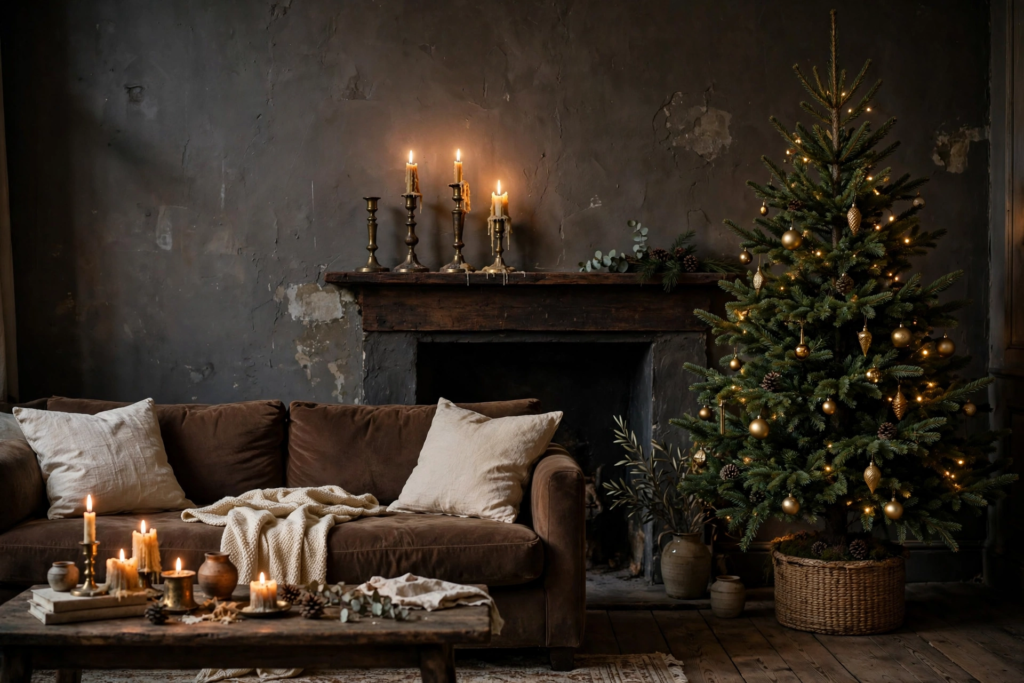
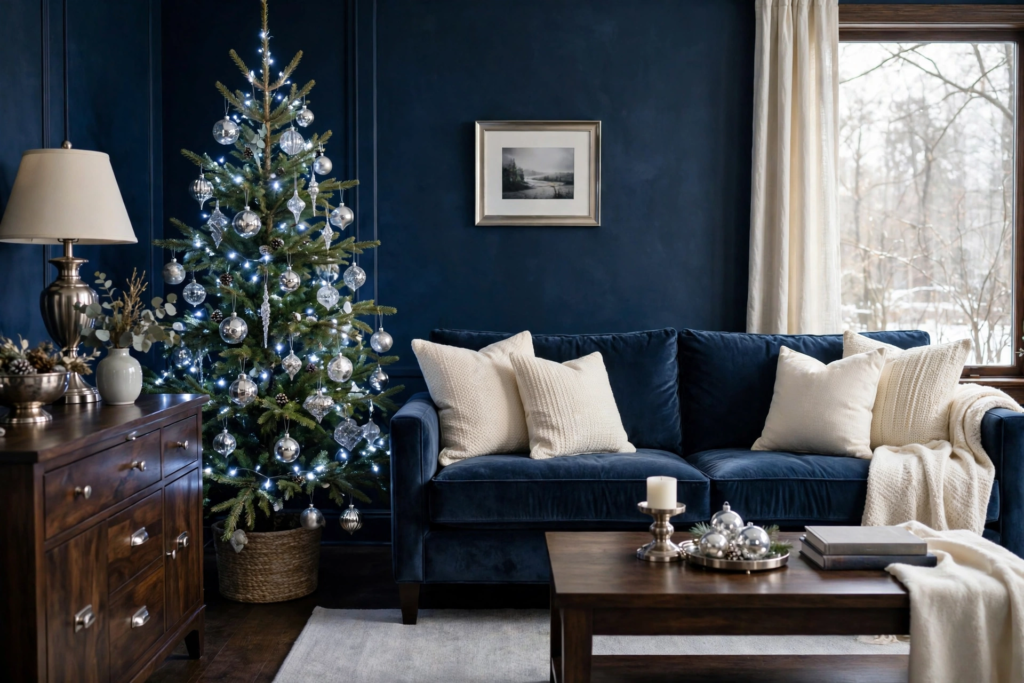
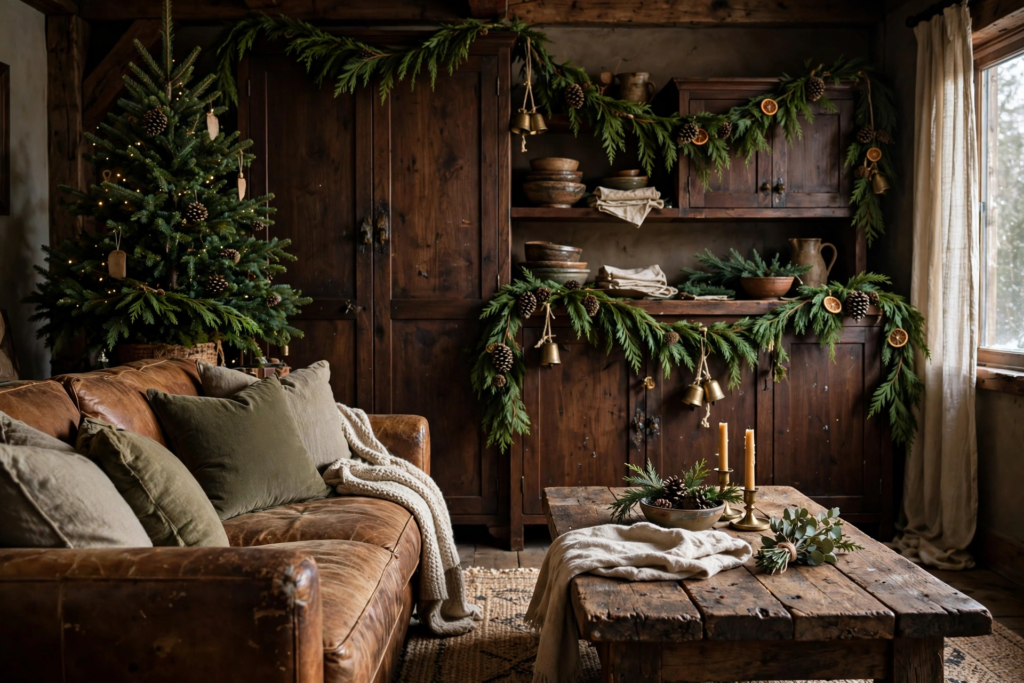
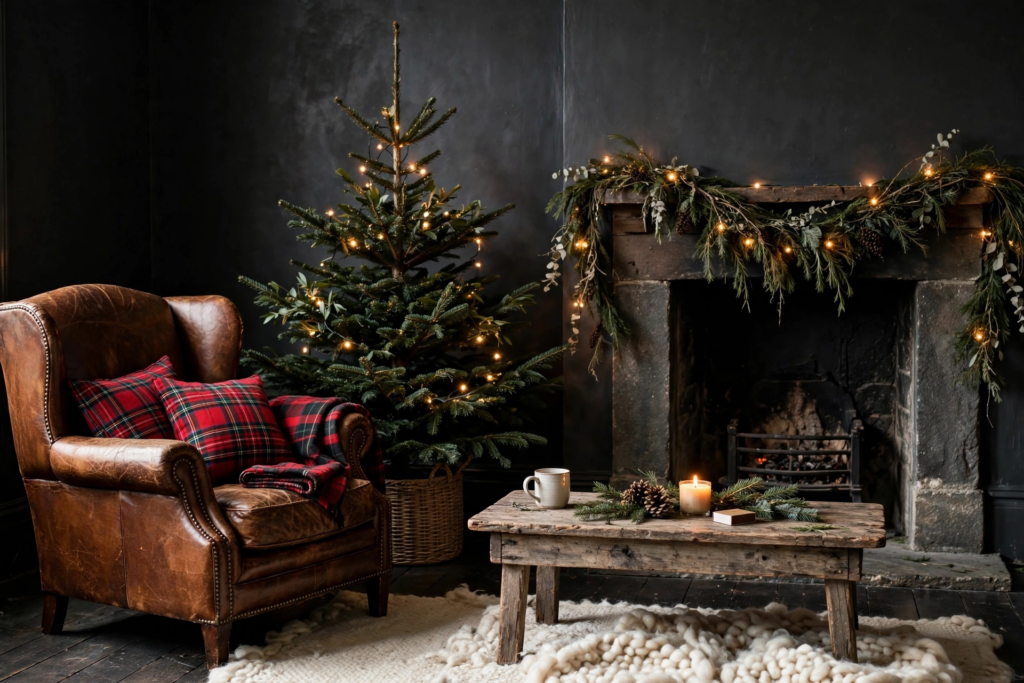
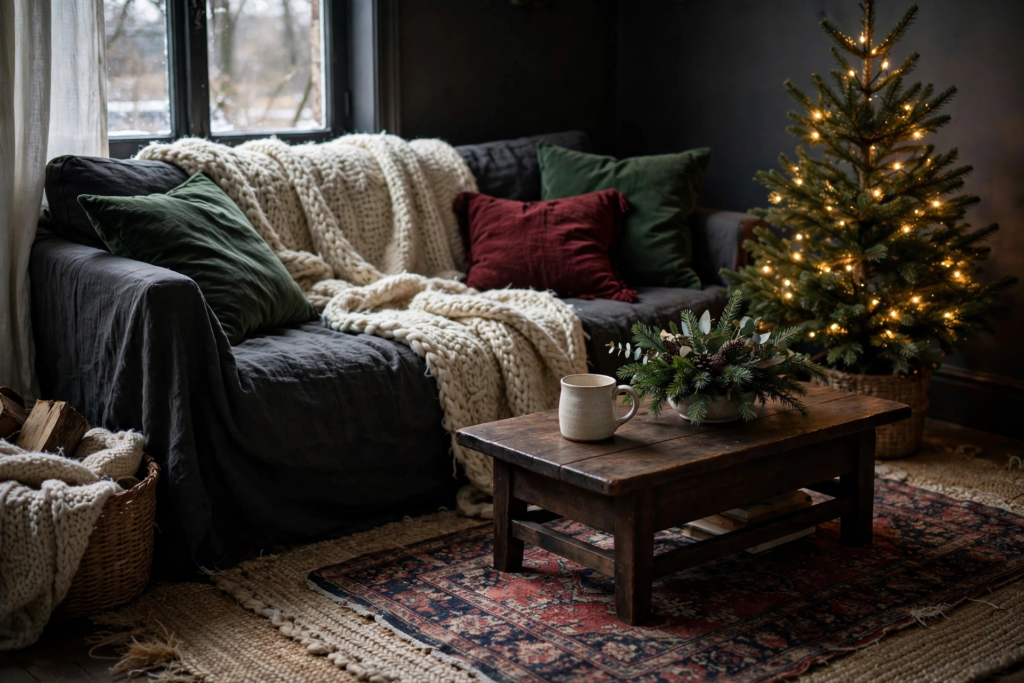
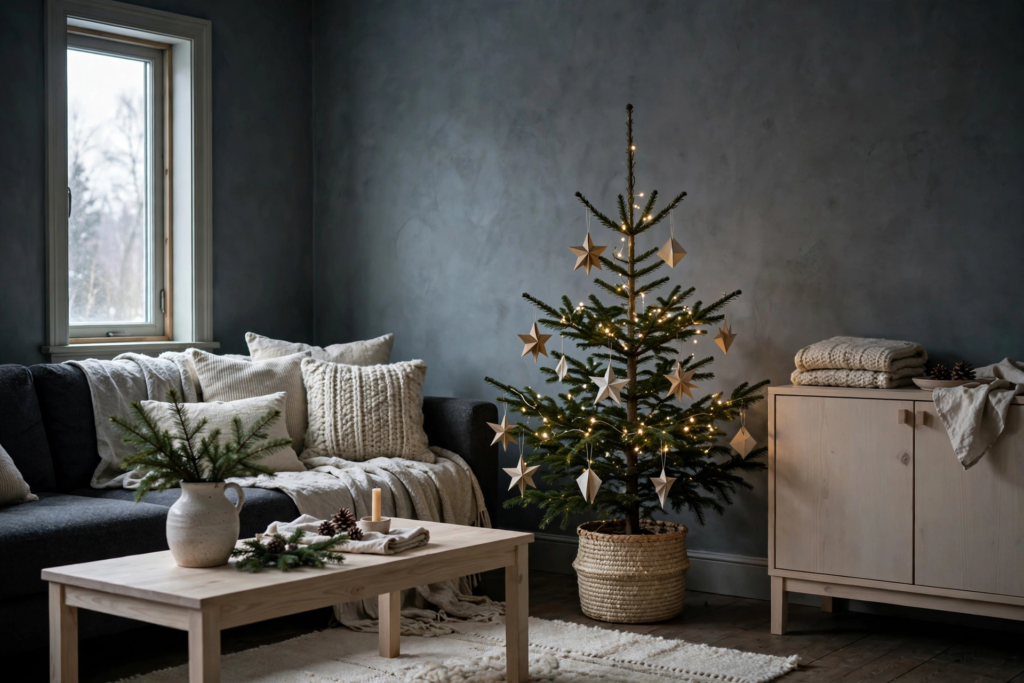
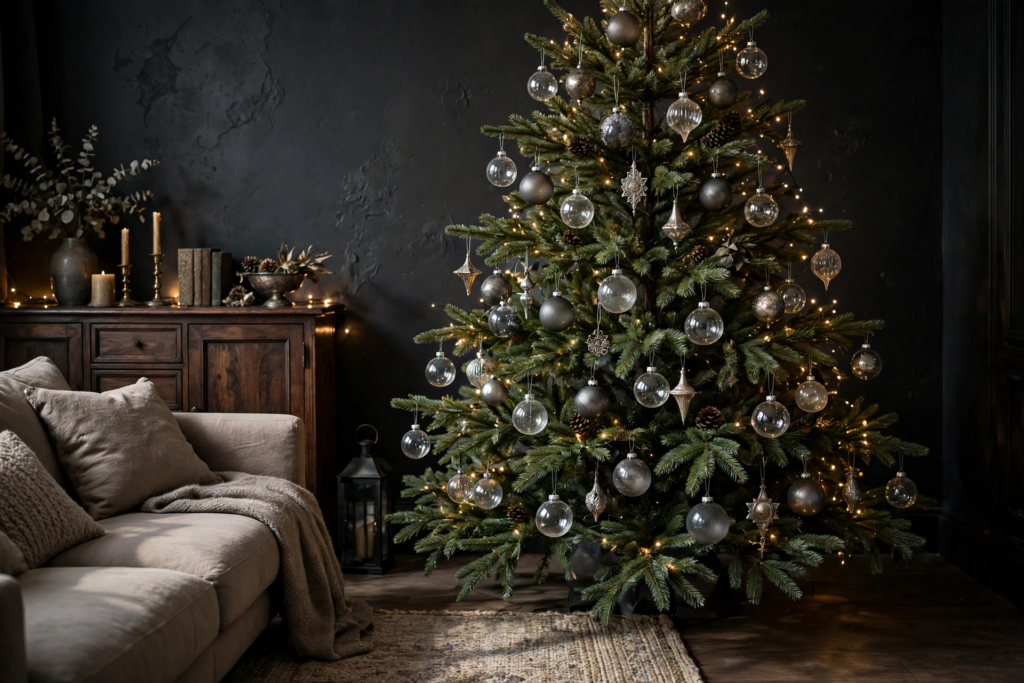
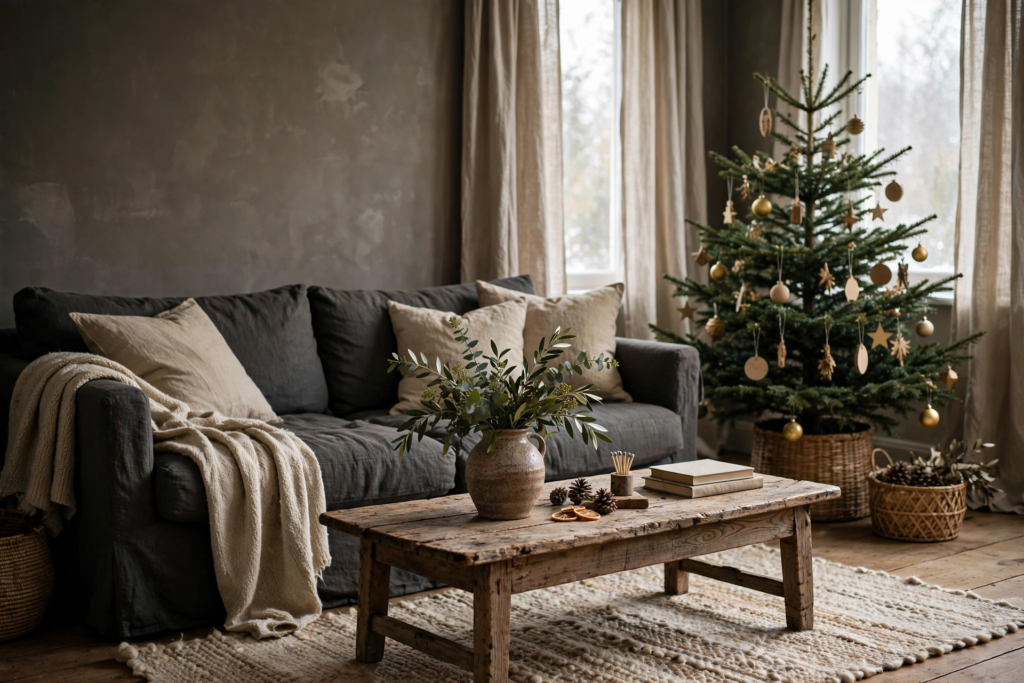
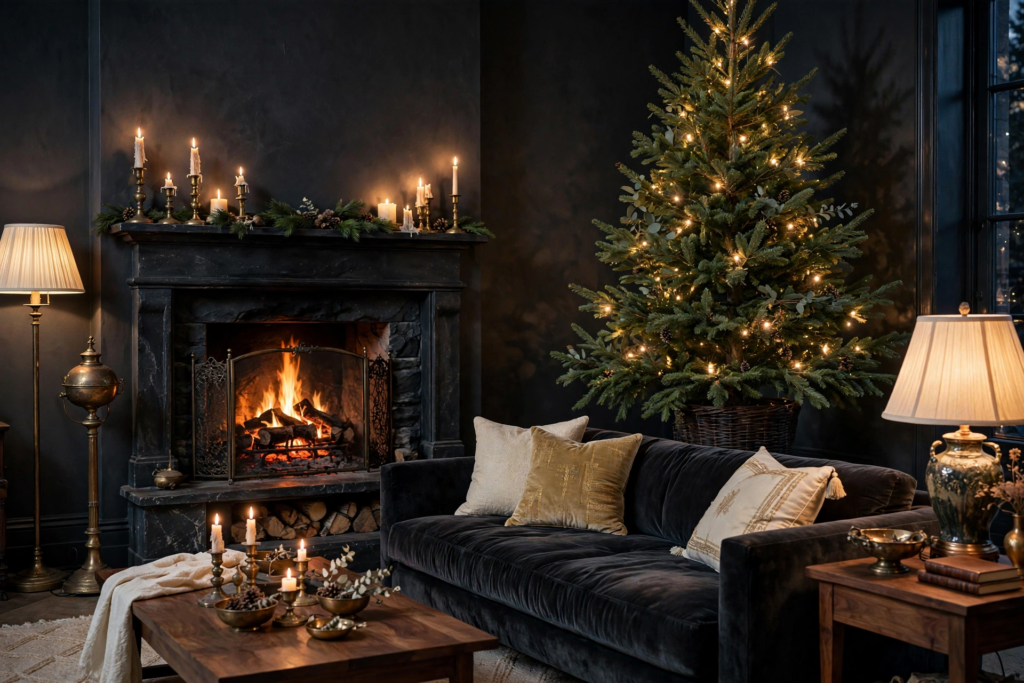
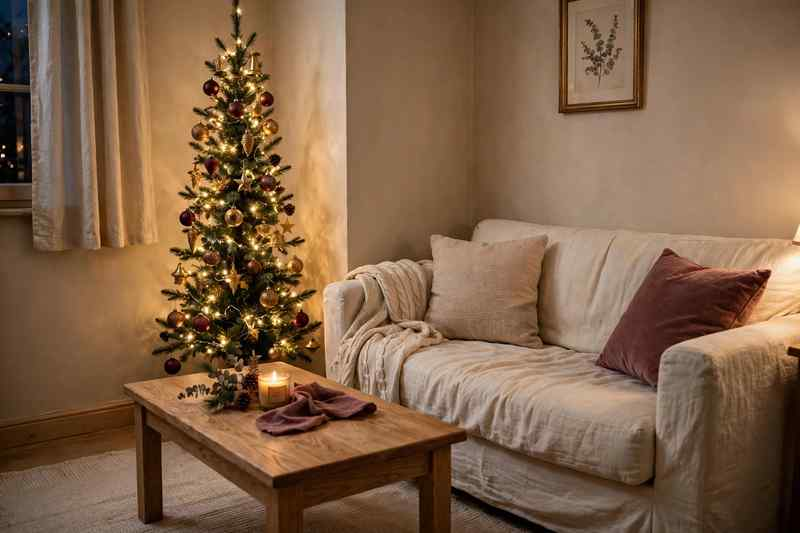
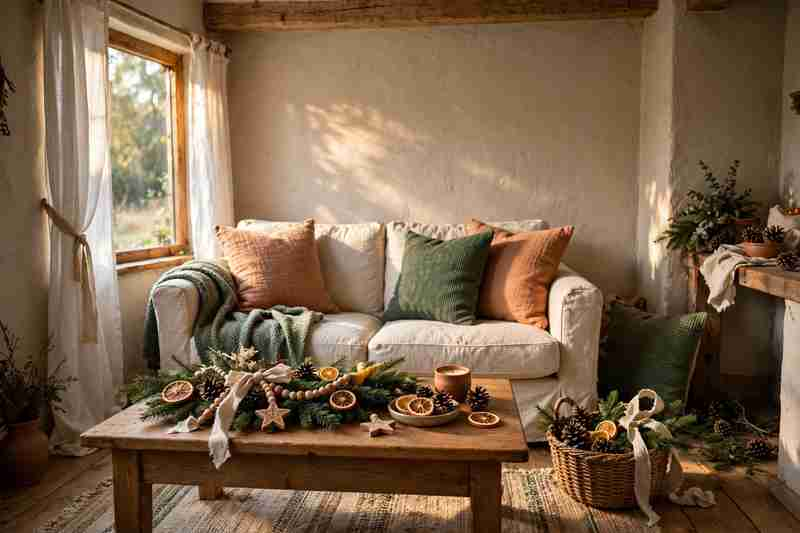
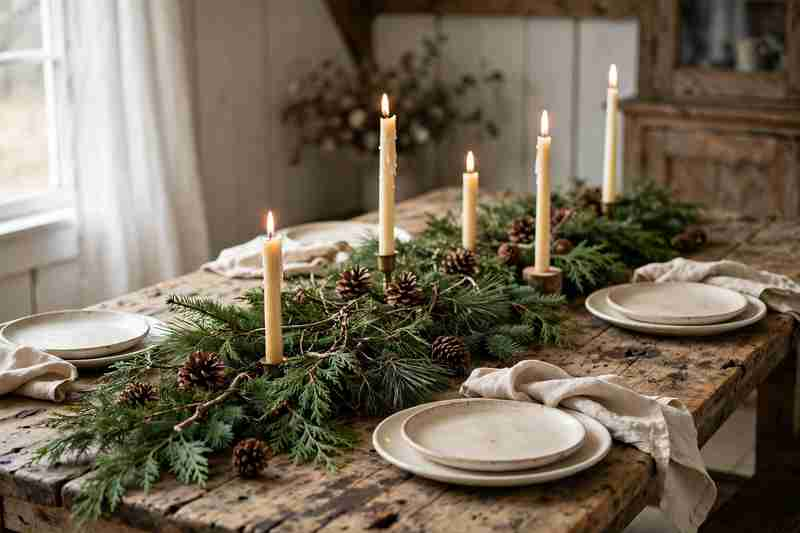
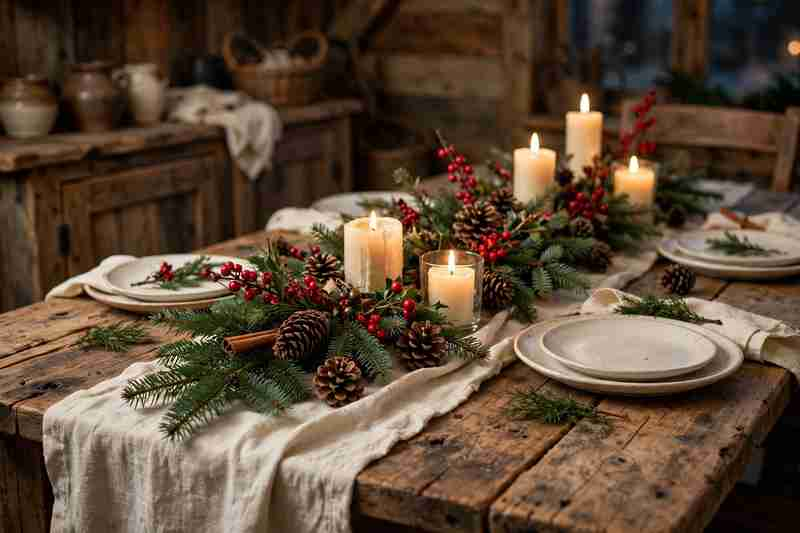
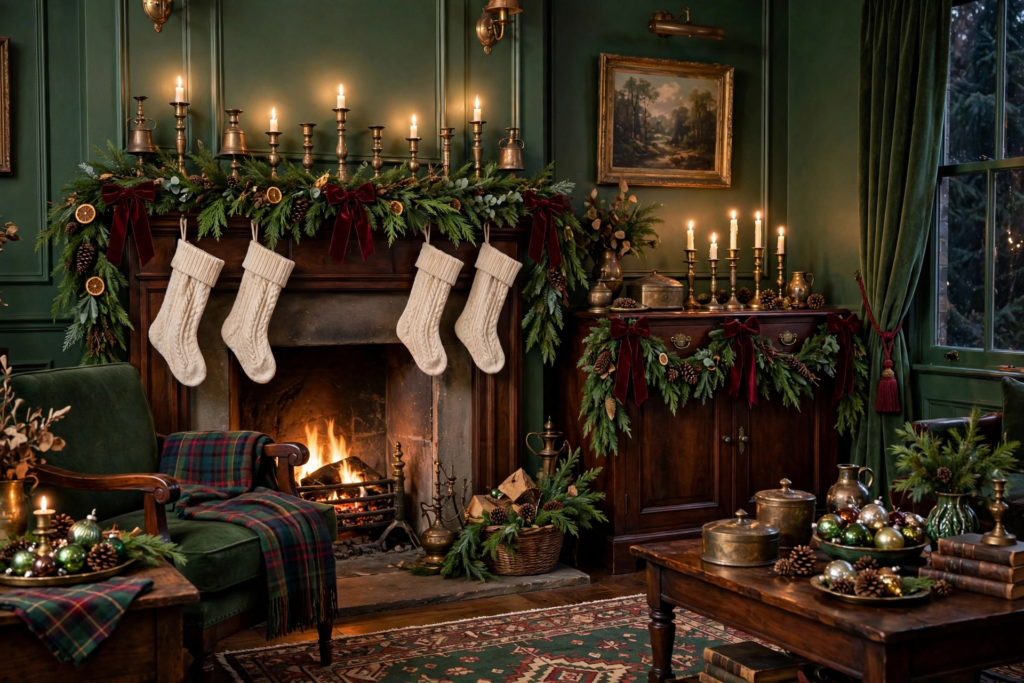
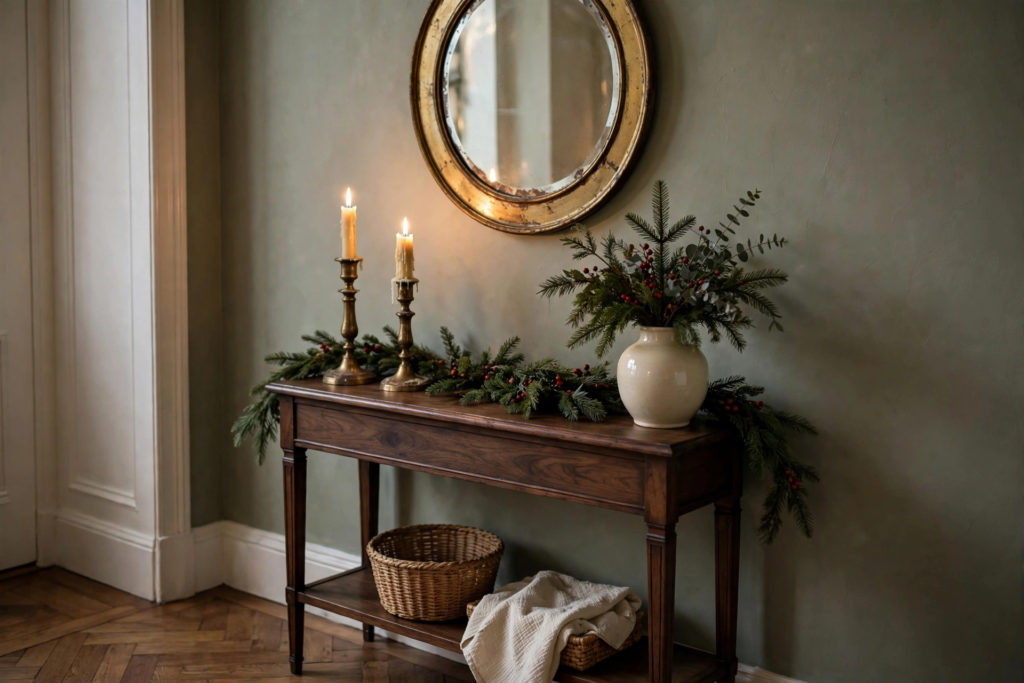
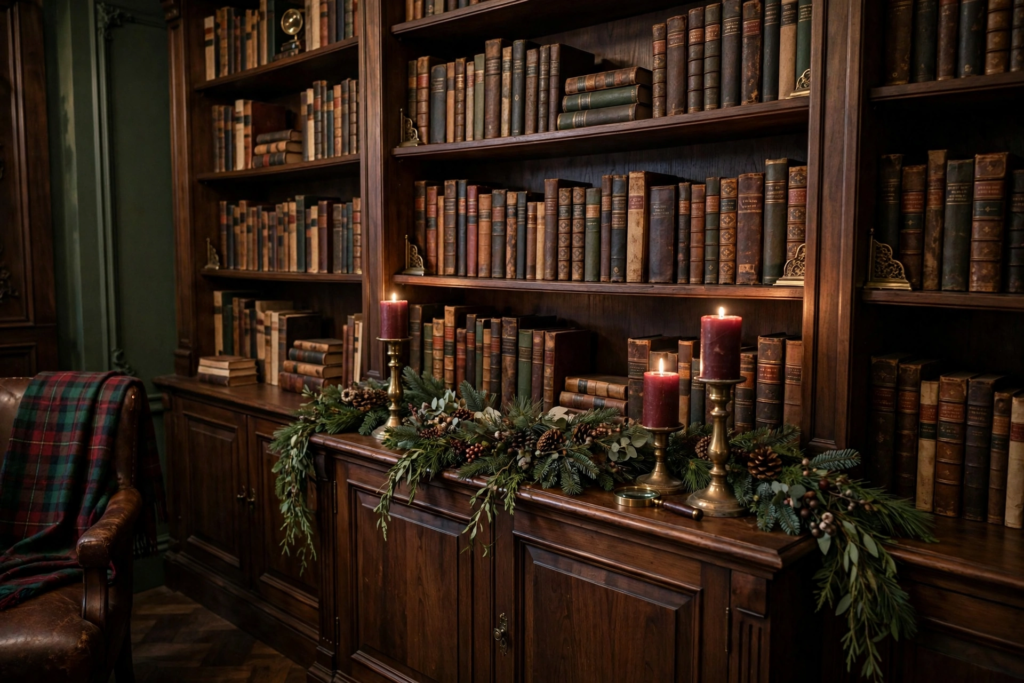
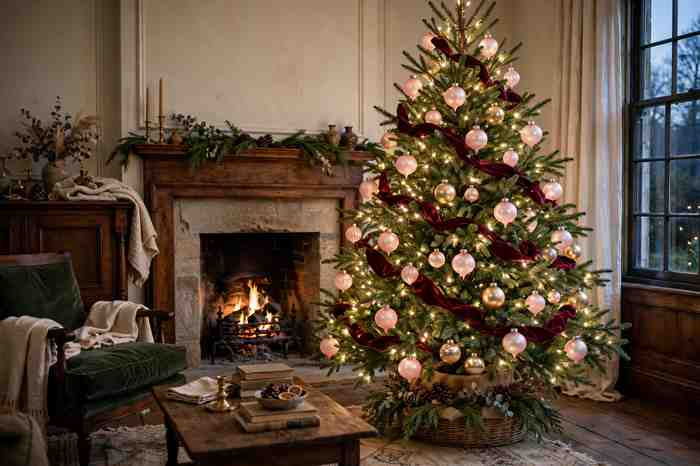
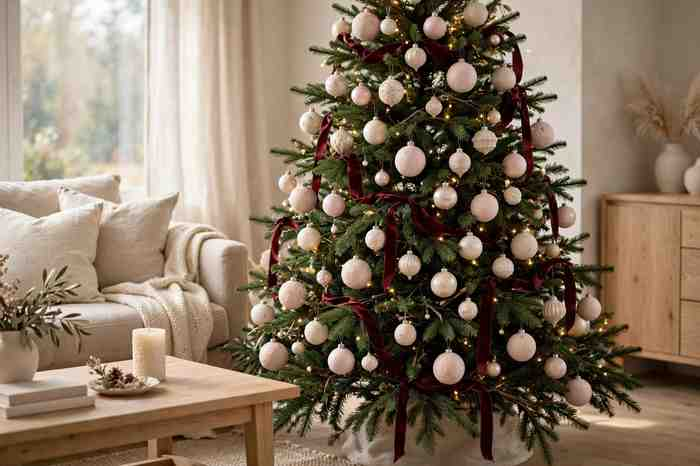
Dark Christmas living rooms bring a special kind of magic to the holiday season. Deep forest greens, charcoal walls, rich burgundy accents, warm wood, and soft candlelight create a cozy atmosphere that feels luxurious without losing the warmth of Christmas.
Whether you love a moody traditional interior, a modern black living room, or a sophisticated space inspired by English country homes, dark Christmas decor can make your home feel beautifully layered and inviting.
The secret is balancing deeper colors with warm lighting, natural greenery, plush fabrics, and carefully chosen festive decorations. These 21 elegant dark Christmas living room ideas will help you create a sophisticated holiday space that feels timeless, cozy, and full of seasonal charm.
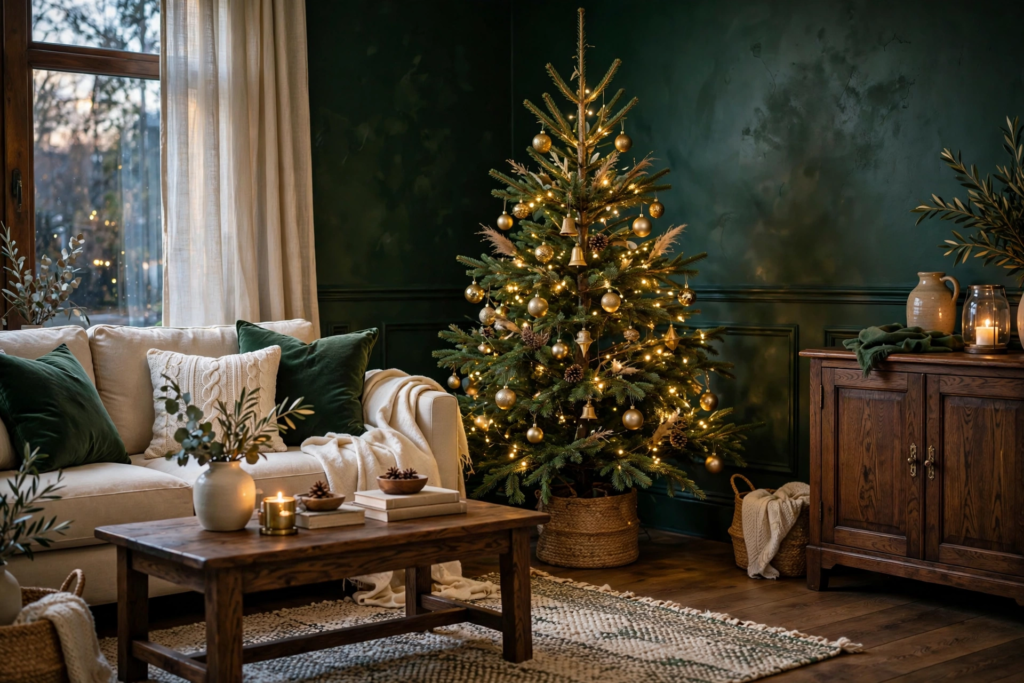
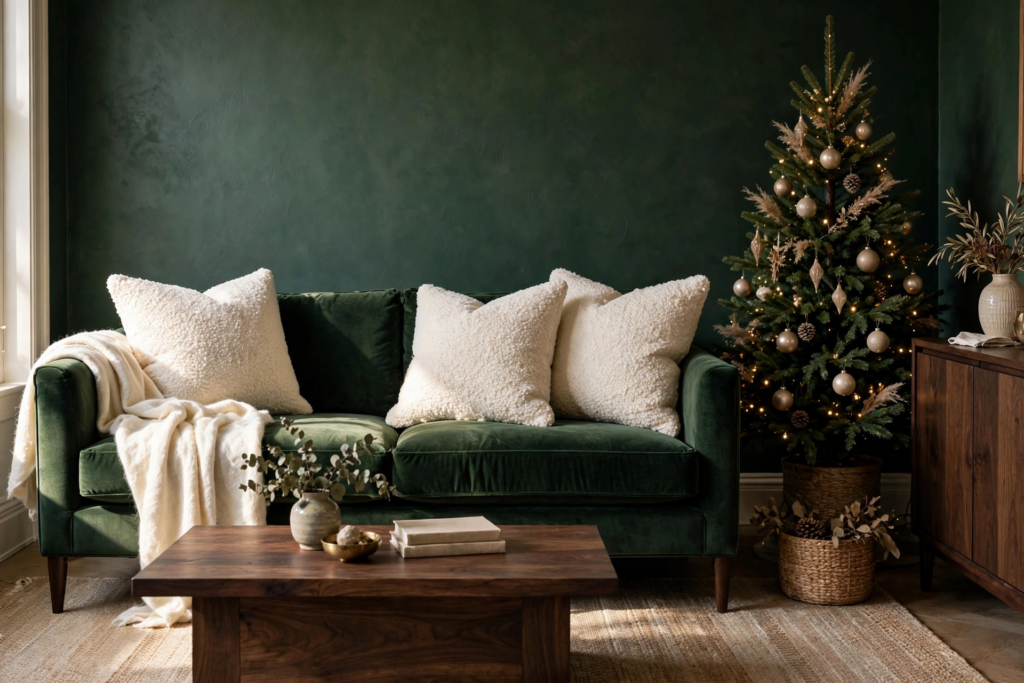
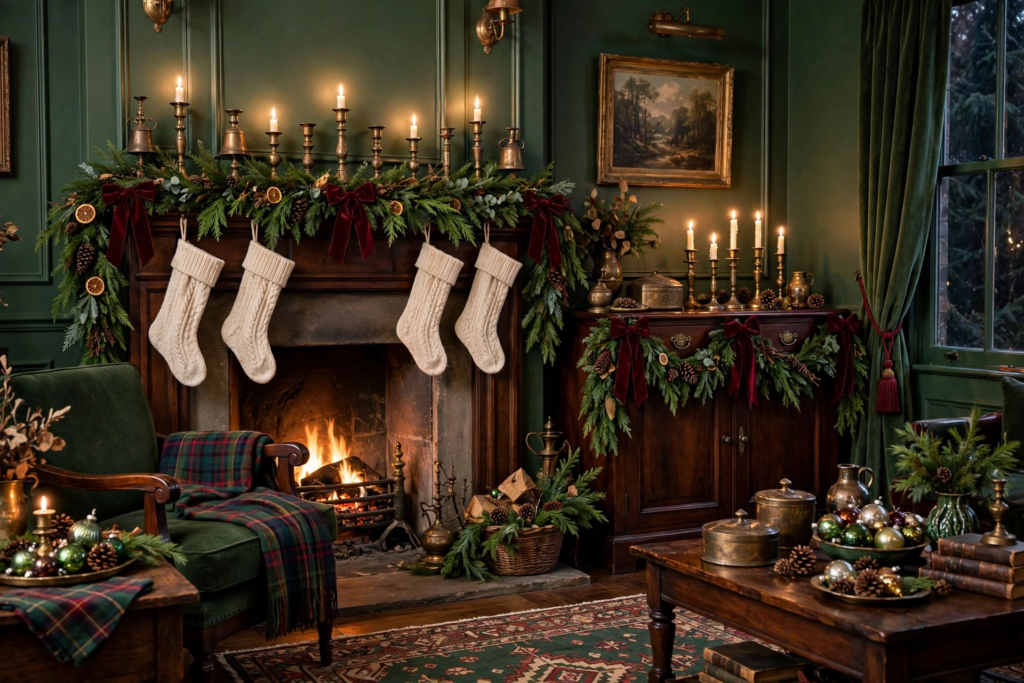
1. Decorate a Dark Green Christmas Living Room
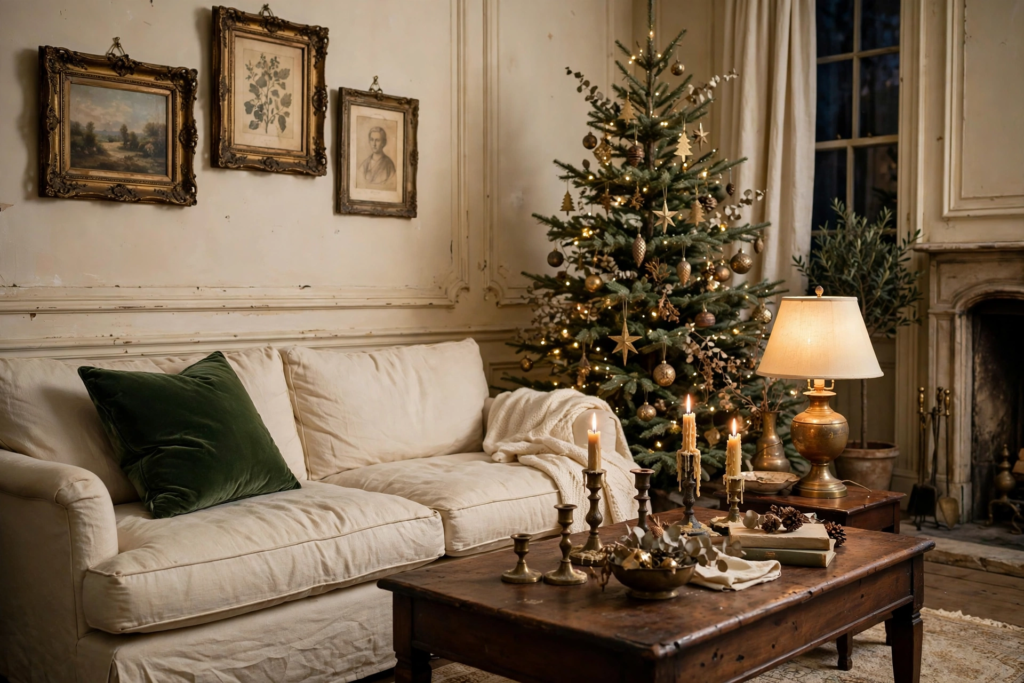
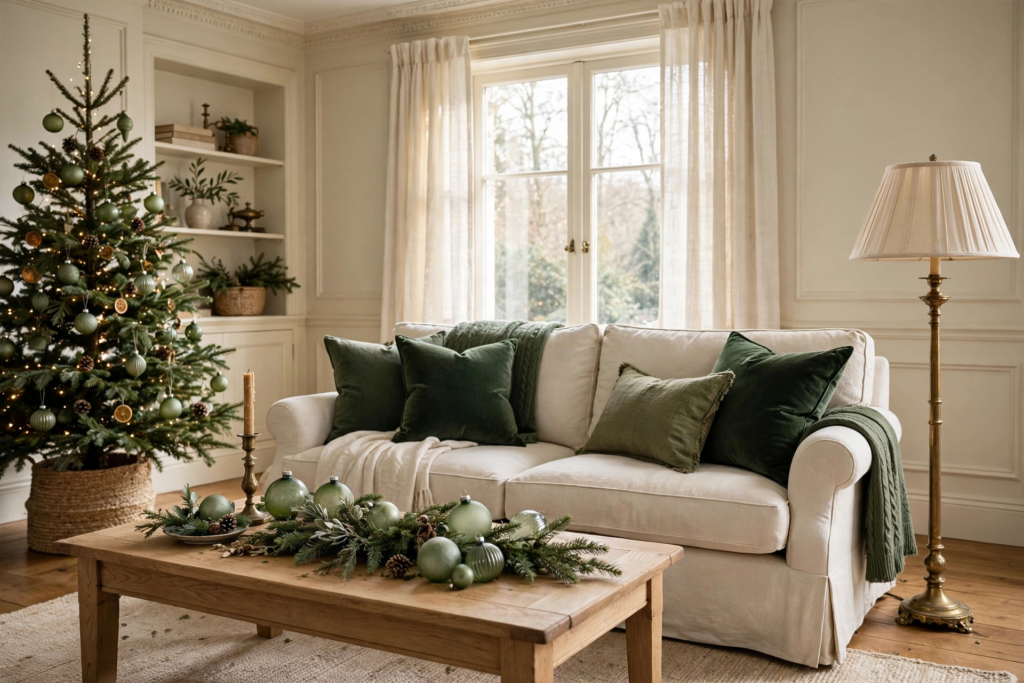
Deep forest green is a beautiful foundation for an elegant Christmas living room. Pair dark green walls or a green velvet sofa with a natural Christmas tree decorated in warm white lights, antique brass ornaments, and subtle champagne-gold accents.
Add cream cushions, a textured wool throw, and a few wooden accessories to soften the darker palette. The combination of evergreen tones and warm natural materials creates a classic Christmas atmosphere that feels rich rather than overwhelming.
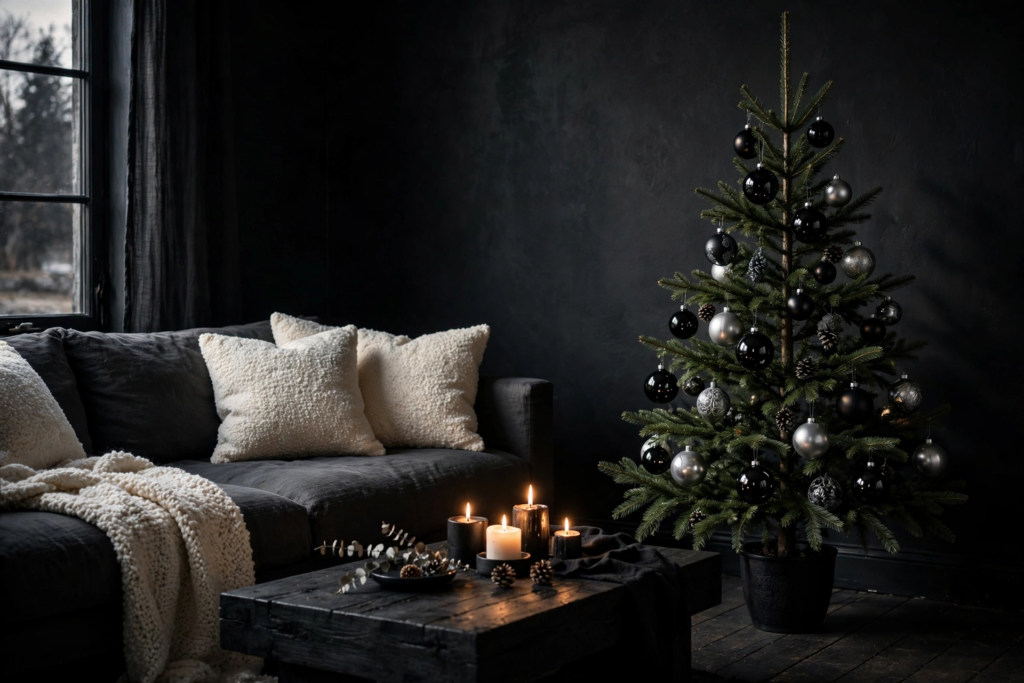
2. Create a Moody Black Christmas Living Room
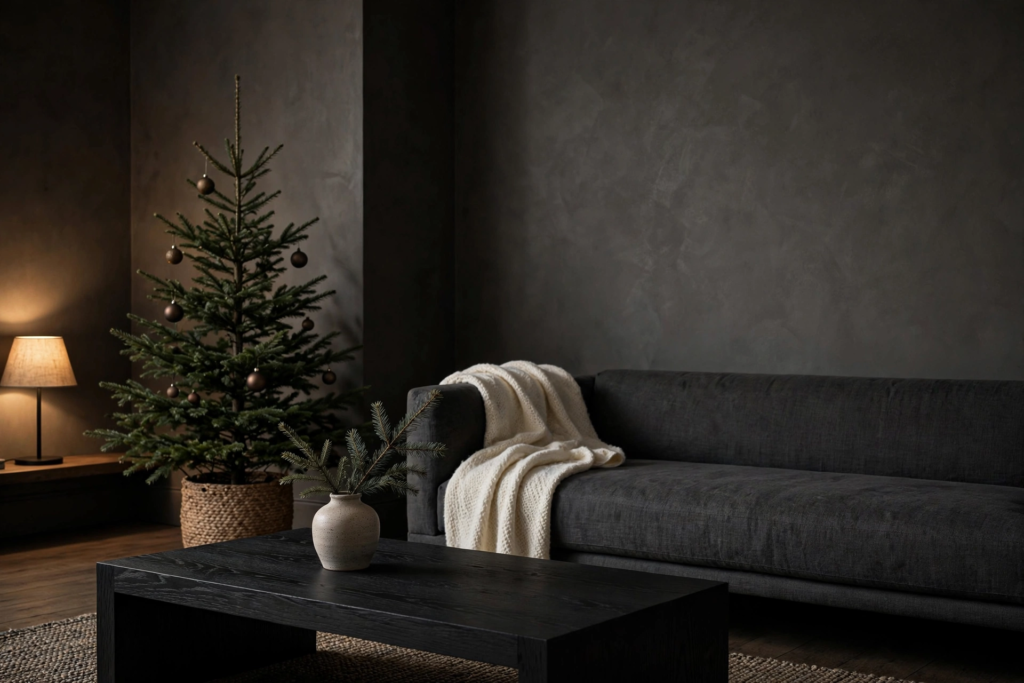
A black Christmas living room can feel dramatic and refined when you balance the dark background with thoughtful festive details. Style charcoal or black walls with a lush green Christmas tree, soft ivory lights, understated metallic ornaments, and a few natural wood elements.
Use a mix of velvet cushions, knitted throws, and warm-toned lamps to make the space feel comfortable. Rather than decorating every surface, choose a few statement pieces that stand out against the dark surroundings.
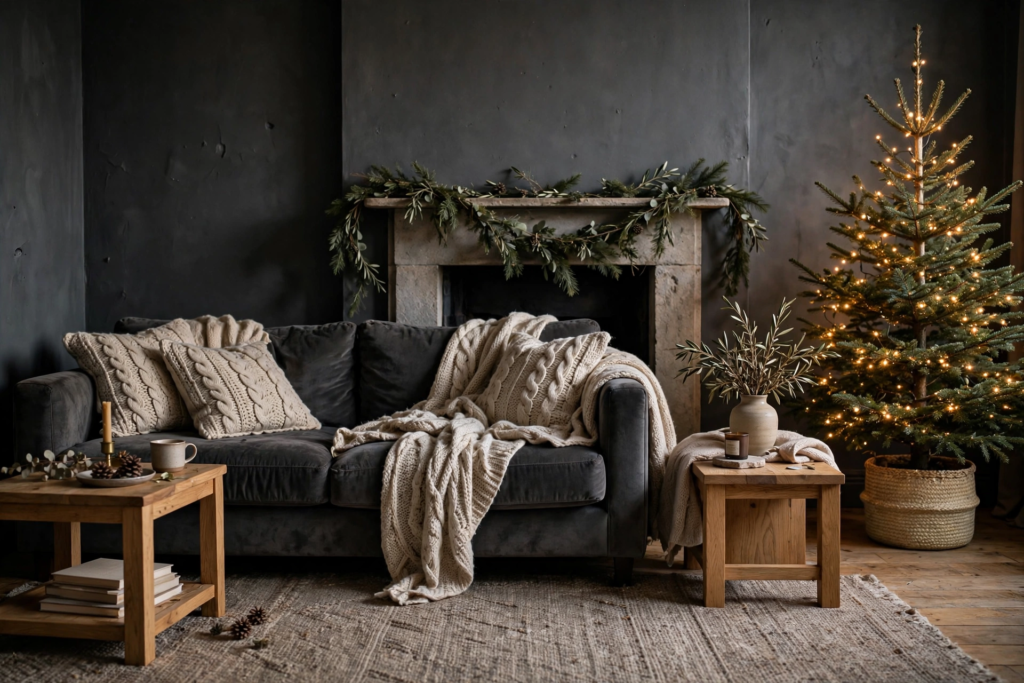
3. Style a Charcoal Living Room With Warm Christmas Lights
Charcoal walls and furniture create a sophisticated backdrop for Christmas decorating. Add a beautifully lit tree with warm white fairy lights, soft gold ornaments, and a few clear glass decorations that reflect the glow.
Layer the seating area with cream knit blankets, taupe cushions, and a textured rug. The warm lighting adds depth to the charcoal palette, making the living room feel intimate and inviting on cold winter evenings.
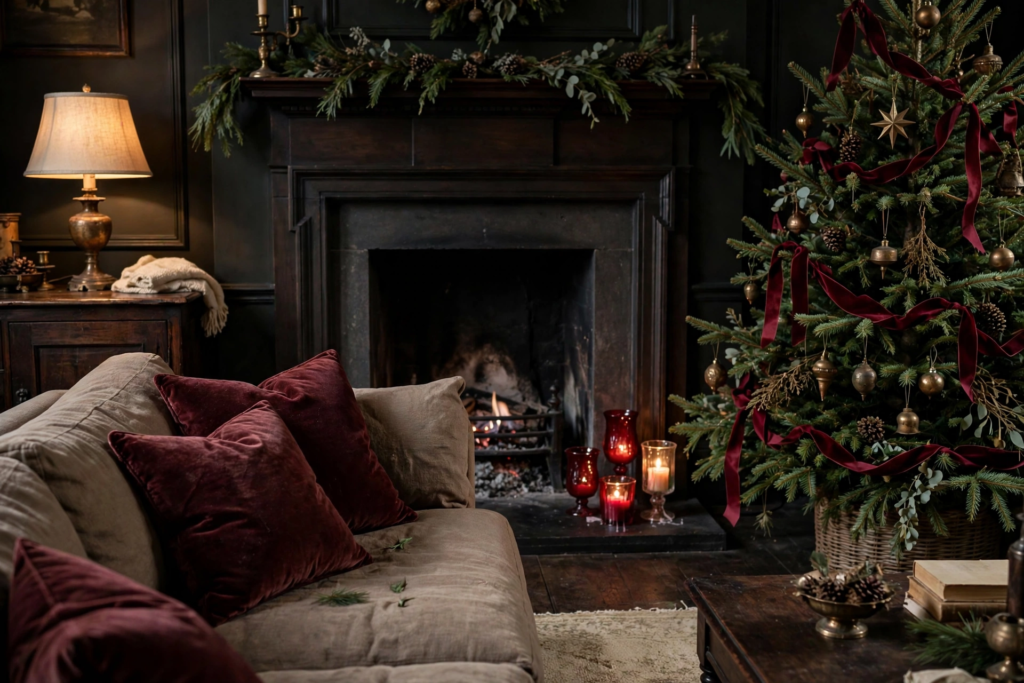
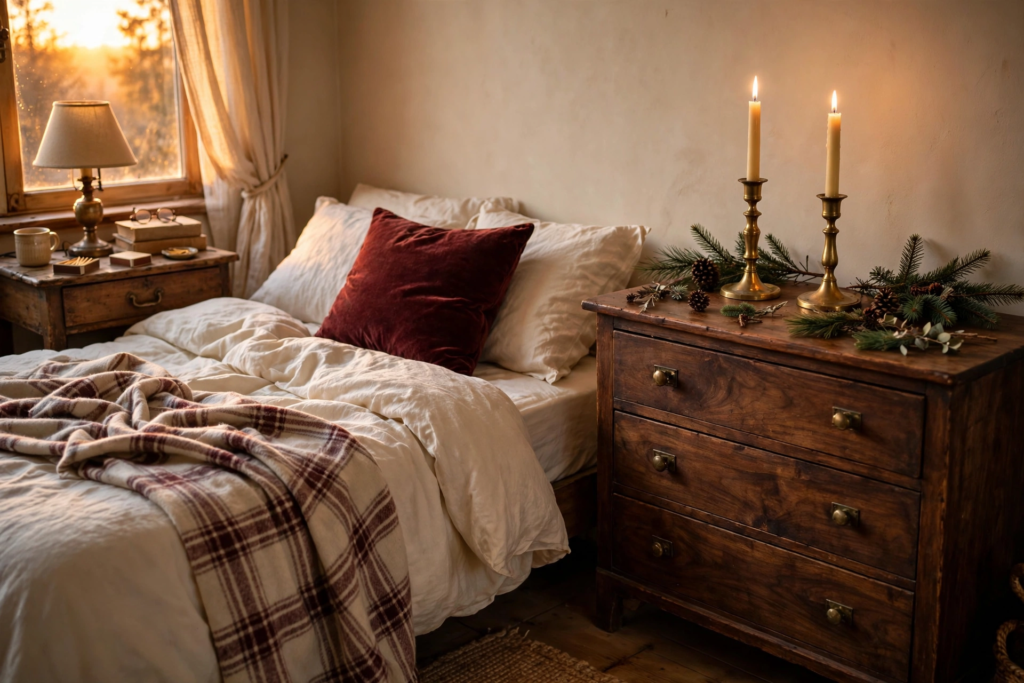
4. Add Burgundy and Wine Red Christmas Accents
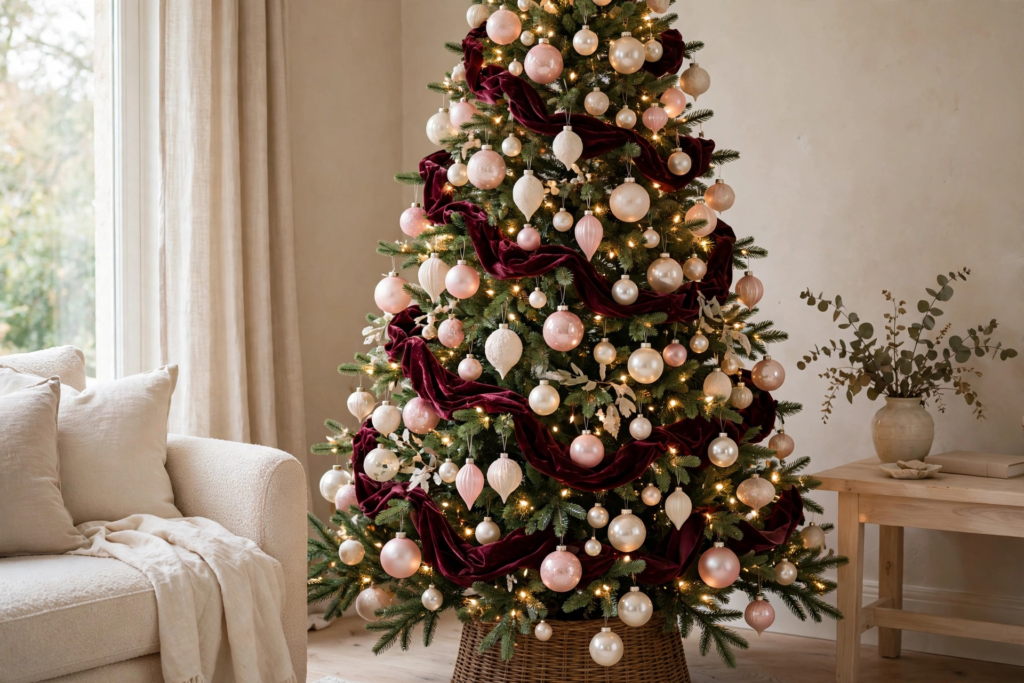
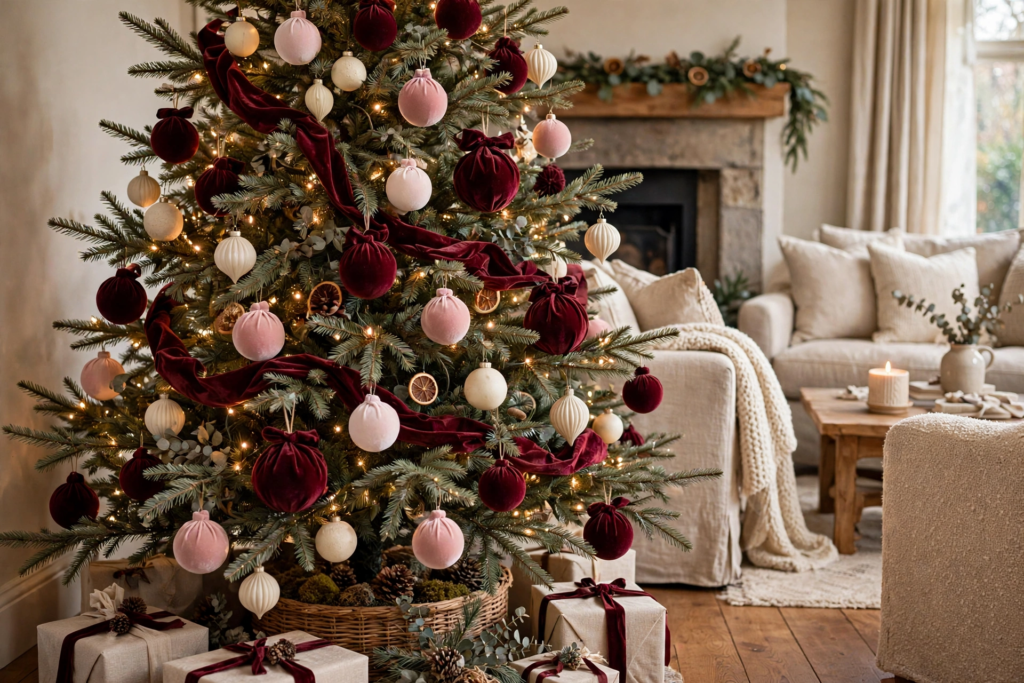
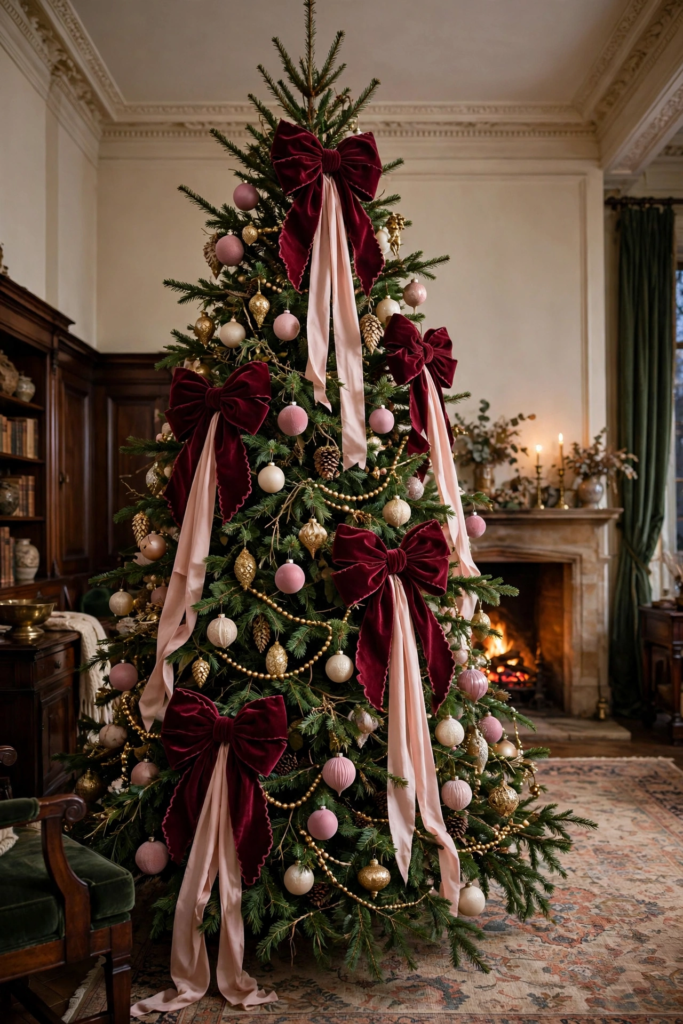
Burgundy and wine red bring warmth and richness to dark Christmas interiors. Introduce these shades through velvet cushions, a deep red throw, ribbon on the Christmas tree, or a few decorative accents on the mantel.
Pair burgundy with forest green, dark walnut, antique brass, and warm ivory for a balanced look. These colors work especially well in traditional living rooms with dark wood furniture or deep-colored upholstery.
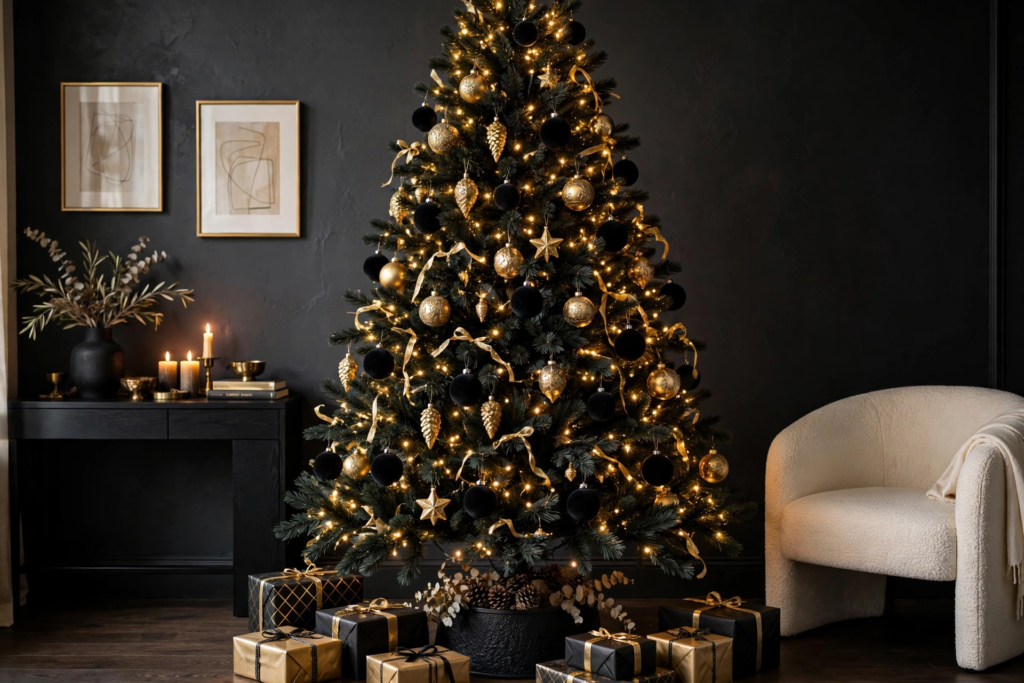
5. Decorate With a Black and Gold Christmas Tree
A black and gold Christmas tree makes a striking focal point in a sophisticated living room. Choose a natural green tree and decorate it with black baubles, brushed gold ornaments, delicate metallic ribbons, and warm white lights.
Repeat the palette with black candleholders, gold picture frames, or brass accents around the room. Keep the surrounding decor simple so the tree remains the star without making the living room feel too formal.
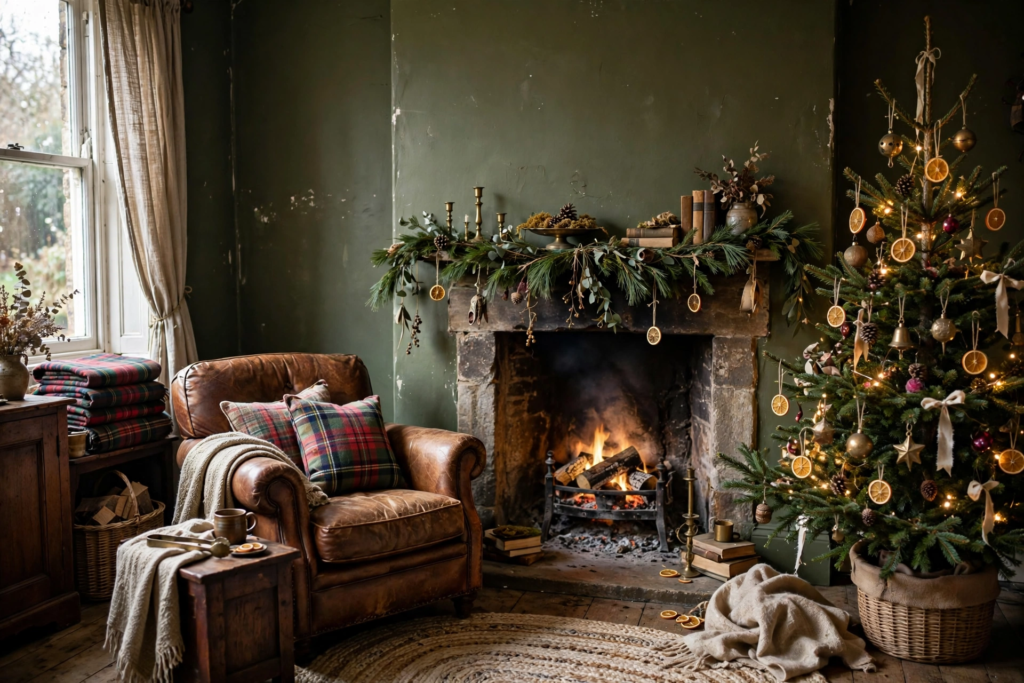
6. Create an English Country Dark Christmas Living Room
English country style combines rich colors, traditional furniture, layered textiles, and natural Christmas greenery. Start with a deep green or navy sofa, dark wood furniture, patterned cushions, and a traditional tree decorated with muted red, gold, and forest-green ornaments.
Add a plaid throw, an evergreen garland, and a few brass candleholders for an authentic seasonal feel. The result is a cozy, collected living room that feels timeless rather than overly decorated.
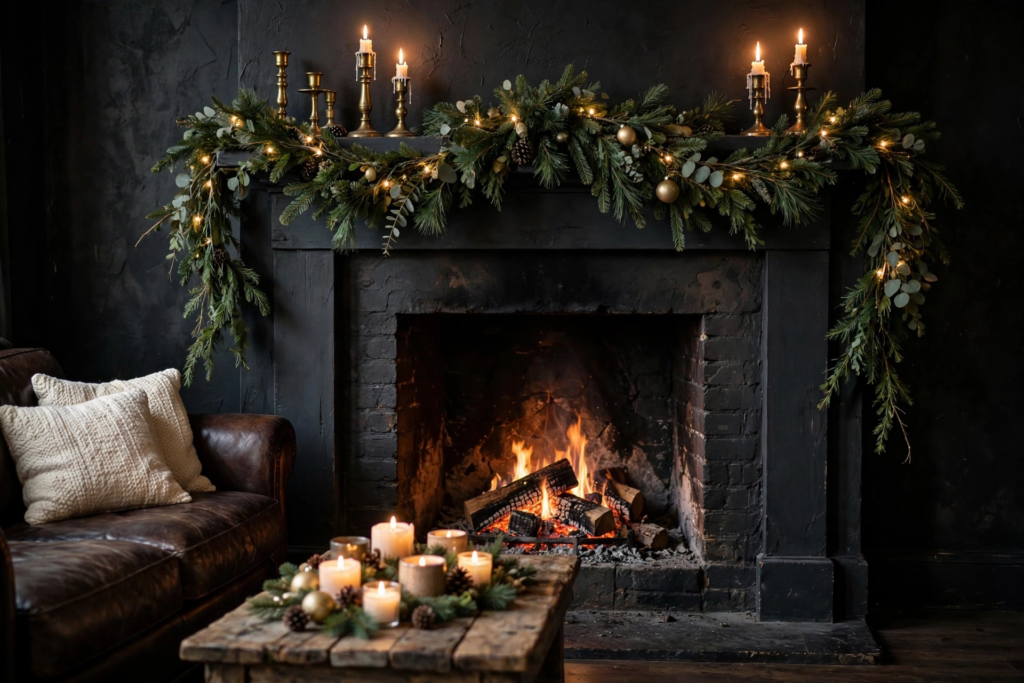
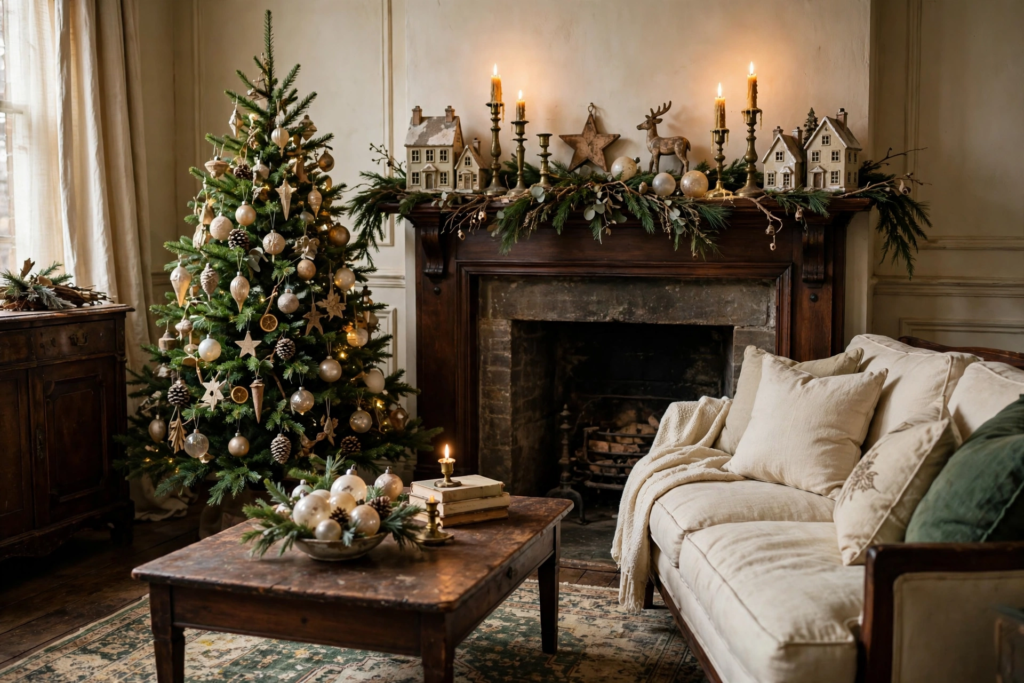
7. Style a Dark Fireplace With Christmas Garland
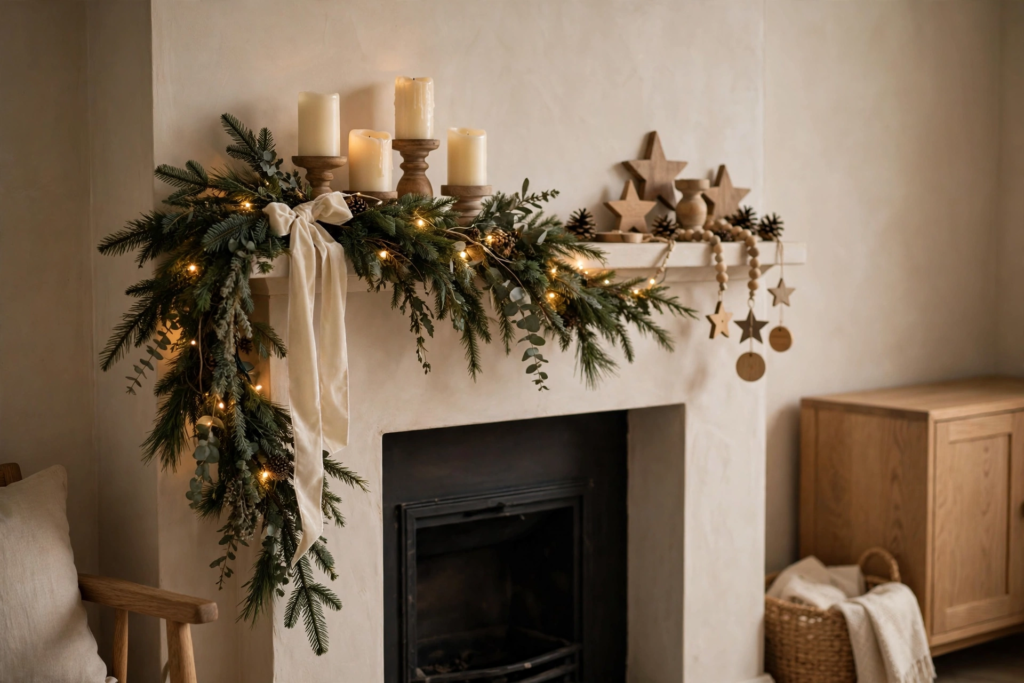
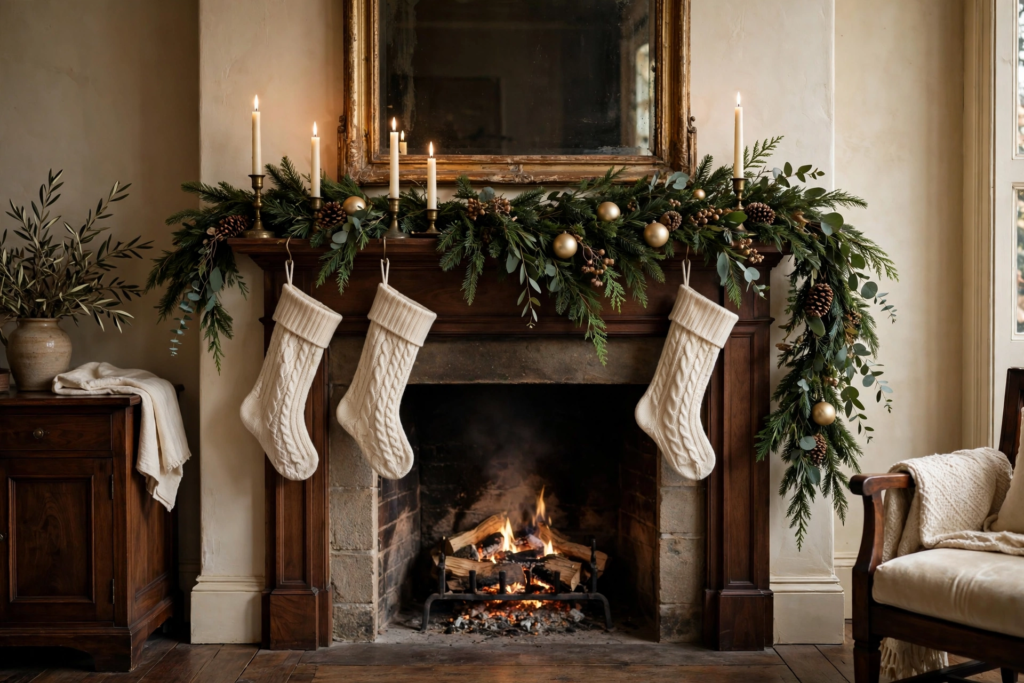
A dark fireplace creates a dramatic focal point during the holiday season. Drape fresh or realistic faux evergreen garland across the mantel, then add a few warm white lights, brass candleholders, and understated cream or gold ornaments.
If your fireplace surround is charcoal, black, or deep green, the greenery will blend beautifully with the darker tones. Keep the garland natural-looking and slightly relaxed instead of arranging it too perfectly for a more welcoming appearance.
8. Layer Forest Green Velvet and Cream Textures
Forest green velvet and cream fabrics create a luxurious contrast that feels especially inviting at Christmas. Style a dark green sofa with ivory cushions, a soft cream throw, and a textured rug in a warm neutral shade.
Add a Christmas tree with restrained gold ornaments and warm white lights. A few ceramic vases, wooden side tables, and subtle brass details will complete the look without competing with the rich fabric textures.
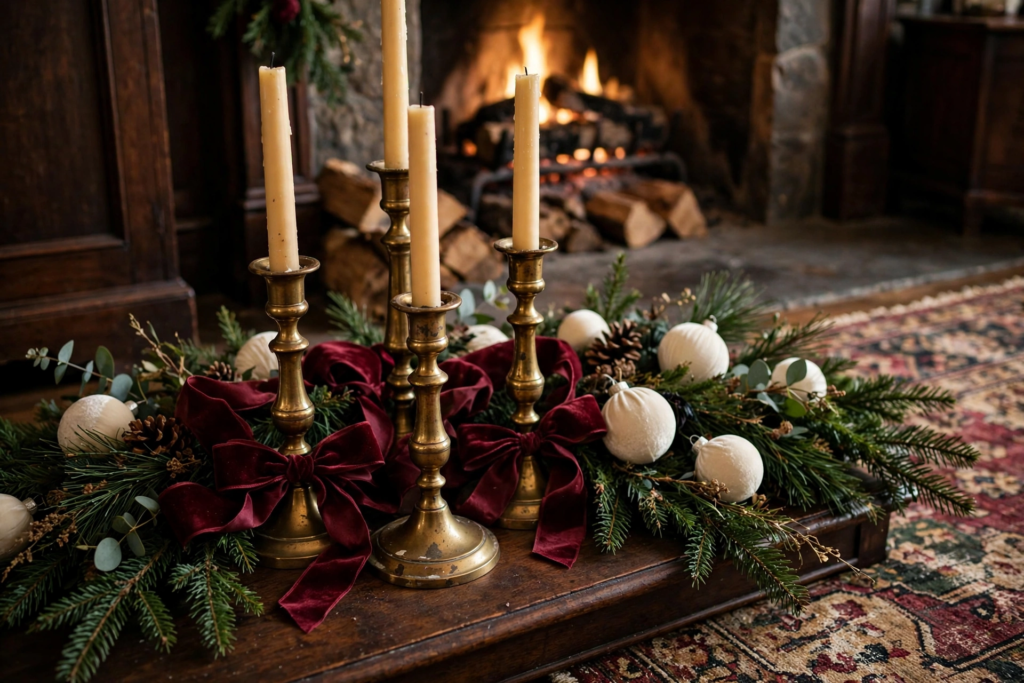
9. Add Antique Brass and Candlelight
Antique brass is ideal for warming up a dark Christmas living room. Introduce brass candlesticks, vintage-inspired picture frames, decorative bowls, or a pair of warm metallic lamps around a charcoal or forest-green interior.
Combine these accents with evergreen branches, dark wood furniture, and soft ivory textiles. The aged finish of brass feels more understated than highly polished gold and works beautifully in traditional, vintage, and modern classic spaces.
10. Create a Moody Navy Blue Christmas Living Room
Deep navy brings a sophisticated alternative to black and charcoal. Pair navy walls or a blue velvet sofa with a natural green Christmas tree, champagne ornaments, warm wood furniture, and creamy textiles.
Add a patterned rug with subtle blue, rust, or ivory details to create depth. Warm lighting is especially important in a navy room because it helps the darker color feel cozy rather than cold.
11. Decorate With Dark Wood and Natural Greenery
Dark walnut, mahogany, and espresso-stained wood create a warm foundation for elegant Christmas decor. Style a dark wood coffee table with a simple evergreen arrangement, a few brass candleholders, and a small bowl of natural ornaments.
Continue the look with a traditional green tree, linen upholstery, and warm white lights. Natural materials keep the room grounded and prevent the darker furniture from feeling too heavy.
12. Style a Dark Christmas Living Room With Plaid
Plaid is a timeless way to bring holiday character into a dark living room. Choose cushions or throws in deep green, burgundy, navy, charcoal, or muted red, and pair them with solid-colored upholstery to keep the pattern balanced.
A natural Christmas tree, warm lights, and a dark wood coffee table will reinforce the traditional look. For a more sophisticated finish, choose classic woven fabrics rather than overly bright or novelty holiday patterns.
13. Choose a Minimalist Dark Christmas Decor Scheme
Minimalist dark Christmas decor focuses on a few strong details instead of an abundance of ornaments. Begin with a charcoal, black, or deep green living room, then add a natural tree with warm white lights and a limited selection of understated decorations.
Use a simple evergreen arrangement on the coffee table, a textured neutral throw, and one or two sculptural candleholders. The uncluttered layout allows the colors, shapes, and natural materials to stand out.
14. Create a Gothic-Inspired Christmas Living Room
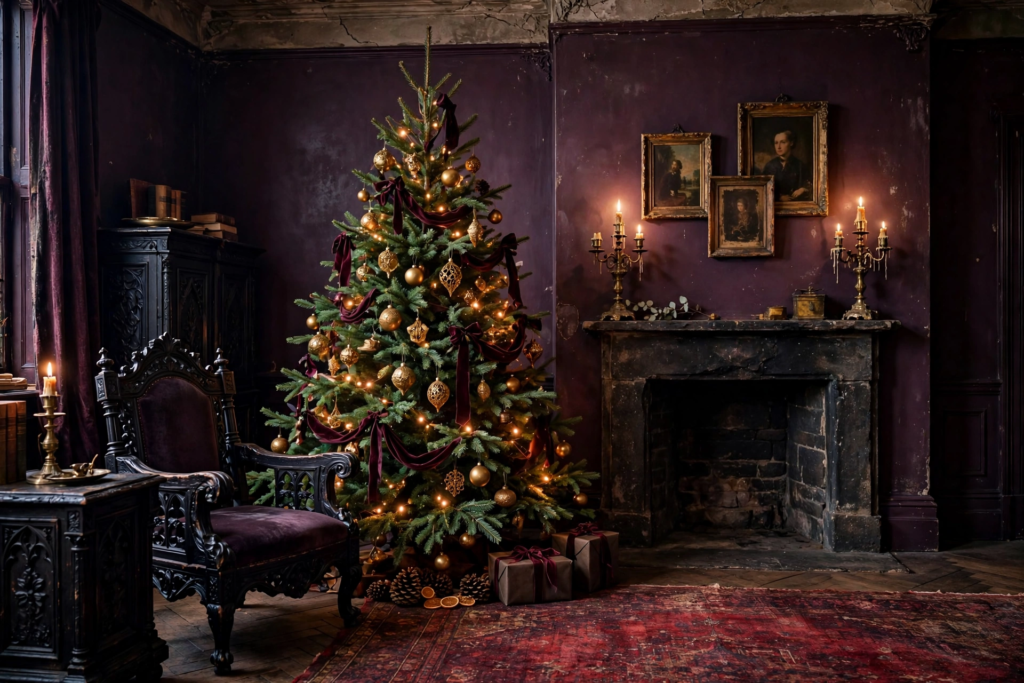
Gothic-inspired Christmas decor uses dramatic colors, traditional shapes, dark finishes, and atmospheric lighting. Pair black or deep plum accents with a natural evergreen tree, dark floral arrangements, antique-style candleholders, and rich velvet fabrics.
A few muted silver or aged-brass details can add contrast without making the room feel overly ornate. Keep the seating comfortable and introduce warm lighting so the atmosphere remains elegant and cozy rather than gloomy.
15. Decorate With Copper and Rust Christmas Accents
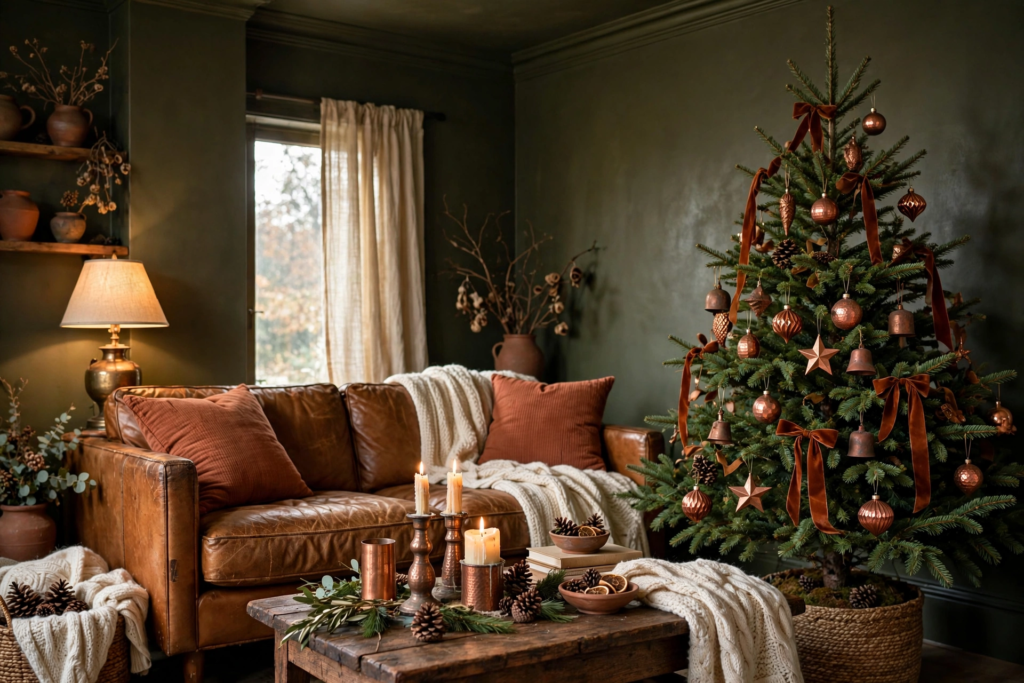
Copper and rust tones bring warmth to a dark holiday interior. Use copper-colored ornaments, rust velvet cushions, terracotta accessories, or a warm brown throw against charcoal walls or deep green upholstery.
These earthy colors look beautiful beside natural greenery and dark wood. Add soft white lighting and a few cream accents to balance the palette, creating a relaxed and sophisticated Christmas living room with a warm seasonal glow.
16. Style a Dark Living Room With Jewel-Tone Ornaments
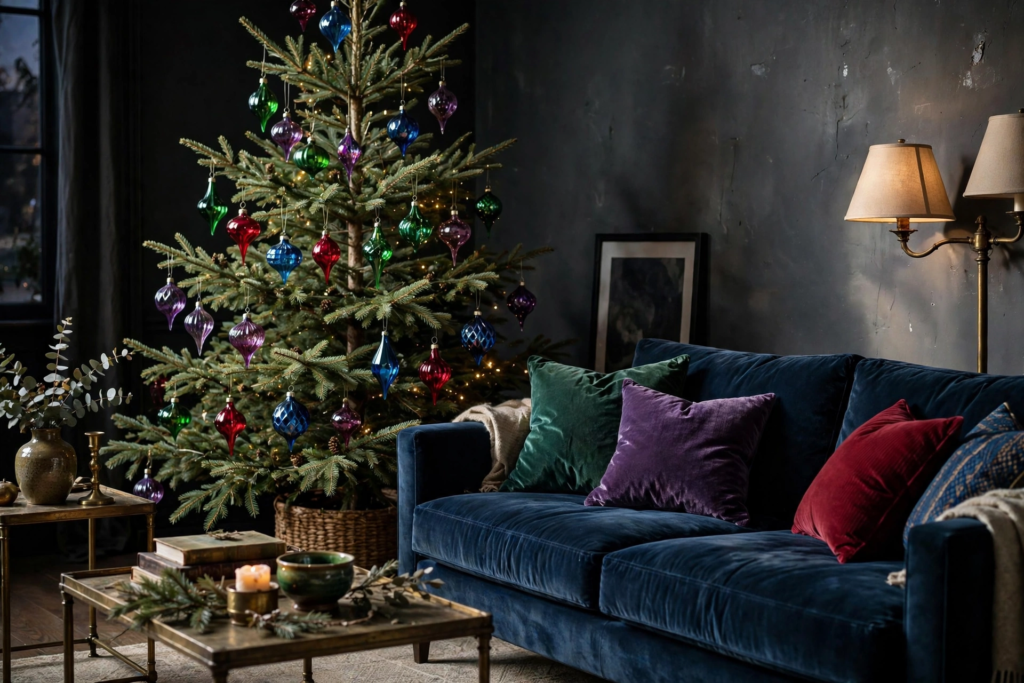
Jewel tones create a rich and colorful Christmas look without relying on bright traditional red and green. Decorate your tree with deep emerald, sapphire blue, amethyst, and burgundy ornaments, balanced with a few muted gold details.
Keep the rest of the living room relatively restrained with charcoal furniture, dark wood, and neutral textiles. The colorful ornaments become the main feature while the darker surroundings make their shades appear deeper and more luxurious.
17. Add a Cozy Layered Rug and Textured Throws
Dark Christmas interiors feel more welcoming when you introduce layers of soft textures. Place a thick wool or vintage-inspired rug beneath the seating area, then add chunky knit throws, velvet cushions, and linen or bouclé upholstery.
Choose warm neutrals, muted green, deep rust, or charcoal to complement the room’s darker elements. These layers create a comfortable space for relaxing while adding visual depth without relying on additional decorations.
18. Create a Dark Scandinavian Christmas Living Room
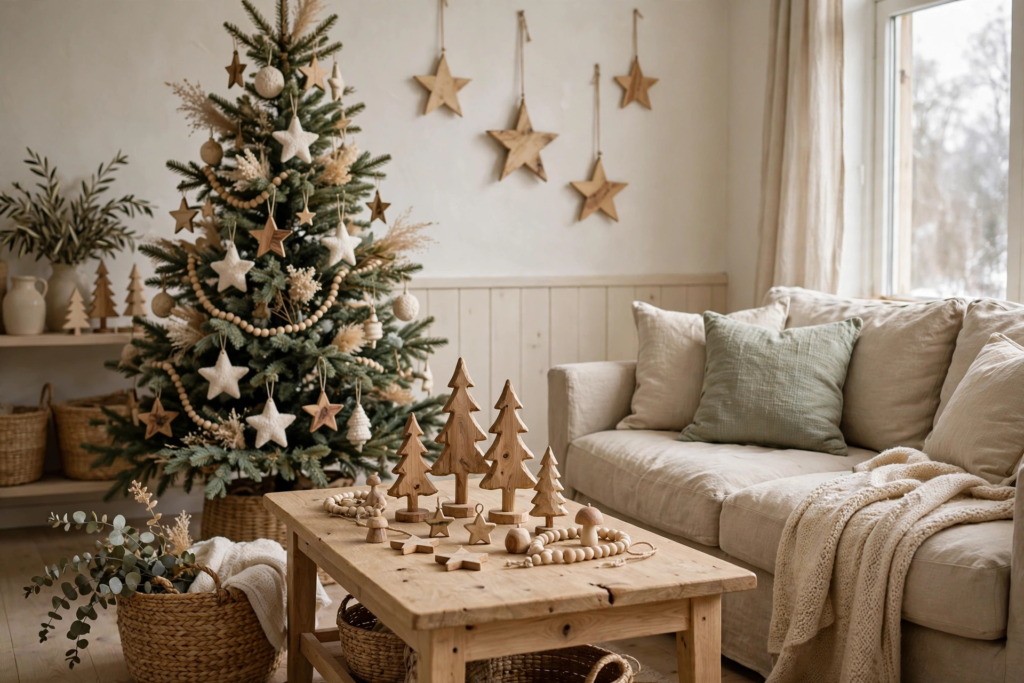
Dark Scandinavian Christmas decor balances clean lines with natural materials and soft lighting. Use charcoal or deep gray walls, simple wooden furniture, a natural evergreen tree, and understated decorations in black, cream, and muted green.
Add knitted blankets, paper ornaments, ceramic candleholders, and warm white lights. The result feels minimal but cozy, with natural textures providing warmth against the darker color palette.
19. Style a Dark Christmas Living Room With Glass Ornaments
Glass ornaments add delicate sparkle to a dark Christmas living room. Decorate a lush green tree with clear glass baubles, smoky gray ornaments, subtle silver accents, and warm white lights.
Repeat the glass details with a vase or decorative bowl on the coffee table. The transparent surfaces catch the light without adding visual weight, making this style particularly effective in compact rooms or interiors with dark furniture.
20. Decorate a Dark Christmas Living Room With Natural Linen
Natural linen softens a dark Christmas palette and creates a relaxed, understated look. Combine charcoal or deep green furniture with oatmeal cushions, cream linen curtains, a natural woven rug, and a textured throw.
Add a simple evergreen garland and a Christmas tree decorated with wood, paper, or muted metallic ornaments. The contrast between deep colors and natural fabrics gives the room a sophisticated, lived-in atmosphere.
21. Create a Luxurious Dark Christmas Living Room With Layered Lighting
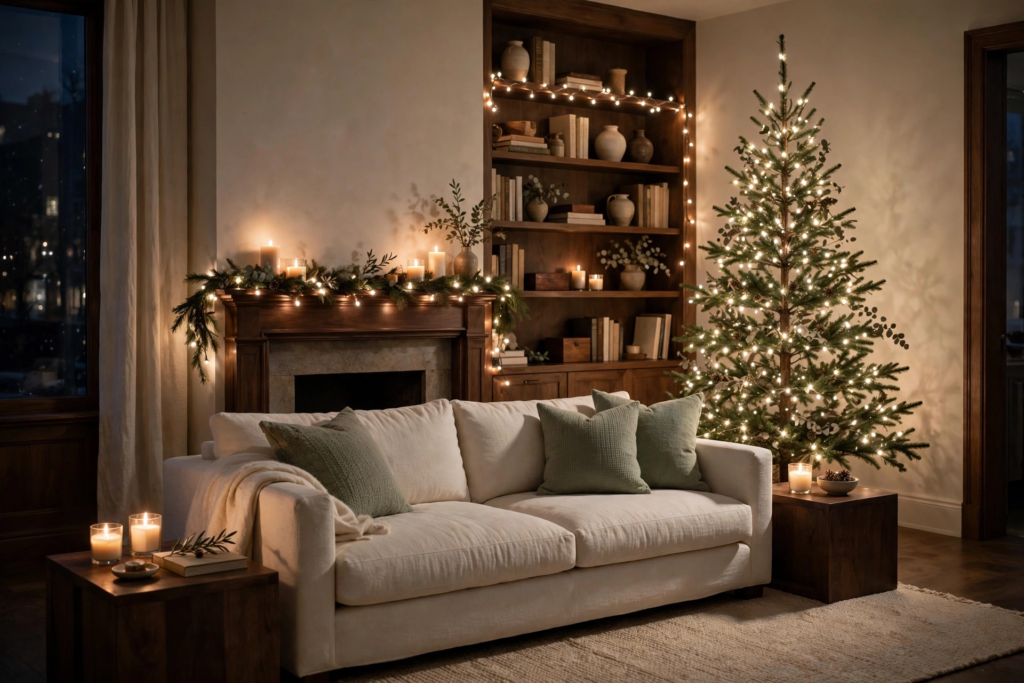
Layered lighting can transform a dark living room into a warm and luxurious Christmas retreat. Combine warm white tree lights with table lamps, wall sconces, subtle fireplace lighting, and a few candle-style lights placed around the seating area.
Use a mix of light sources rather than relying on one bright ceiling fixture. The gentle glow highlights velvet, wood, greenery, and metallic details, creating a beautiful evening atmosphere that feels sophisticated and comfortable.
How to Decorate a Dark Christmas Living Room Without Making It Feel Small
Dark colors can create depth and coziness, but balance is important, particularly in smaller living rooms. Use lighting and contrasting textures to prevent the space from feeling flat.
Add warm lighting: Choose warm white Christmas lights and lamps to soften charcoal, black, and navy tones.
Introduce lighter fabrics: Cream cushions, beige throws, and pale rugs help break up large areas of dark color.
Use reflective accents: Glass ornaments, mirrors, and subtle metallic details help distribute light throughout the room.
Keep pathways clear: Avoid crowding a small living room with oversized trees or too many decorative accessories.
Create one main focal point: A beautifully decorated tree or fireplace can make the room feel intentional without requiring decorations everywhere.
What Colors Look Best With Dark Christmas Decor?
Forest green, burgundy, navy, charcoal, and black all work beautifully for a sophisticated Christmas living room. The best combinations depend on the mood you want to create.
For a classic look, pair forest green with burgundy and antique brass. For modern elegance, combine charcoal with ivory and brushed gold. If you prefer a richer atmosphere, use navy with emerald, plum, or copper accents.
How Can You Make Dark Christmas Decor Feel Cozy?
Warm lighting, tactile fabrics, and natural materials are the key elements. Add knitted throws, velvet cushions, soft rugs, wood furniture, and evergreen branches to bring warmth and depth to the room.
Avoid relying only on dark colors and hard surfaces. A mixture of matte and reflective finishes, soft fabrics, and warm light creates a more inviting atmosphere.
Is Dark Christmas Decor Suitable for Small Living Rooms?
Yes. Dark Christmas decor can work beautifully in a small living room when you use it thoughtfully. You do not need to paint every wall a dark color; a charcoal sofa, dark cushions, or a few black and brass accessories can establish the look.
Choose a tree that suits the room’s proportions, use warm lights, and include lighter textiles to balance the darker elements. Keeping surfaces uncluttered also helps the space feel more open.
How Can You Decorate a Dark Christmas Living Room on a Budget?
Start with the furniture and accessories you already own. Add evergreen branches, warm white fairy lights, a few coordinated ornaments, and inexpensive cushion covers in deep green, burgundy, or charcoal.
You can also restyle existing candleholders, use ribbons to update plain ornaments, or create a simple garland from seasonal greenery. Repeating a limited color palette often makes budget-friendly decor look more cohesive and expensive.
Final Thoughts
Elegant dark Christmas living rooms prove that holiday decorating can feel dramatic, cozy, and timeless all at once. Whether you prefer deep forest green, moody charcoal, rich burgundy, or sophisticated navy, the right combination of lighting, greenery, textures, and metallic accents can transform your home for the season.
Start with one main feature, such as a beautifully decorated Christmas tree or a garland-covered fireplace, then build the rest of the room around it. With these 21 elegant dark Christmas living room ideas, you can create a sophisticated holiday space that feels warm, personal, and beautifully festive.
A monthly planning board is a simple way to organize your schedule, remember important dates, track goals, and make everyday life feel more manageable. Whether you prefer a traditional wall calendar, a magnetic whiteboard, or a beautifully styled command center, the right setup can help you see your entire month at a glance.
The best monthly planning boards combine practicality with a design that fits your home and routine. You can use yours to plan family activities, organize work deadlines, track habits, manage household tasks, or keep personal goals in sight.
If you’re looking for a setup that is both useful and attractive, these monthly planning board ideas will help you create an organized space that makes planning easier.
1. Create a Simple Monthly Calendar Board
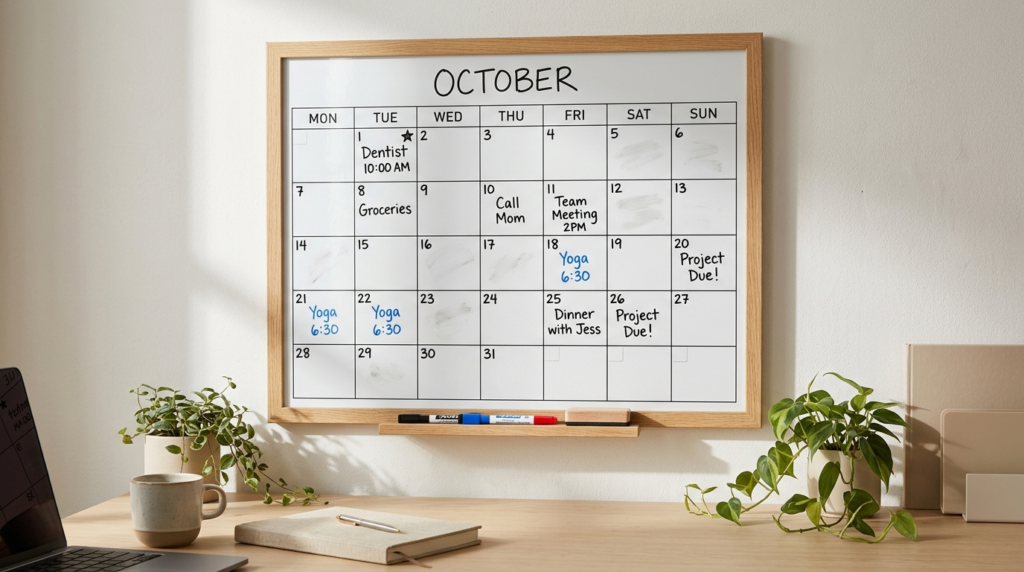
A classic monthly calendar board is one of the easiest ways to keep your schedule organized. Divide the board into seven columns for the days of the week and enough rows to accommodate the dates of the month.
Use it to record appointments, deadlines, birthdays, and important events. Keep the layout simple so you can read everything quickly without feeling overwhelmed by too much information.
2. Design a Minimalist Whiteboard Planner
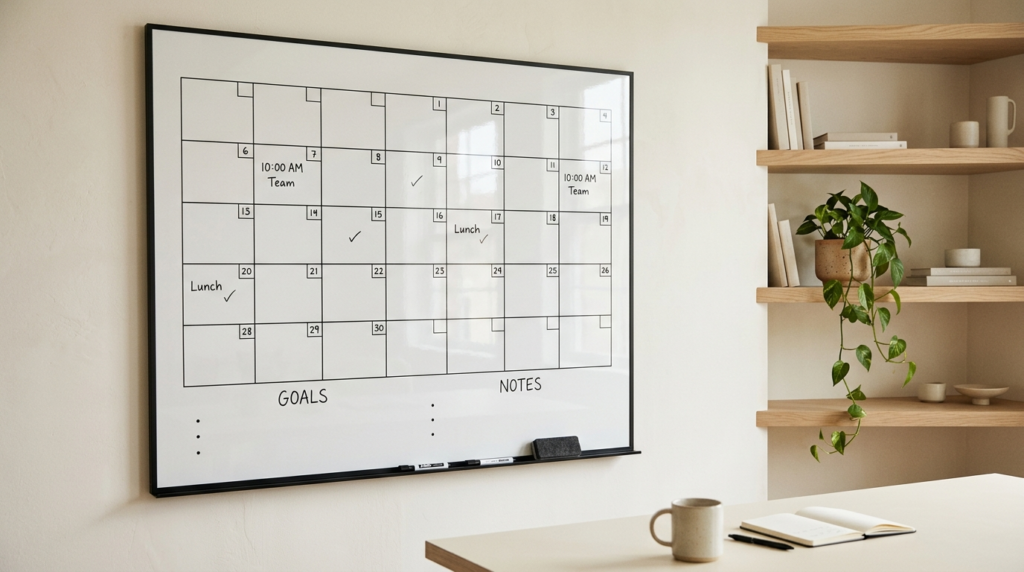
A minimalist whiteboard planner works well if you like a clean, uncluttered look. Choose a whiteboard with thin borders and use black or neutral-colored markers for a simple, easy-to-read layout.
Add only the sections you genuinely need, such as monthly goals, important dates, and upcoming tasks. This makes the board easy to maintain and quick to update.
3. Make a Color-Coded Monthly Planning Board
Color coding can help you distinguish different responsibilities at a glance. Assign one color to work, another to family commitments, and separate colors for personal appointments or household tasks.
Use colored markers, sticky notes, or small labels to keep the system consistent. Avoid using too many colors, as a limited palette is usually easier to understand.
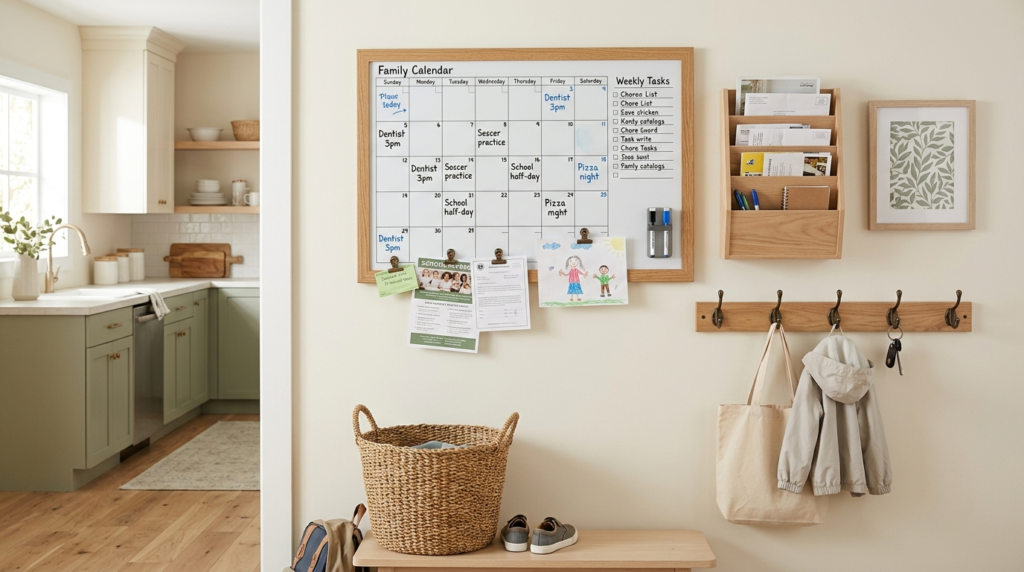
4. Create a Family Command Center Board
A family command center brings everyone’s schedules together in one convenient place. Include a monthly calendar, school events, appointments, household reminders, and upcoming family activities.
Position the board in a kitchen, hallway, or another shared area where everyone can see it. Add a small basket for papers or a section for weekly reminders to make the space even more functional.
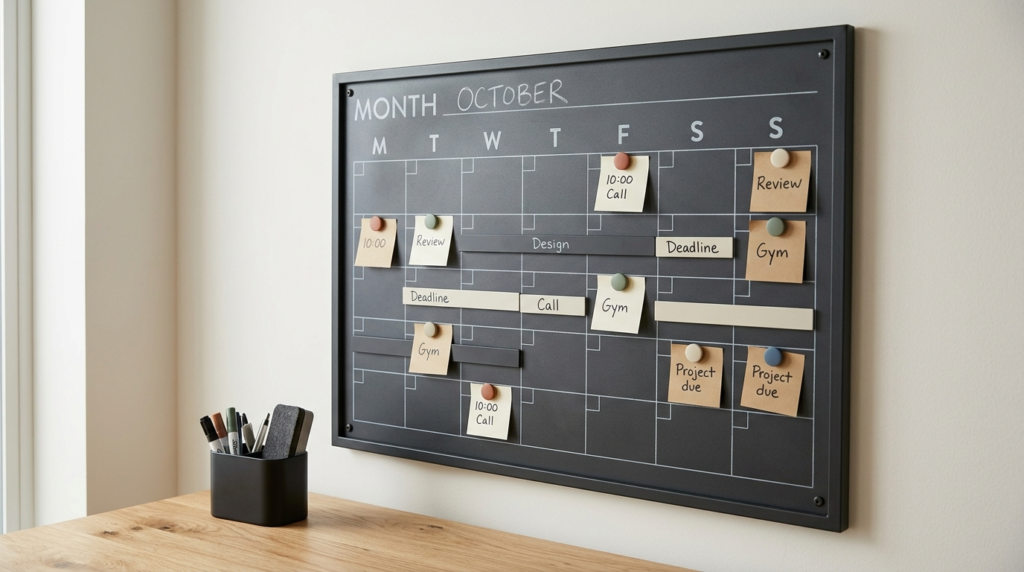
5. Use a Magnetic Monthly Planning Board
A magnetic planning board is ideal for people who want flexibility without rewriting everything. Use magnetic labels for recurring activities, movable notes for appointments, and small markers for important dates.
You can rearrange tasks as plans change throughout the month. Choose a simple metal board with a clean finish to keep your planning area looking organized.
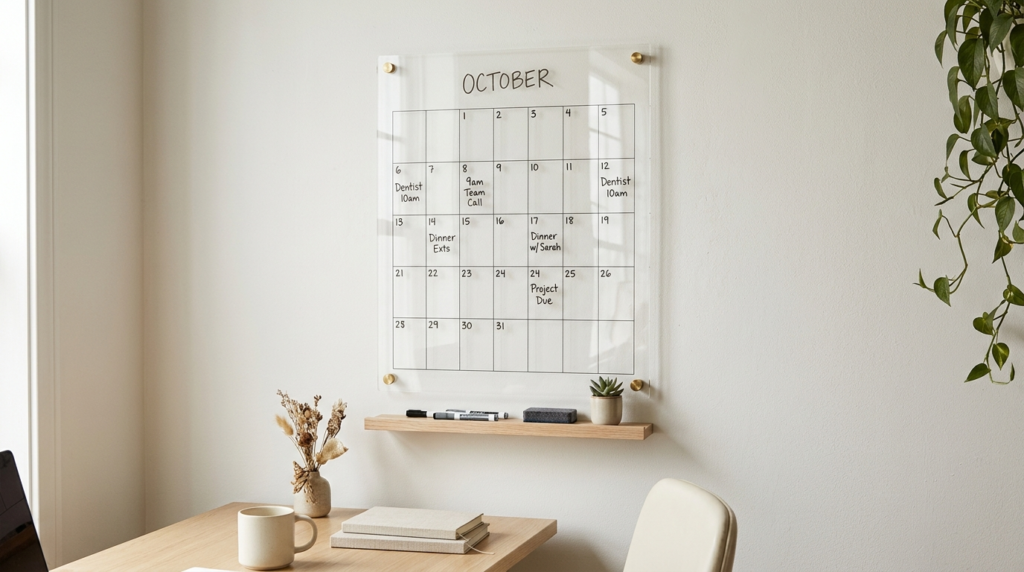
6. Try a Dry-Erase Acrylic Calendar
An acrylic monthly calendar offers a modern, lightweight look that works beautifully in home offices and contemporary interiors. Clear acrylic panels can make the planning board feel less visually bulky than a traditional framed calendar.
Use a marker that is suitable for the specific surface and easy to erase. Keep the lettering dark and readable, especially if the board is mounted against a bright wall.
7. Build a Monthly Goal-Tracking Board
A goal-tracking board helps you connect your monthly schedule with the bigger things you want to accomplish. Create sections for your top three goals, action steps, milestones, and progress notes.
Break large goals into smaller tasks that can be completed throughout the month. This makes your goals feel more achievable and helps you see what deserves your attention first.
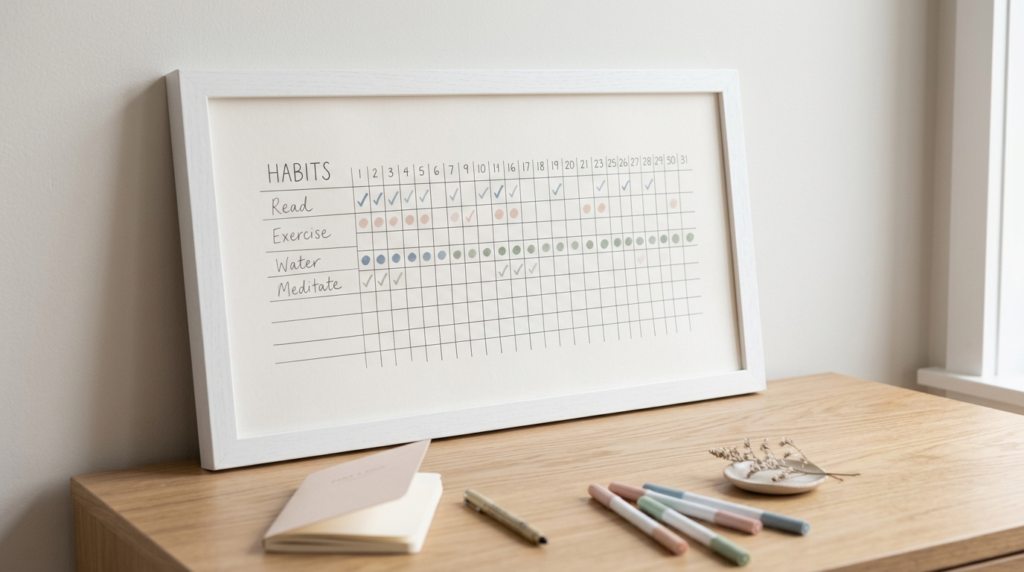
8. Add a Monthly Habit Tracker
A habit tracker makes it easier to notice patterns in your routine and stay consistent with personal goals. Create a grid with your chosen habits down one side and the days of the month across the top.
You might track reading, exercise, drinking enough water, stretching, or maintaining a regular bedtime. Focus on a handful of realistic habits instead of trying to track everything at once.
9. Create a Work and Productivity Board
A monthly productivity board is useful for freelancers, remote workers, students, and busy professionals. Divide the board into sections for deadlines, projects, meetings, priorities, and tasks that need follow-up.
Use the monthly calendar to identify busy periods before they arrive. Pairing dates with project milestones helps you plan your workload more realistically.
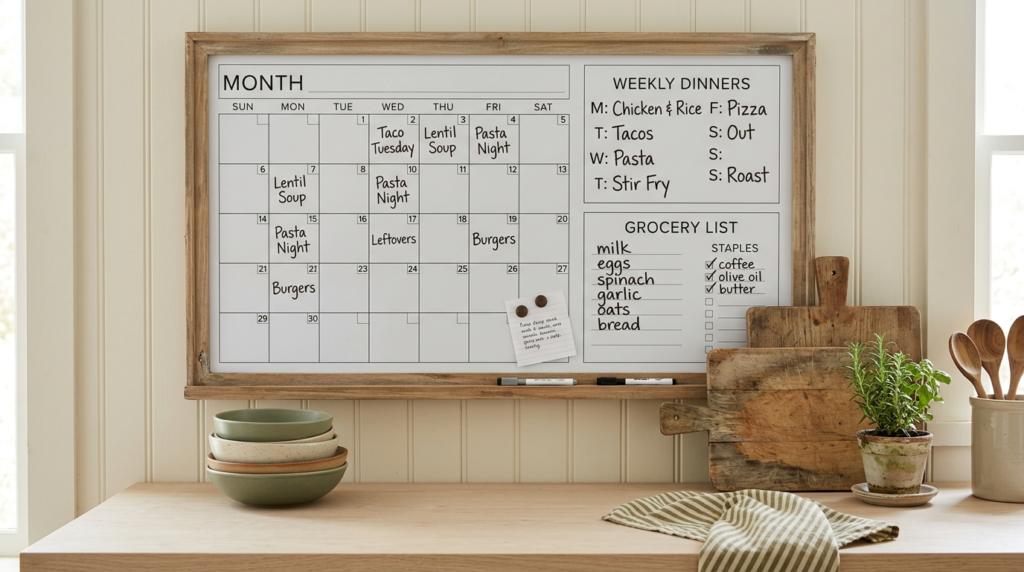
10. Design a Monthly Meal Planning Board
A meal planning board can make grocery shopping and everyday cooking much easier. Create spaces for weekly dinners, meal-prep reminders, grocery essentials, and ingredients you already have at home.
Place the board in or near your kitchen so you can update it while planning meals. A simple layout can help reduce last-minute decisions and make it easier to use food before it expires.
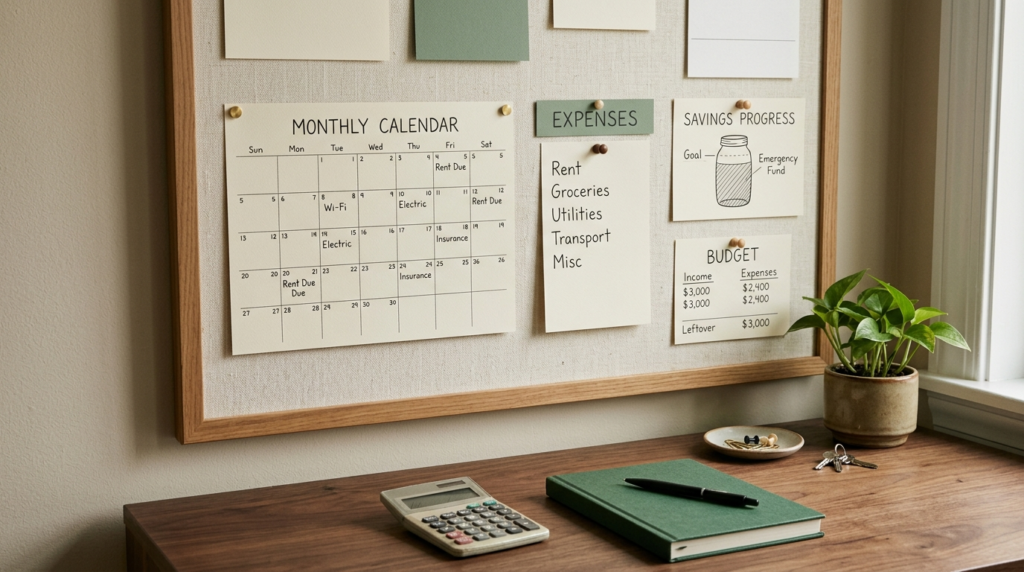
11. Make a Budget and Bill Payment Board
A monthly finance board helps you keep track of bill due dates, savings goals, and planned expenses. Include categories for recurring bills, payment reminders, savings progress, and upcoming financial commitments.
For privacy, keep sensitive account details, passwords, and financial identifiers off a visible household board. You can record general reminders without displaying confidential information.
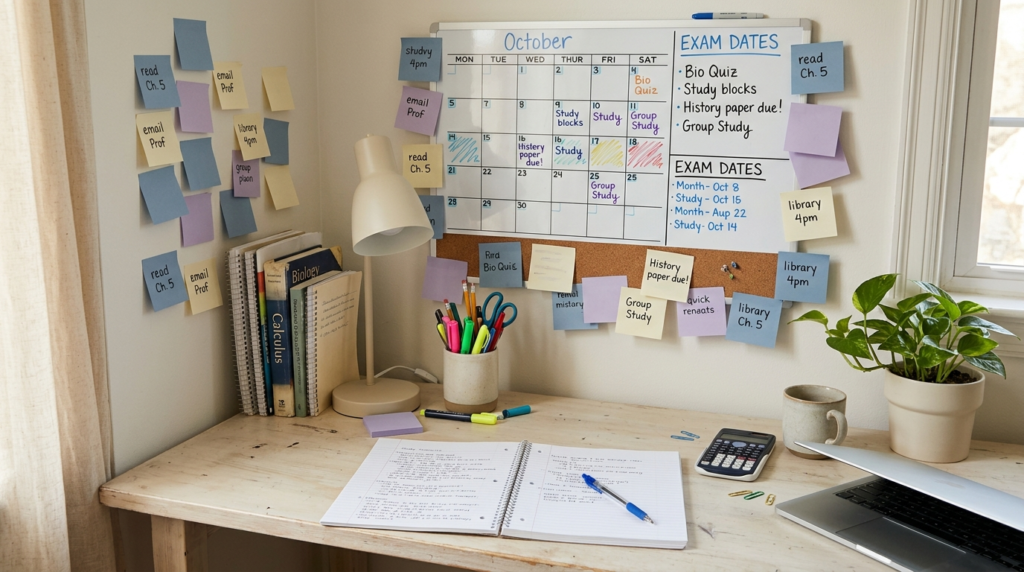
12. Create a Student Study Planning Board
A student planning board can help organize assignments, exams, study sessions, and project deadlines. Use the monthly calendar to mark important dates and add a separate area for the week’s highest-priority tasks.
Keep the design easy to update as coursework changes. A few clear categories are often more useful than a complicated system with too many sections.
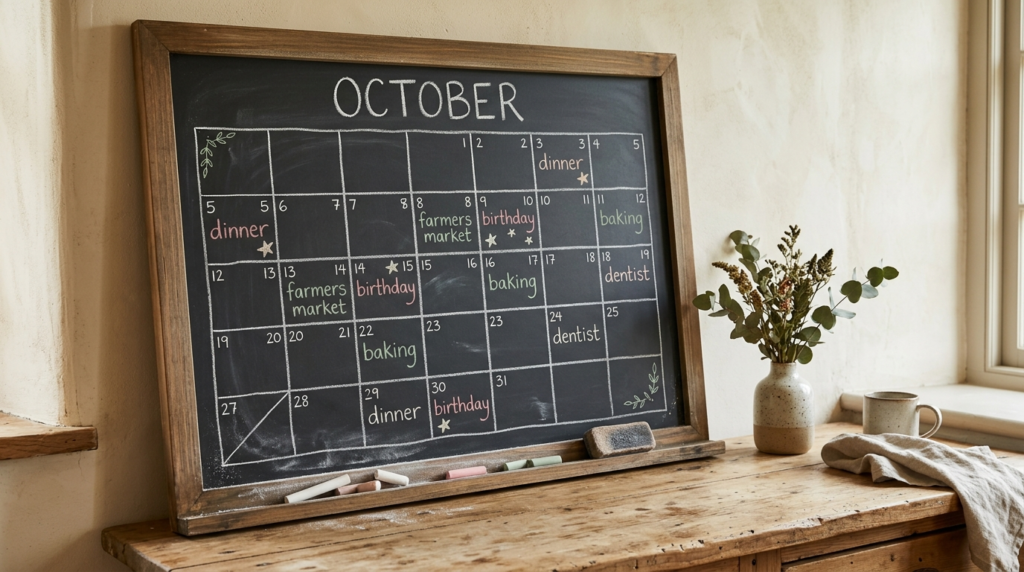
13. Use a Chalkboard Monthly Planner
A chalkboard planner adds a warm, decorative touch to a kitchen, home office, or family room. Draw a monthly grid using chalk markers or suitable chalk, then add dates and reminders in clear lettering.
You can use different chalk colors to distinguish appointments and activities. If the board is mainly decorative, keep important information large enough to read from a distance.
14. Create a Rustic Framed Planning Board
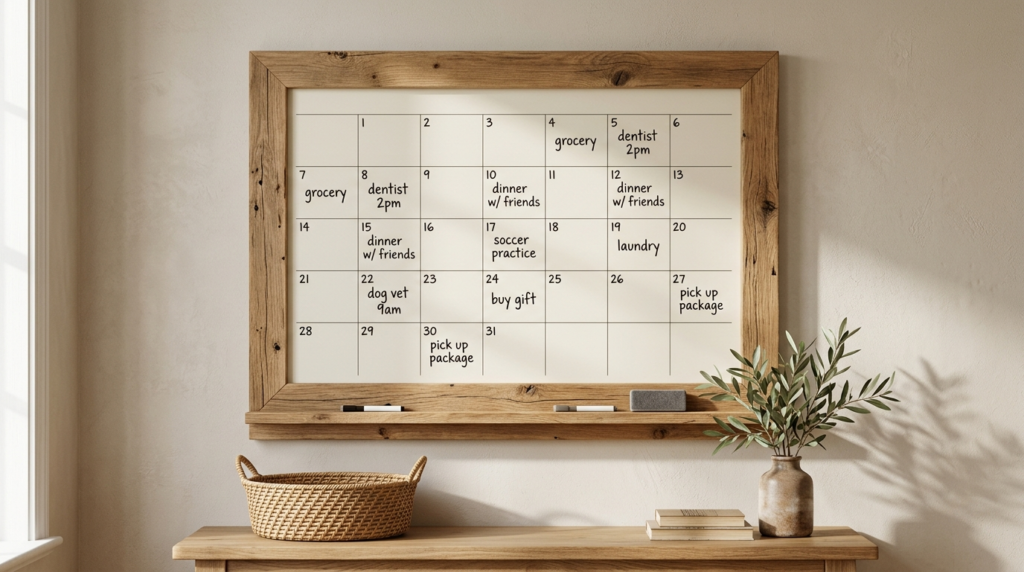
A rustic framed planning board combines everyday organization with natural home decor. Choose a board with a wooden frame, neutral background, and a simple calendar layout that complements your room.
Pair it with a small tray for markers and a few discreet organizational accessories. This style works particularly well in farmhouse-inspired kitchens, mudrooms, and home offices.
15. Design a Monthly Planning Board With Sticky Notes
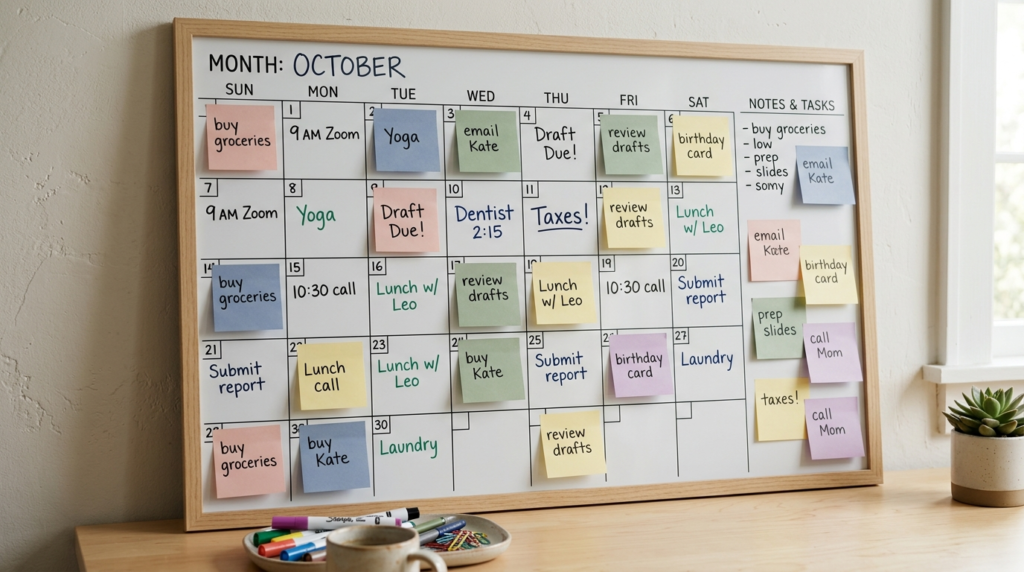
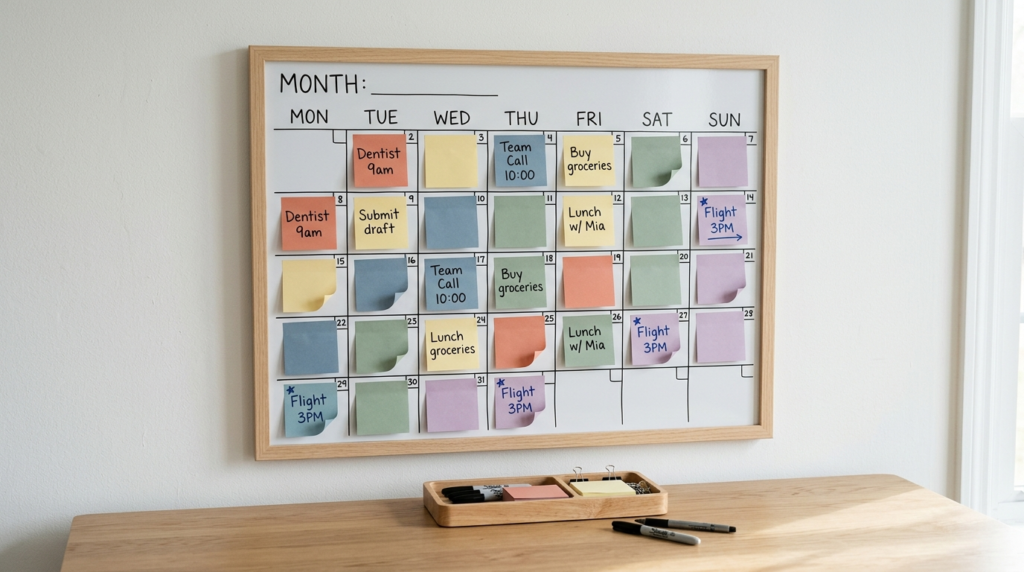
Sticky notes are perfect for people whose plans change frequently. Create a monthly grid and use movable notes for appointments, errands, project tasks, and flexible deadlines.
Choose a consistent color system and write one task or event per note. When plans change, you can move the notes instead of rewriting the entire calendar.
16. Make a Home Office Planning Wall
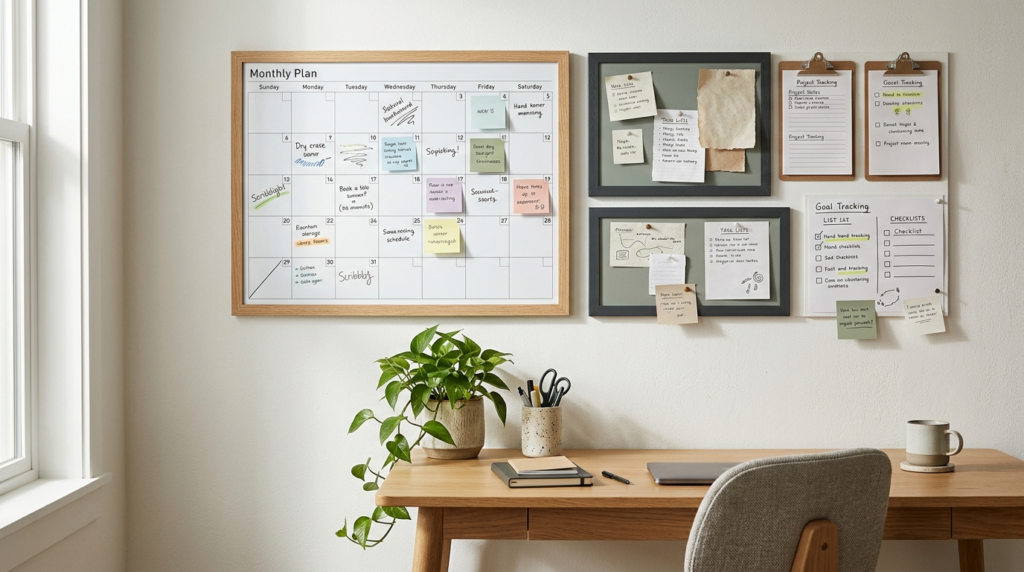
A planning wall can turn an unused section of your home office into a practical organizational hub. Combine a monthly calendar with a small task board, goal section, and space for project notes.
Keep the most important information near eye level and group related tasks together. A well-organized wall makes it easier to see what needs attention without filling your desk with papers.
17. Create a Monthly Cleaning Schedule Board
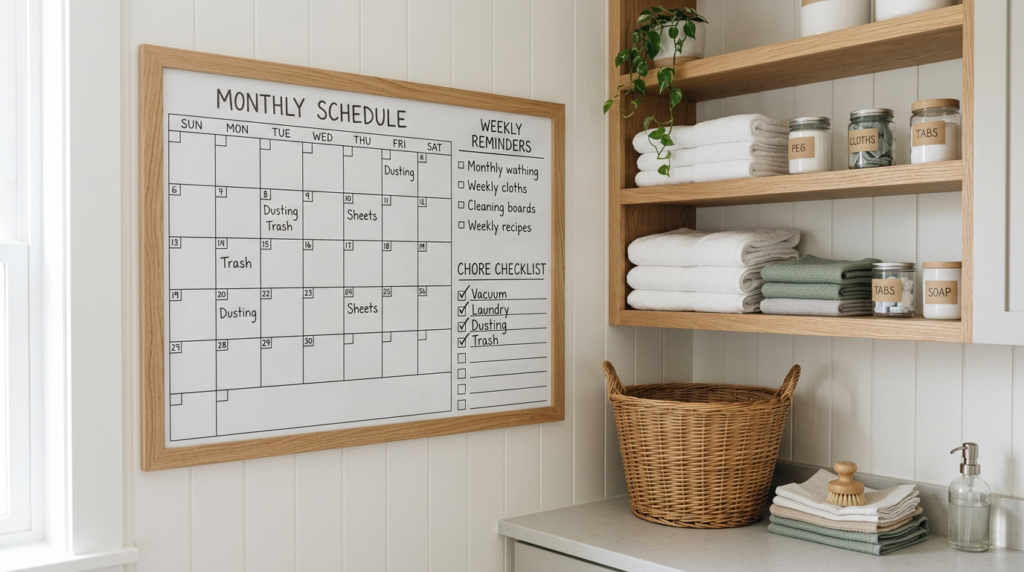
A cleaning schedule board helps divide household chores into manageable tasks. Organize the month into weekly cleaning priorities and include recurring jobs such as laundry, changing bedding, cleaning appliances, or tidying storage areas.
For shared households, assign responsibilities clearly so everyone knows what needs to be done. Keep the workload realistic to avoid turning the board into another source of stress.
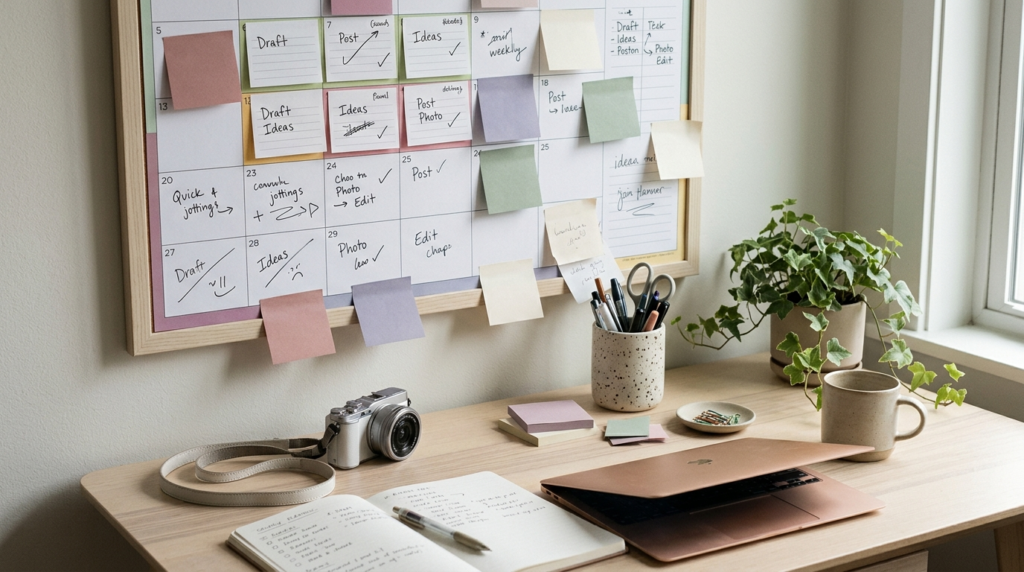
18. Build a Monthly Content Planning Board
A content planning board is especially useful for bloggers, creators, and small business owners. Create sections for content ideas, planned publishing dates, drafts in progress, scheduled posts, and completed projects.
Use different markers or sticky notes for each platform if you manage multiple channels. This visual overview helps you balance your workload and avoid leaving everything until the last minute.
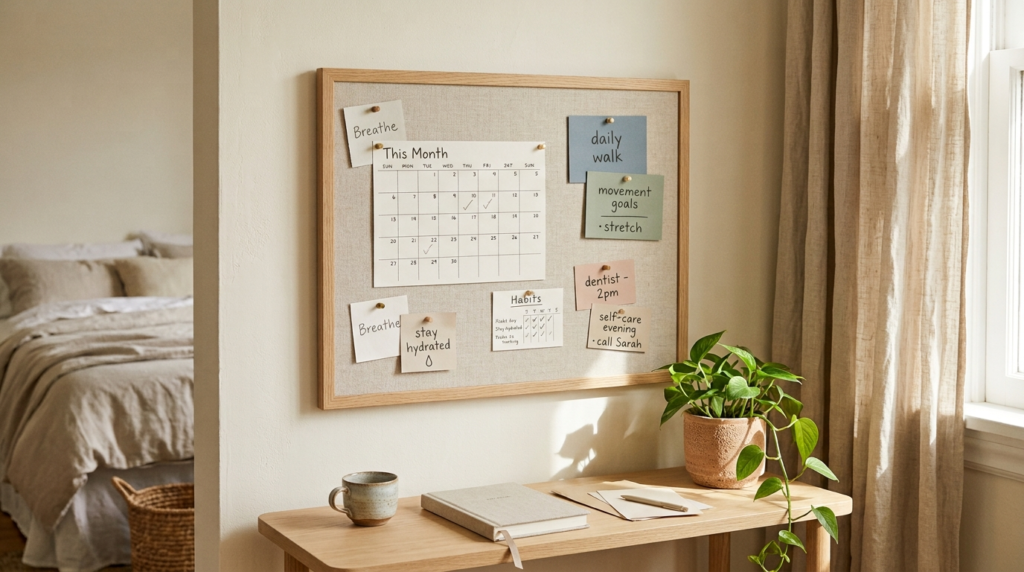
19. Add a Monthly Wellness and Self-Care Board
A wellness board gives personal routines a place alongside work and household responsibilities. Include reminders for movement, relaxation, personal appointments, hobbies, and activities that help you recharge.
Keep the focus on realistic intentions rather than perfection. A few gentle reminders can encourage a healthier balance without making self-care feel like another demanding checklist.
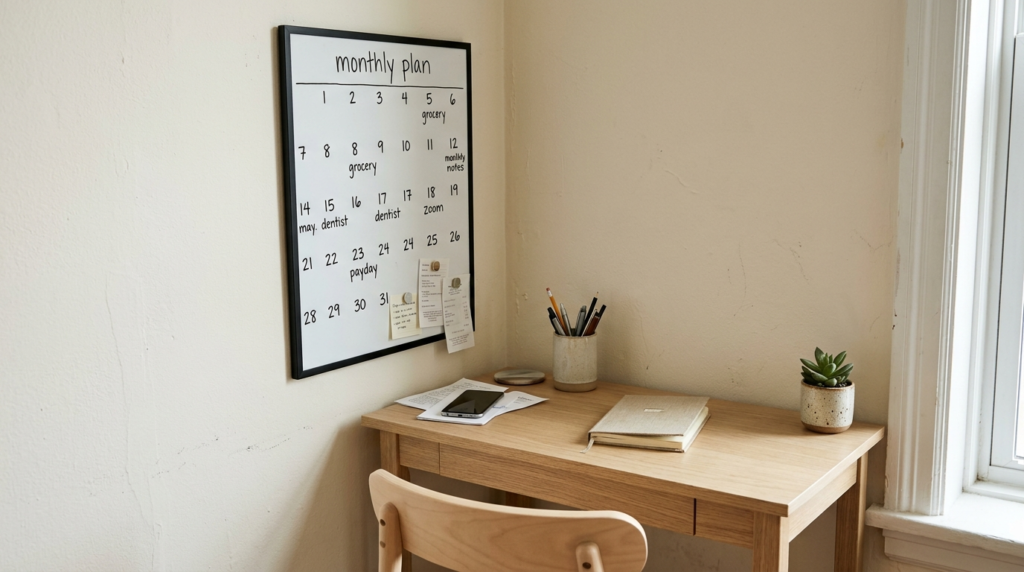
20. Create a Small-Space Monthly Planning Board
You don’t need a large wall to organize your month. A compact magnetic board, framed dry-erase calendar, or small planner mounted near your desk can provide plenty of useful space.
Choose a vertical layout or a slim frame if you’re working with limited wall space. Keep only your most important dates and reminders visible, and store extra notes in a notebook or digital planner.
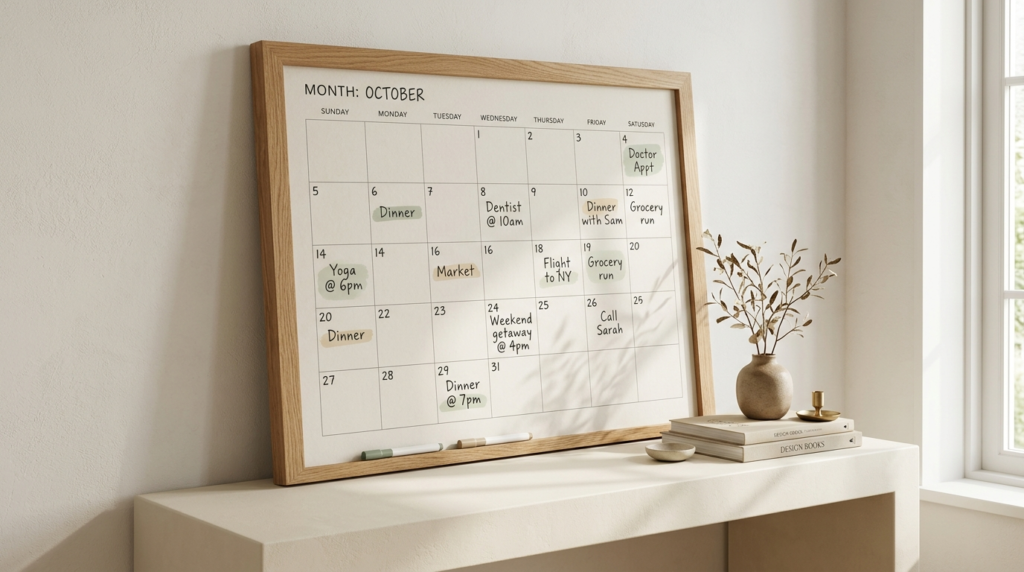
21. Design a Beautiful Monthly Planning Board That Matches Your Decor
Your planning board is more likely to become part of your daily routine if you enjoy looking at it. Choose a frame, background, and marker colors that coordinate with the room, whether your style is modern, minimalist, farmhouse, or colorful and creative.
Try a light wood frame with neutral lettering, a black frame with white writing, or a soft pastel palette for a more playful look. Make sure the design remains readable and functional rather than prioritizing decoration over organization.
What Should You Include on a Monthly Planning Board?
A useful monthly planning board should show the information you need most often. Depending on your lifestyle, it may include:
A monthly calendar with dates and days of the week
Appointments, birthdays, and important deadlines
Work, school, or family commitments
Monthly goals and priority tasks
Bill reminders and household responsibilities
Habit tracking or wellness reminders
A small section for notes and upcoming events
Start with the essentials and add more sections only when you find that you need them.
How Do You Keep a Monthly Planning Board Organized?
The easiest way to maintain your board is to establish a simple routine. Review the upcoming month before it begins, add important dates, and update the board briefly each week.
Use consistent colors and short phrases so information remains easy to scan. At the end of the month, remove completed tasks, transfer unfinished items, and prepare a fresh layout.
What Is the Best Material for a Monthly Planning Board?
The best material depends on how you plan to use the board. Whiteboards are practical for frequent updates, acrylic calendars offer a modern appearance, magnetic boards make rearranging tasks easy, and chalkboards provide a decorative alternative.
Corkboards are useful when you prefer paper notes, printed calendars, or pinned reminders. Choose a surface that suits your writing habits and is easy to maintain.
How Can You Make a Planning Board Look Stylish?
Choose a design that complements the surrounding room without making the information difficult to read. Simple frames, consistent lettering, coordinated marker colors, and an uncluttered layout can make even a basic board look attractive.
You can add a small shelf for supplies or place a basket nearby for paperwork. Keep decorative extras minimal so the calendar remains the main focus.
FAQs
What is a monthly planning board used for?
A monthly planning board helps organize appointments, deadlines, goals, household tasks, events, and other responsibilities in one visible place.
How do I set up a monthly planning board?
Start with a monthly calendar grid, label the days of the week, add important dates, and create small sections for goals or reminders if needed. Keep the layout simple enough to update regularly.
Is a whiteboard or chalkboard better for monthly planning?
A whiteboard is usually easier to update frequently and works well for busy schedules. A chalkboard offers a decorative appearance, while magnetic boards are useful when you need to move notes around.
How often should I update my monthly planning board?
Review it at least once a week and whenever a major appointment or deadline changes. A quick daily glance can also help you stay aware of upcoming responsibilities.
How can I make my planning board less overwhelming?
Limit the board to essential information, use a small number of colors, and avoid adding every minor task. Keep detailed to-do lists elsewhere if the monthly view becomes too crowded.
Can I use a monthly planning board for work and personal life?
Yes. You can use separate colors or sections for work, family, and personal commitments. This helps you see your overall schedule while maintaining a clearer balance between responsibilities.
Final Thoughts
A monthly planning board can make everyday life feel more organized by bringing important dates, responsibilities, and goals into one clear view. Whether you prefer a minimalist whiteboard, a family command center, a magnetic calendar, or a decorative framed planner, the best setup is the one you’ll actually use.
Start with a simple monthly calendar and add features that support your routine. With a little consistency, your planning board can become a practical tool for managing your time, reducing last-minute stress, and making room for the things that matter most.
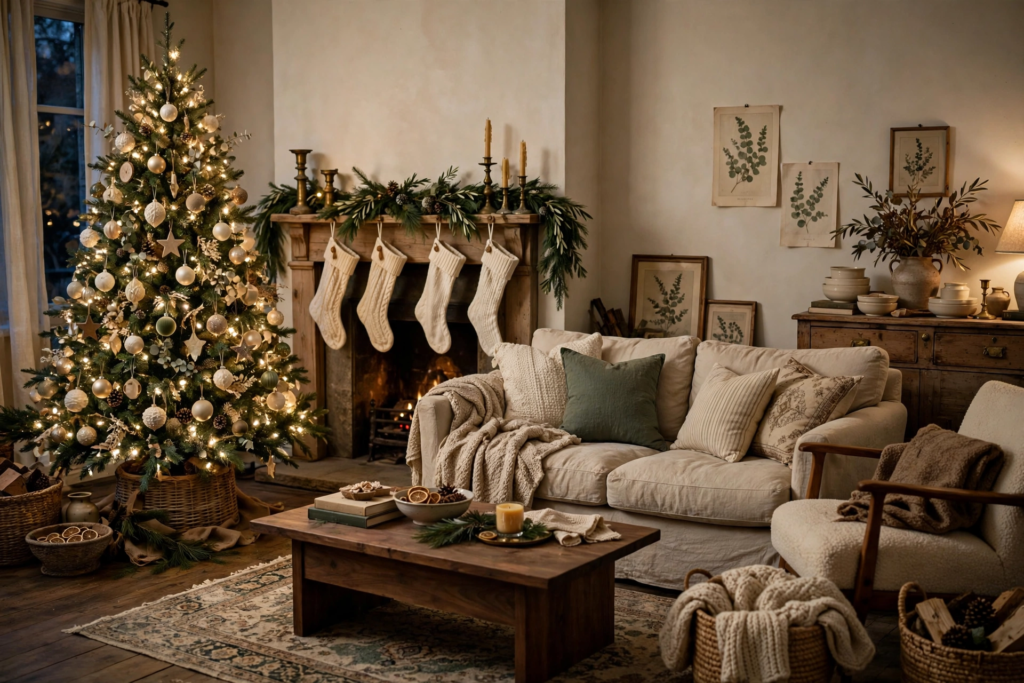
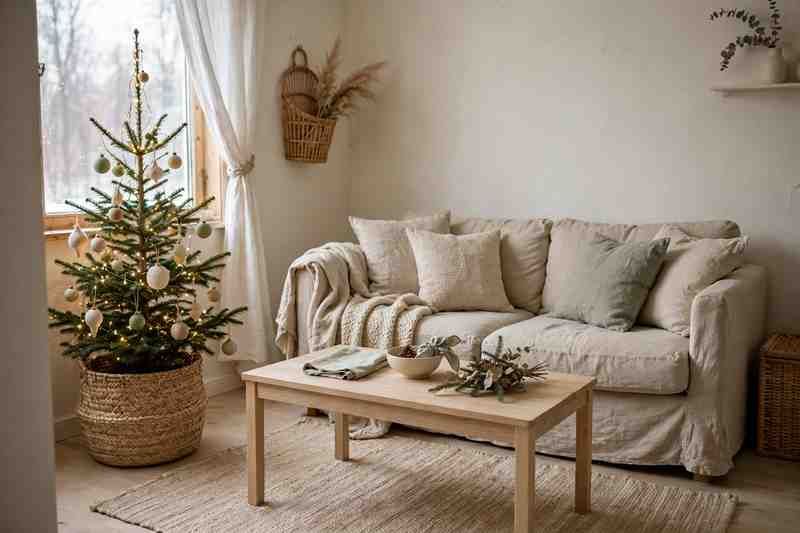
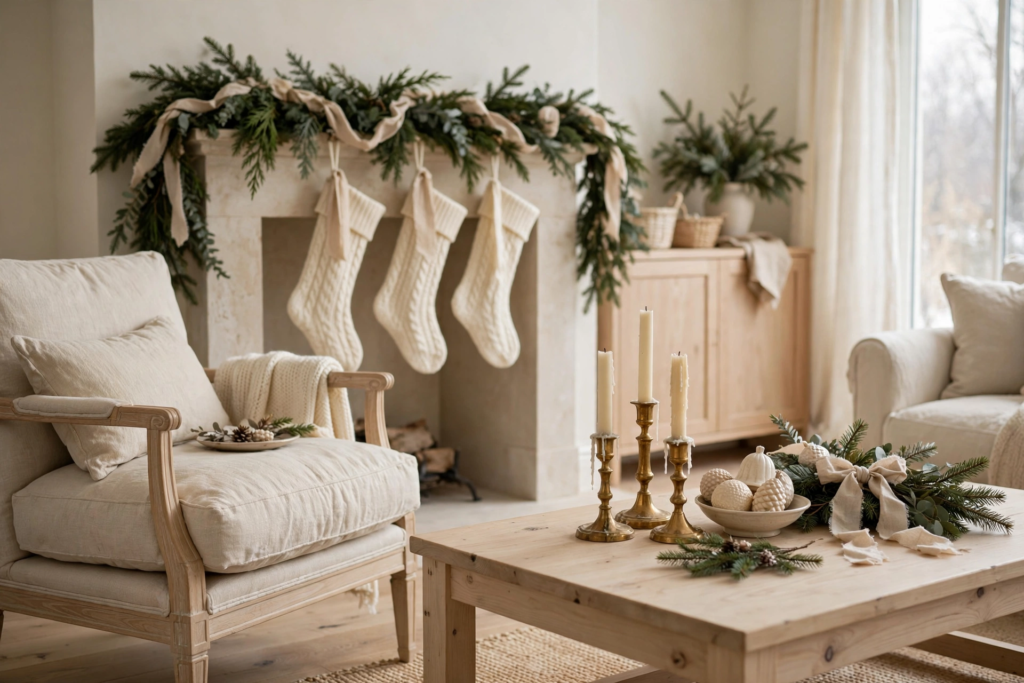
Neutral Christmas decor has a way of making a living room feel festive without becoming visually overwhelming. Instead of relying on bright red and green, you can create a beautiful holiday atmosphere with cream, beige, warm white, taupe, soft brown, muted green, natural wood, and touches of aged gold.
The best neutral Christmas living rooms still feel warm and inviting. Think soft blankets, glowing lights, natural greenery, textured stockings, cozy rugs, and a Christmas tree decorated with ornaments that complement the room rather than taking it over.
If you want an elegant Christmas living room that feels cozy enough for everyday life, these 21 neutral Christmas decor ideas are worth trying.
1. Choose a Cream and Warm White Christmas Palette
Start with a simple combination of cream, ivory, and warm white.
These shades work especially well with natural wood furniture, beige sofas, and warm lighting. Use them throughout your Christmas tree, pillows, throws, stockings, and smaller decorations.
To keep the room from feeling flat, mix several textures. A chunky cream knit throw, velvet cushion, linen curtains, and ceramic ornaments can all be neutral while still creating plenty of visual interest.
2. Decorate the Christmas Tree With Neutral Ornaments
Your Christmas tree can become the main feature without using bright colors.
Try a mixture of ivory, champagne, beige, frosted glass, natural wood, and soft gold ornaments. Add warm white lights rather than cool white bulbs for a softer appearance.
You can also use a simple linen or velvet ribbon instead of traditional colorful tinsel.
For a more natural look, add pinecones, dried branches, or small wooden ornaments between the larger decorations.
3. Add a Cozy Cream Christmas Throw
A simple throw can instantly make a neutral living room feel more festive.
Drape a chunky cream knit blanket over the arm of a sofa or casually across a lounge chair.
Look for fabrics with visible texture, such as cable knit, boucle, brushed cotton, or wool-look materials.
You do not need Christmas-themed patterns. A beautiful neutral throw can work throughout the winter long after the holidays are over.
4. Layer Neutral Christmas Pillows
Swap your everyday cushions for a few seasonal pillows in soft neutral shades.
Cream, oatmeal, beige, taupe, and warm gray are easy to combine. Add subtle Christmas details through small trees, snowflakes, stars, stripes, or simple embroidered designs.
Mix different fabrics rather than using identical pillows. Linen, velvet, boucle, and woven textures can make the sofa feel much more inviting.
5. Add Natural Evergreen Garlands
Evergreen greenery brings the strongest traditional Christmas element into a neutral room.
Drape a garland across your fireplace mantel, media console, bookshelf, or window ledge.
Real greenery looks beautiful, but high-quality faux garlands can also work well if you want something reusable.
Add pinecones, small warm lights, or a simple cream ribbon to keep the arrangement natural and understated.
6. Use Aged Brass for a Touch of Warmth
Neutral rooms can sometimes feel too cool if they contain only white, beige, and gray.
Aged brass adds just enough warmth.
Use brass through candleholders, ornaments, picture frames, lamps, tree accents, or small decorative bowls.
Choose aged or brushed finishes rather than highly polished gold if you want a softer, more timeless appearance.
7. Style a Cozy Christmas Mantel
If you have a fireplace, use the mantel as a focal point.
Start with an evergreen garland and add cream candles, neutral stockings, pinecones, and a few warm metallic accents.
A large mirror or simple artwork above the mantel can finish the arrangement.
Keep the styling slightly asymmetrical. A natural garland does not need to look perfectly balanced to feel beautiful.
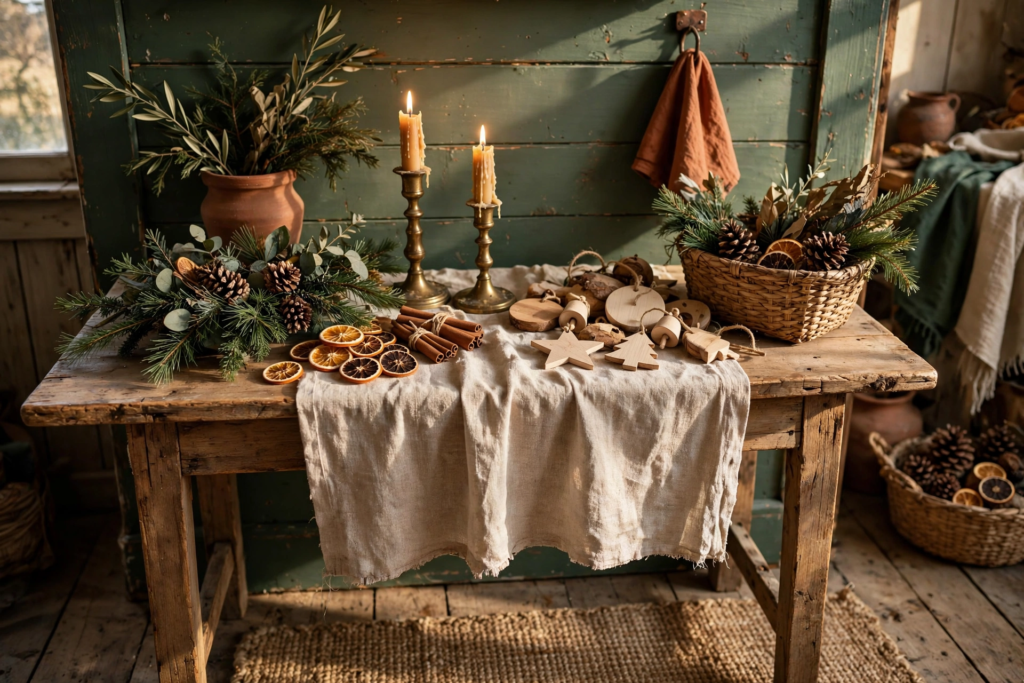
8. Bring in Natural Wood Christmas Decorations
Natural wood is one of the easiest ways to warm up neutral Christmas decor.
Try wooden stars, small trees, candleholders, beads, ornaments, or simple carved decorations.
Pair them with cream ceramics, linen, evergreen branches, and woven baskets.
The combination feels relaxed and organic while still looking festive.
9. Create a Neutral Christmas Coffee Table
Your coffee table does not need to be covered in holiday decorations.
Start with a simple tray and add a few carefully chosen pieces.
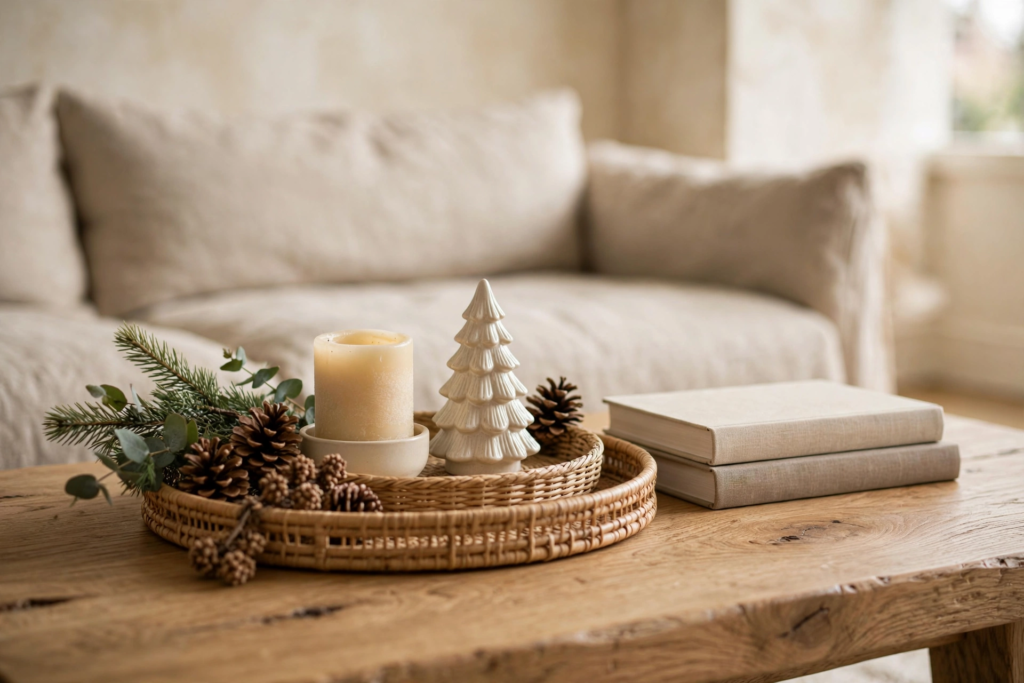
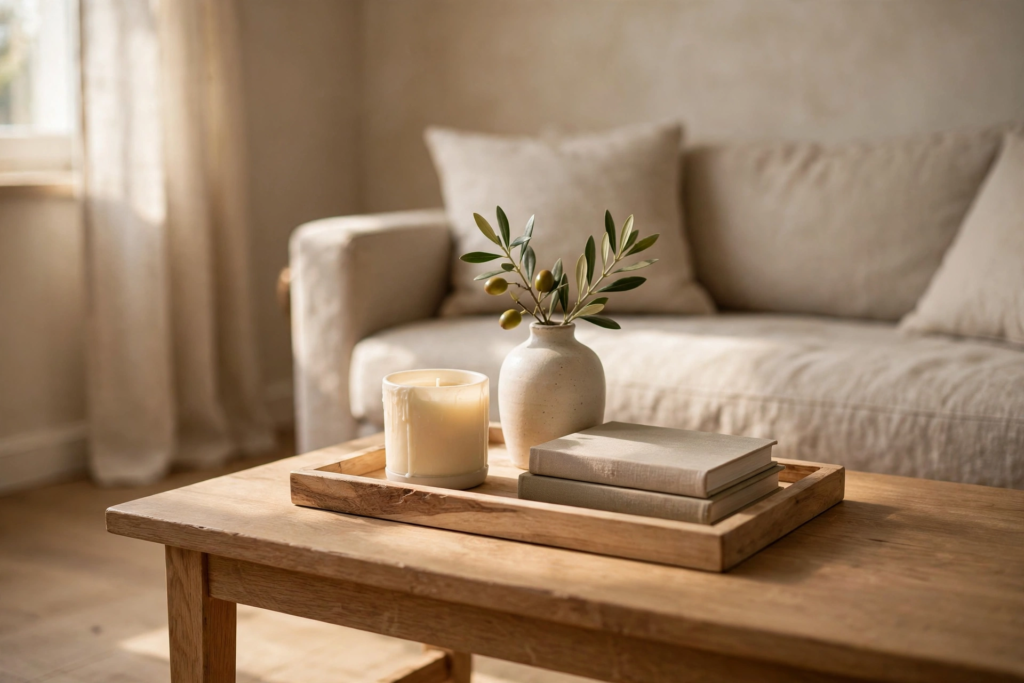
Try a cream candle, small ceramic Christmas tree, pinecones, evergreen clippings, and one or two stacked books.
Leave plenty of empty space around the arrangement. This makes the room feel calm rather than cluttered.
10. Add Soft Warm White Christmas Lights
Lighting can completely change a neutral room during the holiday season.
Use warm white string lights around the Christmas tree, mantel, shelves, or windows.
Avoid overly bright or blue-toned lights. Warm bulbs create a softer glow that works beautifully with cream, beige, wood, and brass.
You can also add flameless candles to side tables and shelves for additional evening warmth.
11. Use Beige and Taupe for a Softer Christmas Look
If you prefer a less traditional palette, build your Christmas decor around beige and taupe.
Use taupe pillows, beige throws, cream ornaments, natural wood, and warm white lights.
This palette works especially well in modern, Scandinavian, farmhouse, and minimalist living rooms.
Add one darker shade, such as chocolate brown or muted forest green, to give the room some contrast.
12. Add Subtle Forest Green Accents
Neutral Christmas decor does not have to be completely colorless.
A little forest green can make cream and beige decorations feel much more festive.
Use evergreen branches, dark green velvet pillows, green glass ornaments, or a few natural wreaths.
Keep the green concentrated in a few areas so it feels intentional rather than overwhelming.
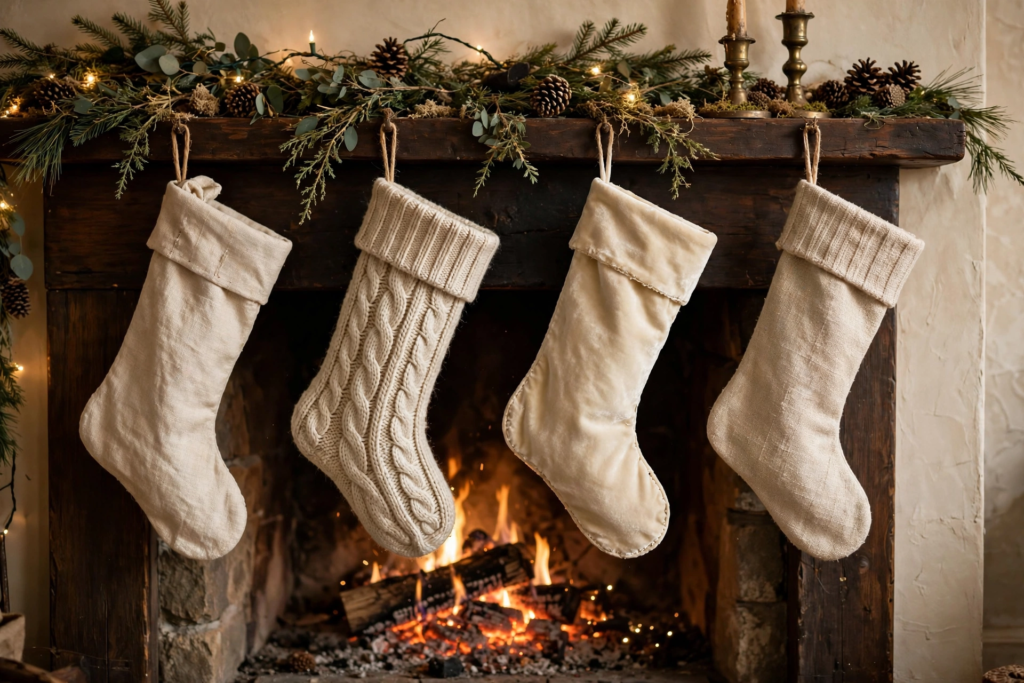
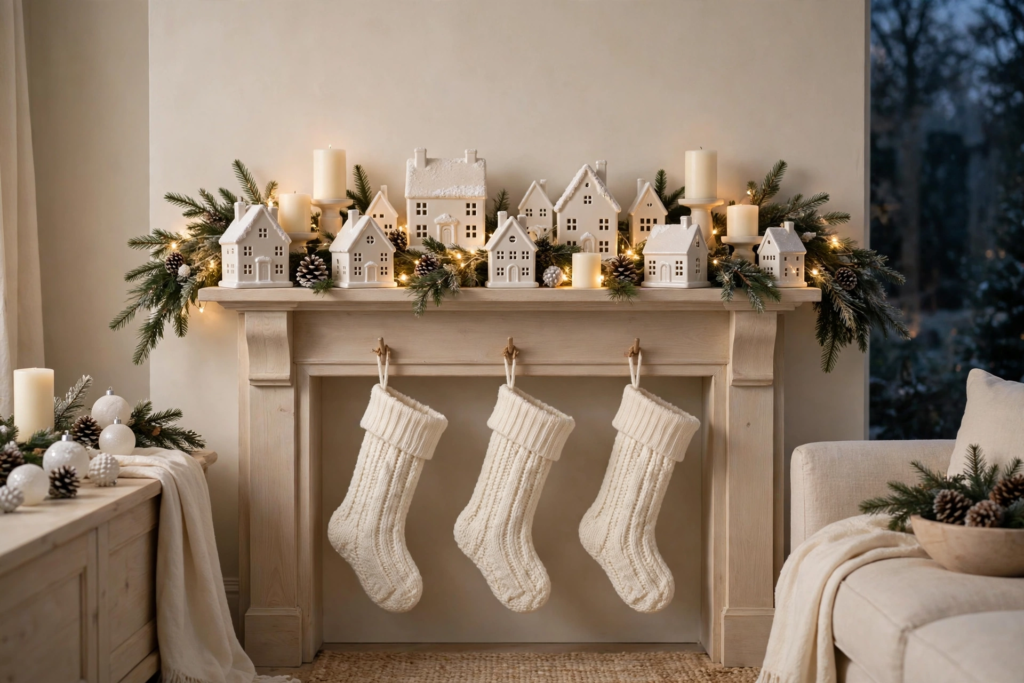
13. Decorate With Cream Stockings
Neutral stockings can make a fireplace look instantly festive.
Choose cream, oatmeal, beige, or soft taupe stockings in materials such as linen, cotton, knit, or velvet.
For a traditional appearance, hang them from the mantel alongside evergreen greenery.
If you do not have a fireplace, hang them from a floating shelf, console table, staircase railing, or decorative hooks.
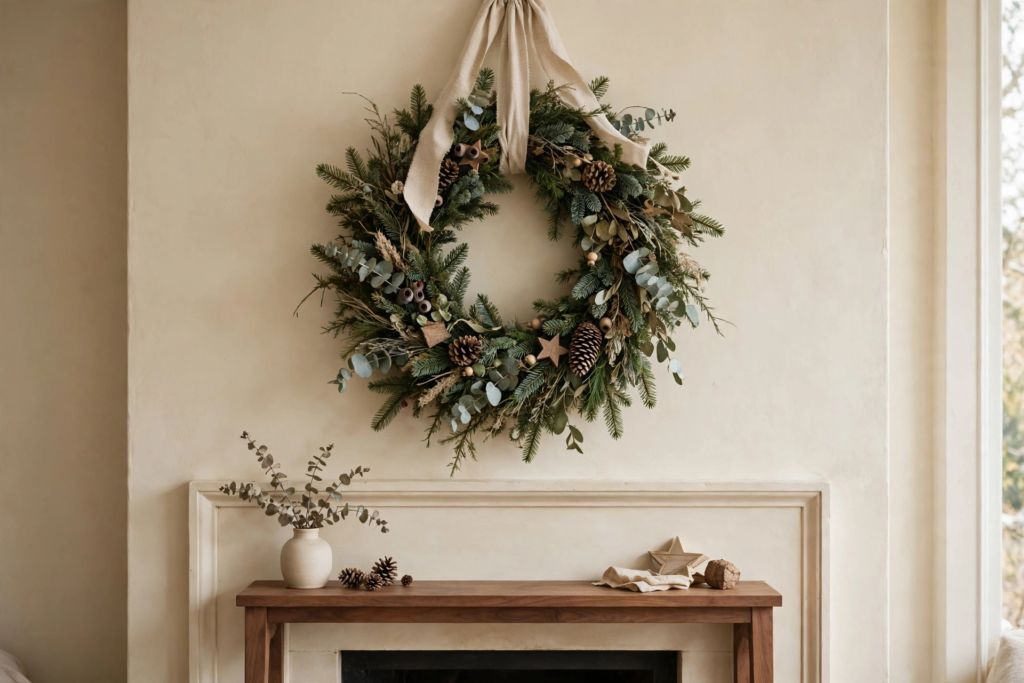
14. Add a Neutral Christmas Wreath
A simple wreath can add Christmas character without introducing strong colors.
Try an evergreen wreath decorated with pinecones, dried flowers, cream ribbon, eucalyptus, or subtle wooden ornaments.
Hang it above the fireplace, on a large mirror, over a console, or on an interior door.
For a modern look, choose a minimalist wreath with plenty of greenery and very few decorations.
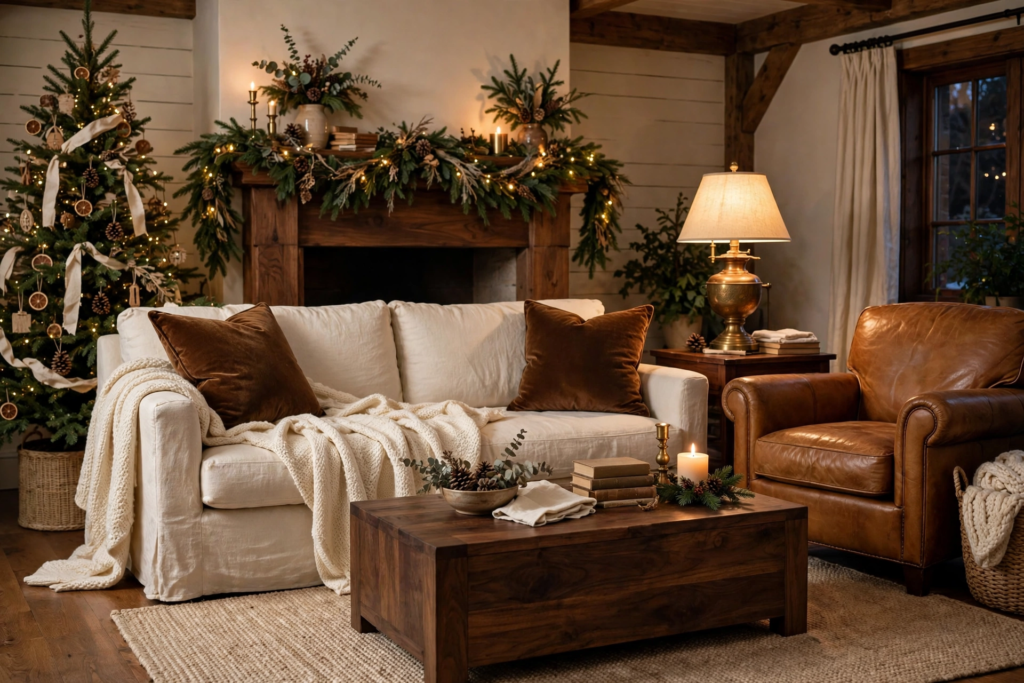
15. Mix Cream With Warm Brown
Warm brown is an excellent companion to neutral Christmas colors.
Use dark wood furniture, caramel leather, brown pillows, woven baskets, or chocolate-colored accents alongside cream and ivory decorations.
This combination prevents the room from feeling too pale and creates a cozy winter atmosphere.
It also works beautifully with traditional Christmas greenery.
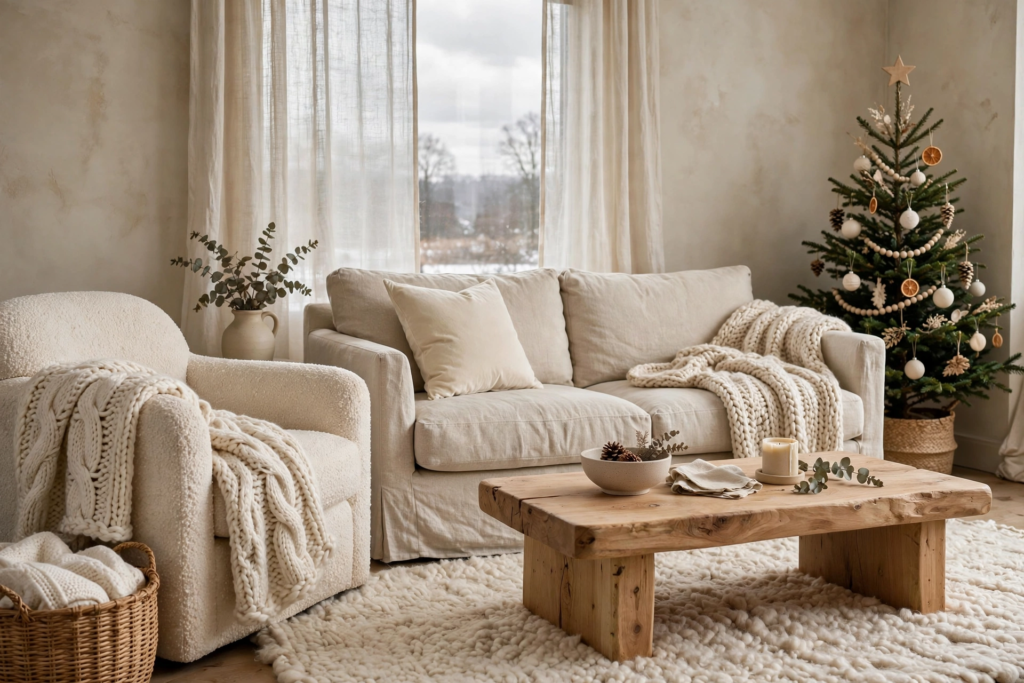
16. Add Texture With Boucle and Chunky Knits
Neutral decor depends heavily on texture because there are fewer strong colors to create visual contrast.
Bring in boucle cushions, chunky knitted blankets, woven baskets, wool-look rugs, linen curtains, and textured ceramics.
Layering these materials creates depth without making the room busy.
The result feels cozy during winter while remaining elegant enough for a more refined decorating style.
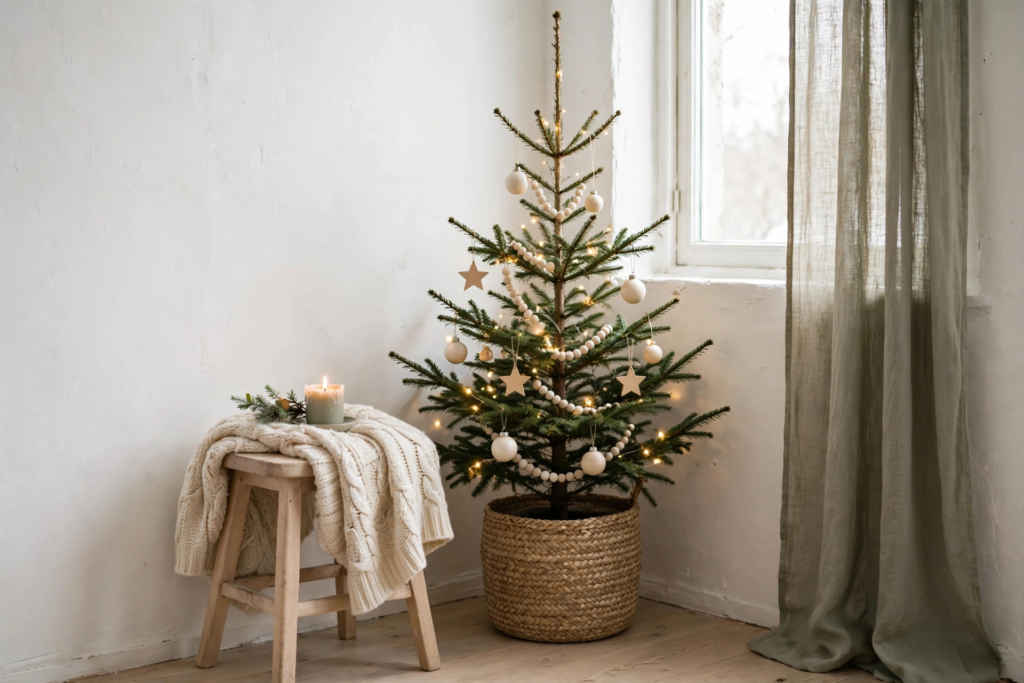
17. Create a Scandinavian-Inspired Christmas Corner
For a simpler look, create one small Scandinavian-style Christmas corner.
Place a slim tree in a woven basket and decorate it with cream, white, natural wood, and soft beige ornaments.
Add a simple wooden stool, small candle, evergreen branch, and cozy throw nearby.
Keep the surrounding area uncluttered so the natural materials become the focus.
18. Use White Christmas Decor With Natural Greenery
An all-white Christmas display can feel beautiful when balanced with greenery.
Try white ceramic houses, cream candles, ivory ornaments, frosted branches, and white stockings.
Then add natural evergreen branches and a few pinecones for contrast.
Avoid making every item bright white. Warm ivory and cream usually create a softer and more comfortable atmosphere.
19. Add Vintage-Inspired Neutral Christmas Pieces
Neutral Christmas decor does not have to look brand new.
Look for vintage-style glass ornaments, aged brass candlesticks, faded wooden decorations, old-fashioned ceramic houses, and antique-inspired frames.
Mix these pieces with modern neutral furniture.
The combination gives the living room a collected feeling and makes the Christmas decorations feel as though they have been gathered over time.
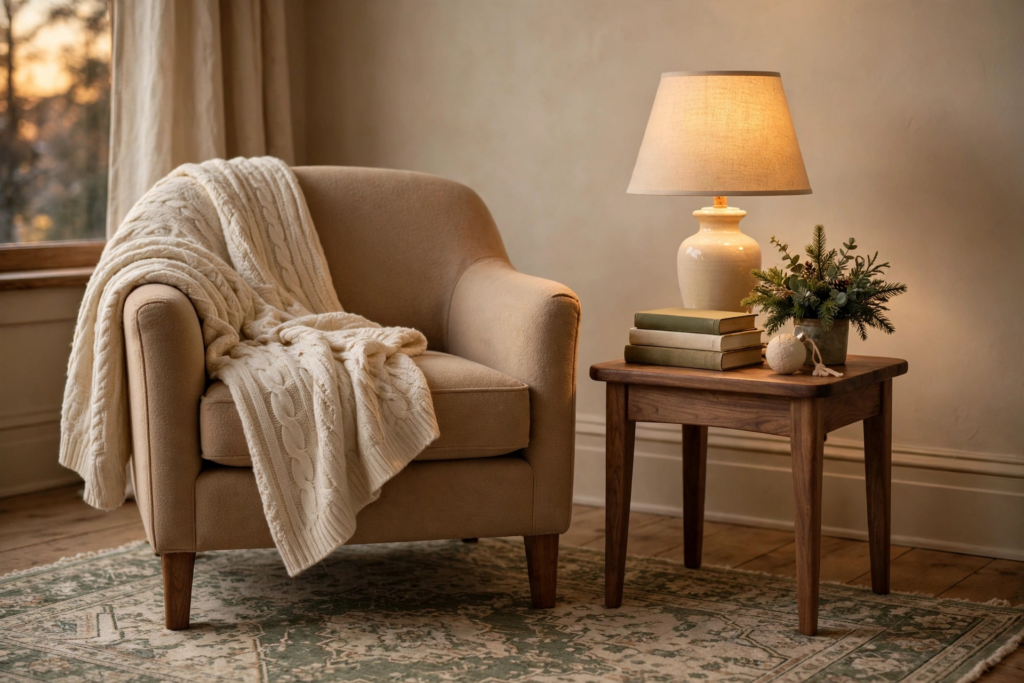
20. Create a Cozy Neutral Christmas Reading Corner
A reading corner is an easy way to bring holiday coziness into an unused part of the living room.
Place a comfortable cream or camel chair beside a small wooden table.
Add a warm lamp, chunky throw, neutral cushion, small evergreen arrangement, and a stack of winter books.
Keep the decorations simple so the corner remains functional after Christmas.
21. Create a Collected Neutral Christmas Living Room
The most beautiful neutral Christmas rooms rarely look like they came from one matching decoration set.
Mix cream ornaments with natural wood, aged brass, evergreen branches, vintage pieces, woven textures, soft fabrics, and a few darker accents.
Let the room have some contrast and personality.
A beige sofa might sit beside a dark walnut table. A modern Christmas tree can share the room with an antique-style mirror. A simple linen stocking can hang next to a velvet one.
This mixture creates a holiday room that feels personal, warm, and collected.
How to Create a Neutral Christmas Living Room
Start with the colors already present in your living room. If your furniture is beige, cream, brown, or gray, build your Christmas decorations around those tones instead of introducing a completely different palette.
Next, choose one metallic finish. Aged brass, champagne gold, or brushed silver can all work beautifully.
Then add greenery for contrast and texture. Finally, layer soft textiles and warm lighting throughout the room.
The goal is not to remove all color. It is to make the colors quieter and more coordinated.
Best Neutral Christmas Color Combinations
Cream + Natural Wood + Evergreen
A classic combination that feels warm and organic.
Beige + Taupe + Aged Brass
Elegant and subtle, especially for modern living rooms.
Ivory + Forest Green + Walnut
A richer neutral palette with traditional Christmas character.
Cream + Burgundy + Dark Brown
Ideal if you want a neutral room with a small amount of traditional holiday color.
White + Soft Gray + Natural Greenery
A lighter combination that works particularly well in Scandinavian-inspired homes.
How to Make Neutral Christmas Decor Look Expensive
Focus on texture rather than buying lots of decorations.
Velvet ribbon, linen stockings, aged brass, natural greenery, textured ceramics, quality-looking faux greenery, and chunky knits can all make a room feel more sophisticated.
Repeat a few colors throughout the space rather than using every Christmas color.
Also give your decorations room to breathe. A smaller number of well-placed pieces often looks more expensive than a room filled with inexpensive ornaments.
Neutral Christmas Decor for a Small Living Room
If your living room is small, avoid filling every available surface.
Choose a slim Christmas tree, decorate one main focal point, and use vertical space where possible.
A wreath above the sofa, garland on a console, stockings on a wall shelf, and warm lights around the tree can add plenty of holiday atmosphere without taking up floor space.
Use lighter colors and reflective accents such as mirrors or aged brass to help maintain an open feeling.
Common Neutral Christmas Decorating Mistakes
The biggest mistake is using too many similar beige shades without enough texture or contrast.
If everything is cream, the room can feel flat. Add natural wood, evergreen, aged brass, darker brown, or muted green to create depth.
Another mistake is using overly cool white lighting. Warm white bulbs usually work much better with neutral Christmas palettes.
Finally, avoid buying an entirely matching decoration collection. Mixing different materials and finishes will give the room more character.
Neutral Christmas Living Room Checklist
Cream, ivory, beige, or taupe base
Warm white Christmas lights
Neutral Christmas tree ornaments
Evergreen greenery
Textured throws
Coordinated Christmas pillows
Natural wood accents
Aged brass or another warm metal
Neutral stockings
A Christmas wreath
Cozy candles or flameless lights
A few vintage-inspired decorations
Natural materials such as baskets and pinecones
One darker accent color
Plenty of open space
FAQ About Neutral Christmas Living Room Decor
What colors work best for neutral Christmas decor?
Cream, ivory, beige, taupe, warm white, soft brown, natural wood, muted green, and aged gold all work beautifully. You can also add small amounts of burgundy, forest green, or dusty blue.
How can I make a neutral Christmas living room feel festive?
Use evergreen greenery, warm white lights, a Christmas tree, seasonal pillows, stockings, wreaths, candles, and natural holiday details such as pinecones and dried branches.
Can neutral Christmas decor still feel cozy?
Absolutely. Texture is the key. Add chunky knits, velvet, linen, boucle, wool-look rugs, woven baskets, warm lighting, and natural greenery.
How do I decorate a small living room for Christmas?
Choose a slim tree, use wall and vertical space, decorate one or two main focal points, and avoid covering every surface with decorations. Warm neutral colors can also help maintain an airy feeling.
Is neutral Christmas decor still traditional?
It can be. Evergreen garlands, wreaths, stockings, candles, wooden ornaments, and warm lights all have traditional Christmas character. Using softer colors simply gives the look a quieter feel.
Final Thoughts
Neutral Christmas decor proves that a festive living room does not need bright colors or piles of decorations.
Cream, beige, warm white, natural wood, evergreen, aged brass, and cozy textures can create a holiday space that feels both elegant and comfortable. Start with your existing furniture, choose a simple palette, and add seasonal details gradually.
The result should feel like your living room at its coziest, just with a little extra Christmas magic.
A small home does not need expensive furniture or a huge decorating budget to look polished. In fact, smaller rooms can often feel more intentional because every piece has a purpose.
The trick is to spend less on quantity and more on a few details that make a room feel finished: good lighting, coordinated colors, attractive textiles, natural materials, and smart storage. You can also make inexpensive furniture look far more expensive by choosing the right proportions and keeping the room visually calm.
If you are decorating a small apartment, studio, bedroom, living room, or compact home, these affordable home decor ideas can help you create a stylish space without filling it with unnecessary stuff.
1. Choose a Warm Neutral Color Palette
One of the easiest ways to make a small room look expensive is to keep the main color palette simple.
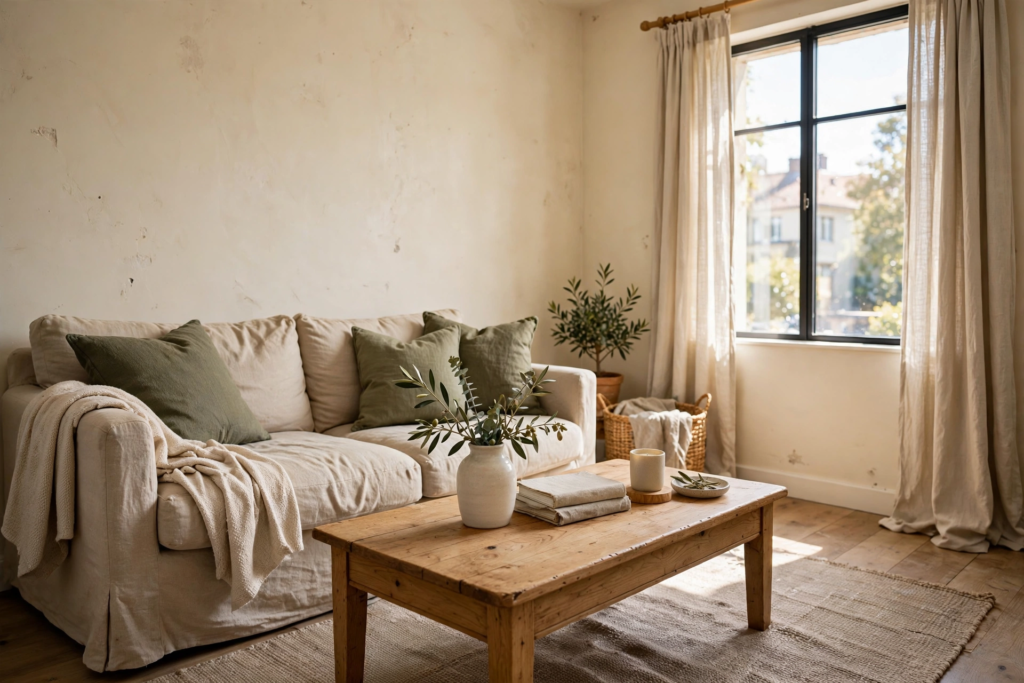
Warm white, cream, beige, taupe, soft gray, and light brown create a calm background that allows furniture and accessories to stand out.
You do not need everything to be the same color. Instead, layer slightly different shades. A cream sofa, beige rug, light wood table, and oatmeal curtains can create much more depth than several unrelated colors.
For a small space, keep the larger pieces neutral and introduce stronger colors through pillows, artwork, flowers, or smaller accessories.
2. Add One Large Mirror
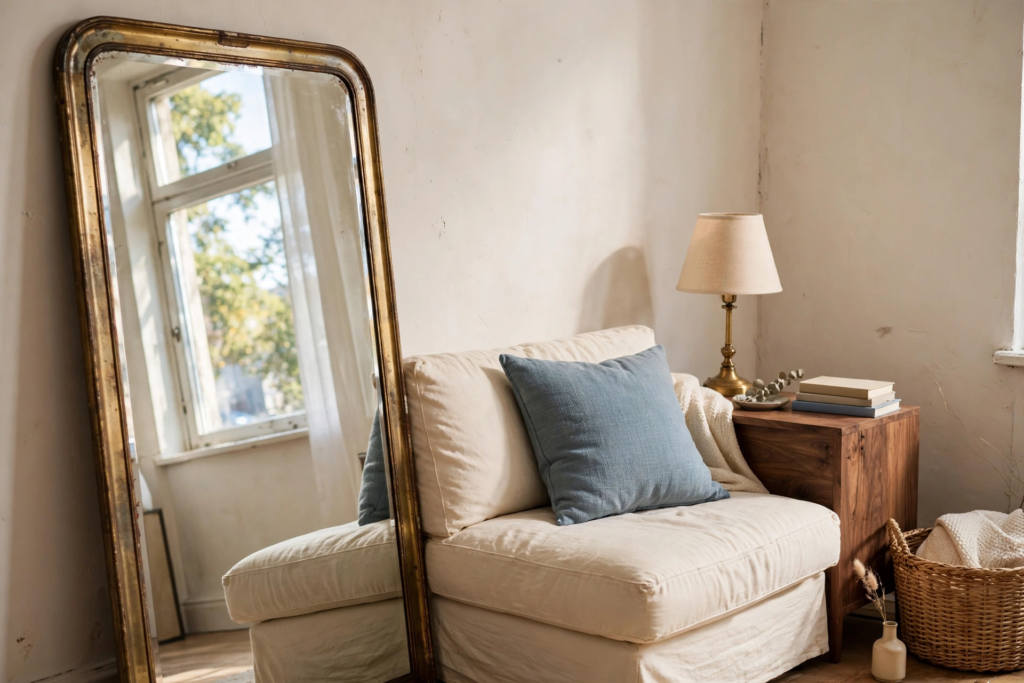
A well-placed mirror can make a small room feel brighter and more open while also acting as a decorative feature.
Instead of covering a wall with several small mirrors, try one larger mirror with a simple frame.
Place it opposite a window when possible so it can reflect natural light. A vintage-style gold frame can add warmth, while a thin black frame works well in a modern space.
You can often find attractive mirrors at thrift stores or discount home stores, making this one of the easiest budget upgrades.
3. Use Curtains From Ceiling to Floor
Short curtains can make a small room look chopped up. Hanging curtains closer to the ceiling and letting them fall almost to the floor creates a taller, more finished appearance.
Choose simple linen-look, cotton, or textured curtains in cream, oatmeal, beige, or soft white.
You do not need extremely expensive window treatments. The important part is getting the length and placement right.
For an especially polished look, let the curtains gently frame the window instead of covering most of the glass.
4. Upgrade the Lighting
A single bright ceiling light can make even beautiful furniture look ordinary.
Instead, create layers of light with affordable table lamps, floor lamps, wall sconces, and warm bulbs.
A small lamp on a side table can make a living room feel much more inviting. In a bedroom, use matching or coordinated bedside lamps to create symmetry.
Look for lamps with ceramic, glass, linen, wood, or aged-metal details. The shade often makes a bigger visual difference than the price of the lamp.
5. Add a Large Area Rug
A properly sized rug can make a small room feel more cohesive.
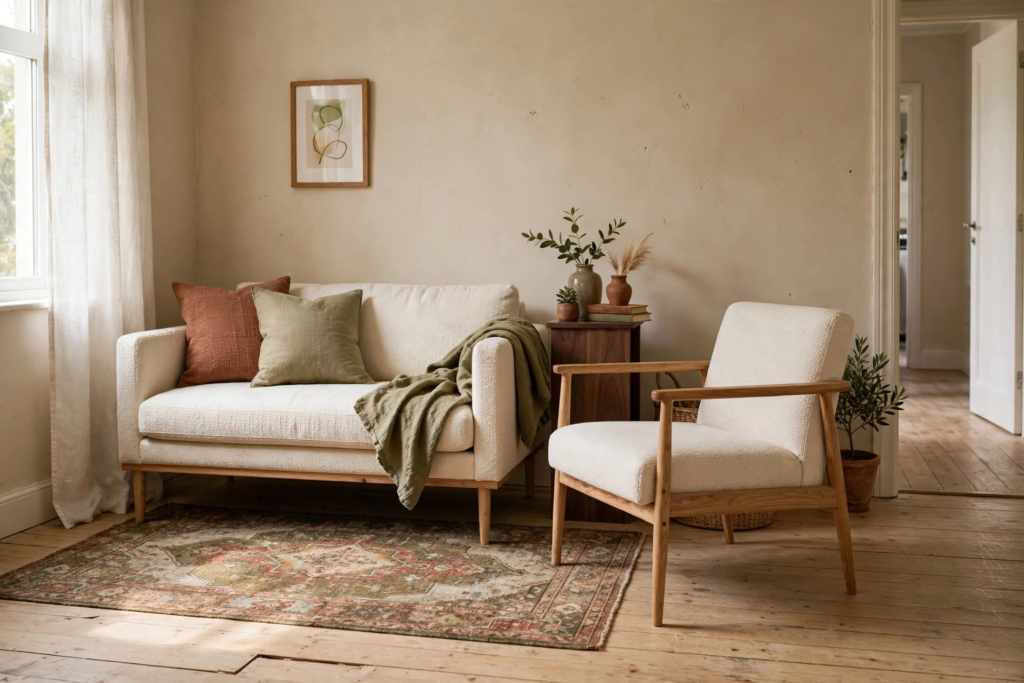
A common mistake is choosing a tiny rug that sits only under the coffee table. A larger rug that reaches under the front legs of your sofa or chairs can visually connect the entire seating area.
Look for affordable rugs with subtle vintage patterns, natural textures, or soft neutral colors.
If you love patterned rugs, choose one with several muted colors so it can work with different cushions and accessories.
6. Use Matching or Coordinated Throw Pillows
Throw pillows are an inexpensive way to change the look of a room.
Instead of buying a completely different pattern for every pillow, choose two or three colors and repeat them throughout the space.
For example, combine cream, olive green, and warm brown. Or try beige, dusty blue, and muted burgundy.
Mix textures such as linen, cotton, velvet, and woven fabric. Even inexpensive pillows can look sophisticated when their colors and textures work together.
7. Choose a Small Coffee Table With Character
Your coffee table does not need to be large to look beautiful.
In a small living room, choose a table that leaves enough space to walk around it. Round or oval designs can be especially useful because they create softer pathways.
Look for natural wood, dark-stained wood, glass, or simple metal designs.
A vintage secondhand table can sometimes look more expensive than a brand-new budget piece because the material has natural character.
8. Create a Simple Styled Tray
A decorative tray is one of the easiest ways to make everyday objects look intentional.
Place a tray on your coffee table, ottoman, kitchen counter, or bedroom dresser. Add two or three items such as a candle, small vase, ceramic bowl, or stack of books.
Keep the arrangement simple.
The goal is not to fill the tray. Leaving some empty space makes the entire arrangement feel more refined.
9. Bring in Affordable Natural Materials
Natural materials instantly add texture to a room.
You do not need expensive furniture made from premium materials. Small additions can make a difference.
Try:
Woven baskets
Wooden bowls
Rattan trays
Jute rugs
Linen-look curtains
Ceramic vases
Stoneware dishes
Wooden picture frames
Combining these materials with neutral colors creates a relaxed, expensive-looking atmosphere without requiring a luxury budget.
10. Use One Statement Piece of Artwork
You do not need an entire gallery wall to make a room interesting.
Choose one larger piece of artwork that works with your color palette. A landscape painting, abstract print, botanical illustration, or vintage-style artwork can become the room’s focal point.
Affordable downloadable prints can work well when printed and framed properly.
For a more expensive appearance, choose a simple frame with some visual weight rather than an overly decorative frame.
11. Make Your Bookshelf Look Collected
Open shelves can quickly become cluttered, especially in a small home.
Instead of filling every inch, leave some empty space and group objects together.
Mix books with:
Small plants
Framed photos
Ceramic pieces
Decorative boxes
Candles
Small baskets
Place some books vertically and others horizontally. Vary the height of objects so the shelves feel balanced without looking overly arranged.
12. Paint an Accent Wall
If your budget does not allow you to repaint an entire room, paint one wall.
A deep olive green, warm taupe, muted blue, dusty rose, or chocolate brown can completely change the atmosphere.
In a bedroom, the wall behind the bed is an obvious choice. In a living room, try the wall behind the sofa or media console.
Keep the remaining walls lighter so the room still feels open.
13. Add Greenery in Simple Pots
Plants bring color and life into a small room without requiring a large decorating budget.
Choose plants based on the light available in your home rather than buying something simply because it looks good.
Use inexpensive ceramic pots, woven baskets, terracotta planters, or even attractive secondhand containers.
A single large plant in an empty corner can have more impact than several tiny plants scattered across every surface.
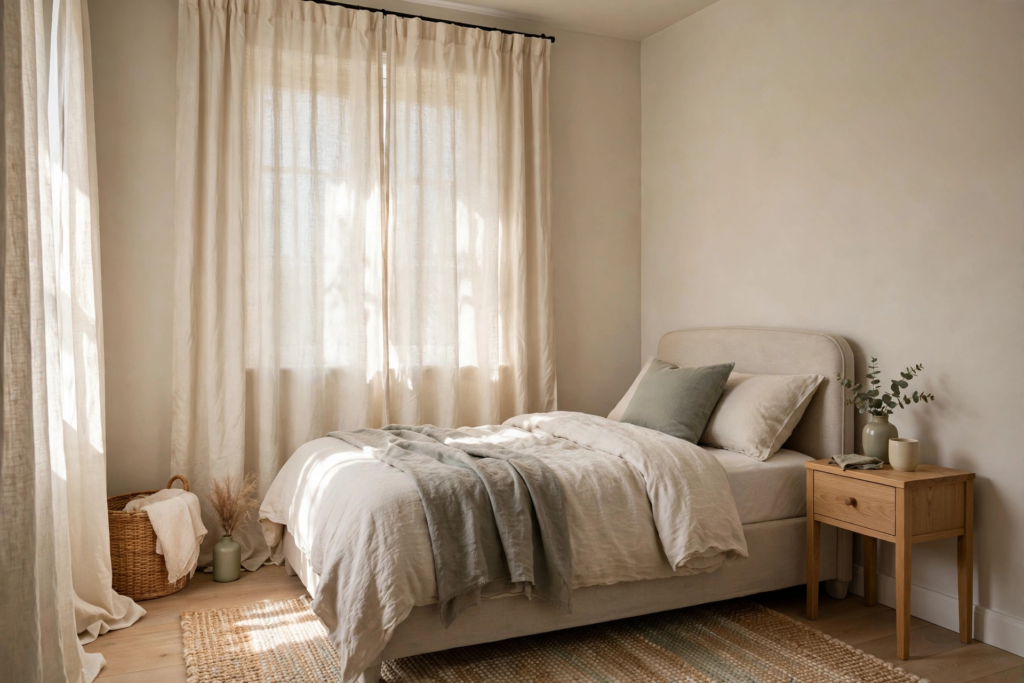
14. Make Your Bed Look Like a Boutique Hotel
You do not need expensive bedding to make a bedroom look polished.
Start with a simple neutral duvet or comforter. Add two or three sleeping pillows, a couple of decorative cushions, and one textured throw at the foot of the bed.
Keep most of the bedding in one color family. Cream, white, oatmeal, beige, or soft gray are easy to layer.
The finishing touch is making the bed neatly without making it look overly stiff.
15. Replace Small Decor With Fewer Larger Pieces
Too many tiny decorative objects can make a small home feel crowded.
Instead of displaying ten inexpensive accessories, choose three or four pieces with more visual presence.
A large ceramic vase, substantial lamp, framed artwork, or oversized plant can make a stronger impression than a collection of small objects.
This approach also makes cleaning and reorganizing much easier.
16. Use Baskets for Attractive Storage
Storage can become part of the decor when you choose attractive containers.
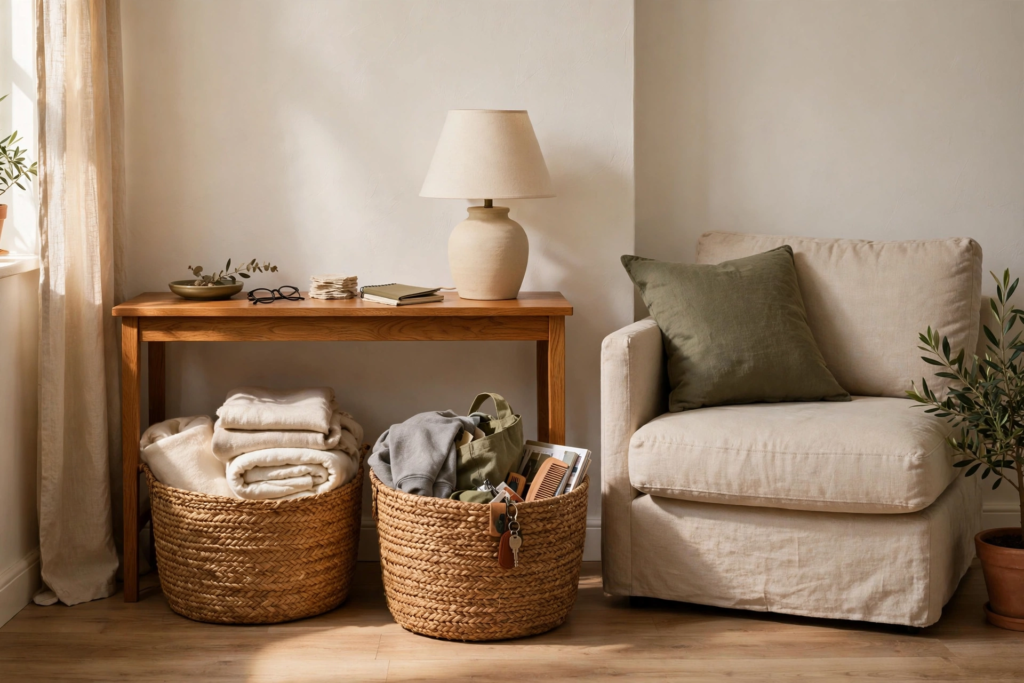
Use woven baskets under a console table, beside the sofa, near the bed, or on open shelving.
They can hide blankets, shoes, children’s items, magazines, or everyday clutter.
Natural woven baskets work especially well with neutral interiors, while darker baskets can add contrast to lighter rooms.
17. Choose Furniture With Exposed Legs
Furniture that sits directly on the floor can make a small room feel visually heavy.
Sofas, chairs, cabinets, and beds with exposed legs allow more of the floor to remain visible, which can make the room feel lighter.
This does not mean every piece needs to have tall legs. Even a sofa with a slim wooden or metal base can create more visual breathing room.
18. Create a Small Dining Nook
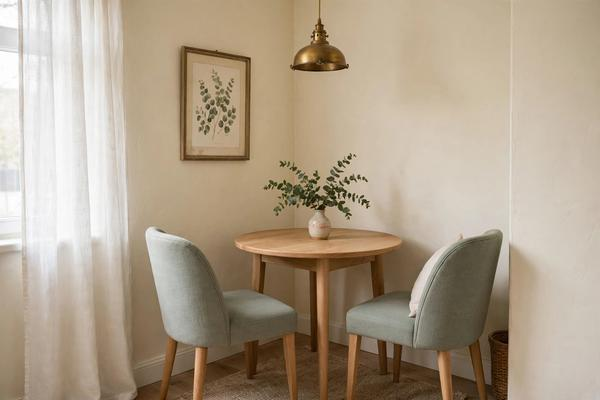
If you do not have space for a full dining room, create a compact dining corner.
A small round table can fit into an unused corner while two comfortable chairs keep the setup practical.
Add a pendant light or small wall artwork above the table. A simple centerpiece such as a ceramic vase with branches can make the area feel intentional.
Round tables are particularly useful in tight spaces because there are no sharp corners interrupting the walkway.
19. Upgrade Hardware Instead of Replacing Furniture
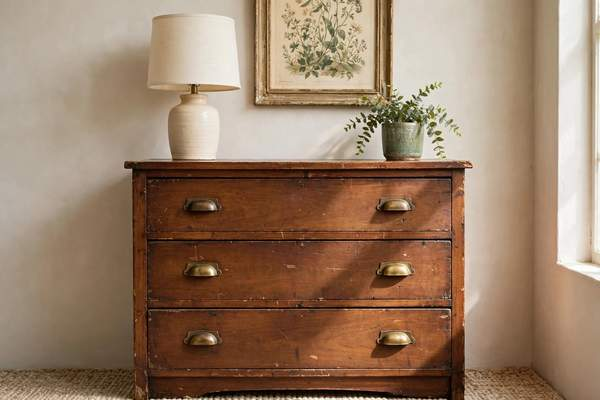
Before replacing an inexpensive cabinet or dresser, consider changing the hardware.
New knobs or handles can completely change the appearance of basic furniture.
Try aged brass for a traditional look, matte black for something modern, or brushed nickel for a cleaner style.
This small change works particularly well on kitchen cabinets, bathroom vanities, dressers, nightstands, and storage units.
20. Keep Countertops and Surfaces Mostly Clear
A room can look expensive simply because it feels organized.
You do not have to remove everything from your counters and shelves. Instead, choose a few useful or beautiful objects and store the rest.
On a kitchen counter, for example, keep a wooden cutting board, ceramic utensil holder, and small plant while putting less attractive items away.
The same idea works in bathrooms, bedrooms, and living rooms.
A little empty space makes the pieces you do display feel more important.
21. Create a Collected Look With Secondhand Finds
The most affordable way to make a small home feel unique is to mix budget pieces with secondhand finds.
Visit thrift stores, flea markets, estate sales, and local resale marketplaces for lamps, mirrors, wooden furniture, artwork, baskets, ceramics, and vintage accessories.
Do not worry about matching everything perfectly.
A modern sofa paired with a vintage coffee table and an old-fashioned lamp can feel far more interesting than a room where every piece came from the same collection.
The goal is for your home to look collected rather than decorated all at once.
How to Make a Small Home Look Expensive on a Budget
You do not need to spend a lot of money at once. Start with the changes that affect the room most.
First, simplify the color palette. Then improve the lighting, add a properly sized rug, introduce natural textures, and remove unnecessary clutter.
After that, look for one or two statement pieces. A beautiful mirror, vintage table, large plant, or substantial piece of artwork can give the room a focal point.
The biggest difference often comes from presentation rather than price.
Affordable Color Combinations That Look Expensive
If you are unsure where to start, try one of these combinations:
Cream + Warm Brown + Olive Green Earthy and relaxed, especially good with wood furniture.
Beige + Black + Warm White Simple and modern with plenty of contrast.
Dusty Blue + Cream + Natural Wood Soft, timeless, and easy to use in bedrooms or living rooms.
Taupe + Burgundy + Brass A richer combination that works beautifully in small dining rooms and living spaces.
Soft White + Sage Green + Light Oak Fresh without feeling overly bright.
How to Decorate a Small Home Without Making It Feel Cluttered
Before buying something new, ask whether it serves a purpose or adds something meaningful to the room.
Try to keep walking paths open and avoid placing furniture directly in front of windows whenever possible.
Use vertical space for storage, choose furniture that fits the scale of the room, and rotate decorative accessories instead of displaying everything you own at the same time.
A small home usually looks better when it has fewer, better-chosen pieces.
Common Small Home Decorating Mistakes
One of the most common mistakes is buying furniture that is too large. Always measure your room and check the dimensions of furniture before purchasing.
Another problem is using too many unrelated colors. A simple palette will make a compact space feel much more cohesive.
Tiny rugs can also make furniture arrangements look disconnected, while excessive small decorations create visual clutter.
Finally, do not sacrifice comfort just to make your home look stylish. The best small spaces are attractive and genuinely easy to live in.
Small Home Decor Checklist
Before you finish decorating, check whether your space has:
A simple, coordinated color palette
At least one good source of layered lighting
A properly sized rug
Curtains that make the windows feel taller
One statement artwork or mirror
Natural materials and textures
A few plants or branches
Attractive storage
Comfortable furniture
Some clear surfaces
A few larger decorative pieces
Personal or secondhand items
You do not need to complete everything at once. Even a few changes can make a noticeable difference.
FAQ About Affordable Decor for Small Homes
How can I make my small home look expensive on a budget?
Start with a cohesive color palette, better lighting, properly sized rugs, attractive curtains, natural textures, and less clutter. Then add one or two statement pieces instead of buying lots of inexpensive decorations.
What colors make a small home look more expensive?
Warm neutrals such as cream, beige, taupe, soft white, and warm gray are easy choices. Add muted green, dusty blue, burgundy, or brown for depth.
What should I avoid in a small home?
Avoid oversized furniture, too many tiny decorative pieces, undersized rugs, excessive colors, and blocked walkways. These can make a room feel smaller and more cluttered.
How can I decorate a small apartment cheaply?
Use secondhand furniture, affordable textiles, removable artwork, plants, mirrors, baskets, and updated hardware. Concentrate your budget on pieces that have a large visual impact.
Does small furniture always work better in a small room?
Not necessarily. A room filled with lots of tiny furniture can feel more cluttered than one with a few well-proportioned pieces. Focus on the right scale rather than simply choosing the smallest options.
Final Thoughts
Making a small home look expensive is less about buying expensive things and more about making thoughtful choices.
A warm color palette, good lighting, natural textures, a properly sized rug, attractive storage, and a few meaningful statement pieces can completely change how a room feels.
Take your time, shop secondhand when possible, and avoid filling every empty corner. When each piece has a purpose, even a compact home can feel polished, comfortable, and personal.
The house in Practical Magic has a kind of charm that is hard to fake. It feels old, slightly mysterious, romantic, and completely lived in. Instead of looking perfectly styled, the rooms are filled with dark wood, vintage furniture, cozy textiles, plants, books, flowers, and little details that make the house feel like it has stories of its own.
If you love the Practical Magic house interior, you can recreate that atmosphere without copying every detail from the movie. The secret is combining Victorian-inspired architecture with cozy cottage elements, moody colors, antique pieces, botanical details, and plenty of personality.
Here are 21 practical ideas for bringing that magical house style into your own home.
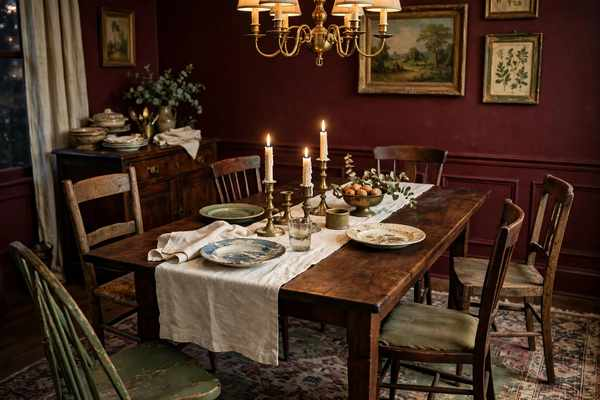
1. Use Dark Wood Throughout the Room
Dark wood is one of the easiest ways to establish the old-world feeling associated with the Practical Magic house. Look for walnut, mahogany, oak with a dark stain, or naturally aged wood.
Try a dark wooden dining table, antique cabinet, coffee table, or bedroom furniture. You do not need every piece to match. Slight differences in wood tones actually make the room feel more collected.
For a modern home, start with one substantial dark wood piece and build around it.
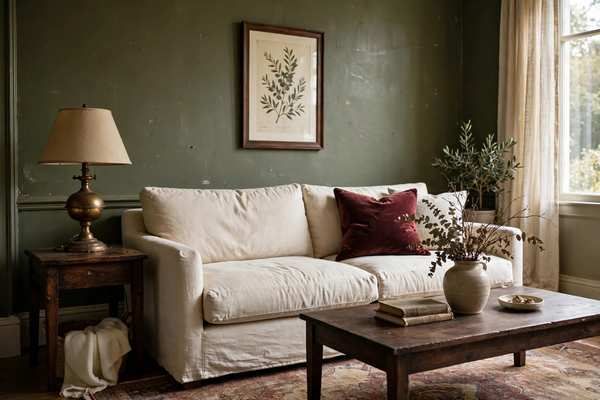
2. Choose Deep, Moody Wall Colors
The movie-inspired look works beautifully with colors that feel slightly dramatic rather than bright and crisp.
Consider:
Deep olive green
Moss green
Warm brown
Muted navy
Dusty blue
Burgundy
Charcoal
Warm cream
You do not have to paint an entire room dark. A single accent wall, library nook, powder room, or hallway can create the mood without making your home feel heavy.
3. Fill Your Home With Vintage Furniture
Part of the charm comes from furniture that looks as though it has been collected over many years.
Search for vintage or antique-inspired pieces such as:
Wooden side tables
Carved dressers
Traditional armchairs
Small writing desks
Display cabinets
Old-fashioned dining chairs
Upholstered benches
Avoid making everything look brand new. A few scratches, worn edges, and slightly faded finishes can actually make the room feel more authentic.
4. Create a Cozy Reading Corner
A comfortable reading corner fits naturally into this style.
Place a traditional armchair beside a window or bookshelf. Add a small wooden table, a warm table lamp, a stack of books, and a soft throw.
For an especially cozy look, choose an upholstered chair in moss green, faded floral, rust, brown, or muted blue.
The goal is to create a spot that looks genuinely useful, not simply decorated for a photograph.
5. Add Plenty of Books
Books are essential if you want your rooms to feel collected and lived in.
Instead of arranging every book perfectly, mix horizontal and vertical stacks. Place some on shelves and a few on side tables or a vintage cabinet.
Old hardcover books with muted covers work especially well with the moody palette.
A large bookcase filled with books, plants, framed photographs, and small decorative objects can become one of the main focal points in the room.
6. Bring in Botanical Prints and Real Plants
The Practical Magic aesthetic has a strong connection to nature, so botanical details fit beautifully.
Try framed botanical illustrations, pressed flowers, dried herbs, potted plants, trailing vines, or branches displayed in old glass bottles.
For a low-maintenance approach, use dried eucalyptus, olive branches, dried hydrangeas, or other preserved greenery.
Mixing plants with dark wood and vintage furniture creates a naturally romantic atmosphere.
7. Decorate With Old-Fashioned Floral Fabrics
Florals do not need to look overly sweet. Choose patterns with slightly faded colors and traditional motifs.
Look for:
Small-scale floral curtains
Vintage floral cushions
Botanical upholstery
Floral bedding
Faded patterned rugs
Brown, cream, dusty rose, sage, muted blue, and burgundy are especially easy to work into a moody room.
If you already have a neutral sofa, adding two floral pillows can be enough to introduce the look.
8. Hang Warm, Traditional Lighting
Lighting makes a huge difference in creating a cozy old-house atmosphere.
Instead of relying on one bright ceiling fixture, layer several warm light sources throughout the room.
Try:
Brass table lamps
Traditional wall sconces
Fabric-shaded lamps
Small chandeliers
Vintage-style pendant lights
Candles
Use warm bulbs rather than cool white lighting. The softer glow makes dark wood, aged metals, and textured fabrics look much richer.
9. Use Antique Brass and Aged Metal
Shiny modern chrome can feel too contemporary for this decorating style. Aged brass, antique bronze, and worn metal are much more suitable.
Introduce these finishes through cabinet hardware, lamps, picture frames, candlesticks, curtain rods, mirrors, or decorative trays.
You only need a few pieces. Repeating the same warm metal finish throughout a room helps the space feel intentional.
10. Create a Dramatic Kitchen With Vintage Character
A Practical Magic-inspired kitchen should feel like a real working kitchen rather than a showroom.
Think warm wood cabinets, open shelving, vintage cookware, ceramic dishes, herbs, cutting boards, and traditional lighting.
Cream or muted green cabinets work especially well. Add aged brass hardware and handmade-looking ceramics for extra character.
If you have a modern kitchen, small changes such as vintage stools, wooden boards, ceramic storage jars, and an antique-style runner can create the same feeling.
11. Display Copper and Vintage Kitchenware
Instead of hiding everything inside cabinets, allow a few beautiful kitchen pieces to become part of the decor.
Hang copper pots from a simple rack or display old wooden utensils in a ceramic crock.
Other useful decorative pieces include:
Vintage mixing bowls
Wooden rolling pins
Copper pans
Stoneware pitchers
Ceramic jars
Woven baskets
Old cutting boards
The key is to display things that look useful. This keeps the room charming instead of overly themed.
12. Layer Persian-Style and Vintage Rugs
Aged-looking rugs help soften dark wood floors and add another layer of history.
Persian-style rugs with faded reds, muted blues, olive green, cream, and brown are particularly effective.
You can use them in living rooms, bedrooms, hallways, kitchens, and reading corners.
Do not worry if the rug has a slightly worn appearance. That lived-in quality works beautifully with this decorating style.
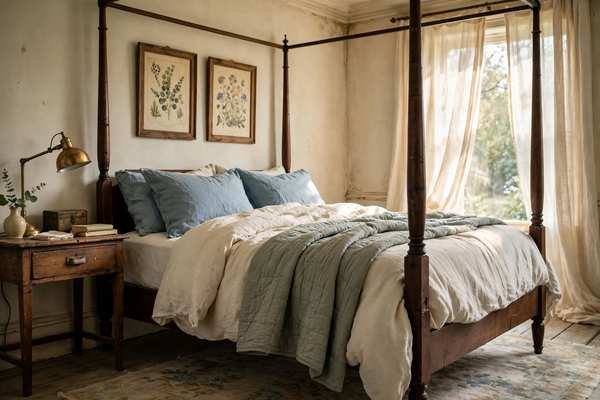
13. Add a Traditional Four-Poster or Wooden Bed
For the bedroom, choose furniture with a classic silhouette.
A dark wooden bed or four-poster frame immediately gives the room an old-fashioned character. Pair it with soft cotton or linen bedding in cream, faded floral, dusty blue, or muted green.
Layer the bed with several pillows and a textured throw rather than making everything perfectly symmetrical.
A vintage bedside table and warm lamp can complete the look.
14. Use Lace, Linen, and Soft Natural Fabrics
The Practical Magic aesthetic is not only about color. Texture is just as important.
Mix:
Linen
Cotton
Velvet
Wool
Lace
Woven fibers
Soft faded fabrics
You might pair linen curtains with a velvet chair, a wool rug, and cotton bedding.
This combination gives a room that wonderfully imperfect, layered feeling that makes old homes feel so comfortable.
15. Style a Mantel With Candles and Greenery
If your home has a fireplace, make it one of the room’s main features.
Keep the arrangement relaxed rather than perfectly symmetrical. Add taper candles, brass candlesticks, dried branches, small framed artwork, and trailing greenery.
A large vintage mirror or traditional artwork above the mantel can anchor the arrangement.
For homes without a fireplace, a long console table can create a similar decorative focal point.
16. Mix Moody Colors With Warm Cream
Dark interiors work best when they have lighter elements to balance them.
Try combinations such as:
Olive green + cream + dark wood
Burgundy + warm white + walnut
Dusty blue + brown + antique brass
Charcoal + ivory + faded green
Deep brown + blush + cream
Warm cream is particularly useful because it softens deeper colors without making the room feel stark.
17. Decorate With Botanical and Vintage Artwork
Blank walls can make this style feel incomplete.
Create a gallery wall using a mixture of botanical prints, landscape paintings, antique-style portraits, vintage photographs, and small decorative mirrors.
The frames do not have to match perfectly. Combine dark wood, brass, black, and aged finishes.
Leave some breathing room between pieces so the wall feels collected rather than cluttered.
18. Add Woven Baskets and Natural Materials
Natural materials help balance the darker furniture and colors.
Use woven baskets for blankets, firewood, towels, magazines, or everyday storage.
You can also bring in:
Rattan
Seagrass
Cane
Wicker
Jute
Unfinished wood
These materials add warmth without taking away from the vintage character of the room.
19. Create a Moody Dining Room
A traditional dining room can become one of the most atmospheric rooms in the house.
Start with a substantial wooden table and comfortable chairs. Add linen napkins, vintage-style dishes, brass candlesticks, and a faded floral or Persian-style rug.
For the walls, try deep green, warm taupe, muted blue, or another earthy shade.
Keep the table setting slightly imperfect. A few mismatched vintage pieces can make it feel much more authentic.
20. Make the Bathroom Feel Like an Old Cottage
You can carry the Practical Magic look into the bathroom too.
Choose vintage-inspired fixtures, aged brass hardware, traditional mirrors, small patterned tiles, and warm-colored textiles.
A wooden stool, woven basket, dried branches, and amber glass bottles can add character without requiring a full renovation.
For a smaller bathroom, focus on the accessories and lighting instead of changing everything.
21. Create a Collected, Slightly Mysterious Home
The final ingredient is personality.
The Practical Magic house does not feel like it was decorated in one afternoon. It feels accumulated over time.
Mix old and new pieces. Display books you actually enjoy. Use family photographs, vintage objects, plants, ceramics, artwork, baskets, candles, and furniture with character.
Do not make every corner match.
A little mystery is part of the charm.
How to Recreate the Practical Magic House Look Without Making Your Home Feel Like a Movie Set
You do not need to recreate the exact house from the movie to capture its atmosphere. Start with the elements that appeal to you most.
If you love the cozy side, focus on warm lighting, layered textiles, books, rugs, and comfortable furniture.
If you prefer the darker aesthetic, experiment with olive green, burgundy, brown, charcoal, and deep blue.
If vintage style is your favorite part, look for antique furniture, aged brass, botanical prints, traditional rugs, and old-fashioned lighting.
The best rooms combine these elements naturally rather than using all of them at once.
Practical Magic Color Palette Ideas
A simple color palette can make it much easier to recreate the mood.
Olive Green, Cream, and Dark Wood
This combination feels earthy and timeless. Use olive on the walls, cream textiles, and dark wood furniture.
Burgundy, Brown, and Antique Brass
A richer combination for dining rooms, libraries, and bedrooms.
Dusty Blue, Cream, and Walnut
Choose this palette if you want the vintage look to feel lighter and more relaxed.
Deep Green, Blush, and Warm White
The small amount of blush keeps a moody room from feeling too serious.
Charcoal, Olive, and Natural Linen
A good option for a more modern interpretation of the style.
How to Get the Look on a Budget
You do not have to buy expensive antiques.
Start with secondhand shops, estate sales, flea markets, and online vintage marketplaces. Look for wooden furniture with good proportions even if the finish is not perfect.
You can also make inexpensive pieces feel more appropriate by changing hardware, using warm lamps, adding vintage-style rugs, or replacing modern artwork with botanical prints.
Focus your budget on a few pieces that have visual weight, such as a beautiful rug, wooden cabinet, traditional lamp, or comfortable chair.
Common Mistakes to Avoid
The biggest mistake is making the room look like a themed Halloween set.
Avoid filling every surface with mysterious objects, fake cobwebs, witch-themed decorations, or overly obvious props.
Instead, let the atmosphere come from the architecture, furniture, colors, lighting, plants, books, and textiles.
Also avoid making everything perfectly coordinated. A little mismatch is part of what gives this style its personality.
Practical Magic Interior Style Checklist
Before you finish decorating, check whether your room includes a few of these elements:
Dark or naturally aged wood
Warm cream or earthy wall colors
Vintage or antique-style furniture
Traditional lighting
Aged brass or bronze
Botanical artwork
Real or dried plants
Floral or vintage textiles
Persian-style rug
Books and collected objects
Woven baskets
Warm candlelight
Natural fabrics
Comfortable seating
A few imperfect vintage pieces
You do not need every item. Even five or six of these details can completely change the feeling of a room.
FAQ About Practical Magic House Interior Decor
What style is the Practical Magic house?
The house combines Victorian-inspired architecture with cozy cottage, traditional, vintage, and slightly gothic influences. Dark wood, floral fabrics, plants, books, traditional furniture, and warm lighting all contribute to the look.
What colors are best for a Practical Magic-inspired home?
Earthy and moody colors work especially well, including olive green, moss, burgundy, brown, dusty blue, charcoal, cream, and muted neutrals.
How can I get the Practical Magic look in a modern house?
Focus on furniture and accessories rather than trying to recreate the architecture. Add a vintage rug, dark wood furniture, botanical artwork, warm lighting, plants, traditional textiles, and aged brass accents.
Does Practical Magic decor have to be dark?
No. The style can be adapted to lighter homes. Use warm cream walls, natural wood, faded blue, soft green, linen, and vintage furniture while keeping the layered, collected feeling.
What type of furniture works best?
Traditional wooden furniture, antique-style cabinets, upholstered chairs, four-poster beds, writing desks, wooden dining tables, and vintage side tables all fit naturally into the look.
Final Thoughts
A Practical Magic-inspired interior is less about copying a movie set and more about creating a home with history, warmth, and personality.
Start with dark wood, vintage furniture, earthy colors, warm lighting, botanical details, books, and comfortable textiles. Then add pieces that feel personal rather than perfectly matched.
The result should feel a little mysterious, a little romantic, and most importantly, like someone actually lives there.
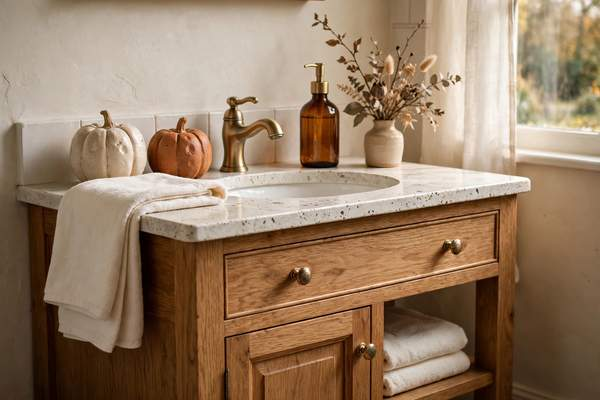
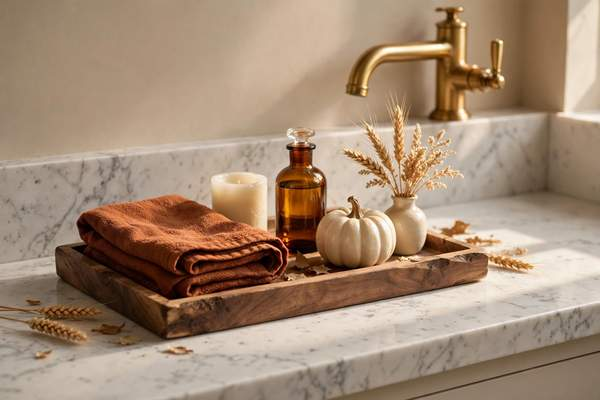
Fall decorating does not have to stop at the living room or front porch. Your bathroom can also benefit from a few warm seasonal touches, and you do not need a complete makeover to make it feel like autumn.
A soft towel, a small vase of dried branches, amber glass, warm wood, or a simple fall-scented candle can change the mood of the entire space. The key is to add seasonal texture and color while keeping the bathroom practical and uncluttered.
If you love cozy autumn interiors, these 21 fall bathroom decorating ideas will help you create a warm, inviting space that still feels fresh and functional.
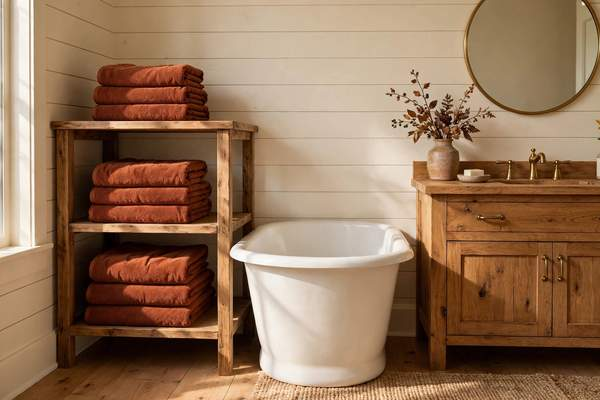
1. Add Warm Rust-Colored Towels
One of the easiest ways to bring fall into a bathroom is by switching your everyday towels.
Rust, burnt orange, cinnamon, and terracotta shades instantly introduce an autumn feeling without requiring permanent changes. Fold a few towels neatly on an open shelf or roll smaller hand towels into a basket.
If your bathroom is mostly white or cream, a rich rust color creates a beautiful contrast.
2. Decorate With Dried Autumn Branches
Bring a little of the outdoors inside with dried branches.
Place tall branches in a simple ceramic vase on a bathroom counter, shelf, or empty corner. Look for natural brown, muted orange, burgundy, or golden tones.
Dried branches are especially useful in bathrooms because they require no watering and can stay in place throughout the season.
3. Use Amber Glass Accessories
Amber glass is perfect for a warm fall bathroom.
Try an amber soap dispenser, small storage jars, candle holder, or decorative bottle. The translucent brown color catches natural and artificial light beautifully.
Pair amber glass with cream towels, warm wood, and brass fixtures for an understated autumn look.
4. Add a Small Fall-Inspired Bath Mat
A bath mat can completely change the feeling of the room.
Choose warm neutral shades such as oatmeal, camel, terracotta, muted olive, or cinnamon. A textured cotton or woven mat can make the bathroom feel softer without looking overly seasonal.
If you already have patterned tile, keep the mat simple so the room does not feel visually crowded.
5. Bring in Natural Wood
Wood instantly adds warmth to a bathroom filled with cool tile and porcelain.
Use a small wooden stool, teak bath tray, bamboo storage basket, wooden soap dish, or framed mirror. You do not need much. One or two natural wood pieces can make a noticeable difference.
Warm oak and walnut are particularly beautiful with autumn colors.
6. Create a Cozy Candle Display
A candle can make an ordinary bathroom feel much more relaxing on a cool fall evening.
Place a candle on a tray beside the bathtub or on a bathroom shelf. Choose scents such as vanilla, cedar, apple, cinnamon, or amber if you enjoy seasonal fragrances.
For safety and convenience, flameless candles are a good option, especially in small bathrooms or spaces where candles could be knocked over.
7. Add a Touch of Olive Green
Fall does not have to mean orange everywhere.
Olive green works beautifully with autumn neutrals and natural materials. Add an olive green hand towel, small ceramic vase, bath mat, or framed botanical print.
Combine it with cream, brown, brass, and warm wood for a relaxed earthy palette.
8. Style the Bathroom Counter With Fall Details
You only need a few carefully chosen pieces to make the counter feel seasonal.
Place everyday products on a small wooden or ceramic tray, then add a tiny vase of dried foliage and an amber glass container. Keep the rest of the counter clear.
This approach adds fall character without sacrificing useful workspace.
9. Add a Woven Basket for Towels
Woven baskets are practical and decorative at the same time.
Use one to store rolled towels, toilet paper, extra toiletries, or bath accessories. Natural seagrass, rattan, and water hyacinth all work well with fall decorating.
The texture helps soften bathrooms dominated by smooth tile and glass.
10. Decorate With Terracotta Accents
Terracotta brings an earthy autumn quality into the bathroom.
Try a small terracotta planter, soap dish, vase, or decorative container. Pair it with cream, beige, warm brown, or olive green.
The slightly imperfect texture of handmade-looking terracotta also works well in rustic and Mediterranean-inspired bathrooms.
11. Use Burgundy for a Richer Fall Look
Burgundy is an easy way to make a bathroom feel warmer and more sophisticated.
A burgundy hand towel, small bath mat, shower curtain detail, or decorative vase can be enough. You can also repeat the shade through dried flowers or artwork.
Against white tile and brass fixtures, burgundy creates a particularly rich contrast.
12. Add a Small Seasonal Floral Arrangement
A small arrangement can bring color and texture into an otherwise plain bathroom.
Use dried hydrangeas, eucalyptus, wheat stems, preserved grasses, or autumn-colored flowers. Keep the arrangement compact if you have limited counter space.
A simple ceramic vase will keep the display from feeling overly decorative.
13. Swap in a Warm Fall Shower Curtain
If your bathroom uses a fabric shower curtain, changing it can make a surprisingly big difference.
Choose a pattern that complements your existing tile rather than competing with it.
14. Add Brass or Aged Gold Details
Warm metal finishes work beautifully with fall colors.
If you already have brass fixtures, repeat the finish through small accessories such as a tray, mirror frame, candle holder, or soap dispenser.
If replacing hardware is not practical, simply adding a few aged brass accessories can create the same visual warmth.
15. Create a Cozy Fall Bathroom Shelf
A bathroom shelf gives you a small area to experiment with seasonal styling.
Combine folded cream towels, an amber glass jar, a small ceramic pumpkin, dried branches, and a woven basket. Leave enough space between items so the shelf still feels organized.
For a more sophisticated look, use muted autumn shades instead of bright orange.
16. Add a Ceramic Pumpkin or Two
Small pumpkins are an easy seasonal accent for a bathroom.
Choose ceramic, stoneware, wood, or fabric pumpkins instead of fresh ones if you want something that can be reused every year. Cream, terracotta, sage, and muted orange are particularly versatile.
Place one beside the sink or on a shelf rather than scattering pumpkins throughout the room.
17. Layer Cream, Camel, and Brown
For a quiet autumn bathroom, skip strong seasonal colors and work with warm neutrals.
Combine cream towels with camel accessories, medium brown wood, beige textiles, and subtle brass details.
This palette creates a cozy feeling without making the bathroom look themed.
18. Bring in a Small Houseplant
Greenery can balance the warm colors of fall.
Choose a bathroom-friendly plant based on the natural light and humidity available in your space. Place it in a terracotta, ceramic, or woven planter.
If your bathroom does not get enough light for a live plant, realistic dried or artificial greenery can provide a similar visual effect.
19. Style an Autumn-Inspired Bathroom Tray
A tray helps keep small decorations organized.
Arrange a candle, amber glass bottle, folded hand towel, small ceramic pumpkin, and a tiny vase of dried foliage on a wooden or stone tray.
The grouping makes several small pieces feel intentional rather than randomly placed around the counter.
20. Create a Warm Fall Guest Bathroom
A guest bathroom is a great place to add a little extra seasonal personality.
Use fresh-looking cream towels, a small fall arrangement, a seasonal hand soap, warm wood accents, and an amber candle or diffuser. Keep toiletries neatly organized so guests still have plenty of usable space.
A small seasonal touch can make the room feel thoughtful without going overboard.
21. Create a Collected Autumn Bathroom Look
The most natural fall bathrooms combine several subtle elements rather than relying on one obvious decoration.
Mix warm towels, natural wood, dried greenery, amber glass, woven textures, aged brass, and one or two seasonal accents. Keep the permanent bathroom finishes neutral so the seasonal pieces can change throughout the year.
This creates a bathroom that feels warm and autumnal without looking like a themed display.
How to Decorate a Bathroom for Fall
Start with the things that are easiest to change.
Swap your towels, add a warm bath mat, and introduce one natural element such as dried branches or a woven basket. From there, add small accessories in a consistent fall color palette.
For example, cream towels, a rust bath mat, a walnut stool, and an amber candle can completely change the mood without requiring any renovation.
Best Fall Bathroom Color Combinations
Fall bathroom decor works especially well with muted, earthy colors.
Rust + cream + warm wood: classic and cozy
Olive + oatmeal + brown: natural and relaxed
Burgundy + cream + brass: rich and elegant
Terracotta + beige + olive: earthy and Mediterranean
Camel + cream + walnut: warm and sophisticated
Burnt orange + charcoal + cream: modern autumn style
Taupe + amber + natural wood: subtle and inviting
Dusty rose + brown + cream: soft and romantic
Choose one main combination and repeat it through towels, accessories, textiles, and small decorative pieces.
How to Make a Small Bathroom Feel Cozy for Fall
Small bathrooms benefit from simple decorating.
Use vertical shelves, wall hooks, a narrow wooden stool, or a small woven basket rather than filling the counter with decorations. Warm towels and soft lighting can provide more impact than a large collection of seasonal accessories.
Keep the countertop mostly clear so the bathroom still feels spacious.
How to Make Fall Bathroom Decor Look Expensive
Focus on materials and texture rather than quantity.
Choose thick cotton towels, linen-look textiles, natural wood, stoneware ceramics, woven baskets, amber glass, and aged metal. Even inexpensive decorations can look polished when you group them thoughtfully.
Avoid buying several unrelated fall decorations. A few pieces that share the same colors and materials will create a much more cohesive look.
Common Fall Bathroom Decorating Mistakes
Avoid these common decorating problems:
Using too many bright orange decorations
Filling every counter and shelf
Choosing seasonal pieces that interfere with everyday use
Mixing too many unrelated colors
Using textiles that are difficult to keep dry
Placing real candles too close to towels or curtains
Adding plants that cannot handle the bathroom’s light or humidity
Choosing too many tiny decorations without a clear focal point
The bathroom should still feel clean, practical, and easy to maintain.
Fall Bathroom Decorating Checklist
Before finishing your seasonal update, check for:
Warm autumn-colored towels
A soft bath mat
One natural wood element
Dried branches or seasonal greenery
Amber glass or warm ceramic accessories
One or two seasonal accents
A woven basket
Warm lighting
A cohesive fall color palette
Clear and functional countertops
Safe placement of candles and decorations
FAQ
How can I decorate my bathroom for fall without making it look cluttered?
Focus on a few useful pieces such as towels, a bath mat, a small vase, and one decorative tray. Keep most surfaces clear and repeat the same colors throughout the room.
What colors are best for fall bathroom decor?
Rust, terracotta, olive green, burgundy, camel, cream, warm brown, and muted orange all work well. Warm neutrals are especially useful if you want a subtle seasonal look.
What are the easiest fall bathroom decorations?
Changing towels, adding a woven basket, placing dried branches in a vase, and introducing amber glass accessories are some of the simplest options.
Can I decorate a small bathroom for fall?
Absolutely. Use vertical space and choose small, functional accents. A warm towel, compact vase, and one seasonal accessory can be enough.
How can I make my bathroom feel cozy for autumn?
Layer warm textures and earthy colors. Combine soft towels, natural wood, woven accessories, dried greenery, and warm lighting to create a comfortable fall atmosphere.
Final Thoughts
Fall bathroom decorating is all about small changes that make the room feel warmer. You do not need new tile, expensive fixtures, or a complete makeover. A few seasonal colors, natural textures, and cozy details can make an everyday bathroom feel noticeably more inviting.
Start with the pieces you use every day, such as towels, bath mats, baskets, and storage trays. Then add a little greenery, warm lighting, or seasonal decoration to finish the look. The result should feel like your bathroom, just a little cozier for autumn.
Your front door sets the mood before anyone even steps inside, and Halloween is the perfect excuse to have a little fun with it. The best Halloween front door decorations do not have to be frightening or complicated. A wreath, a few pumpkins, some warm lighting, or a handful of dried branches can completely change the look of your entryway.
Whether you prefer a spooky haunted-house entrance, a classic black-and-orange display, or a more elegant fall-inspired look, these Halloween front door ideas offer plenty of ways to decorate without making your home feel chaotic.
1. Create a Classic Halloween Pumpkin Display
You cannot go wrong with pumpkins around the front door. Arrange pumpkins in different sizes along the steps, beside planters, or directly near the doorway.
Mix traditional orange pumpkins with white and muted green varieties for a more layered look. A few crooked stems and natural imperfections actually make the display feel more charming.
For a classic Halloween entrance, add a black lantern or two and a simple black doormat.
2. Hang a Spooky Black Wreath
A black wreath can make a front door look instantly dramatic.
Use a wreath made from dark branches, black faux leaves, dried grasses, or black-painted twigs. Add a few subtle details such as miniature bats, a black ribbon, or dark berries.
Against a white or light-colored door, the wreath becomes the main focal point without needing many other decorations.
3. Add a Halloween Garland Around the Door
Frame the entire doorway with a garland for a more dramatic entrance.
Combine faux autumn leaves, dark greenery, black branches, and orange berries. You can make the garland symmetrical on both sides or let one side trail slightly lower for a more natural look.
Add warm string lights underneath the greenery to make the entrance glow after sunset.
4. Create a Black and Orange Entryway
For a traditional Halloween look, stick with the colors everyone recognizes.
Use orange pumpkins, black lanterns, a black wreath, and a dark doormat. You can soften the contrast with natural wood, beige planters, or warm brown fall leaves.
This palette works especially well on white, cream, gray, or natural wood-colored doors.
5. Decorate With Oversized Spiders
If you want your front door to look genuinely spooky, oversized spiders can do most of the work.
Place one large faux spider on the wall beside the door or across a garland. Add stretched faux cobwebs around the frame, keeping them loose and slightly irregular.
A few smaller spiders scattered around the display will make the arrangement feel more believable.
6. Build a Haunted House Front Door
Turn your entrance into a miniature haunted house.
Cover part of the doorway with dark fabric or faux cobwebs, add crooked branches, black lanterns, and a few weathered-looking decorations. Use dim warm lighting rather than bright bulbs to create atmosphere.
You can make the display spooky without using anything graphic. Shadows, texture, and lighting often create a stronger Halloween mood.
7. Use White Pumpkins for a Sophisticated Look
Halloween decor does not always have to be orange.
Arrange white pumpkins around the door with cream mums, eucalyptus, dried grasses, and black accents. Add a black wreath or black lanterns for contrast.
This combination works beautifully with modern, farmhouse, cottage, and neutral exterior styles.
8. Make a Witch-Inspired Front Door
Create a playful witch-themed entrance with a black witch hat, broom, dark wreath, and a few pumpkins.
Lean an old-fashioned broom against the wall beside the door and hang a pointed black hat from a hook. Add black ribbon or dark greenery around the entry.
Keep the colors mostly black, charcoal, deep purple, and muted orange for a more sophisticated witchy look.
9. Add a Moody Burgundy and Black Palette
For something different from traditional orange Halloween decor, use burgundy and black.
Add deep burgundy flowers or dried foliage, black pumpkins, dark wood planters, and a black wreath. A few warm brass lanterns can keep the entrance from feeling too cold.
This palette works particularly well with brick, dark-painted, or traditional homes.
10. Create a Pumpkin-Lined Walkway
Make the entire approach to your front door part of the decoration.
Place pumpkins at intervals along the walkway rather than grouping them all beside the door. Mix sizes and shapes so the arrangement feels natural.
Add small lanterns between some of the pumpkins for a warm glow that helps guide guests toward the entrance.
11. Decorate With Corn Stalks
Tall dried corn stalks can give a front door a wonderfully old-fashioned autumn feel.
Tie several stalks together and place them on either side of the entrance. Add pumpkins at their base and a simple wreath on the door.
The height of the stalks draws attention upward and makes even a simple entryway feel more dramatic.
12. Add a Halloween Doormat
Sometimes a small change can make a big difference.
Choose a black, charcoal, or natural-fiber doormat with a playful Halloween message or a simple seasonal pattern. Layer it over a larger neutral outdoor rug if you have enough space.
A layered doormat arrangement can make the entry feel finished without requiring lots of decorations.
13. Create a Cottage-Style Halloween Porch
For a softer Halloween look, combine seasonal decorations with cottage-style details.
Use pumpkins, dried flowers, woven baskets, vintage lanterns, and a simple autumn wreath. Stick with cream, muted orange, sage green, and warm brown instead of bright Halloween colors.
The result feels festive while still blending naturally with the rest of the home.
14. Hang Bats Around the Front Door
Paper or lightweight faux bats are an easy way to add movement to your entryway.
Arrange them so they appear to be flying outward from one corner of the door or climbing upward along the wall. Use different sizes rather than placing every bat at the same distance.
Black bats against a pale exterior create a strong visual contrast.
15. Add Warm Lanterns and Candles
Lighting can completely change your Halloween front door after dark.
Place lanterns on the steps or beside planters and fill them with flameless candles. Choose warm amber-colored lighting to create a soft glow.
Combine the lanterns with pumpkins and greenery so the entrance feels inviting rather than simply dark.
16. Create a Vintage Halloween Entrance
Give your front door an old-fashioned Halloween feeling with vintage-inspired pieces.
Look for weathered lanterns, antique-style frames, dark wooden crates, old-looking bottles, black candlesticks, and faded Halloween decorations. Combine them with dried branches and muted pumpkins.
Keep the palette slightly faded with charcoal, cream, brown, burgundy, and dusty orange.
17. Use Black and Cream for Modern Halloween Decor
A black-and-cream palette can make Halloween decorations feel surprisingly elegant.
Try cream pumpkins, a black wreath, charcoal planters, warm wood, and a simple black doormat. Add just a tiny amount of orange if you want a more recognizable Halloween touch.
This is especially effective for modern homes where bright seasonal colors may feel out of place.
18. Decorate the Front Steps With Pumpkins and Mums
Combine pumpkins with potted chrysanthemums for a classic fall entry.
Place larger pots toward the sides of the steps and smaller pumpkins between them. Use orange, cream, burgundy, and muted yellow flowers to create a layered seasonal display.
The combination works for Halloween and can easily transition into the rest of fall.
19. Create a Spooky Spiderweb Door
Cover the door frame with faux spiderweb material and add a few realistic-looking spiders.
Keep the web concentrated around the corners rather than covering every inch of the entrance. Add one larger spider as a focal point.
Pair the display with black lanterns and a few dark pumpkins for a simple but creepy effect.
20. Add a Dramatic Halloween Door Bow
A large ribbon can make a surprisingly beautiful Halloween decoration.
Choose black velvet, deep burgundy, burnt orange, or dark purple ribbon and tie an oversized bow around the door or wreath.
Velvet works especially well because its texture gives the display a richer, more sophisticated appearance.
21. Build a Collected Halloween Front Door
For the most natural-looking entrance, mix several Halloween elements instead of relying on one theme.
Combine pumpkins, a seasonal wreath, dried branches, lanterns, mums, a textured doormat, and a few subtle spooky details. Repeat two or three colors throughout the display so everything feels connected.
The goal is not to fill every inch of the porch. Leave some breathing room so the front door remains the visual center.
How to Decorate Your Front Door for Halloween
Start with the door itself, then build outward.
Choose one main focal point, such as a wreath, oversized bow, or dramatic Halloween sign. Next, add something at ground level, such as pumpkins or planters. Finish with lighting to make the display work after sunset.
A simple formula is:
Door decoration + pumpkins or planters + seasonal greenery + warm lighting
You can then add one spooky detail, such as bats, spiders, cobwebs, or a witch-inspired accessory.
Best Halloween Front Door Color Combinations
The color palette you choose can completely change the mood.
Orange + black: classic and playful
Black + cream: modern and elegant
White + black + muted orange: clean and sophisticated
Burgundy + black + brass: moody and dramatic
Sage + cream + burnt orange: soft autumn style
Purple + black + orange: traditional spooky Halloween
Brown + cream + muted orange: rustic and natural
Try to keep the main palette to three or four colors. Too many competing shades can make a small entryway feel cluttered.
How to Decorate a Small Front Door for Halloween
You do not need a large porch to create an impressive Halloween display.
Hang a wreath on the door, place two small pumpkins near the threshold, and add one lantern or planter. Vertical decorations such as hanging bats or a narrow garland can add visual interest without using much floor space.
A small display with clear focal points usually looks better than trying to squeeze in every Halloween decoration you own.
How to Make Halloween Front Door Decor Look Expensive
Use texture and repetition instead of simply adding more decorations.
Velvet ribbon, natural greenery, aged brass, wood, woven baskets, dried flowers, and realistic pumpkins tend to look more polished than a collection of unrelated plastic decorations.
Repeat the same colors in the wreath, pumpkins, planters, and doormat. This creates a cohesive entrance without requiring expensive pieces.
Common Halloween Front Door Decorating Mistakes
Avoid these common problems when decorating your entryway:
Covering the entire door with decorations
Using too many bright colors at once
Blocking the walkway with pumpkins or props
Using too many tiny decorations
Forgetting about nighttime lighting
Covering handrails or steps with loose decorations
Using real candles where they can be knocked over
Making the entrance so spooky that it no longer feels welcoming
Ignoring the existing color and style of your home
A little restraint can make even inexpensive Halloween decorations look intentional.
Halloween Front Door Decorating Checklist
Before you call your entryway finished, check that you have:
One main focal point
A Halloween wreath or door decoration
Pumpkins or seasonal planters
One or two lighting elements
A clean, functional walkway
Two or three main colors
Seasonal greenery or dried materials
One spooky detail
A weather-resistant doormat
Securely attached decorations
Enough open space around the door
FAQ
What should I put on my front door for Halloween?
A wreath is one of the easiest options, but you can also use an oversized bow, hanging bats, a witch hat, dried branches, or a seasonal garland.
How can I decorate my front door for Halloween without it looking too scary?
Use pumpkins, mums, greenery, warm lanterns, cream colors, and a simple wreath. Replace graphic decorations with natural textures and autumn-inspired details.
What colors look best for Halloween porch decor?
Black and orange are classic, while black and cream, burgundy and black, and sage with burnt orange offer softer alternatives.
How do I make a small porch look good for Halloween?
Use vertical space and choose a few larger pieces. A wreath, two planters or pumpkin groupings, and warm lighting can be enough.
How can I make Halloween decorations look elegant?
Choose a restrained color palette and focus on materials such as velvet, wood, dried foliage, aged brass, natural pumpkins, and realistic greenery.
Final Thoughts
Your front door does not need to look like a haunted attraction to feel festive for Halloween. Sometimes the most inviting displays are built around simple pumpkins, beautiful greenery, warm lanterns, and one or two spooky details.
Whether you love classic orange and black or prefer a sophisticated burgundy, cream, and charcoal palette, choose decorations that work with your home’s existing style. A thoughtful arrangement can make the entrance feel both spooky and welcoming, which is exactly what a Halloween porch should be.
Your bedroom does not need a huge Christmas tree or shelves packed with decorations to feel festive. A few thoughtful changes can make it feel warm, magical, and unmistakably ready for Christmas.
Think soft bedding, warm lights, evergreen branches, velvet ribbons, little trees, candles, and seasonal colors that work with what you already have. The best Christmas bedroom decor feels cozy enough for everyday life while still giving you that special holiday feeling.
Here are 21 Christmas bedroom decorating ideas to inspire a beautiful and comfortable holiday retreat.
1. Layer a Cozy Christmas Bedding Set
Start with the bed because it naturally becomes the focal point of the bedroom. Swap your everyday duvet cover for a winter-friendly combination of cream, forest green, burgundy, or soft red.
You do not need a full matching Christmas bedding set. A neutral duvet with a plaid blanket and a few velvet pillows can look much more relaxed and sophisticated.
For an especially cozy finish, layer different textures rather than adding lots of patterns.
2. Add a Small Christmas Tree
A small Christmas tree can bring the holiday spirit into your bedroom without taking up much floor space.
Place a tabletop tree on a nightstand, dresser, bench, or small stool. Keep the decorations simple with warm white lights, miniature ornaments, and a small velvet ribbon.
A little tree with slightly imperfect branches often looks more charming than something overly decorated.
3. Decorate the Headboard With Evergreen
Bring a little greenery behind the bed by draping a lightweight faux evergreen garland across the headboard.
For a traditional bedroom, add burgundy ribbon or small brass bells. For a more neutral room, leave the greenery mostly undecorated and pair it with warm white lights.
If your headboard is upholstered, secure decorations carefully so they do not pull or damage the fabric.
4. Hang a Christmas Wreath Above the Bed
A wreath does not have to stay on the front door.
A simple evergreen wreath above the headboard can instantly make the bedroom feel festive. Choose a size that leaves plenty of wall space around it so the arrangement does not overwhelm the bed.
For a softer look, try a wreath made with eucalyptus, dried berries, pinecones, or muted greenery.
5. Use Warm White Fairy Lights
Few things create a magical Christmas bedroom faster than warm lighting.
Wrap delicate string lights around a headboard, drape them across a curtain rod, or place them inside a glass vase on a dresser.
Choose warm white bulbs rather than cool white lighting if you want the room to feel soft and inviting. Battery-operated lights can also be useful when you want to avoid visible cords.
6. Bring in Burgundy Velvet Accents
Burgundy works beautifully in a bedroom because it adds depth without feeling overly bright.
Try a burgundy velvet pillow, throw blanket, ribbon, or small upholstered bench. Against cream bedding and warm wood furniture, the color feels especially rich.
You only need a few burgundy accents to create a noticeable Christmas mood.
7. Create a Christmas Nightstand
Give your bedside table a tiny holiday makeover.
Place a small evergreen clipping in a ceramic vase, add a brass candleholder, and finish with a miniature Christmas ornament or pinecone. Keep the arrangement low enough that it does not interfere with your lamp or everyday items.
The goal is a festive corner that still feels practical.
8. Add Plaid to the Bed
Plaid is one of the easiest ways to make a bedroom feel ready for Christmas.
A red-and-green tartan blanket folded across the end of the bed creates a traditional look. For something quieter, choose brown, cream, charcoal, or muted green plaid.
If the bedding already has a pattern, use plaid in just one small accent so the room does not become visually busy.
9. Decorate With Mini Christmas Trees
You can create a little Christmas forest without using much space.
Place two or three miniature trees of different heights on a dresser, windowsill, or console table. Mix natural-looking bottle-brush trees with tiny ceramic or wooden versions.
Leaving some of the trees undecorated can make the display feel more relaxed and natural.
10. Add a Christmas Garland to a Dresser
A dresser is another easy place to introduce seasonal greenery.
Lay a short evergreen garland across the top and add a few pinecones, brass ornaments, or warm lights. Keep everyday items such as perfumes and jewelry organized in trays so the arrangement still feels useful.
For a more elegant bedroom, combine greenery with cream candles and aged brass instead of bright red decorations.
11. Choose Cream and Forest Green
If traditional red Christmas decor feels too strong for your bedroom, try a softer color palette.
Cream, forest green, warm wood, and muted gold create a festive look that feels calm and sophisticated. Use cream bedding as the base, then introduce green through pillows, greenery, blankets, or small trees.
This palette works particularly well with Scandinavian, farmhouse, cottage, and traditional bedrooms.
12. Style the Windowsill for Christmas
A windowsill can become a small seasonal display without taking up valuable floor space.
Arrange miniature evergreen trees, pinecones, a few flameless candles, and perhaps a small ceramic house. During the day, natural winter light will make the display feel especially pretty.
Avoid blocking too much of the window if you want to keep the bedroom bright.
13. Hang Velvet Christmas Ribbons
Sometimes one beautiful detail is enough.
Tie wide velvet ribbons around a wreath, small tree, bedpost, curtain tieback, or decorative branch. Burgundy, deep green, cream, and dusty rose all work beautifully in bedrooms.
Let the ribbon tails fall naturally rather than making every bow perfectly symmetrical.
14. Add a Cozy Christmas Throw
A thick throw at the foot of the bed instantly makes a bedroom look warmer.
Try chunky knit, brushed cotton, quilted fabric, velvet, or soft wool-look textures. Cream and oatmeal are especially useful because they can stay in the room long after Christmas.
For a stronger holiday look, choose a throw in burgundy, forest green, cinnamon, or traditional tartan.
15. Bring in Natural Christmas Materials
Christmas bedroom decor does not have to be made entirely from ornaments.
Pinecones, dried oranges, evergreen branches, wooden stars, woven baskets, and unfinished wood accents can create a warm seasonal atmosphere without making the bedroom look overly decorated.
These materials also pair beautifully with neutral bedding and natural wood furniture.
16. Create a Candlelit Christmas Corner
Set up a small Christmas corner on a dresser or side table using flameless candles, greenery, and a few seasonal ornaments.
Choose candles in different heights to create a more layered display. Cream or ivory candles tend to blend beautifully with most bedroom color schemes.
If using real candles, keep them away from bedding, curtains, greenery, and other flammable materials. Flameless versions are usually the easier choice for a bedroom.
17. Add Christmas Stockings to the Bedside Area
Who says stockings belong only by the fireplace?
Hang small stockings from a sturdy shelf, decorative ladder, dresser handle, or wall hooks near the bed. Choose materials that complement your bedding, such as linen, velvet, cable knit, or plaid.
For a coordinated look, repeat one stocking color somewhere else in the room.
18. Create a Romantic Pink and Burgundy Bedroom
For a softer Christmas bedroom, move beyond traditional red and green.
Combine blush pink, dusty rose, burgundy, cream, and muted gold. Add velvet cushions, soft bedding, warm fairy lights, and a small decorated tree.
The result feels festive without looking overly traditional, making it especially appealing if your bedroom already uses warm neutral or feminine tones.
19. Decorate a Bedroom Bench
If your bedroom has a bench at the foot of the bed, turn it into a subtle Christmas display.
Fold a plaid or velvet blanket over one side and place a small decorative pillow on top. Add a woven basket underneath for extra winter blankets.
Keep the bench functional so the room still feels comfortable rather than staged.
20. Add a Little Christmas Village
A miniature Christmas village can create a wonderfully nostalgic bedroom display.
Arrange a few tiny houses, bottle-brush trees, and warm lights on a dresser, bookshelf, or floating shelf. Keep the colors muted if you want the display to blend with the rest of the room.
A small village is also a great option when you love Christmas decorations but have very little floor space.
21. Create a Collected Christmas Bedroom
The most magical Christmas bedrooms rarely look like everything came from one matching decoration set.
Mix old-looking ornaments with new pieces, combine different fabrics, and repeat a few colors throughout the room. A vintage-style mirror, brass candlestick, plaid throw, evergreen branches, and soft linen bedding can all work together without being perfectly matched.
Leave some empty space too. A room feels more inviting when the decorations have room to breathe.
How to Make Your Bedroom Feel Magical for Christmas
You do not need to decorate every surface. Start with the bed, then choose two or three smaller areas such as the nightstand, dresser, windowsill, or headboard.
A simple formula works well:
Soft bedding + warm lighting + greenery + one Christmas color + natural texture
For example, start with cream bedding, add a forest green throw, place evergreen branches on the dresser, and finish with warm white lights and a few aged brass accents.
That is enough to make the room feel festive without turning it into a Christmas showroom.
Best Christmas Bedroom Color Combinations
Different color combinations create very different moods.
Cream + forest green + warm wood: natural and timeless
Burgundy + cream + brass: rich and traditional
Red + green + ivory: classic Christmas
Blush pink + burgundy + gold: romantic and elegant
Sage green + oatmeal + cream: soft and relaxed
Navy + cream + antique gold: sophisticated and slightly dramatic
Chocolate brown + cream + evergreen: warm and cozy
White + silver + soft green: light and wintery
Choose one main palette and repeat it throughout the bedroom instead of introducing too many holiday colors.
How to Decorate a Small Bedroom for Christmas
Small bedrooms can actually look especially cozy during the holidays.
Use vertical space whenever possible. Hang a wreath above the bed, add greenery around a headboard, decorate a windowsill, or use a small wall shelf for miniature Christmas trees.
Choose a slim tree instead of a wide one, and use bedding as your main decorative feature. A few larger accents usually look better than many tiny decorations scattered around the room.
How to Make Christmas Bedroom Decor Look Expensive
The secret is usually texture rather than quantity.
Choose velvet, linen, wood, aged brass, glass, wool-look fabrics, and realistic greenery. Repeat the same two or three colors throughout the room so everything feels connected.
You can also make inexpensive decorations look more polished by grouping them together. Three small trees on a tray often look more intentional than three separate trees placed randomly around the bedroom.
Common Christmas Bedroom Decorating Mistakes
A few small choices can make the room feel cluttered instead of cozy.
Using too many competing Christmas colors
Covering every surface with decorations
Choosing overly bright or cool-toned lighting
Blocking windows with large displays
Using too many small decorations without a focal point
Forgetting that the bedroom still needs to feel restful
Mixing several unrelated decorating styles
Using real candles too close to bedding or curtains
Keep the sleeping area comfortable first and decorative second.
Christmas Bedroom Decorating Checklist
Before you finish decorating, check that you have:
A cozy Christmas bedding layer
One main holiday color palette
Warm white lighting
Seasonal greenery
One or two festive focal points
At least one soft winter texture
A small Christmas tree or wreath
Natural seasonal accents
Clear bedside surfaces
Safe candle placement
Enough open space to keep the bedroom relaxing
FAQ
How can I decorate my bedroom for Christmas without making it look cluttered?
Focus on a few areas rather than decorating everything. The bed, one dresser, and one small corner are often enough. Keep the color palette limited and use larger, intentional accents.
What colors work best for Christmas bedroom decor?
Cream, forest green, burgundy, warm white, natural wood, and muted gold are particularly easy to work with. For a softer look, try blush pink and burgundy or sage green and oatmeal.
How can I make a small bedroom feel festive?
Use vertical surfaces, windowsills, small trees, wreaths, fairy lights, and seasonal bedding. A slim Christmas tree can also provide a strong focal point without taking over the room.
Can I use Christmas lights in the bedroom?
Yes, but choose lights designed for indoor use and keep cords and bulbs away from bedding and other heat-sensitive materials. Flameless candles are also a practical choice for adding a warm glow.
What is the easiest Christmas bedroom decoration?
A cozy throw, warm white string lights, and a small evergreen wreath can make a noticeable difference with very little effort.
Final Thoughts
A magical Christmas bedroom does not have to be extravagant. The most inviting spaces combine a few festive details with the things that already make a bedroom comfortable: soft bedding, warm lighting, natural textures, and plenty of room to relax.
Whether you choose classic red and green, elegant burgundy and brass, or a quiet cream-and-evergreen palette, let the decorations complement your bedroom rather than compete with it. A few thoughtful changes can make bedtime feel a little more special throughout the holiday season.
Decorating a small living room for Christmas can be surprisingly cozy. You do not need a huge tree, layers of decorations, or a fireplace covered from end to end to make the room feel festive. In a smaller space, a few thoughtful details can have a bigger impact.
The trick is to decorate vertically, keep walkways open, and choose pieces that add warmth without taking over the room. A slim Christmas tree, soft lights, a small garland, cozy textiles, and a restrained color palette can completely change the atmosphere.
If your living room feels tight during the holidays, these Christmas decor ideas can help you make it festive while keeping it comfortable and practical.
1. Choose a Slim Christmas Tree
A narrow Christmas tree can give you the traditional holiday feeling without taking up the floor space of a full-width tree.
Place it in an unused corner beside the sofa or near a window. Choose a tree with a slimmer profile and decorate it with warm white lights, small ornaments, and a simple ribbon.
2. Decorate the Mantel or Media Console
If you do not have a fireplace, your media console can become the focal point for Christmas decor.
Add a short evergreen garland, a few candles, small ornaments, or a simple wreath above it. Keep the arrangement low and avoid covering the entire surface so the room still feels open.
3. Hang a Christmas Wreath Above the Sofa
A wreath does not need to be reserved for the front door. In a small living room, a wall wreath can provide a strong Christmas focal point without using any floor space.
Try an evergreen wreath with a simple burgundy, red, cream, or velvet ribbon. A natural wreath also works beautifully in neutral rooms.
4. Use a Mini Christmas Tree on a Side Table
A small tabletop tree is perfect when there simply is not enough room for a full-size Christmas tree.
Place one on a side table, console, cabinet, or small stool. Keep the decorations simple with tiny ornaments and warm lights so the tree feels intentional rather than crowded.
5. Add Christmas Pillows to the Sofa
Changing a few cushions can make a surprisingly big difference. You do not need a completely new set of Christmas pillows.
Try one or two seasonal patterns alongside your everyday cushions. Plaid, velvet, subtle snowflake patterns, stripes, or solid burgundy and forest green covers can add enough holiday color.
6. Layer a Cozy Christmas Throw
A soft throw draped over the arm or back of the sofa adds both Christmas warmth and everyday comfort.
Choose chunky knit, brushed cotton, wool, or fleece in cream, camel, burgundy, forest green, or warm brown. In a small room, one beautiful throw is often better than several decorative blankets.
7. Hang Christmas Stockings on a Wall Shelf
No fireplace? No problem. Hang stockings from a floating shelf, media console, wall-mounted hooks, or a narrow sideboard.
Keep the display simple with greenery and a few stockings. This gives you the traditional Christmas feeling without requiring additional furniture.
8. Use Warm White String Lights
String lights can make a small living room feel magical without adding visual weight.
Wrap them around a small tree, drape them along a shelf, or place them inside a glass vase. Warm white bulbs generally create a softer atmosphere than very bright or cool-toned lights.
9. Decorate With a Small Christmas Garland
A short garland can bring greenery into the room without overwhelming your furniture.
Place it across a media console, floating shelf, coffee table, or window ledge. Add a few pinecones or small ornaments rather than filling it with decorations.
10. Create a Christmas Coffee Table Tray
Instead of decorating the entire coffee table, use one tray to contain your holiday display.
Add a small candle, evergreen clipping, ceramic tree, pinecone, and one or two ornaments. When you need the table for drinks or snacks, the whole arrangement can be moved easily.
11. Use a Neutral Christmas Color Palette
A small room can sometimes feel even smaller when too many bright colors are introduced.
Try cream, warm white, beige, natural wood, and soft green. Add one stronger accent such as burgundy or muted red for a festive touch.
12. Decorate the Windowsill
Windowsills are often overlooked in small living rooms. They can provide useful decorating space without taking up floor area.
Add small evergreen branches, battery-powered candles, miniature trees, or a few simple ornaments. Keep the display low enough that it does not block natural light.
13. Hang Christmas Garlands Vertically
When floor space is limited, think upward. Hang a narrow strand of greenery vertically beside a window, doorway, bookshelf, or wall mirror.
You can add a velvet bow or a few small ornaments for color. Vertical decorating draws the eye upward and makes the room feel taller.
14. Add a Small Christmas Village Display
A tiny Christmas village can create a festive scene without requiring much space. Use a narrow shelf, windowsill, console, or small cabinet.
Choose a limited number of houses and trees rather than building a large display. Warm miniature lights can make the scene especially cozy in the evening.
15. Decorate With Christmas Candles
Candles add atmosphere without taking up much room. Group two or three candles on a tray or side table and surround them with a few evergreen clippings.
Ivory, cream, burgundy, and warm red candles all work well. If you have pets or young children, consider flameless LED candles instead.
16. Use a Small Christmas Tree Collar or Basket
A basket can make a small Christmas tree feel more finished while adding useful texture.
Place a slim tree inside a woven basket or use a compact tree collar. Natural rattan, seagrass, or wood tones work especially well with neutral and Scandinavian-inspired living rooms.
17. Add Christmas Decor to Your Bookshelf
A bookshelf is valuable decorating space in a small living room because it uses vertical storage.
Mix a few Christmas pieces between your everyday books. Add small evergreen branches, miniature trees, brass candleholders, ceramic ornaments, or a few vintage-style decorations.
18. Decorate With One Oversized Christmas Accent
You might think small spaces require only tiny decorations, but one larger accent can actually create a cleaner look.
Try one oversized wreath, a large velvet bow, a tall slim tree, or a substantial basket of greenery. Keep the surrounding decor simple so the statement piece has room to stand out.
19. Bring in Natural Christmas Materials
Natural materials can make a small living room feel warm without creating visual clutter.
Try pinecones, evergreen branches, dried oranges, wooden ornaments, woven baskets, linen ribbon, and small branches. These materials add texture while keeping the palette grounded.
20. Create a Cozy Christmas Reading Corner
If you have a small unused corner, turn it into a simple holiday reading spot.
A comfortable chair, small side table, warm throw, floor lamp, and tiny evergreen arrangement can be enough. Add a Christmas cushion or a small basket of blankets for extra seasonal warmth.
21. Create a Collected Small-Space Christmas Look
The best small living rooms do not try to fit every Christmas decoration into one space. Instead, choose a few pieces that work together.
Repeat two or three colors, such as cream, forest green, and burgundy. Mix greenery with wood, soft textiles, and a few metallic accents. Leave some surfaces undecorated so the room still feels like a comfortable living space.
How to Decorate a Small Living Room for Christmas
Start with the areas that naturally draw attention. This might be the Christmas tree, TV console, fireplace, coffee table, or largest wall.
Once you choose one main focal point, add smaller decorations around it.
A useful formula is:
One main Christmas feature + greenery + warm lighting + cozy textiles + a few seasonal accents
This keeps the room festive without turning every surface into a display.
Best Christmas Colors for a Small Living Room
A restrained color palette can make a small room feel more cohesive.
Try:
Cream, forest green, and natural wood
Burgundy, cream, and brass
Soft green, beige, and warm white
Red, cream, and dark wood
White, silver, and pale blue
Chocolate brown, ivory, and muted green
If your living room already has a strong color scheme, choose Christmas decorations that complement it instead of introducing several new colors.
How to Make a Small Living Room Feel Bigger at Christmas
Keep the floor as open as possible. Use wall shelves, windowsills, consoles, and other vertical areas for decorations.
Choose a slim tree rather than a wide one, and avoid placing large baskets or furniture directly in walkways.
Mirrors can also help reflect Christmas lights and make the room feel brighter. Keep window areas relatively clear so natural light can still enter during the day.
Small Living Room Christmas Decor on a Budget
You do not need to buy an entirely new Christmas collection.
Reuse ornaments from previous years, gather evergreen branches, make dried orange decorations, switch pillow covers, and add warm string lights.
A simple wreath, one good throw, and a few candles can change the room more than a large collection of inexpensive decorations.
Common Small Living Room Christmas Decorating Mistakes
Using a tree that is too wide: Height is usually easier to accommodate than width.
Blocking walkways: Keep paths between the sofa, door, and other furniture clear.
Decorating every surface: Empty space helps the room feel larger.
Using too many colors: A limited palette creates a calmer look.
Adding too many small decorations: Lots of tiny pieces can create visual clutter. A few larger, intentional pieces often work better.
Ignoring everyday function: Leave enough room for coffee cups, books, remotes, and normal family use.
Small Living Room Christmas Decor Checklist
Slim or tabletop Christmas tree
Warm white string lights
Christmas wreath
Small evergreen garland
Seasonal pillow covers
Cozy throw blanket
A few candles or flameless candles
Small ornaments
Pinecones or natural greenery
Wooden or woven accents
One main Christmas focal point
Clear walking paths
FAQ About Christmas Decor for Small Living Rooms
How do I decorate a small living room for Christmas?
Choose one main focal point, such as a slim Christmas tree, wreath, or decorated media console. Then add greenery, warm lights, seasonal textiles, and a few smaller decorations.
What kind of Christmas tree works best in a small living room?
Slim, pencil, corner, and tabletop Christmas trees are all useful options. Choose based on the height and width available in your room.
How can I decorate without making my small living room look cluttered?
Limit your color palette and concentrate decorations in a few key areas. Use walls, shelves, windowsills, and consoles instead of filling the floor with decor.
Can I decorate a small living room without a Christmas tree?
Absolutely. A large wreath, evergreen garland, stockings, warm string lights, candles, and seasonal pillows can create a festive room without a tree.
What colors make a small living room feel cozy at Christmas?
Warm neutrals such as cream, beige, camel, and natural wood work beautifully with forest green, burgundy, muted red, or soft gold.
Final Thoughts
A small living room can feel incredibly cozy at Christmas when you decorate with intention. Instead of trying to recreate a large holiday display, focus on the details that make the room feel warm: soft lighting, greenery, comfortable textiles, natural materials, and a few meaningful decorations.
Keep the floor open, decorate upward, and give each Christmas piece enough breathing room. A smaller space can actually make the holidays feel more intimate, which is exactly what cozy Christmas decorating is supposed to do.
A rustic Christmas table does not need to look overly themed or perfectly matched. The most inviting holiday tables usually combine natural greenery, warm wood, simple linens, vintage-looking pieces, and a few traditional Christmas colors.
Think pine branches scattered down the center of the table, flickering candles, handmade ceramics, plaid napkins, dried oranges, and a centerpiece that feels like it came together naturally. These details create a cozy setting that works for both a quiet family dinner and a larger holiday gathering.
If you want your Christmas dining table to feel warm, relaxed, and festive without looking overdecorated, these rustic Christmas table decor ideas are a great place to start.
1. Create a Simple Evergreen Table Runner
Skip the traditional fabric runner and let fresh evergreen branches become the centerpiece. Lay pine, cedar, or fir branches loosely down the middle of the table.
Add a few pinecones and simple candles between the greenery. The uneven shape of the branches gives the table a relaxed farmhouse feel rather than a formal appearance.
2. Use a Natural Linen Tablecloth
Natural linen is perfect for rustic Christmas decorating because it adds texture without competing with the rest of the table.
Choose oatmeal, flax, warm beige, or soft ivory. The slight wrinkles in linen actually make the table feel more relaxed and authentic, so there is no need to make it perfectly smooth.
3. Add Wooden Christmas Chargers
Wooden chargers instantly bring warmth to a Christmas table. Look for unfinished, lightly stained, or naturally weathered wood.
Layer them underneath simple white plates and add greenery or a small pinecone to each place setting. The contrast between white ceramics and natural wood keeps the table feeling fresh.
4. Decorate With Pinecones
Pinecones are one of the easiest rustic Christmas decorations to use. Scatter a few along the center of the table or place one beside each napkin.
For a more finished look, combine pinecones with evergreen branches, dried oranges, and small candles. Their natural brown color works beautifully with almost every Christmas palette.
5. Bring in Red Plaid Napkins
A little plaid can make a neutral table instantly feel like Christmas. Choose red and green tartan, burgundy plaid, or a softer red-and-cream pattern.
Fold the napkins simply and tuck a small evergreen sprig underneath the fold. There is no need for complicated napkin styling.
6. Use Mason Jars as Simple Candle Holders
For an inexpensive rustic centerpiece, use clear glass mason jars with small candles inside. Surround them with greenery or place them along the center of the table.
The transparent glass keeps the arrangement light while the candlelight adds warmth. If using real candles, choose stable holders and keep greenery safely away from the flame.
7. Create a Dried Orange Christmas Centerpiece
Dried orange slices add color, texture, and a subtle seasonal feeling without making the table look overly traditional.
Arrange them among evergreen branches, pinecones, cinnamon sticks, and small wooden ornaments. Their warm orange tone looks especially beautiful with cream, brown, forest green, and natural wood.
8. Choose Handmade-Looking Ceramic Dinnerware
Perfectly matching dinnerware can sometimes make a rustic table feel too formal. Instead, choose ceramic plates and bowls with subtle variations in shape, glaze, or color.
Cream, off-white, stone, and muted green ceramics all work beautifully. Add simple glassware and linen napkins to complete the setting.
9. Add Brass or Aged Metal Candlesticks
A little metal can keep a rustic Christmas table from feeling too plain. Aged brass or antique-finish candlesticks pair especially well with natural wood and evergreen branches.
Use ivory taper candles for a softer look, or choose deep red candles if you want a stronger Christmas accent.
10. Create a Rustic Farmhouse Christmas Table
For a classic farmhouse look, combine a weathered wood table with white plates, linen napkins, evergreen branches, and red accents.
Add wooden candleholders, small galvanized metal details, or vintage-style Christmas ornaments. Keep the color palette simple so the natural materials remain the focus.
11. Use Burlap as a Table Accent
Burlap works well in small amounts. Instead of covering the entire table, use a narrow burlap runner or small burlap placemats underneath individual settings.
Combine it with soft linen and greenery so the overall table still feels comfortable and inviting rather than overly rustic.
12. Make Mini Christmas Trees the Centerpiece
Small potted evergreen trees can make a charming Christmas table centerpiece. Place several mini trees in simple ceramic pots or weathered wooden containers down the center.
Leave them mostly undecorated or add tiny warm lights. This idea works particularly well for long farmhouse tables.
13. Add Red Berries to the Greenery
For a traditional rustic Christmas palette, add red berries to your evergreen arrangement.
You can use real branches when available or realistic faux stems. Mix them loosely through the greenery instead of creating a perfectly even arrangement.
14. Use Wooden Place Card Holders
Small wooden place card holders add a personal touch without making the table feel formal.
Use simple cards with handwritten names and place them beside each plate. A tiny evergreen sprig or pinecone can make each setting feel more finished.
15. Create a Cozy Candlelit Table
Nothing changes the atmosphere of a Christmas dinner quite like candlelight. Place several candles down the center of the table at different heights.
Combine pillar candles in glass holders with taper candles in rustic or aged-metal holders. Keep the arrangement low enough that guests can still see each other across the table.
16. Mix Forest Green With Warm Neutrals
If you prefer a Christmas table without bright red, try forest green with cream, beige, brown, and natural wood.
Use green linen napkins, evergreen branches, ivory plates, and wooden chargers. A few brass details can add just enough warmth to the neutral palette.
17. Add Vintage Christmas Ornaments
Vintage-style ornaments can be used beyond the Christmas tree. Place a few around the centerpiece or put one at each place setting.
Look for faded red, muted green, antique gold, cream, or old-fashioned glass finishes. These colors work especially well with rustic wood and natural greenery.
18. Use Woven Baskets for a Rustic Centerpiece
A shallow woven basket makes an easy base for a Christmas centerpiece. Fill it with evergreen branches, pinecones, dried oranges, and small ornaments.
The basket adds natural texture and can be removed from the table quickly when it is time to serve dinner.
19. Add Cinnamon Sticks and Seasonal Details
Small natural details can make a rustic Christmas table feel special. Add cinnamon sticks, star anise, dried apples, oranges, or sprigs of rosemary to the centerpiece.
These details work especially well when combined with linen, wood, and warm candlelight.
20. Mix Rustic Wood With Classic Christmas Red
You do not have to choose between rustic and traditional Christmas decor. A weathered wooden table can provide the perfect backdrop for classic red accents.
Try red napkins, burgundy ribbon, red berries, cream dinnerware, and evergreen branches. Keep the wood visible so the table still feels relaxed.
21. Create a Collected Rustic Christmas Table
The most charming rustic tables often combine pieces that do not look like they came from the same collection.
Mix vintage-looking plates with modern glasses, old brass candleholders with wooden chargers, and linen napkins with handmade ceramics. Add natural greenery to tie everything together.
The slight differences make the table feel personal, warm, and ready for a real holiday gathering.
How to Style a Rustic Christmas Table
Start with the largest elements first. Choose your tablecloth or runner, then add greenery or your main centerpiece. After that, build the individual place settings.
A simple formula is:
Natural wood + greenery + warm linen + candlelight + one Christmas color
From there, add small details such as pinecones, dried oranges, plaid, berries, or vintage ornaments.
Try not to put something on every inch of the table. Leaving some wood or linen visible gives the arrangement room to breathe.
Best Rustic Christmas Table Color Combinations
Rustic Christmas decor does not have to mean only red and green. Some beautiful combinations include:
Forest green, cream, and natural wood
Burgundy, oatmeal, and dark brown
Red, forest green, and warm white
Sage green, beige, and brass
Terracotta, cream, and evergreen
Chocolate brown, ivory, and muted red
Navy, cream, and weathered wood
Choose two or three main colors and repeat them throughout the table rather than introducing too many competing shades.
How to Make a Rustic Christmas Table Look Expensive
You do not need expensive decorations. Focus on texture and consistency instead.
Use natural linen rather than shiny polyester, real or realistic evergreen branches, simple ceramic dinnerware, quality-looking glassware, and a few metal accents.
Repeating the same materials across the table also helps. For example, if you use wood chargers, bring another wooden element into the centerpiece. If you use brass candlesticks, repeat a little brass in the place settings.
Rustic Christmas Table Decor for a Small Table
A small dining table needs fewer decorative pieces. Instead of a large centerpiece, try a narrow evergreen garland or a low arrangement of greenery in a simple vase.
Use small candles, compact place settings, and foldable or removable centerpieces. Keeping the middle of the table relatively low also makes conversation easier.
Budget-Friendly Rustic Christmas Table Ideas
You can create a beautiful table using many items you may already have at home.
Gather branches from appropriate evergreen plants, reuse last year’s ornaments, collect pinecones, dry orange slices, and use simple glass jars as candleholders.
A few linen napkins or wooden chargers can make a bigger visual difference than buying dozens of small Christmas decorations.
Common Rustic Christmas Table Decorating Mistakes
Using too many rustic materials: Wood, burlap, wicker, galvanized metal, and distressed finishes can become heavy when used all at once. Mix rustic pieces with softer linen and ceramics.
Making the centerpiece too tall: Guests should be able to see across the table comfortably.
Overloading the table: Leave enough room for plates, serving dishes, and glasses.
Using too many Christmas colors: A simple palette usually looks more polished.
Ignoring candle safety: Keep flames away from evergreen branches, dried oranges, ribbon, napkins, and other flammable materials.
Rustic Christmas Table Checklist
Natural linen tablecloth or runner
Wooden chargers or serving boards
White or cream ceramic plates
Evergreen branches
Pinecones
Dried oranges
Plaid or linen napkins
Warm white candles
Rustic or aged-metal candleholders
Red berries or muted Christmas ornaments
Simple glassware
Wooden or woven centerpiece details
FAQ About Rustic Christmas Table Decor
What makes a Christmas table look rustic?
Natural materials are the foundation of rustic Christmas table decor. Wood, linen, greenery, pinecones, ceramics, woven textures, and aged metals all help create the look.
What colors work best for a rustic Christmas table?
Forest green, cream, warm brown, red, burgundy, beige, and natural wood are especially easy to combine. For a softer look, try sage green with oatmeal and ivory.
How can I decorate a rustic Christmas table cheaply?
Use natural greenery, pinecones, dried oranges, mason jars, existing Christmas ornaments, and simple candles. These inexpensive materials can create plenty of texture.
Should a rustic Christmas table have red?
Not necessarily. Red is traditional, but forest green, cream, brown, beige, and muted metallics can create a beautiful rustic Christmas palette without bright colors.
How do I keep a rustic table from looking cluttered?
Choose one main centerpiece, limit your color palette, and leave enough open space for plates and serving dishes. Rustic decor looks best when the individual materials can be seen.
Final Thoughts
A cozy rustic Christmas table is less about having perfect decorations and more about creating a warm setting where people actually want to sit and stay awhile.
Start with natural materials, add evergreen greenery, bring in warm candlelight, and choose a few Christmas accents that fit your home. A weathered wood table, linen napkins, simple ceramics, and a handful of pinecones can be just as beautiful as an elaborate holiday tablescape.
The goal is a table that feels festive but still looks like part of your home.
Brass candlesticks have a way of making Christmas decor feel instantly warmer and more collected. Their aged golden finish works beautifully with evergreen branches, velvet ribbons, traditional ornaments, candles, and natural wood without making a room feel overly decorated.
Whether you have a large fireplace mantel or a small sideboard, you can use brass candlesticks in simple ways to bring a classic holiday feeling into your home. The key is mixing different heights, textures, and finishes rather than arranging everything too perfectly.
Here are 21 Christmas decor ideas with brass candlesticks to inspire a warm and elegant holiday home.
1. Style Brass Candlesticks on a Christmas Mantel
A fireplace mantel is one of the easiest places to make brass candlesticks part of your Christmas decor. Arrange several candlesticks in different heights along one side, then balance them with evergreen garland, pinecones, or a simple wreath.
Choose ivory or warm white taper candles for a traditional look. If your mantel already has plenty of greenery, keep the candlesticks relatively simple so the display does not feel crowded.
2. Create a Classic Christmas Dining Table
Brass candlesticks make a Christmas dining table feel special without requiring a complicated centerpiece. Place several pieces down the center of the table and surround them with evergreen sprigs, pinecones, and a few understated ornaments.
A linen tablecloth, cream napkins, traditional china, and red or burgundy accents can make the whole arrangement feel timeless.
3. Mix Brass Candlesticks With Burgundy Velvet
Burgundy velvet and aged brass are a particularly rich combination for Christmas decorating. Try brass candlesticks beside burgundy velvet ribbon, stockings, bows, or table linens.
The warm metallic finish keeps the deep red from feeling too heavy, while the velvet adds softness and depth.
4. Pair Brass With Evergreen Branches
For a natural Christmas arrangement, combine brass candlesticks with fresh or realistic evergreen branches. Cedar, pine, fir, and eucalyptus can all work beautifully.
Let some greenery extend casually around the candleholders instead of creating a perfectly symmetrical arrangement. The slightly relaxed styling makes the display feel more collected and inviting.
5. Decorate a Christmas Coffee Table
A coffee table does not need a huge Christmas centerpiece. A low arrangement of greenery paired with two or three brass candlesticks can be enough.
Place the candles on a tray with a small bowl of ornaments, pinecones, or dried oranges. Leave plenty of open space around the arrangement so the table remains practical for everyday use.
6. Add Brass Candlesticks to a Christmas Entryway
Your entryway is a great place to introduce brass before guests reach the main Christmas decorations. Style a console table with a mirror, evergreen branches, a few vintage ornaments, and a pair of brass candlesticks.
Choose candles in cream, ivory, or soft white to keep the display warm and classic.
7. Use Different Brass Candlestick Heights
Using identical candlesticks can sometimes make a display look too formal. Instead, combine short, medium, and tall brass candleholders.
Varying the heights creates movement and makes even a simple arrangement look more thoughtfully styled. Keep the shapes somewhat related so the collection still feels cohesive.
8. Combine Brass With Red Christmas Berries
For a classic holiday look, add red berries to a brass candlestick display. Cranberries, winterberry branches, or realistic faux berries can bring a small amount of strong Christmas color into the arrangement.
Pair them with evergreen foliage and cream candles for a traditional red, green, and gold palette.
9. Create a Cozy Library Christmas Display
Brass candlesticks feel especially natural in a traditional library or home office. Place them on a dark wood bookcase, console, or writing desk alongside stacked books, evergreen branches, and vintage-style ornaments.
Dark walnut, forest green, burgundy, and aged brass create a cozy old-world Christmas atmosphere without needing excessive decorations.
10. Style Brass Candlesticks With Christmas Ornaments
Use your favorite Christmas ornaments in a small tabletop display around brass candleholders. Glass baubles, antique-style ornaments, pinecones, and small branches can add layers without overwhelming the candles.
Stick to two or three main colors for a more sophisticated appearance.
11. Add Brass Candlesticks to the Kitchen
Christmas decorating does not have to stop at the living room. Place a few brass candlesticks on a kitchen island, breakfast table, or open shelf.
Combine them with a small evergreen wreath, wooden cutting boards, ceramic pitchers, or a bowl of oranges. This works especially well in traditional, farmhouse, and cottage-style kitchens.
12. Pair Brass With Cream Christmas Decor
If you prefer a softer holiday palette, combine brass with cream, ivory, beige, and warm white. Use cream taper candles, ivory ornaments, linen ribbons, and natural greenery around the brass pieces.
This palette is especially beautiful in rooms with warm wood floors and neutral upholstery because it adds Christmas character without introducing bright colors.
13. Create a Brass Candlestick Christmas Centerpiece
For a dining room centerpiece, group three to five brass candlesticks down the middle of the table. Place them among evergreen clippings, pinecones, dried oranges, and small ornaments.
Keep the greenery low enough that guests can comfortably see across the table. If you are using real candles, leave sufficient space between the flames and nearby greenery or fabric.
14. Mix Brass With Tartan and Plaid
Tartan and plaid instantly bring a traditional Christmas feeling to a room. Add brass candlesticks to a plaid-covered dining table, mantel, console, or sideboard.
Burgundy, forest green, cream, navy, and brass work particularly well together. Keep the rest of the decor relatively restrained so the plaid remains an accent rather than visual clutter.
15. Decorate a Bedroom With Brass Candlesticks
A pair of brass candlesticks can bring a subtle holiday touch to a bedroom. Place them on a dresser or console with a small evergreen arrangement, a few ornaments, and warm white candles.
For a cozy bedroom, combine the brass with cream bedding, velvet pillows, dark wood, and soft warm lighting.
16. Create a Winter White Christmas Display
Brass adds warmth to an otherwise cool winter-white arrangement. Combine brass candleholders with snowy evergreen branches, white ceramic pieces, ivory stockings, and cream ornaments.
The result feels festive without relying on traditional red and green. Add natural wood or woven textures to keep the white palette from feeling too stark.
17. Style a Brass Candlestick Cluster on a Sideboard
A sideboard gives you plenty of room to create a layered Christmas arrangement. Start with a large mirror or artwork, then add greenery, brass candlesticks, ceramic objects, and a few ornaments.
Use candlesticks of different heights and place them slightly off-center rather than creating a rigid line. This makes the display feel more natural.
18. Combine Brass With Natural Christmas Decor
Brass looks beautiful when paired with simple natural materials. Think pinecones, dried oranges, cinnamon sticks, evergreen branches, unfinished wood, linen, and woven baskets.
This approach is ideal if you want elegant Christmas decor that still feels relaxed and connected to nature.
19. Use Brass Candlesticks on a Christmas Bar Cart
Turn a bar cart into a small holiday vignette with brass candlesticks, glassware, evergreen sprigs, and a bowl of seasonal fruit.
Add a few burgundy or forest green details for color. The metallic candleholders can also tie the display together with brass barware or warm-toned hardware.
20. Mix Vintage Brass Pieces With New Christmas Decor
You do not need every Christmas decoration to match. In fact, combining older-looking brass pieces with newer ornaments can make your home feel much more personal.
Try pairing vintage-style candlesticks with fresh evergreen garlands, modern cream ornaments, velvet ribbon, and family decorations. The contrast keeps the room from looking like everything was purchased at the same time.
21. Create a Collected Brass Candlestick Christmas Look
For the richest look, do not limit brass candlesticks to one room. Repeat the finish throughout your home in small doses.
Use them on the mantel, dining table, entryway, bedroom dresser, or sideboard. Mix different shapes and heights while repeating a few other materials, such as evergreen, velvet, dark wood, or cream ceramics.
The result feels collected over time rather than overly coordinated.
How to Decorate With Brass Candlesticks for Christmas
The easiest way to make brass candleholders work is to treat them as part of the room rather than as the only focal point.
Start with a simple base such as evergreen greenery. Add brass for warmth, then introduce one or two additional textures such as velvet, plaid, linen, wood, or glass.
A good Christmas display usually benefits from contrast. If your room is mostly neutral, brass can provide warmth. If the room already contains strong colors, use fewer brass pieces and let them act as small highlights.
How Many Brass Candlesticks Should You Use?
There is no fixed number that works for every space.
For a small console, two or three pieces may be enough. A large dining table can handle a longer arrangement with several candleholders. On a mantel, try grouping a few pieces together instead of spreading them evenly from end to end.
Odd numbers often create a relaxed arrangement, but symmetry can look beautiful when you want a more formal traditional style.
Best Candle Colors for Brass Candlesticks
Warm white and ivory taper candles are the easiest choices because they work with almost every Christmas palette.
For something richer, try:
Burgundy
Deep forest green
Dark red
Soft taupe
Cream
Warm white
If the brass is highly polished, neutral candles can help keep the display from becoming too flashy. Aged brass generally works well with richer colors and traditional Christmas fabrics.
How to Make Brass Christmas Decor Look Expensive
The secret is not adding more decorations. It is choosing materials that have visual depth.
Combine brass with:
Velvet ribbon
Natural greenery
Dark walnut or oak
Linen
Tartan
Aged glass
Traditional ceramics
Vintage-style ornaments
Warm white candles
Avoid filling every available surface. Leaving some empty space around your brass pieces allows the individual materials to stand out.
Brass Candlestick Christmas Decor for Small Spaces
You can still use this idea if you live in a small apartment or have limited decorating space.
Try a pair of brass candlesticks on a narrow console, a small dining table centerpiece, or a bookshelf. A single candlestick can even work on a bathroom shelf or bedroom dresser alongside a small evergreen clipping.
For a tiny space, choose fewer larger-quality pieces rather than collecting lots of small decorations.
Common Christmas Decorating Mistakes to Avoid
Using too many metallic finishes: Brass works best when it has a clear supporting role. Mixing it with several competing metals can make the room feel busy.
Making everything symmetrical: Perfect symmetry can sometimes make Christmas decor feel staged. Mix heights and allow some greenery to extend naturally.
Crowding candles with greenery: Keep real flames safely away from branches, ribbons, dried materials, and other flammable decorations.
Using only one texture: Brass can feel cold when used by itself. Pair it with velvet, wood, linen, greenery, or woven materials for balance.
Decorating every surface: Choose a few areas to highlight rather than filling every table and shelf.
Christmas Brass Candlestick Decorating Checklist
Choose aged or antique-style brass for a softer look
Mix different candlestick heights
Use warm white or ivory taper candles
Add evergreen branches
Bring in one rich Christmas color
Mix brass with wood or natural materials
Add velvet or plaid for texture
Leave some open space around displays
Repeat brass in a few rooms
Keep real candles away from flammable decorations
FAQ About Brass Candlestick Christmas Decor
Are brass candlesticks good for Christmas decorating?
Yes. Brass has a warm golden tone that works especially well with evergreen, red, burgundy, cream, forest green, and traditional Christmas materials.
What color candles look best in brass candlesticks?
Ivory and warm white are the most versatile choices. Burgundy, deep green, and other muted colors can work when you want a richer Christmas palette.
Can brass candlesticks work with modern Christmas decor?
Absolutely. Pair them with simple greenery, neutral ornaments, clean-lined furniture, and minimal decorations for a more contemporary look.
Do brass candlesticks have to match?
No. Mixing different heights and slightly different designs can make a Christmas display feel more collected and interesting.
How can I decorate with brass candlesticks without making my home look old-fashioned?
Balance traditional brass with modern or simple pieces. Cream ceramics, plain greenery, natural linen, contemporary ornaments, and uncluttered arrangements can keep the look fresh.
Final Thoughts
Brass candlesticks are one of those Christmas decorating pieces that can work almost anywhere. They bring warmth to a neutral room, richness to traditional decor, and a little vintage character to modern holiday spaces.
You do not need a huge collection to get the effect. Start with two or three candleholders, add greenery, introduce a favorite Christmas color, and build the arrangement around materials you already love. The best displays feel warm, useful, and personal rather than perfectly matched.
Pink and burgundy make an unexpectedly beautiful Christmas combination. Soft pink brings a lighter, romantic feeling, while burgundy adds depth and makes the tree feel richer and more traditional. Together, they can create anything from a delicate feminine Christmas tree to a dramatic, vintage-inspired holiday display.
The key is choosing the right balance. Dusty pink works beautifully with burgundy velvet, blush ornaments pair well with dark red ribbons, and warm gold or antique brass can bridge the two colors. You can also bring in cream, champagne, brown, or forest green when the tree needs a little more contrast.
Here are 21 pink and burgundy Christmas tree ideas to inspire your holiday decorating.
1. Blush Pink and Burgundy Velvet Ribbon
Start with a simple green Christmas tree and layer wide burgundy velvet ribbon through the branches. Add blush pink ornaments in matte, glass, and slightly pearlescent finishes.
Keep the rest of the decorations understated so the ribbon and pink ornaments remain the focus. A few warm white lights and champagne ornaments can add just enough sparkle.
2. Dusty Pink, Burgundy, and Gold
Dusty pink looks especially elegant when paired with antique gold. Use burgundy ornaments as the darker anchor, then add dusty pink baubles and warm gold accents throughout the tree.
Choose gold with a slightly aged finish rather than extremely shiny metallic pieces for a softer, more traditional appearance.
3. Burgundy Velvet Bows With Pink Ornaments
Oversized burgundy bows can completely change the look of a Christmas tree. Tie large velvet bows onto the branches and fill the spaces between them with blush and dusty pink ornaments.
This approach works particularly well on a tall tree because the large bows create visual impact from across the room.
4. Soft Pink and Deep Burgundy With Cream
If you want a romantic tree that still feels calm, bring cream into the palette.
Use soft pink ornaments, deep burgundy ribbon, ivory flowers, and cream-colored baubles. The neutral pieces break up the darker red and keep the tree from looking too heavy.
This combination works beautifully in rooms with warm white walls and natural wood furniture.
5. Pink and Burgundy Vintage Christmas Tree
Give the color combination an old-fashioned feel by choosing vintage-style ornaments with imperfect finishes.
Look for dusty rose glass balls, dark burgundy baubles, antique gold ornaments, velvet ribbon, and traditional Christmas shapes.
The slightly mismatched pieces make the tree feel collected rather than overly coordinated.
6. Burgundy and Blush Pink With Champagne
Champagne ornaments are an easy way to soften burgundy. Combine them with blush pink baubles and burgundy velvet ribbon for a warm, sophisticated palette.
Use warm white lights rather than cool white bulbs. The warmer light helps the champagne and pink tones look richer in the evening.
7. Pink and Burgundy Floral Christmas Tree
For a softer romantic look, decorate the tree with faux roses, magnolia-style flowers, or other winter-friendly floral stems.
Mix blush and dusty pink flowers with burgundy ornaments and velvet ribbon. Keep the greenery visible so the floral details do not make the tree feel too much like a bouquet.
8. Dark Burgundy Ribbon With Blush Ornaments
Let burgundy become the dominant color and use pink as the lighter accent.
Wrap a wide dark burgundy ribbon loosely through the tree, then add blush pink ornaments in several sizes. A few cream or champagne ornaments can fill empty spaces without introducing another strong color.
This is a good option if you want the tree to feel dramatic rather than overly sweet.
9. Pink, Burgundy, and Antique Brass
Antique brass adds warmth and connects pink and burgundy beautifully.
Try burgundy velvet ribbon, blush ornaments, antique brass bells, vintage-style brass ornaments, and warm white lights.
This palette looks especially good beside dark wood, leather furniture, traditional fireplaces, and other warm materials.
10. Monochromatic Pink and Burgundy Christmas Tree
You do not need many colors to make a Christmas tree interesting.
Use several shades of pink, ranging from pale blush to dusty rose, and contrast them with burgundy ornaments and ribbon. Vary the finishes with matte, velvet, glass, pearl, and subtle glitter.
The different textures create depth even though the color palette stays limited.
11. Burgundy, Pink, and Chocolate Brown
Chocolate brown gives this romantic Christmas palette a cozy, sophisticated edge.
Add brown velvet ribbon, wooden ornaments, burgundy baubles, dusty pink ornaments, and warm white lights. A few cream pieces can help keep the darker colors from dominating.
This combination is particularly beautiful in traditional rooms with walnut or mahogany furniture.
12. Pink and Burgundy Christmas Tree With Tartan
For a more traditional Christmas look, introduce tartan or plaid ribbon.
Choose a plaid containing burgundy, cream, muted pink, or warm brown. Add pink glass ornaments and solid burgundy baubles around the ribbon.
The pattern keeps the tree from feeling too delicate and gives the romantic palette a classic holiday character.
13. Blush Pink and Burgundy With Pearl Ornaments
Pearl-finish ornaments are perfect for a softer Christmas tree.
Combine pale blush baubles, burgundy velvet ribbon, pearl ornaments, and a handful of champagne accents. The slightly luminous finish of the pearls catches the Christmas lights without looking overly sparkly.
This style works especially well for elegant living rooms with cream or beige furnishings.
14. Romantic Pink and Burgundy Cottage Christmas Tree
For a cozy cottage look, combine the colors with natural textures.
Use burgundy ribbon, dusty pink ornaments, small wooden decorations, dried orange slices, pinecones, and cream fabric bows.
The natural materials make the pink feel less formal and give the tree a relaxed, homemade character.
15. Burgundy and Rose Pink With Silver Accents
Although gold is the more traditional pairing, silver can create a cooler, more glamorous interpretation.
Use deep burgundy ornaments, rose pink baubles, soft silver ornaments, and warm white lights. Avoid too much bright silver so the tree does not become visually cold.
A few frosted branches can complete the winter-inspired effect.
16. Pink and Burgundy Christmas Tree With Velvet Ornaments
Velvet ornaments add softness and dimension to the tree.
Mix burgundy velvet baubles with blush pink velvet ornaments, matte glass pieces, and simple warm white lights. Add a few velvet bows for continuity.
The combination feels luxurious without relying on excessive glitter.
17. Pink and Burgundy With Forest Green
If your pink and burgundy tree feels too soft, add a little forest green.
Keep the green mostly in the natural branches, then use burgundy ribbon and pink ornaments as the decorative colors. A few deep green ornaments can reinforce the palette.
The green brings the traditional Christmas feeling back into the romantic color scheme.
18. Pink, Burgundy, and Warm White Christmas Tree
Warm white can become the third major color in this palette.
Use a combination of ivory ornaments, blush pink baubles, burgundy ribbon, and warm white lights. The result feels soft, cozy, and sophisticated.
This is especially useful if your Christmas room already has a neutral color scheme.
19. Burgundy and Pink Christmas Tree With Oversized Bows
Make the tree feel dramatic by using several large bows rather than relying on lots of small decorations.
Choose burgundy velvet bows and add pink ribbon tails that cascade through the branches. Finish with blush ornaments and a few antique gold pieces.
This style works beautifully on a large tree where smaller decorations might disappear.
20. Elegant Pink and Burgundy Christmas Tree With Gold
For a classic glamorous look, combine burgundy, blush pink, and warm gold.
Use burgundy velvet ribbon as the foundation, then add pink glass ornaments, champagne-gold baubles, gold floral stems, and warm white lights.
Keep the gold slightly muted so it complements the romantic colors instead of overpowering them.
21. The Ultimate Collected Pink and Burgundy Christmas Tree
For the richest look, combine several of the ideas together without trying to make everything match perfectly.
Start with burgundy velvet ribbon, then layer blush and dusty pink ornaments, vintage-style gold pieces, cream baubles, floral stems, velvet bows, and a few natural accents.
Use different ornament sizes and finishes to make the tree look collected over time. The goal is a Christmas tree that feels personal, warm, and full rather than perfectly coordinated.
How to Decorate a Pink and Burgundy Christmas Tree
Start with the darker color first. Burgundy works well as the foundation because it gives the tree visual depth.
Then add pink in different shades rather than using only one. Blush, dusty rose, muted mauve, and soft rose can all work together.
A simple layering order is:
Warm white lights
Burgundy or plaid ribbon
Large burgundy ornaments
Pink and blush ornaments
Cream or champagne accents
Floral stems or bows
Small decorative ornaments
A simple tree topper
Do not worry about filling every branch. Leaving some greenery visible keeps the tree looking natural.
Best Pink Shades for a Christmas Tree
Not every pink creates the same mood.
Blush pink gives the tree a soft, romantic appearance.
Dusty rose feels more mature and works beautifully with burgundy and antique gold.
Muted mauve creates a slightly moodier palette.
Rose pink adds more color while still feeling elegant.
Pale pink works well when you want the tree to feel light and airy.
For a sophisticated result, combine two or three shades instead of using only one.
Best Colors to Pair With Pink and Burgundy
Pink and burgundy are already strong enough to create a complete Christmas palette, but a small amount of a third color can add balance.
Good choices include:
Cream
Ivory
Champagne
Antique gold
Warm white
Chocolate brown
Forest green
Muted silver
Natural wood
If your tree already contains lots of burgundy, use lighter cream and pink accents to prevent it from feeling too dark.
How to Make a Pink and Burgundy Christmas Tree Look Expensive
The secret is not adding more decorations. It is using different textures.
Combine velvet ribbon with glass ornaments, matte baubles, pearl finishes, natural greenery, and a few metallic accents.
Use larger ornaments toward the inside of the tree and smaller pieces toward the outer branches. This creates depth and makes the tree look fuller.
Also, repeat your main colors throughout the tree instead of creating separate sections of pink and burgundy.
Pink and Burgundy Christmas Tree Ideas for a Small Space
A smaller tree does not need a huge amount of decoration.
Choose one ribbon style, two or three ornament finishes, and a limited color palette. Burgundy velvet ribbon with blush ornaments and warm white lights can be enough.
If floor space is limited, place a tabletop tree on a console, sideboard, or small cabinet and use the same color combination throughout the room.
Common Pink and Burgundy Christmas Tree Decorating Mistakes
Using Too Many Shades
Pink can quickly become confusing if you mix very bright pink, pastel pink, neon pink, and mauve together. Stick to a controlled range of soft pinks.
Making Burgundy Too Dominant
Deep burgundy is beautiful, but too much can make the tree look heavy. Use blush, cream, or champagne to create contrast.
Using Only One Ornament Finish
A tree decorated entirely with shiny baubles can look flat. Mix matte, glass, velvet, pearl, and textured ornaments.
Forgetting the Tree Lights
The right lighting can completely change the appearance of pink and burgundy ornaments. Warm white lights usually work best with this palette.
Decorating in Separate Color Sections
Avoid placing all the pink ornaments on one side and all the burgundy on the other. Spread both colors throughout the tree for a more natural look.
Pink and Burgundy Christmas Tree Checklist
Before you finish decorating, make sure you have:
Warm white Christmas lights
Burgundy ribbon or bows
Blush or dusty pink ornaments
Burgundy ornaments
Cream or champagne accents
Several ornament sizes
At least two or three different textures
A few larger statement decorations
Natural greenery showing through
A balanced tree topper
Decorations distributed evenly from top to bottom
Frequently Asked Questions
Is pink and burgundy a good Christmas color combination?
Yes. Pink softens the deeper burgundy tone, while burgundy gives pink enough depth to feel appropriate for traditional Christmas decorating.
What shade of pink goes with burgundy?
Blush pink, dusty rose, muted mauve, and soft rose generally work well with burgundy. Dustier shades tend to create a more sophisticated look.
What color ribbon goes with a pink and burgundy Christmas tree?
Burgundy velvet is an easy choice. You can also use blush pink, cream, champagne, or a burgundy-and-cream plaid ribbon.
Does gold look good with pink and burgundy?
Yes. Warm gold and antique brass can add richness to the combination. For a softer appearance, choose muted or aged metallic finishes.
Can I use pink and burgundy Christmas decor with a traditional green tree?
Absolutely. A natural green tree provides a strong background for both colors and keeps the overall look grounded in traditional Christmas style.
Final Thoughts
A pink and burgundy Christmas tree can feel romantic without losing the warmth and tradition that make Christmas decorating so inviting. Burgundy gives the tree depth, while blush and dusty pink bring softness and charm.
Whether you prefer velvet bows, vintage ornaments, floral details, tartan ribbon, antique gold, or a simple mix of pink and burgundy baubles, the best approach is to build the tree in layers. Mix finishes, repeat your colors throughout the branches, and leave enough greenery visible to keep everything feeling natural.
The result can be festive, cozy, and elegant without looking overly matched.