 Home Decor & Interior Design
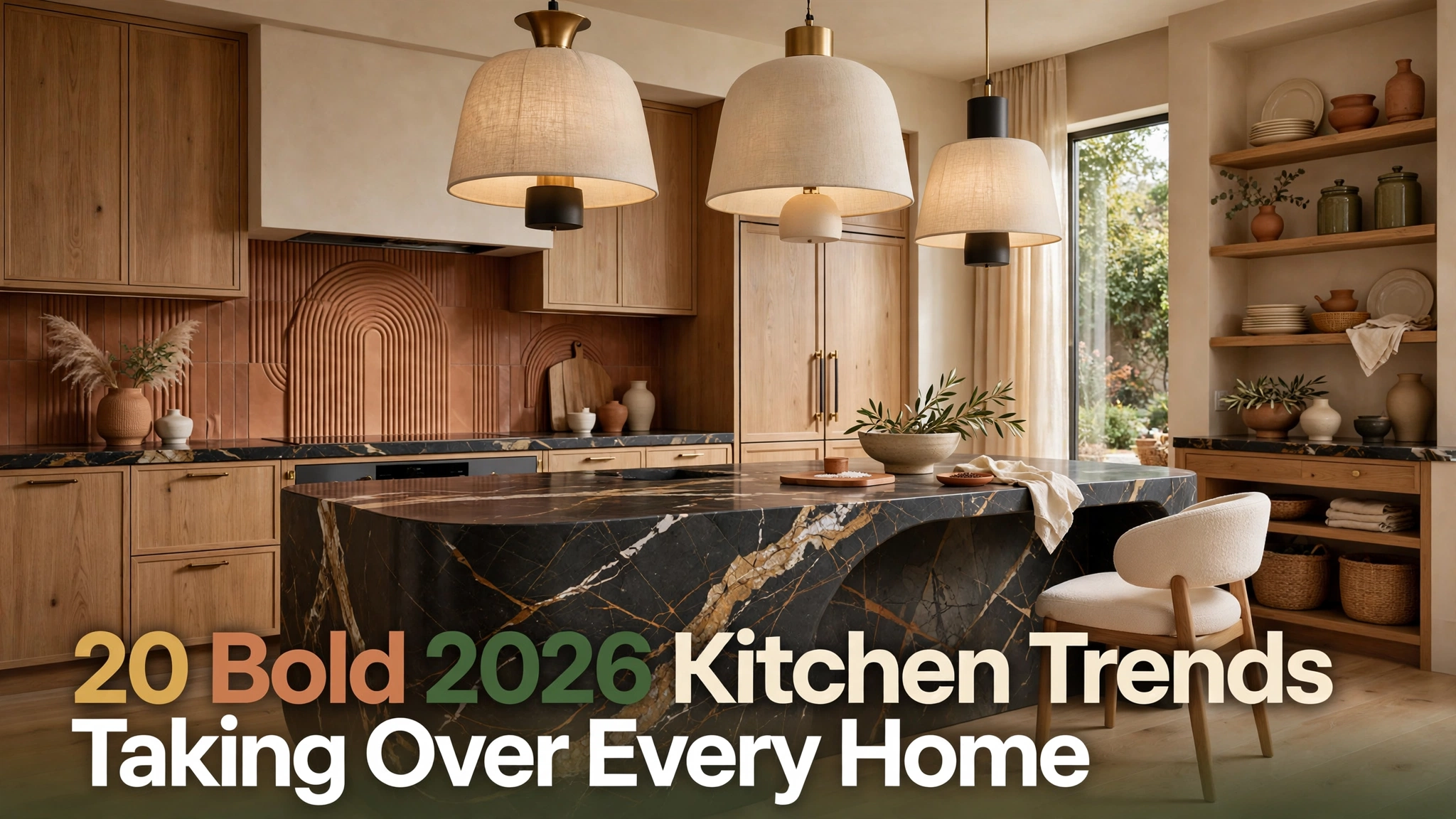
Kitchen design is moving beyond plain white cabinets and predictable finishes. In 2026, homeowners are embracing warmer colors, stronger materials, vintage touches, statement lighting, and kitchens that feel connected to the rest of the home.
The best part? You do not need to completely remodel your kitchen to bring these ideas in. A new paint color, updated hardware, layered lighting, or even a few carefully chosen accessories can make a noticeable difference.
If you are planning a kitchen refresh, these 2026 kitchen trends are worth saving for inspiration.
1. Warm Wood Cabinets Are Back
Cool-toned kitchens are making room for warmer wood finishes. Oak, walnut, cherry-inspired tones, and medium wood stains can make a kitchen feel inviting without looking overly rustic.
For a balanced look, pair wood cabinets with simple countertops and understated hardware. Natural wood also works beautifully with cream, beige, muted green, and soft blue.
If your cabinets are already in good shape, you may not need to replace them. Refinishing or changing only the hardware can create a completely different impression.
2. Earthy Kitchen Colors Replace Stark White
White will always have a place in kitchen design, but warmer shades are becoming increasingly appealing.
Think:
- Warm cream
- Mushroom
- Terracotta
- Olive green
- Clay
- Taupe
- Dusty blue
- Deep brown
These colors add personality while remaining easy to live with.
One simple approach is to keep the cabinets neutral and introduce an earthy shade through the island, backsplash, curtains, or dining area.
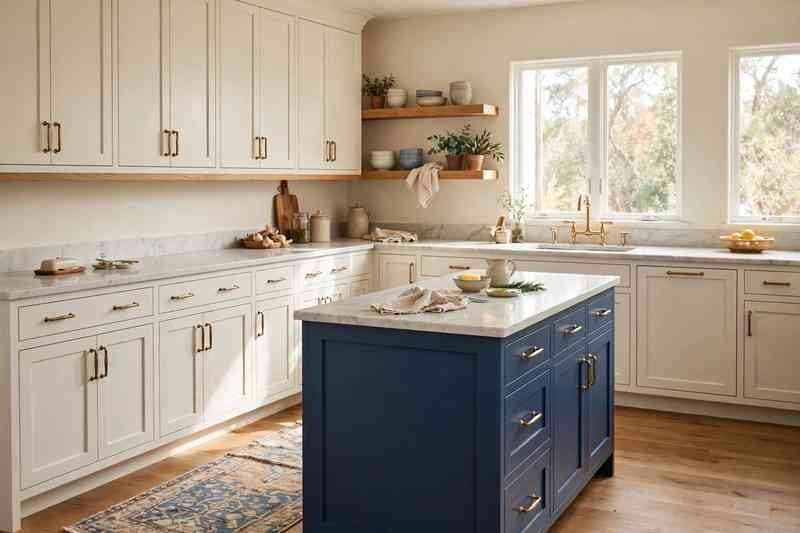
3. Statement Kitchen Islands Take Center Stage
The kitchen island is no longer just extra counter space. It can become the strongest visual feature in the room.
A contrasting island can add interest without requiring the entire kitchen to change. Try a painted island against wood cabinets, a darker island with light cabinetry, or a bold stone surface that catches attention immediately.
Large islands can also combine seating, storage, food preparation, and entertaining in one practical zone.
4. Natural Stone With Plenty of Character
Instead of choosing materials that look perfectly uniform, homeowners are increasingly drawn to stone with visible movement and natural variation.
Veining, subtle color changes, and organic patterns can give countertops and backsplashes more personality.
If you love this look but want to keep the room calm, use a dramatic stone in one area and pair it with quieter cabinets and flooring.
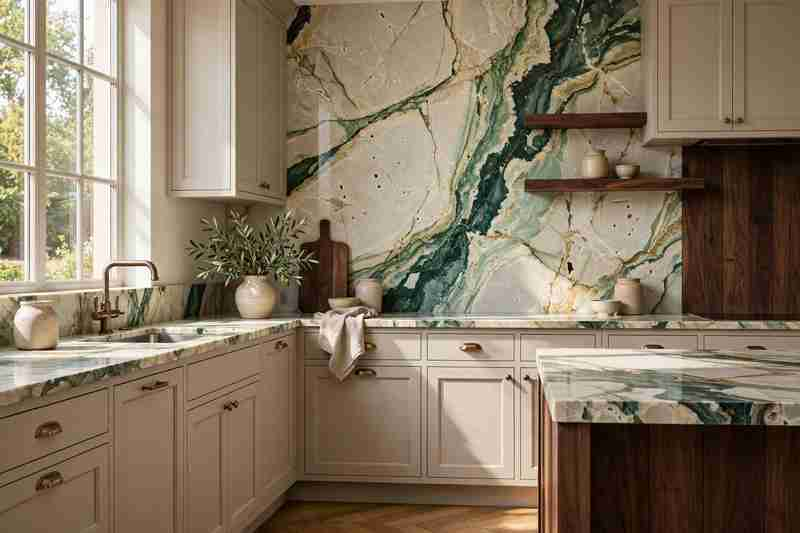
5. Full-Height Backsplashes Make a Bigger Impact
A backsplash does not always have to stop beneath the cabinets.
Taking tile or stone higher up the wall creates a more finished appearance and gives the kitchen a strong visual backdrop. It can be especially effective behind a range or across an entire countertop wall.
For a timeless result, choose materials you will still enjoy looking at years from now rather than relying entirely on short-lived patterns.
6. Vintage Pieces Bring Personality
One of the easiest ways to make a new kitchen feel less predictable is to introduce something old.
A vintage stool, antique cutting board, old framed artwork, traditional pottery, or reclaimed wooden piece can soften a modern kitchen.
The goal is not to make everything look vintage. A few older pieces mixed with contemporary cabinetry can create the collected feel that many homeowners want.
7. Hidden Appliances Create a Cleaner Look
Modern kitchens are becoming more visually organized, and integrated appliances can help achieve that effect.
Refrigerators, dishwashers, and other appliances can be concealed behind matching cabinetry in designs where a seamless appearance is important.
This works particularly well in open-plan homes where the kitchen is visible from the living room. Keeping large appliances visually quiet can make the entire space feel more like a cohesive room.
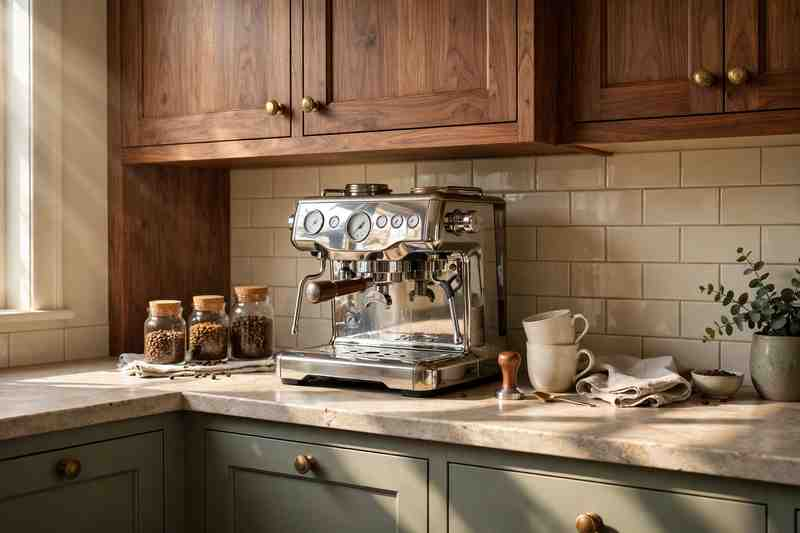
8. Fluted and Ribbed Details Add Texture
Flat surfaces can sometimes make a kitchen feel one-dimensional. Fluted cabinet doors, ribbed islands, textured panels, and grooved wood details introduce depth without relying on bright colors.
Use this trend selectively. A fluted island or one textured cabinet section can be enough to create a focal point.
Pair it with smooth countertops and simple lighting so the room does not feel visually crowded.
9. Open Shelving Gets a More Thoughtful Treatment
Open shelves are still useful when they are styled with intention.
Instead of filling every inch, leave some breathing room between dishes, bowls, glasses, cookbooks, and decorative pieces. Mixing practical items with a few beautiful objects makes the shelves feel natural rather than staged.
Wood shelves can also warm up a kitchen filled with painted cabinetry.
10. Brass and Aged Metal Hardware Add Warmth
Hardware is one of the smallest details in a kitchen, but it can dramatically change the overall style.
Warm brass, aged brass, bronze, and other softer metallic finishes work especially well with today’s warmer kitchen palettes.
Try matching cabinet pulls with lighting or faucet finishes without making every metal surface identical. A little variation can make the space feel more collected.
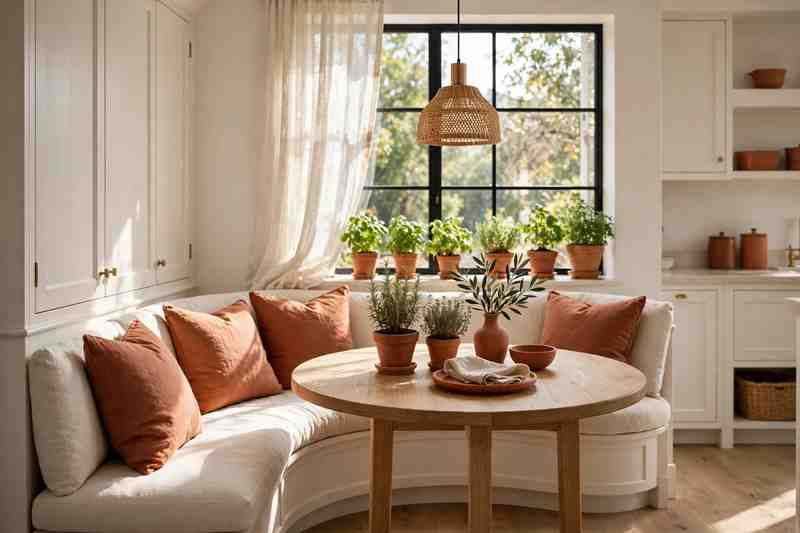
11. Kitchens Are Becoming More Like Living Spaces
The kitchen is increasingly being designed as a room where people actually spend time, not simply a place to prepare meals.
Comfortable stools, upholstered seating, rugs, artwork, plants, books, and decorative lighting can make the space feel more connected to the rest of the home.
This approach works particularly well in larger kitchens with an island or breakfast area.
12. Decorative Lighting Becomes a Focal Point
Lighting does much more than illuminate countertops.
Oversized pendants, sculptural fixtures, vintage-inspired lanterns, and interesting wall lights can become decorative features in their own right.
For a layered kitchen, combine practical task lighting with ambient and decorative fixtures. This gives you flexibility throughout the day and makes the kitchen feel warmer in the evening.
13. Rich Green Cabinets Add a Sophisticated Touch
Green remains a strong choice for homeowners who want color without overwhelming the room.
Deep olive, moss, sage, and muted forest green can all work beautifully in kitchens. Darker greens pair especially well with warm wood, cream countertops, brass hardware, and natural stone.
If painting the entire kitchen feels too bold, try green on the island or lower cabinets instead.
14. The Pantry Becomes a Design Feature
A well-organized pantry can make everyday kitchen life easier while adding another opportunity for thoughtful design.
Glass jars, labeled containers, wood shelves, baskets, and dedicated storage areas can keep frequently used ingredients easy to find.
For larger homes, a walk-in pantry or secondary prep kitchen can also keep small appliances and food preparation mess out of the main kitchen.
15. Soft Kitchen Curtains Return
Kitchen windows do not always need to be completely bare.
Soft linen curtains, café curtains, relaxed Roman shades, and simple woven window treatments can add warmth and texture. They work particularly well in kitchens with natural wood, traditional cabinetry, or farmhouse-inspired details.
Keep window treatments practical around cooking areas. Choose washable fabrics and make sure curtains are positioned safely away from heat sources.
16. Two-Tone Cabinetry Creates Contrast
Using one cabinet color throughout the kitchen is no longer the only option.
Two-tone cabinetry can create a more customized look. Popular combinations include:
- Cream uppers with warm wood lowers
- White cabinets with a navy island
- Sage green lowers with natural oak uppers
- Taupe cabinets with a dark brown island
- Soft blue cabinets with warm white walls
The key is choosing colors that relate to one another rather than competing for attention.
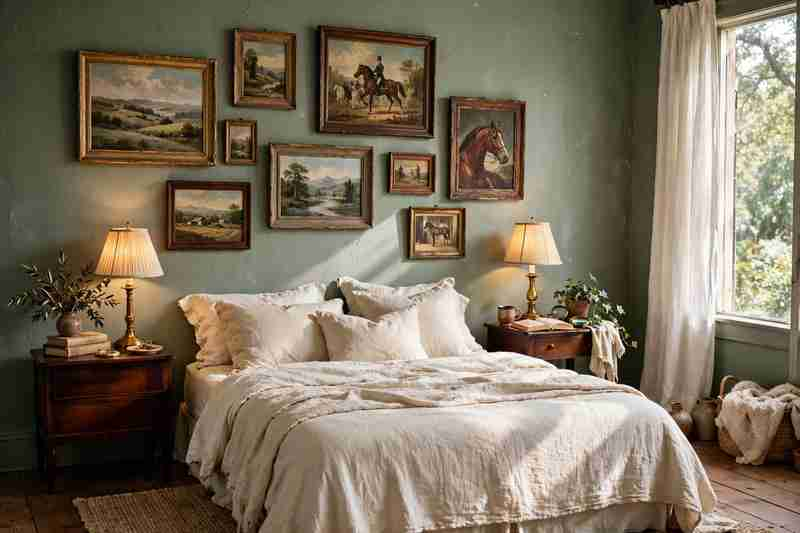
17. Breakfast Nooks Feel More Personal
Unused corners are getting new life as comfortable breakfast areas.
A small round table, built-in bench, upholstered chairs, pendant light, and a nearby window can turn an overlooked corner into one of the most inviting spots in the kitchen.
Add a small vase, artwork, or cushion for personality without filling the space with unnecessary decoration.
18. Warm Metal and Wood Work Together
Mixing materials is one of the easiest ways to give a kitchen depth.
Imagine warm oak cabinets paired with aged brass hardware, a stone countertop, woven stools, and a ceramic pendant. None of the materials has to dominate.
Natural wood helps soften harder surfaces, while metal details add a refined finishing touch.
19. Moody Kitchens Make a Statement
Not every kitchen needs to be bright and airy.
Deep navy, charcoal, chocolate brown, and dark green can create a dramatic kitchen with plenty of character. These colors work especially well when balanced with warm lighting, natural wood, lighter countertops, or reflective metal finishes.
If the room has limited natural light, consider using a dark color on the island or lower cabinets instead of covering every wall.
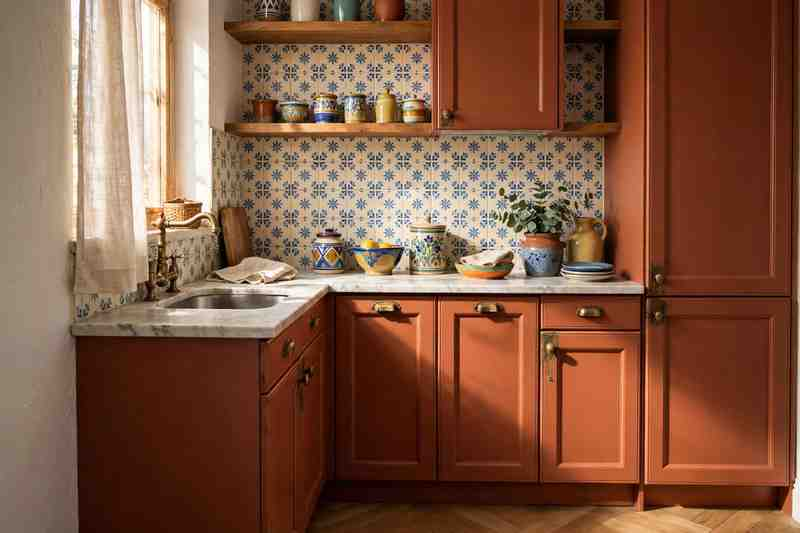
20. Kitchens Embrace a Collected, Less-Perfect Look
Perhaps the biggest shift is toward kitchens that feel personal rather than showroom-perfect.
A beautiful kitchen can have an antique bowl on the counter, a few cookbooks on a shelf, slightly mismatched stools, handmade ceramics, or artwork that has nothing to do with traditional kitchen decor.
The result feels more comfortable and lived-in.
Instead of asking whether every item matches, ask whether the room feels like somewhere you would genuinely want to cook, eat, talk, and spend time.
How to Choose the Right 2026 Kitchen Trends for Your Home
You do not have to use all 20 trends. In fact, choosing too many can make a kitchen feel busy.
Start with the elements that are hardest and most expensive to change, such as cabinetry, countertops, flooring, and backsplash materials. Then build around them with easier updates like lighting, hardware, curtains, stools, artwork, and accessories.
A simple formula is:
One main style + two or three supporting trends + plenty of practical storage.
For example, a warm traditional kitchen could combine oak cabinets, a cream backsplash, aged brass hardware, linen curtains, and vintage accessories.
A modern kitchen might use smooth cabinetry, a dramatic stone island, sculptural lighting, and minimal open shelving.
A Simple 2026 Kitchen Color Palette
If you are unsure where to start, these combinations can help narrow things down.
Warm and Natural
- Warm white
- Natural oak
- Beige
- Aged brass
- Soft olive
Moody and Sophisticated
- Deep green
- Chocolate brown
- Cream
- Walnut
- Antique brass
Soft and Fresh
- Cream
- Dusty blue
- Light oak
- Warm white
- Brushed metal
Classic With a Modern Edge
- Navy
- Ivory
- Walnut
- Stone gray
- Brass
Kitchen Trends to Use Carefully
Trends can be fun, but not every popular idea deserves a permanent place in your kitchen.
Be cautious with extremely bold finishes that are difficult or expensive to replace. A dramatic color or patterned tile may look fantastic, but consider whether you will still enjoy it after the initial excitement fades.
The easiest trends to experiment with are usually lighting, hardware, textiles, stools, artwork, and accessories.
For larger home projects, think about the entire house rather than designing the kitchen in isolation. Even exterior updates, such as roof work, can affect how you approach a home’s overall renovation priorities. If that is on your list too, you can explore roof replacement options separately.
FAQ About 2026 Kitchen Trends
What is the biggest kitchen trend for 2026?
Warm, personalized kitchens are a major design direction. Natural wood, earthy colors, layered materials, statement islands, and decorative details can all help create this look.
Are white kitchens going out of style in 2026?
Not completely. White kitchens remain versatile, but warmer whites, creams, natural wood, and more expressive colors are giving homeowners alternatives to the all-white kitchen.
What cabinet colors are popular for 2026 kitchens?
Warm wood, olive green, deep green, cream, taupe, navy, and other earthy or muted shades are strong choices for a more current kitchen.
Are kitchen curtains coming back?
Yes, curtains and softer window treatments can add warmth and texture to a kitchen. Linen panels, café curtains, and relaxed shades work particularly well when used thoughtfully and safely around cooking areas.
How can I update my kitchen without remodeling?
Start with affordable visual changes such as cabinet hardware, lighting, curtains, stools, artwork, rugs, and accessories. Painting an island or replacing a few decorative elements can also make a noticeable difference.
Final Thoughts
The most appealing 2026 kitchen trends are not necessarily the loudest ones. Warm wood, earthy colors, interesting stone, vintage pieces, layered lighting, and personal details can make a kitchen feel current without making it look like it came straight from a showroom.
Choose the ideas that fit your home’s architecture, your daily routine, and your personal taste. A kitchen that looks beautiful but still feels comfortable and practical will always have more staying power than a room built entirely around passing trends.