 Home Decor & Interior Design
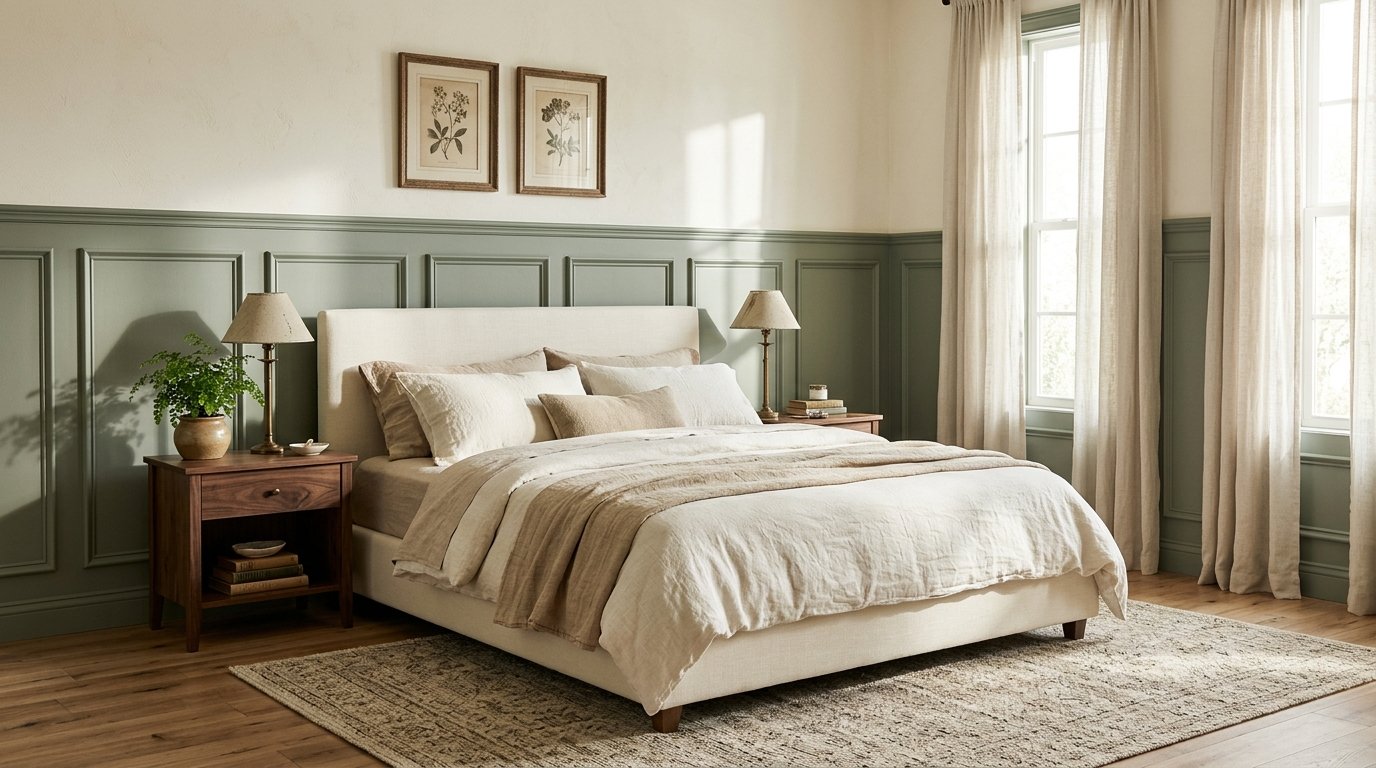
Wainscoting can make a bedroom feel instantly more finished, but the paint color you pair with it can completely change the mood. Soft beige creates a calm retreat, deep green feels cozy and sophisticated, while dusty blue gives the room a fresh and relaxed character.
The beauty of wainscoting is that you can use color in different ways. Paint the paneling and upper wall the same shade for a quiet, layered look, or create contrast with two complementary colors.
Whether your bedroom is small, traditional, modern, or cottage-inspired, these wainscoting bedroom ideas can help you find a combination that feels polished without looking overly formal.
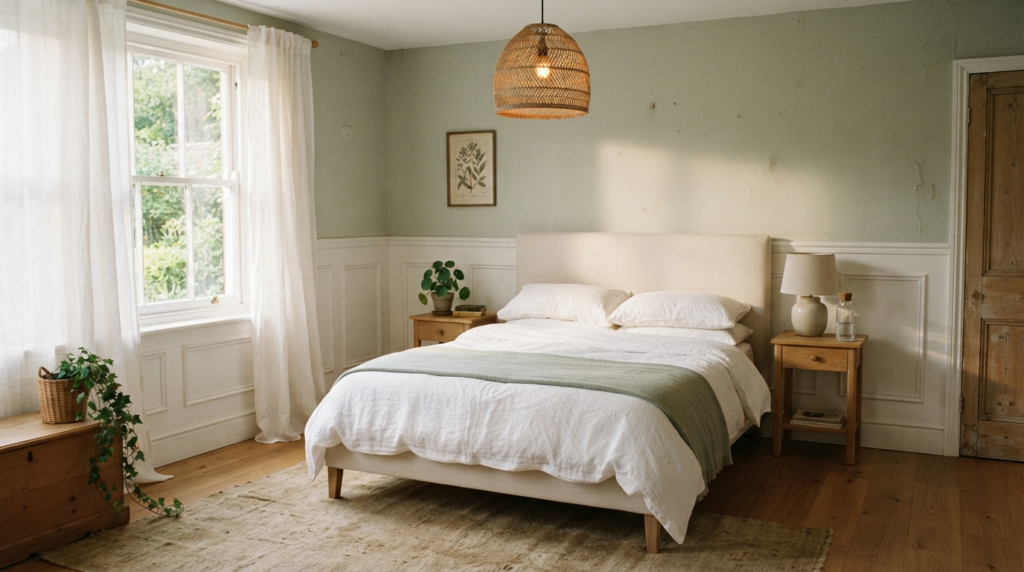
1. Pair White Wainscoting With Sage Green Walls
Sage green and crisp white make a bedroom feel calm without being boring.
Keep the wainscoting bright white and use a muted sage above it. Add natural wood nightstands, cream bedding, and a few leafy plants to reinforce the relaxed feeling.
This combination works especially well in bedrooms that receive plenty of natural daylight.
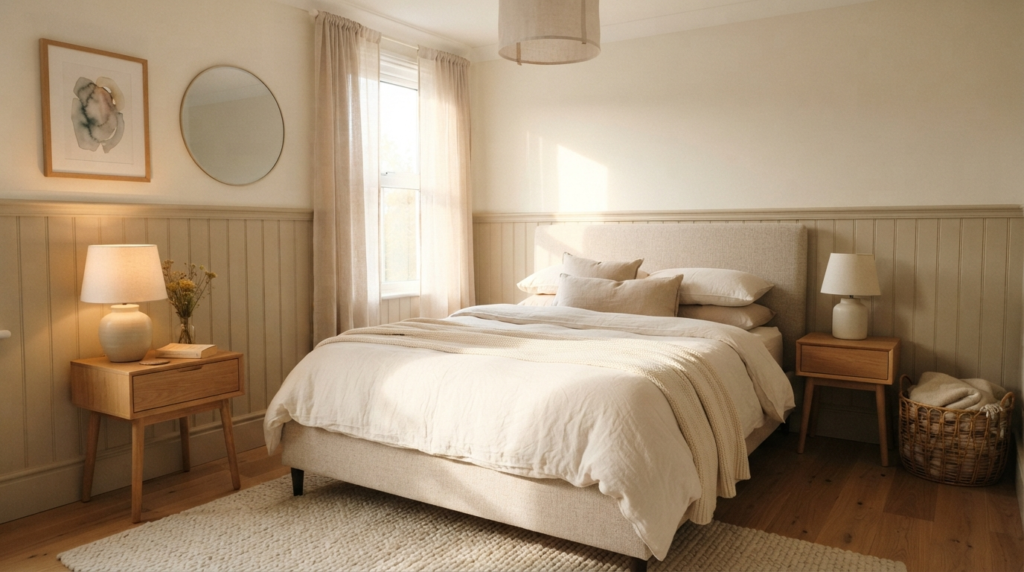
2. Try Beige Wainscoting With Cream Walls
For a warm neutral bedroom, combine soft beige wainscoting with creamy walls.
The colors are close enough to create a layered effect while still giving the paneling some definition. Add linen bedding, woven accents, and light oak furniture for a relaxed organic look.
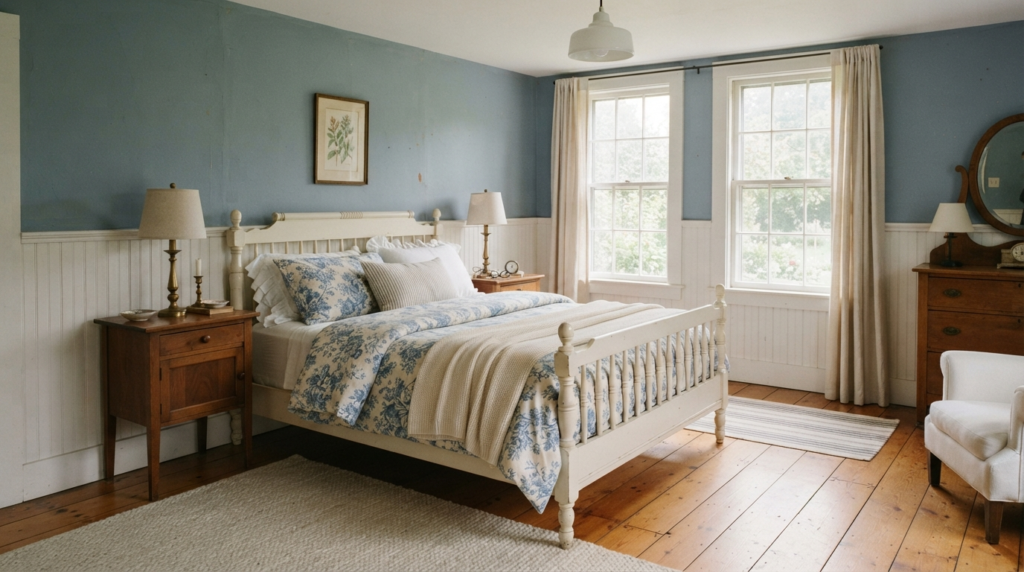
3. Use Dusty Blue Above White Paneling
Dusty blue is a beautiful choice when you want your bedroom to feel fresh and peaceful.
Pair it with traditional white wainscoting and simple white bedding. Brass lighting and warm wood furniture can prevent the blue from feeling too cool.
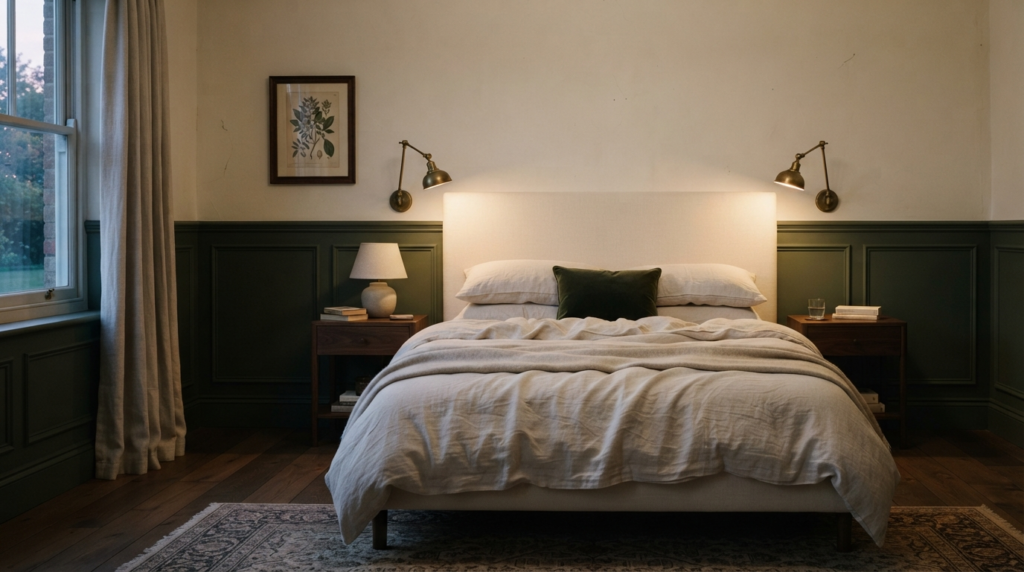
4. Paint the Wainscoting Deep Green
Instead of using color only on the upper wall, make the wainscoting the star.
A deep olive or forest green can create a cozy, dramatic bedroom when paired with warm cream walls. Add natural wood, brass accents, and soft neutral bedding to balance the darker color.
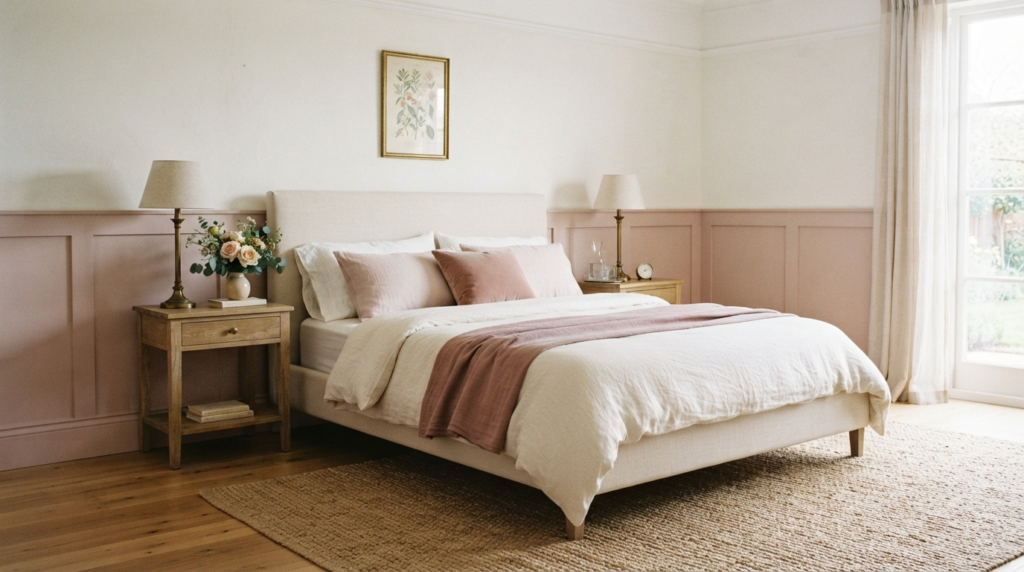
5. Create a Soft Pink Bedroom
Soft blush pink can look sophisticated when used thoughtfully.
Try blush or dusty rose wainscoting with warm white walls. Keep the bedding neutral and introduce brass lighting or light wood furniture to prevent the room from feeling overly sweet.
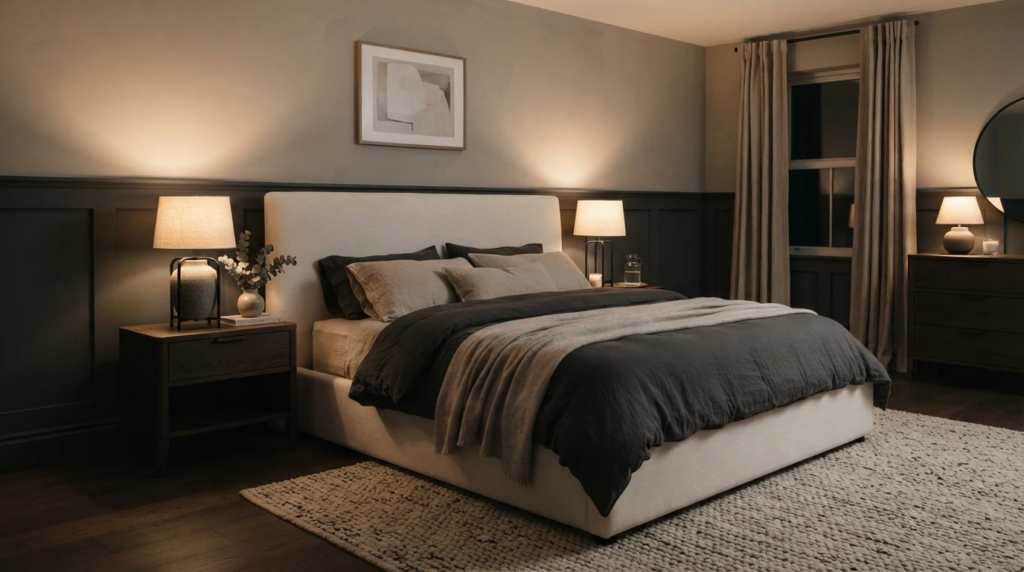
6. Choose Moody Charcoal Wainscoting
Charcoal wainscoting can give a bedroom a sophisticated, slightly dramatic appearance.
Pair it with soft gray or warm white walls above. Add cream bedding, dark wood furniture, and warm bedside lighting so the room feels cozy rather than heavy.
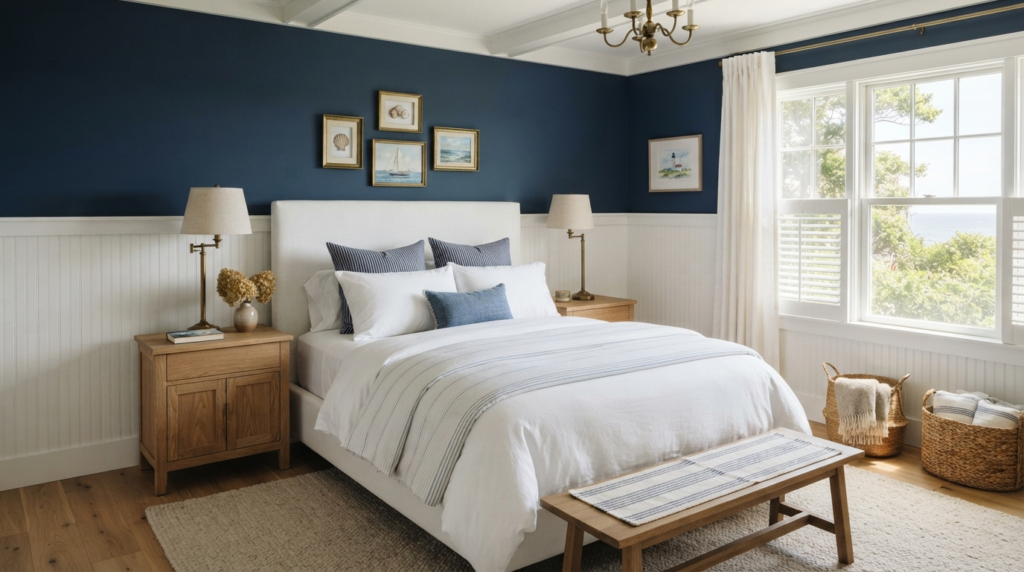
7. Try Navy Blue With White Wainscoting
Navy blue creates a classic bedroom combination when paired with white paneling.
Use navy on the upper wall and keep the wainscoting bright white. Natural wood, striped textiles, and brass hardware can give the room a timeless coastal or traditional character.
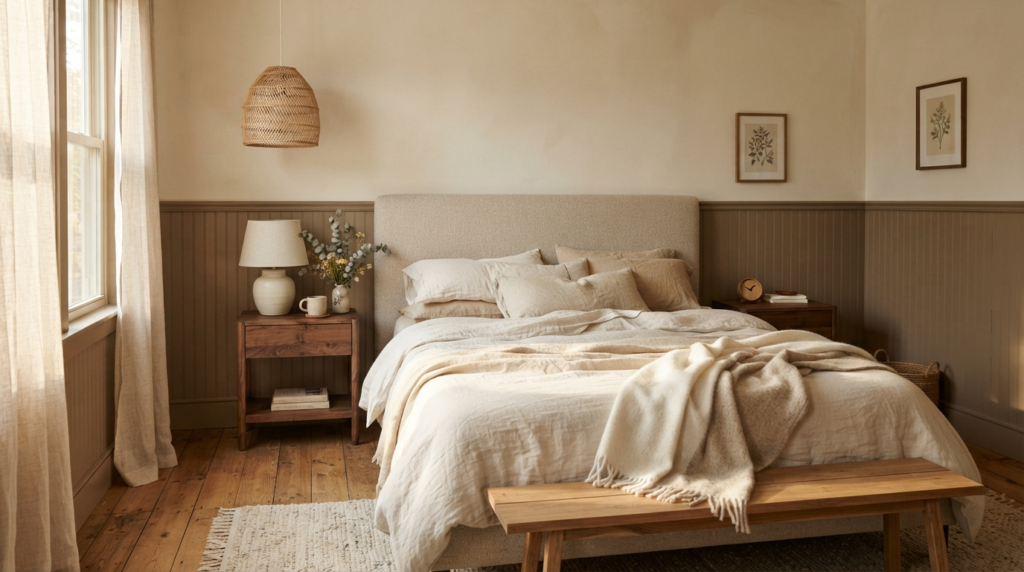
8. Use Warm Taupe for a Cozy Look
Warm taupe is an excellent choice if you prefer neutral bedrooms with more depth.
Paint the wainscoting taupe and use a slightly lighter cream or beige above it. Layer different textures through linen bedding, woven baskets, wool throws, and natural wood.
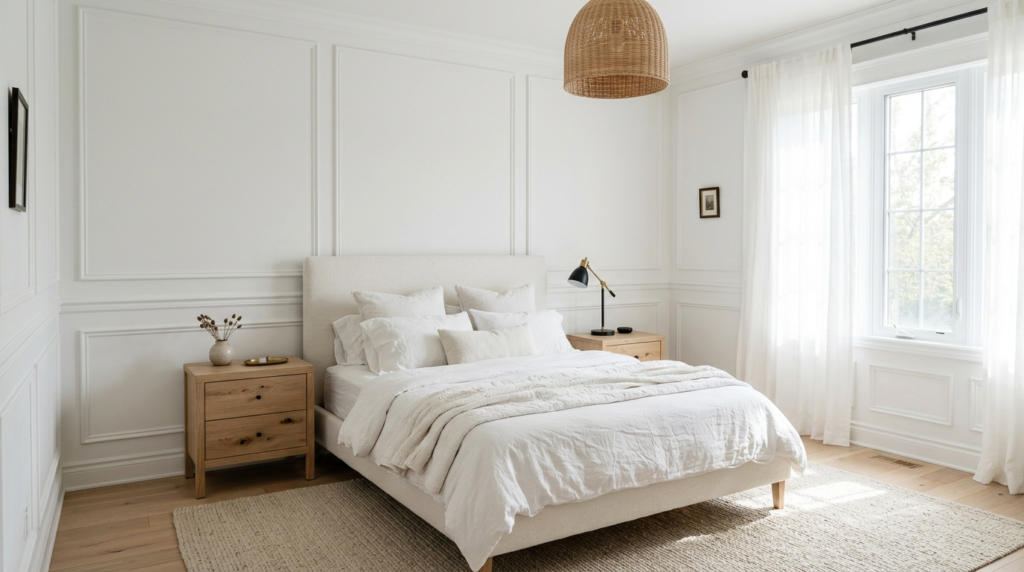
9. Create an All-White Wainscoting Bedroom
An all-white bedroom can look surprisingly elegant when different textures and architectural details provide the interest.
Paint both the wainscoting and upper walls white. Then introduce contrast through natural wood, soft beige textiles, black accents, or antique brass lighting.
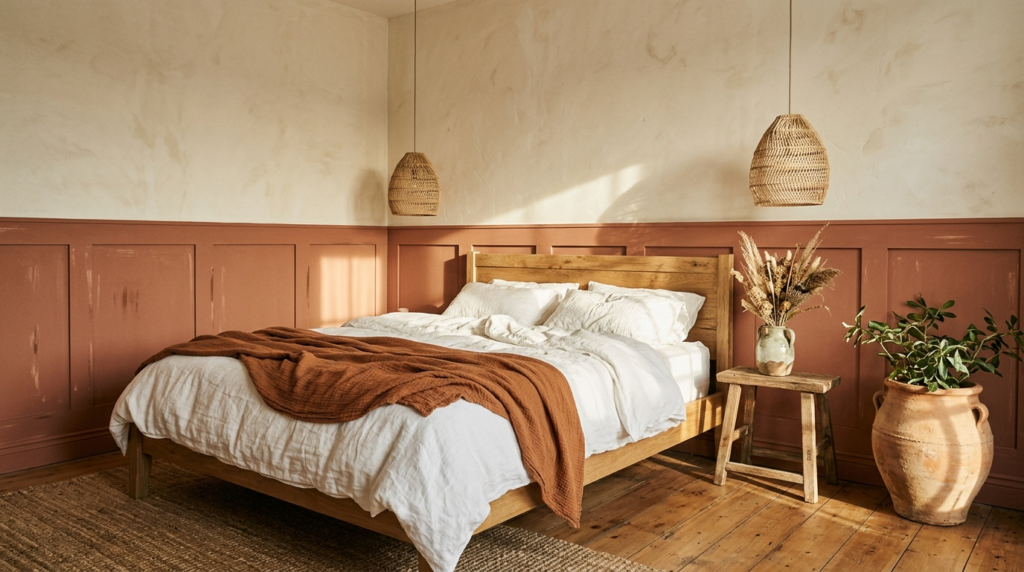
10. Combine Terracotta With Cream
Terracotta adds warmth and personality to a bedroom.
Use a muted terracotta shade on the wainscoting and warm cream above it. Natural wood furniture, woven accessories, and white or oatmeal bedding complete the earthy palette.
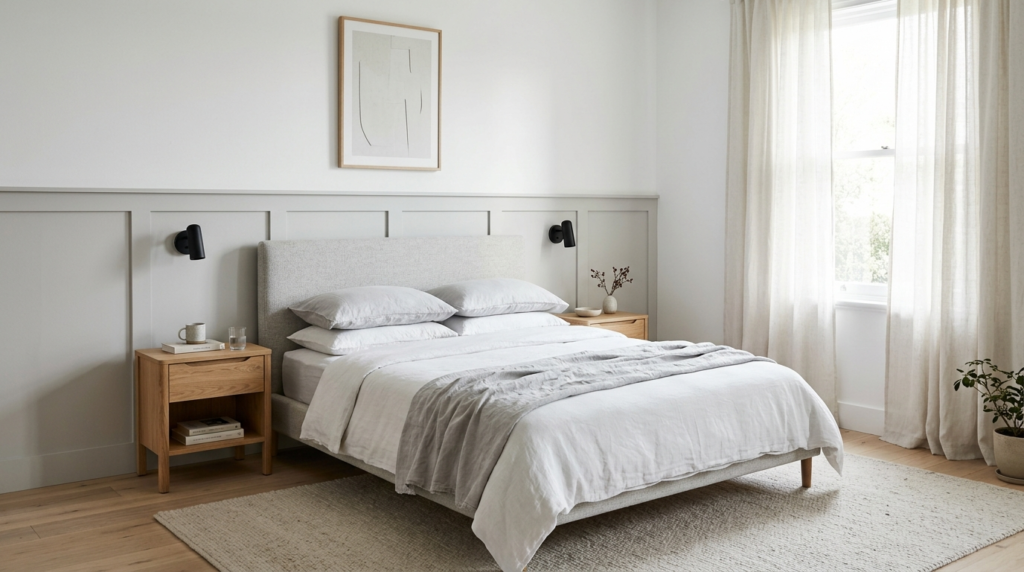
11. Try Light Gray Wainscoting
Light gray is a versatile choice for a modern bedroom.
Pair pale gray paneling with white or very soft gray walls. Add black accents for contrast and warm wood furniture to keep the room from feeling too cool.
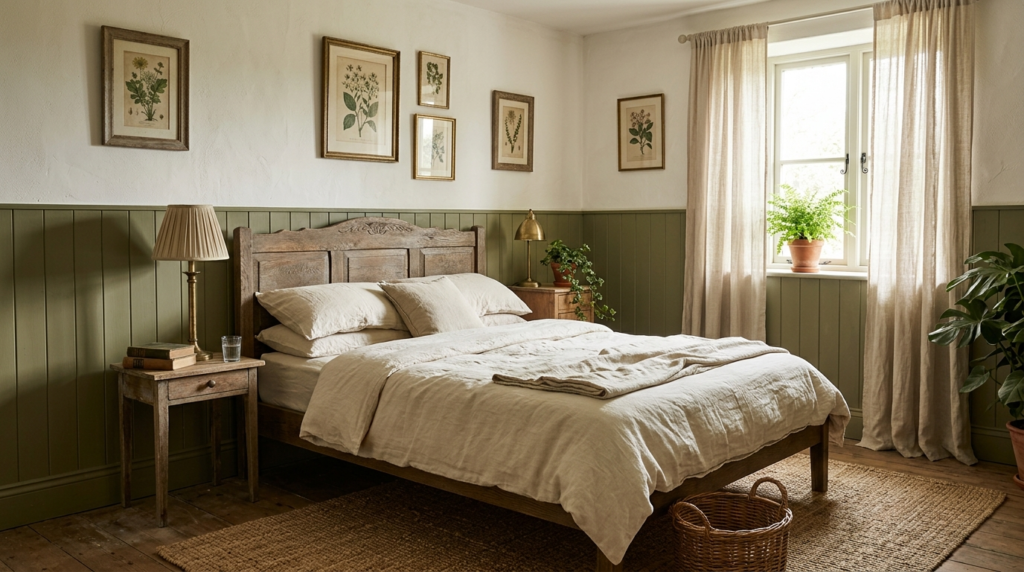
12. Use Olive Green for a Nature-Inspired Bedroom
Olive green works beautifully with traditional wainscoting because it has a slightly earthy, historic quality.
Paint the lower paneling olive and keep the upper walls warm white. Add botanical artwork, oak furniture, and cream textiles for a relaxed nature-inspired space.
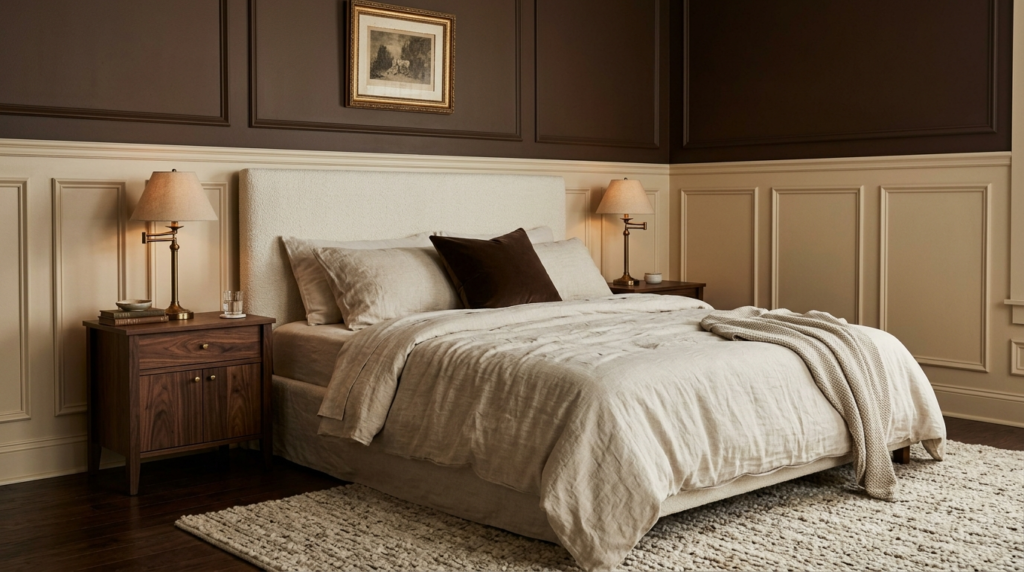
13. Pair Cream Wainscoting With Chocolate Brown
Chocolate brown can make a bedroom feel warm and luxurious.
Instead of using brown across the entire room, keep it concentrated on the wainscoting and use creamy walls above. Add beige bedding, walnut furniture, and warm brass lighting for an inviting finish.
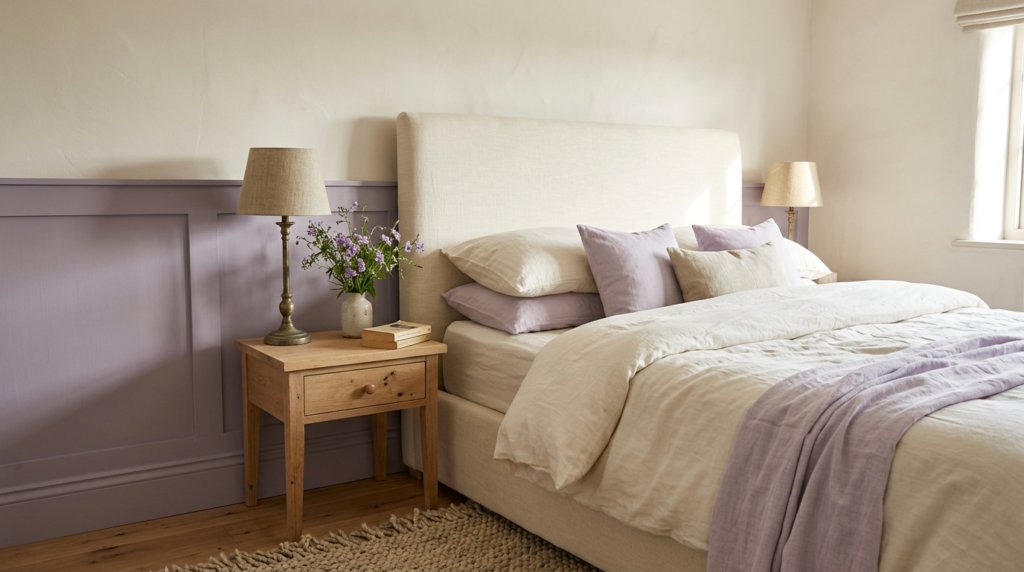
14. Create a Lavender Bedroom
Muted lavender can bring a soft, romantic quality to a bedroom without becoming too bright.
Pair lavender wainscoting with warm white walls and neutral bedding. Light oak furniture and simple floral accents can make the color feel fresh rather than overly traditional.
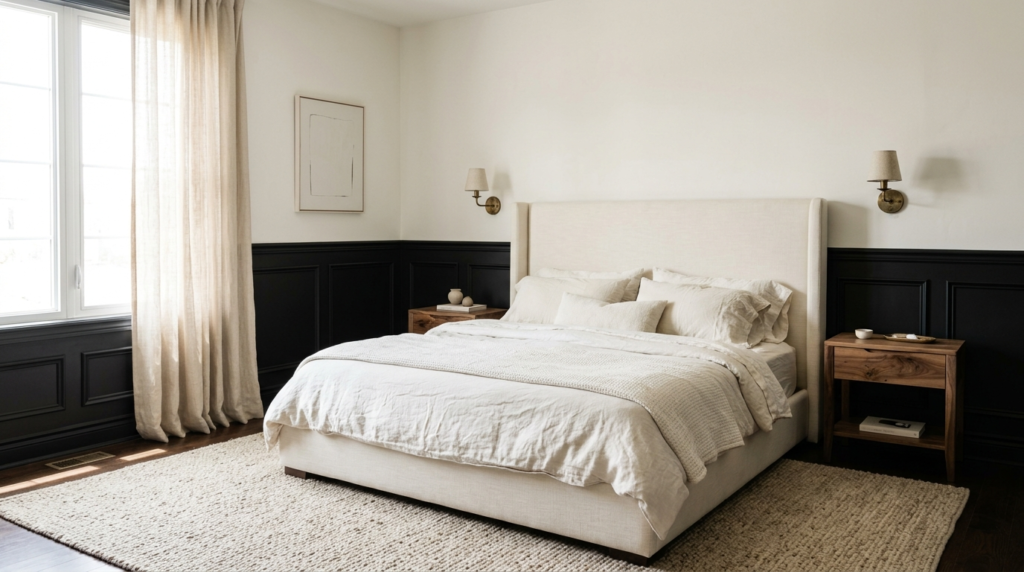
15. Try Black Wainscoting for Contrast
Black paneling can create a dramatic focal point, especially in a bedroom with plenty of natural light.
Keep the upper walls soft white or warm beige and use lighter bedding to balance the darker lower section. Brass lamps and natural wood can add warmth.
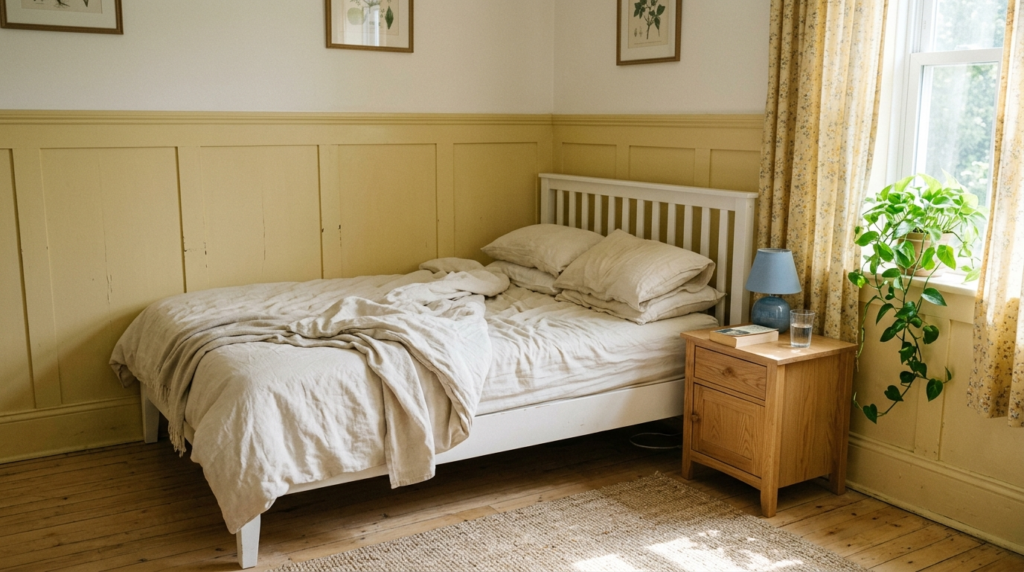
16. Use Pale Yellow for a Cheerful Bedroom
A muted buttery yellow can make a bedroom feel sunny and welcoming.
Try pale yellow wainscoting with warm white walls. Keep the rest of the palette understated with cream bedding, light wood, and small touches of greenery.
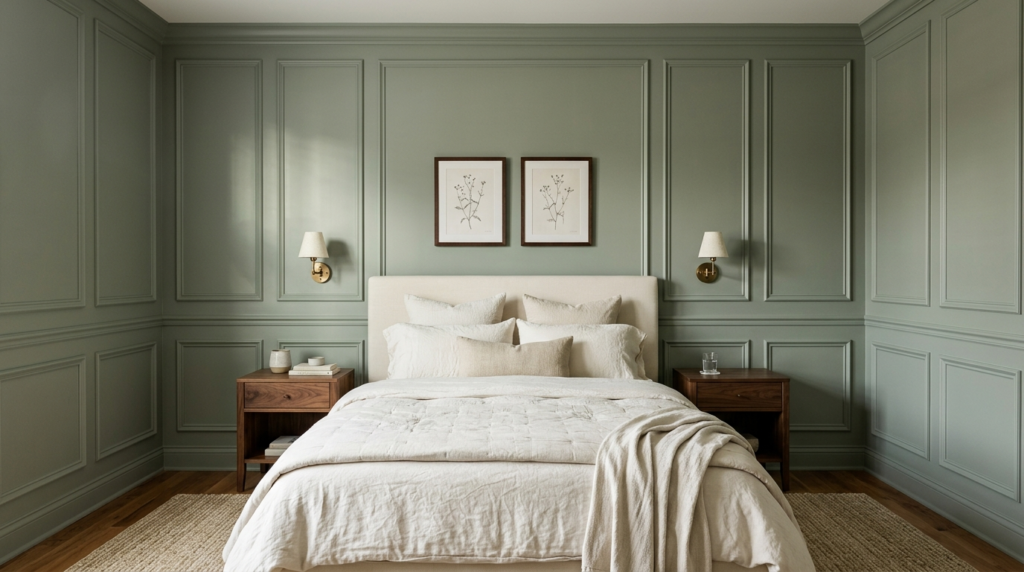
17. Paint the Entire Wall One Color
Wainscoting does not always need to contrast with the wall above it.
For a more sophisticated approach, paint the paneling and upper wall the same shade. Deep green, dusty blue, warm taupe, and soft beige all work particularly well with this technique.
The architectural detail remains visible because of the change in texture and shadow.
18. Combine Blue-Gray With Natural Wood
Blue-gray gives a bedroom a calm, slightly sophisticated feel.
Use the color on the wainscoting and pair it with a soft white upper wall. Then introduce natural oak furniture, woven baskets, and beige textiles to warm up the palette.
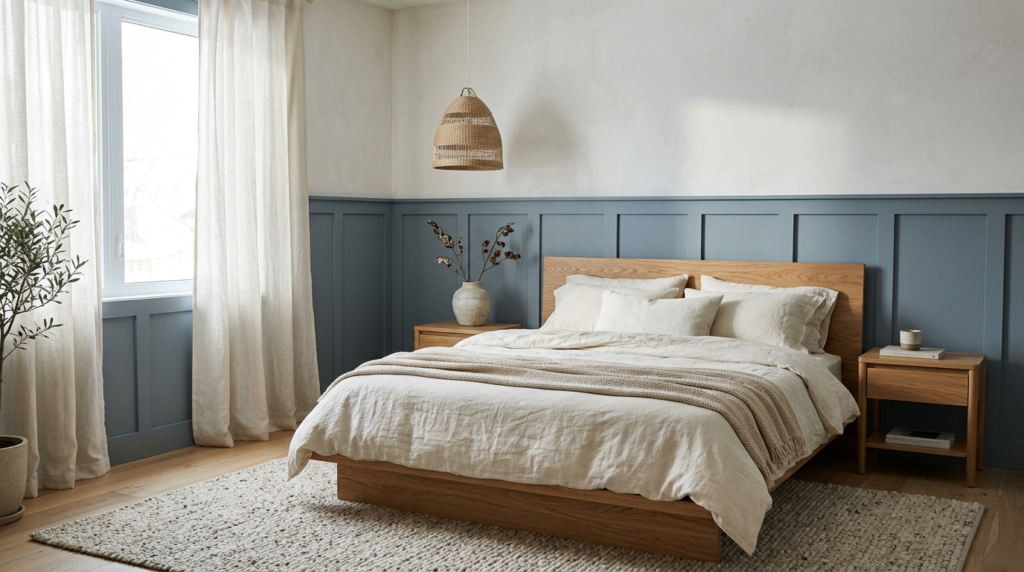
19. Try Burgundy for a Dramatic Bedroom
If you want something richer, muted burgundy can create a beautiful statement.
Use burgundy on the wainscoting and balance it with warm cream walls. Choose neutral bedding and antique brass accents so the color remains sophisticated rather than overwhelming.
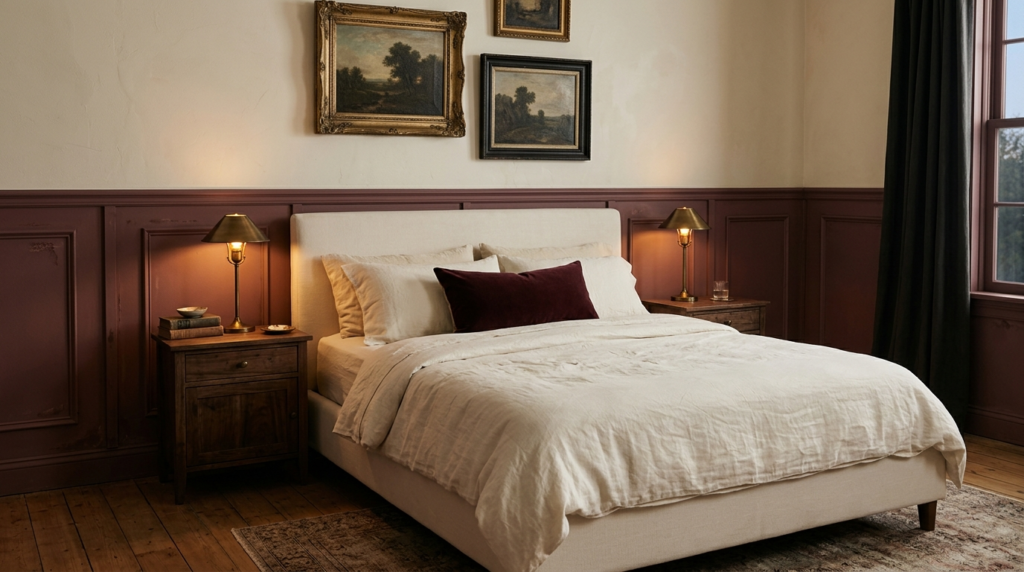
20. Create a Coastal Bedroom With Seafoam Green
Seafoam green is ideal for a relaxed coastal-inspired bedroom.
Pair the soft green wainscoting with white walls, natural wood, woven lighting, and blue-and-white bedding. Keep the accessories simple so the room feels airy rather than themed.
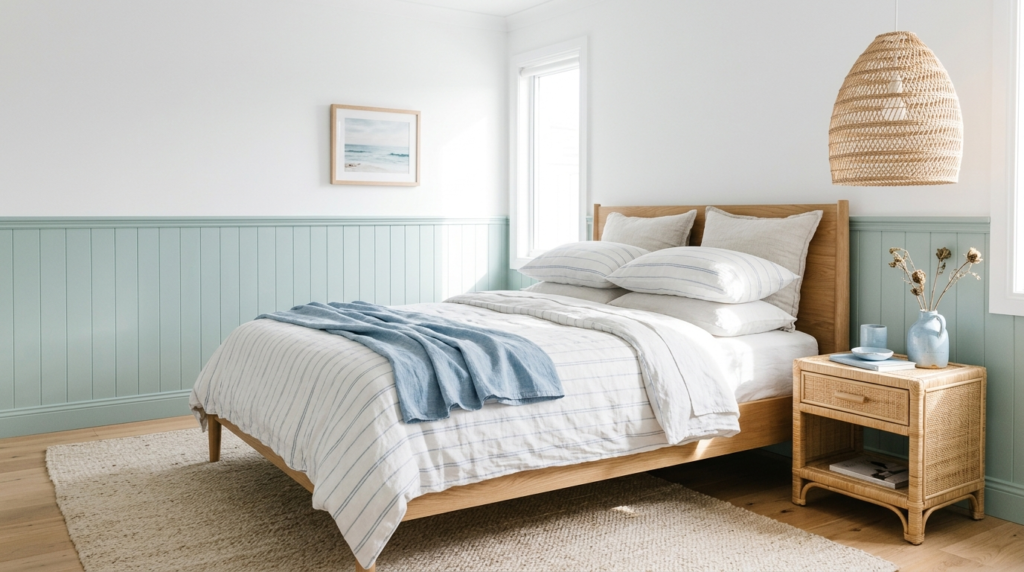
21. Use Greige for a Modern Classic Look
Greige combines the warmth of beige with the understated quality of gray.
Paint the wainscoting in a medium greige and use a lighter neutral above it. Add black window frames, cream bedding, and walnut furniture for a polished modern-classic bedroom.
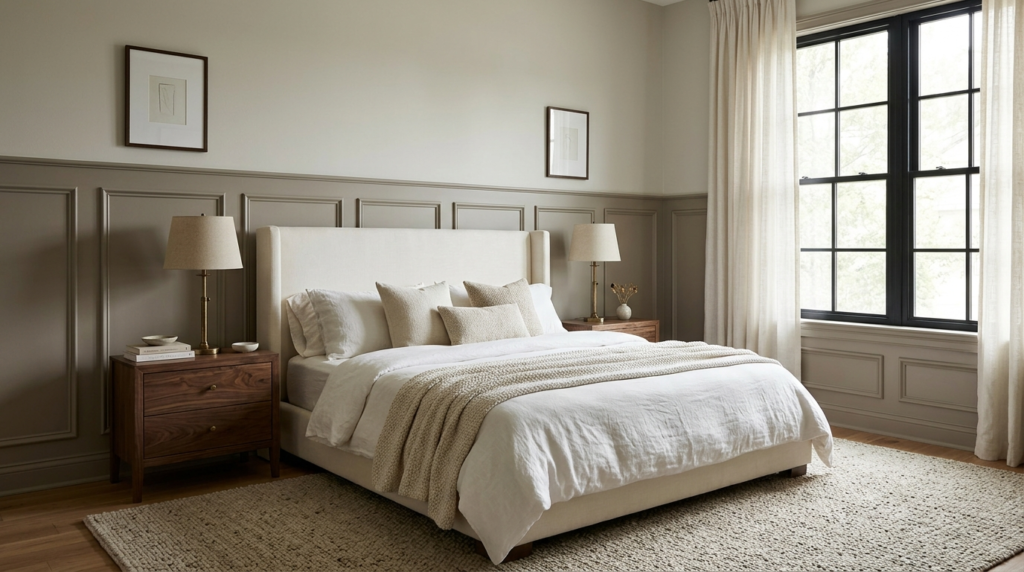
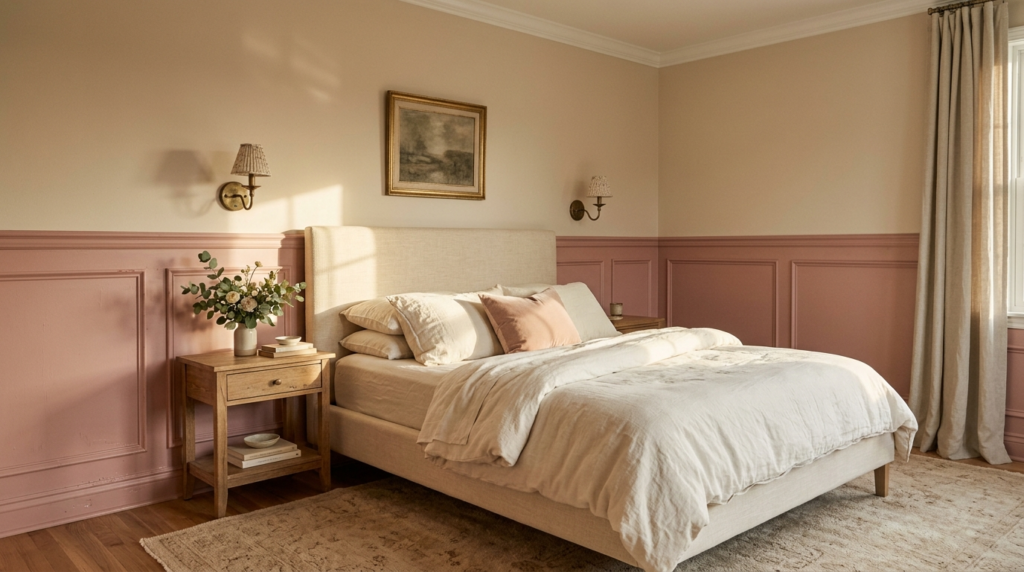
22. Pair Dusty Rose With Warm Beige
Dusty rose and warm beige create a soft, sophisticated color combination.
Use dusty rose on the wainscoting and beige on the upper wall. Add cream bedding, aged brass lighting, and natural wood to create a bedroom that feels warm and elegant.
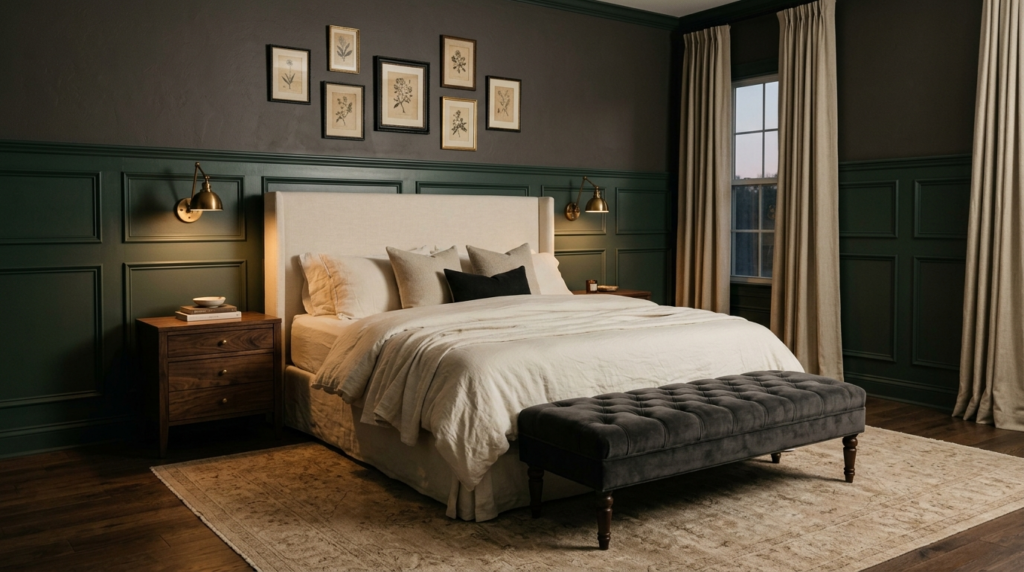
23. Create a Moody Two-Tone Bedroom
For a dramatic but balanced finish, choose two deeper colors.
Try forest green wainscoting with warm charcoal walls, or navy paneling with a muted blue-gray upper wall. Keep the bedding and larger furniture pieces neutral so the architectural details remain the focus.
This approach works especially well in bedrooms where you want a cozy evening atmosphere.
How High Should Bedroom Wainscoting Be?
There is no single height that works for every bedroom, but wainscoting is often installed somewhere around one-third of the wall height.
The right proportion depends on your ceiling height, furniture, windows, and the style of paneling.
For a traditional bedroom, slightly taller paneling can create a more formal appearance. Simpler lower paneling often works well in modern or relaxed spaces.
Before installing it, use painter’s tape to mark the proposed height. This gives you a chance to see how the proportion looks with your bed and other furniture.
Should Wainscoting Be Lighter or Darker Than the Wall?
Either option can work.
A darker wainscoting with lighter walls creates clear contrast and makes the paneling stand out. A lighter lower section creates a softer, more traditional appearance.
For a subtle bedroom, keep the colors within the same family. For more impact, use contrasting shades such as navy and white, olive and cream, or charcoal and warm beige.
What Paint Finish Is Best for Bedroom Wainscoting?
A durable washable finish is usually practical for wainscoting because the lower portion of a wall can collect more marks than the upper section.
A satin or eggshell-style finish can provide some durability without looking overly glossy. The ideal finish also depends on the type of paint and the existing finish of the walls.
If you want the paneling and wall to appear as one continuous color, using compatible finishes can help maintain a cohesive appearance.
How to Make Wainscoting Look More Modern
Traditional paneling can easily be given a contemporary feel through color and styling.
Try painting the entire wall in one shade, choosing a muted modern color, or pairing the paneling with simple furniture and minimal accessories.
Avoid overcrowding the wall above the wainscoting. A single large artwork or simple pair of wall lights can look cleaner than many small decorations.
Best Bedroom Colors to Pair With Wainscoting
Some of the most versatile choices include:
- Sage green
- Olive green
- Dusty blue
- Navy
- Warm white
- Cream
- Beige
- Taupe
- Greige
- Terracotta
- Dusty rose
- Charcoal
- Chocolate brown
- Muted lavender
- Seafoam green
The best color depends on the atmosphere you want. Soft greens and blues feel restful, warm neutrals feel cozy, and deeper shades create a more dramatic bedroom.
FAQs About Wainscoting Bedrooms
Is wainscoting a good idea for a bedroom?
Yes. Wainscoting adds architectural detail and can make a bedroom feel more finished. It can also help define the lower portion of a wall without requiring wallpaper or a complicated decorative treatment.
What is the most popular color for bedroom wainscoting?
White remains a classic choice, but muted greens, beige, gray, blue, and warm neutrals are popular alternatives. The right choice depends on the overall bedroom palette.
Should bedroom wainscoting match the trim?
It can, but it does not have to. Matching the wainscoting to the trim creates a traditional look, while using a different color can make the paneling a stronger design feature.
Can I use dark wainscoting in a small bedroom?
Yes. Dark wainscoting can work in a small bedroom, particularly when the upper wall and larger furniture pieces remain lighter. Good natural or layered lighting can also keep the room from feeling too enclosed.
What wall color goes best with white wainscoting?
Sage green, dusty blue, navy, beige, blush, taupe, and soft gray all pair beautifully with white wainscoting. Warm white is another option if you prefer a subtle layered neutral look.