 Home Decor & Interior Design
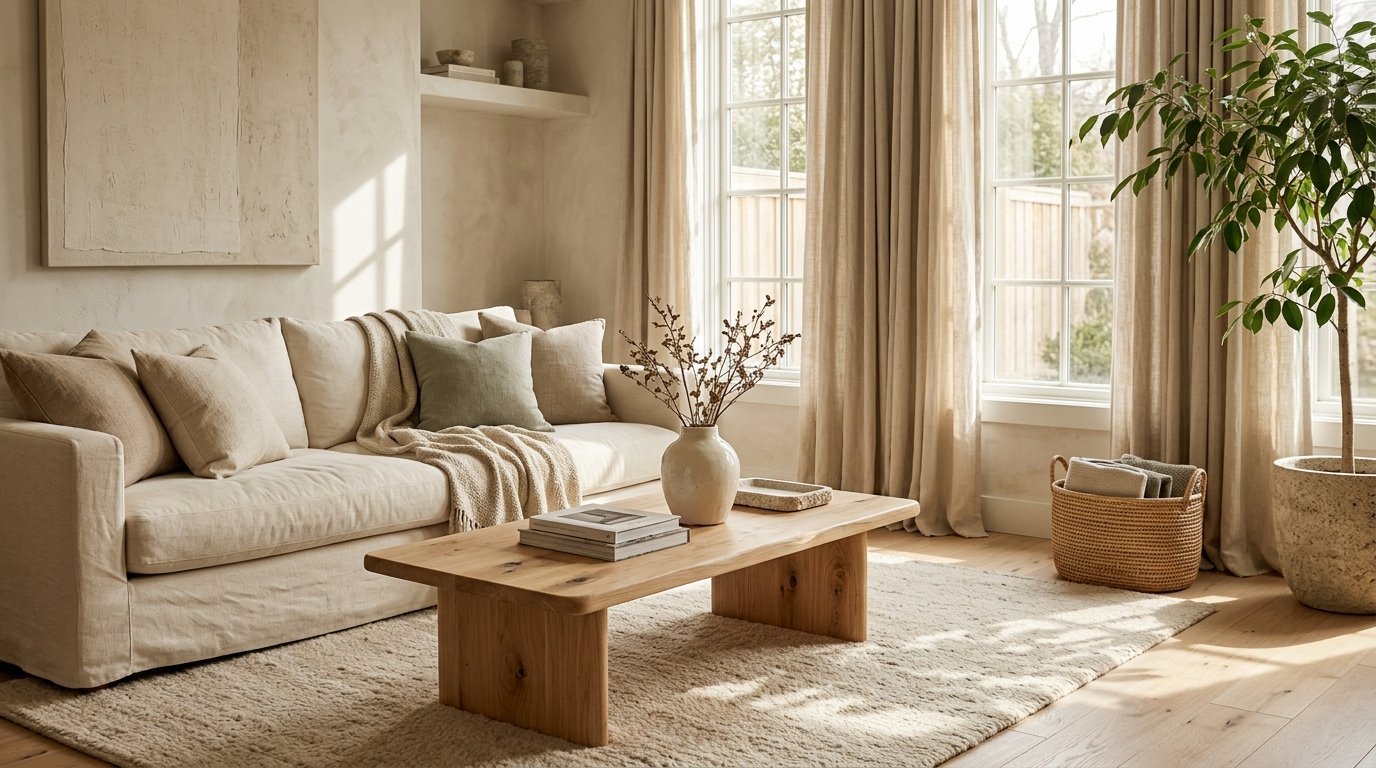
Natural minimalist home decor combines the simplicity of minimalism with the warmth of natural materials, soft colors, and comfortable textures. The result is a home that feels peaceful, uncluttered, and inviting rather than cold or overly plain.
If you love clean spaces but still want your home to feel cozy and lived-in, natural minimalist decor is a beautiful style to try. From warm wood and linen to earthy colors and greenery, these ideas can help you create a calm home with plenty of character.
1. Choose Warm Natural Wood
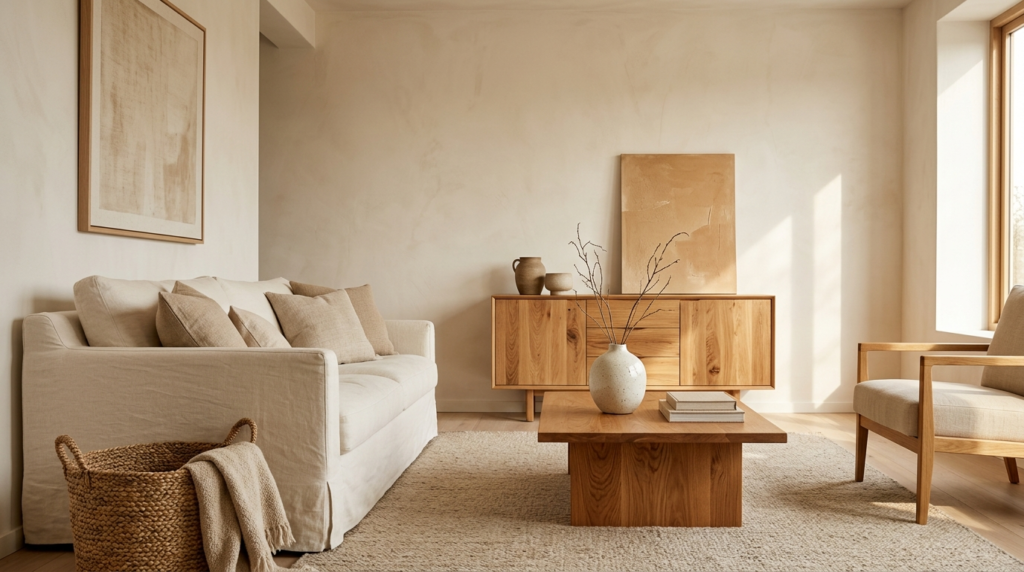
Warm natural wood is one of the easiest ways to bring character into a minimalist home. Choose oak, walnut, pine, or other softly finished woods for coffee tables, dining furniture, shelving, and cabinetry.
Keep the surrounding decor simple so the natural grain becomes part of the room’s visual interest without making the space feel busy.
2. Use a Soft Neutral Color Palette
A natural minimalist home works beautifully with warm whites, ivory, beige, taupe, oatmeal, and soft greige. These colors create a calm foundation while allowing natural materials to stand out.
Instead of using several bold colors, layer different neutral shades to give the room depth and warmth.
3. Add Linen and Cotton Textures
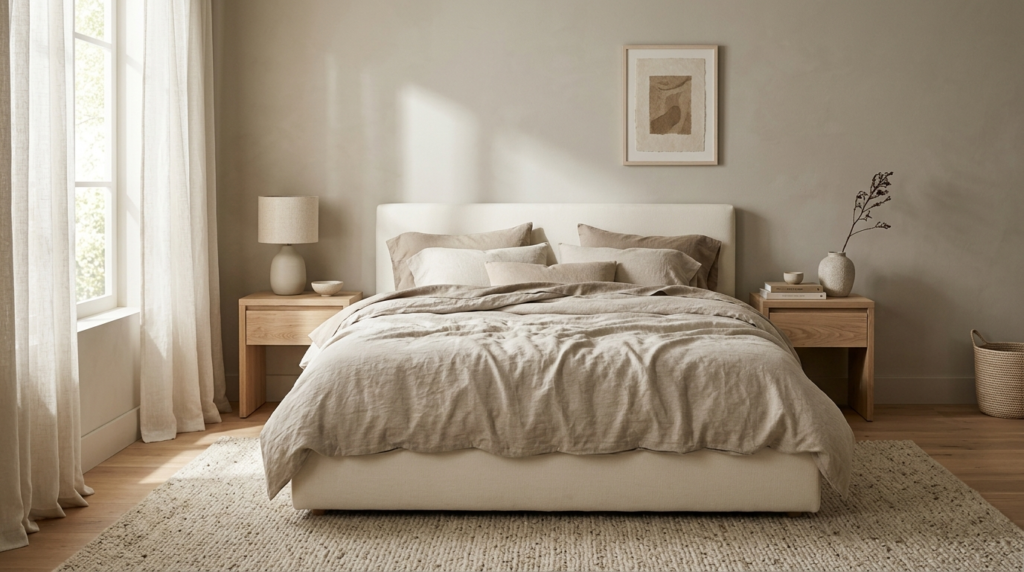
Soft linen and cotton fabrics can make minimalist rooms feel much more comfortable. Use them for curtains, bedding, cushions, throws, and upholstered furniture.
Look for slightly relaxed fabrics with natural texture rather than perfectly smooth materials. Small imperfections can make the space feel more authentic.
4. Decorate With Indoor Plants
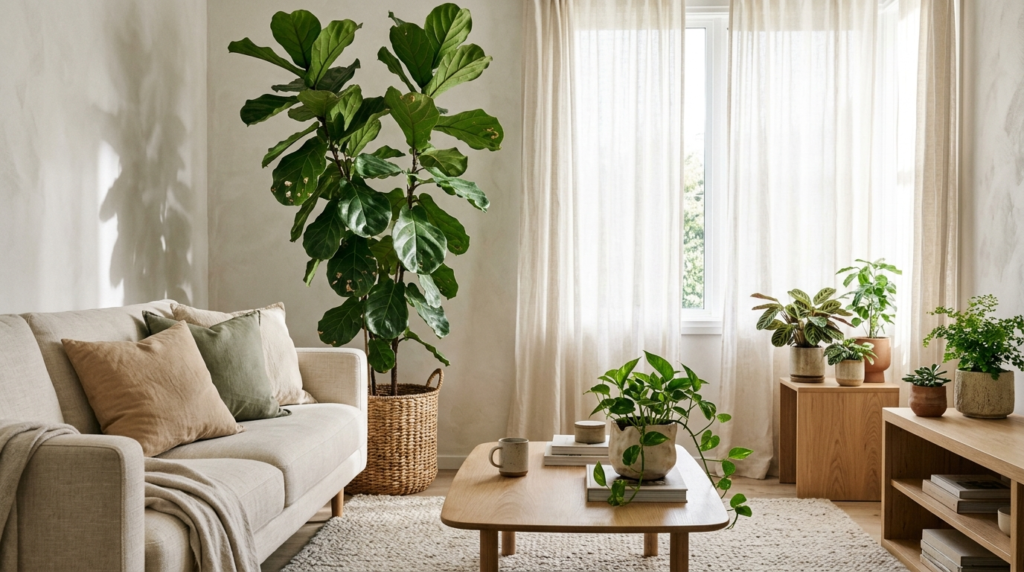
Greenery brings life and freshness into a minimalist interior without adding visual clutter. Choose a few beautiful plants and display them in simple ceramic, stone, or woven planters.
Large leafy plants can fill an empty corner, while smaller plants work beautifully on shelves, side tables, or kitchen counters.
5. Choose Simple Organic Shapes
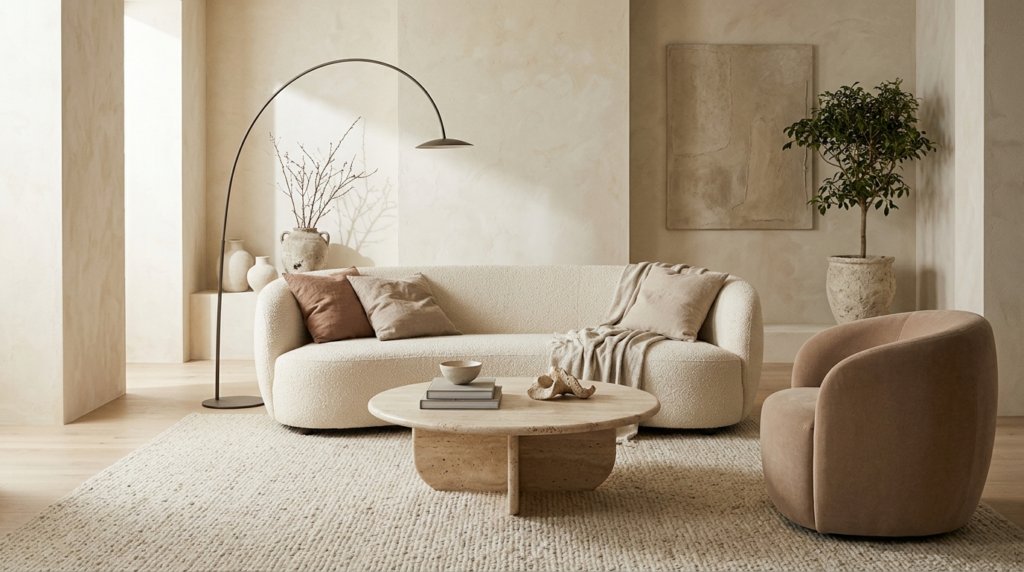
Natural minimalist interiors do not have to be filled with sharp lines. Rounded coffee tables, curved chairs, arched mirrors, and softly shaped lamps can make a clean room feel more inviting.
Mixing organic shapes with simple furniture creates a relaxed look without sacrificing the minimalist aesthetic.
6. Create a Cozy Minimalist Living Room
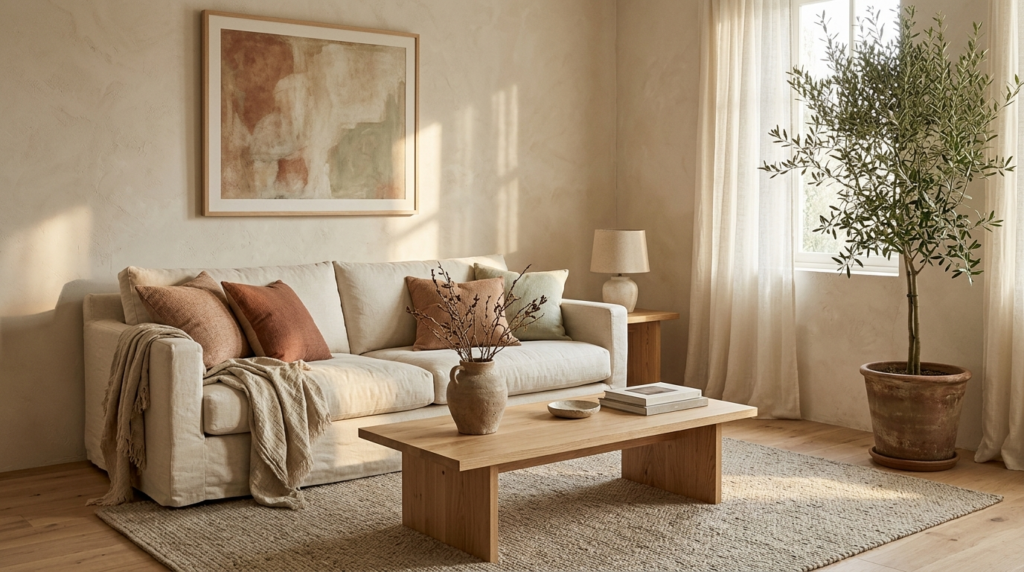
Start with a comfortable neutral sofa, a simple wood coffee table, and a textured area rug. Add a few linen cushions and one or two carefully chosen decorative pieces.
Keep surfaces relatively clear and allow plenty of breathing room between furniture. This makes the living room feel peaceful while still being comfortable for everyday life.
7. Use Woven Natural Materials
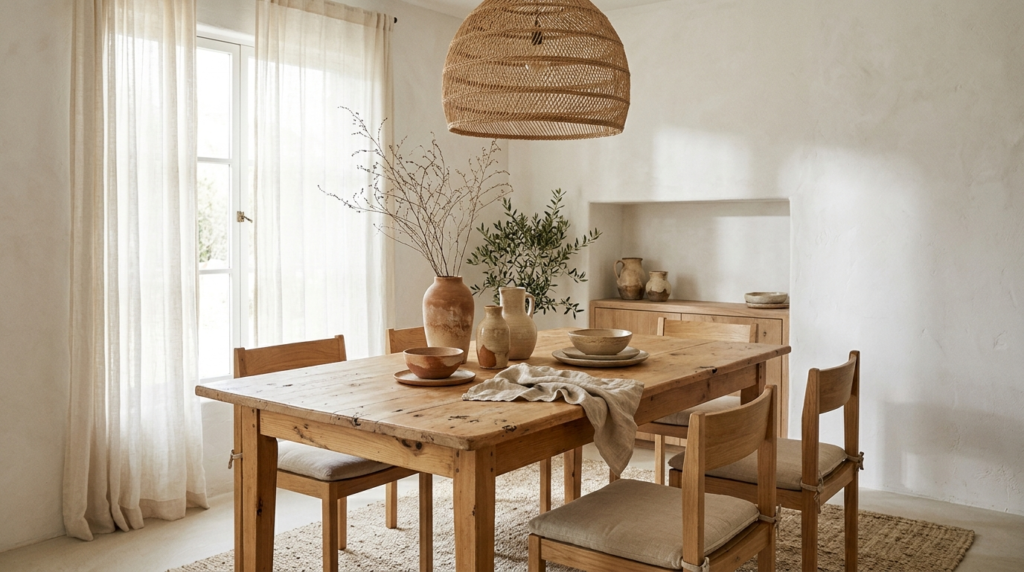
Rattan, jute, cane, seagrass, and wicker are excellent materials for adding warmth to minimalist rooms. They introduce subtle texture without overwhelming the space.
Try a woven basket, jute rug, cane cabinet, or rattan accent chair to bring a relaxed natural feeling into your home.
8. Add Warm Ambient Lighting
Lighting can completely change the mood of a minimalist interior. Choose warm bulbs and use table lamps, floor lamps, wall sconces, and soft pendant lights to create layers of illumination.
Avoid relying only on bright overhead lighting. A combination of gentle light sources makes the home feel much cozier in the evening.
9. Keep Decor Simple and Intentional
Natural minimalism is about choosing fewer things and giving each piece more importance. Instead of filling every shelf, select a beautiful vase, ceramic bowl, framed artwork, or sculptural object.
Leaving some empty space around decorative pieces helps the room feel organized and allows special objects to stand out.
10. Layer a Neutral Bedroom
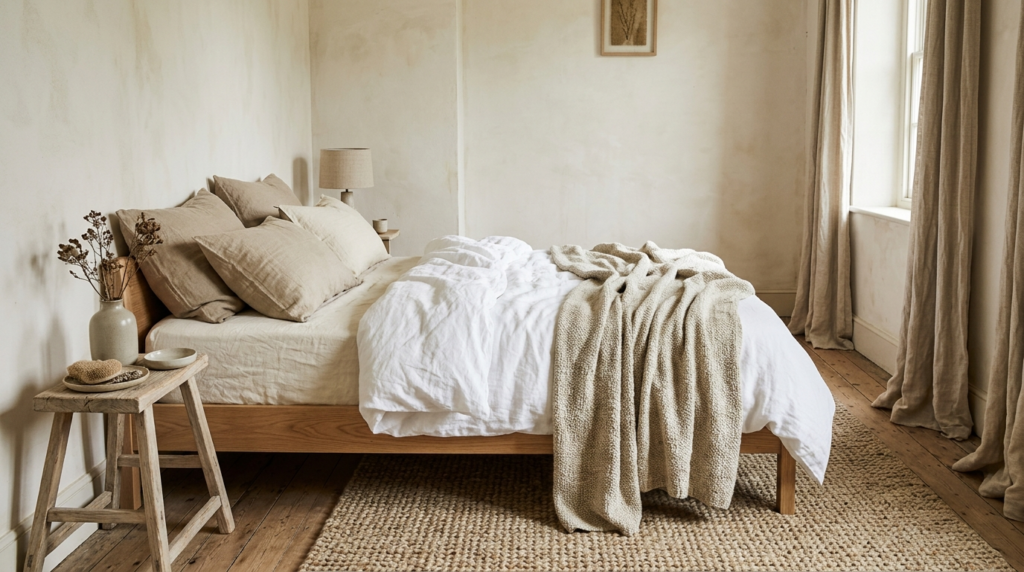
A natural minimalist bedroom can feel incredibly cozy when several soft neutral textures are layered together. Combine linen bedding, knitted throws, cotton pillows, and a textured rug.
Use warm beige, ivory, cream, soft brown, or muted sage to create a restful atmosphere that feels connected to nature.
11. Add Handmade Ceramic Decor
Handmade ceramics bring subtle personality to minimalist interiors. Choose imperfect vases, bowls, candle holders, or decorative vessels in earthy finishes.
Cream, sand, clay, stone, and muted brown ceramics work particularly well with natural wood and linen.
12. Choose an Earthy Accent Color
A neutral home can still benefit from a small amount of color. Sage green, olive, terracotta, muted brown, dusty blue, and warm rust are beautiful choices.
Use an earthy accent color sparingly through pillows, artwork, pottery, blankets, or small decorative objects for a natural and sophisticated look.
13. Use Natural Stone Accents
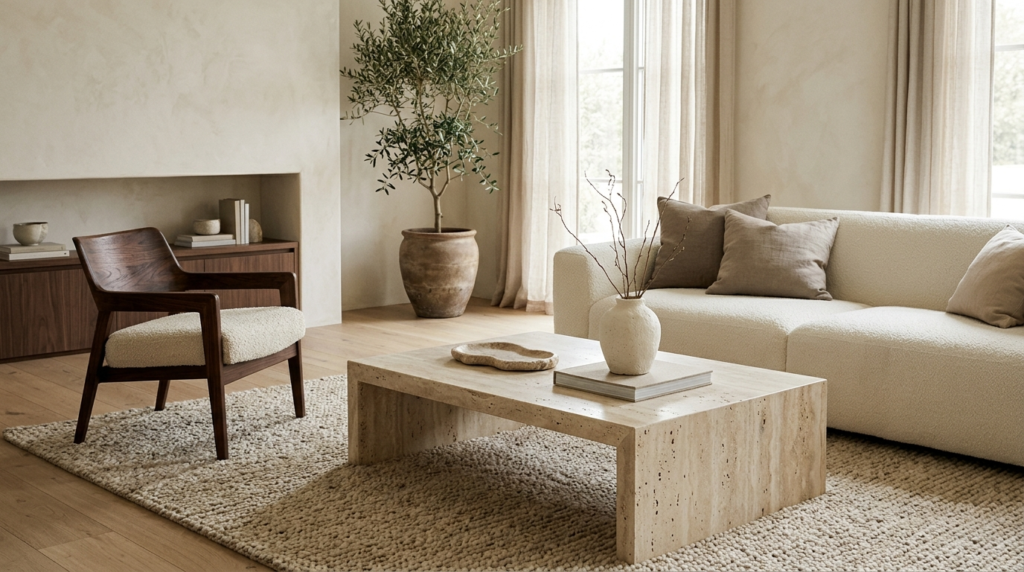
Stone adds a quiet sense of luxury while keeping the room connected to natural materials. Consider limestone, travertine, marble, slate, or stone-look accessories.
A stone coffee table, sculptural tray, countertop, or simple vase can become a beautiful focal point without introducing visual clutter.
14. Create an Uncluttered Entryway
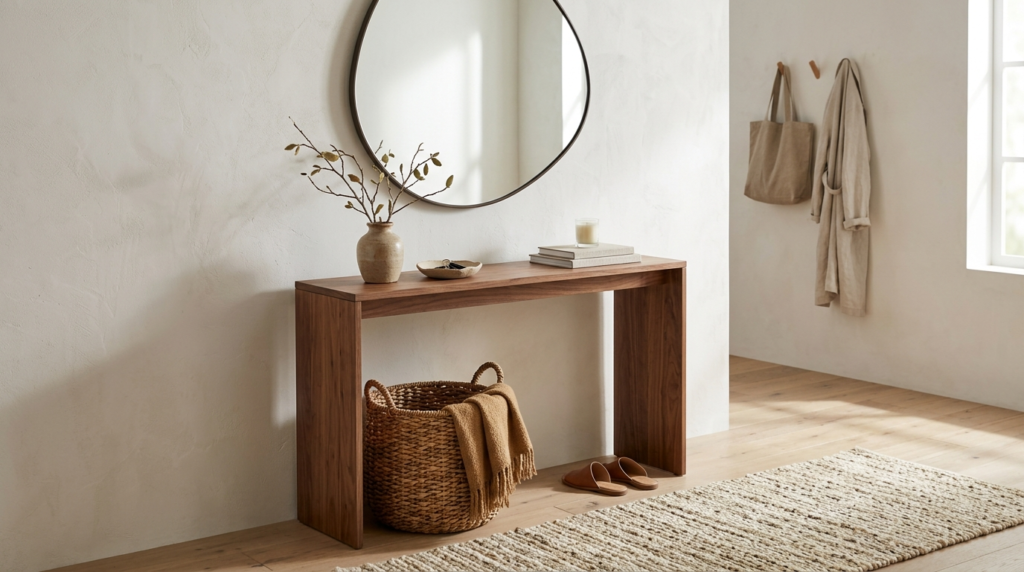
The entryway sets the tone for the entire home. Keep it simple with a wooden console, woven basket, neutral runner, and one piece of understated artwork.
Use baskets or closed storage to hide everyday items such as shoes, bags, and accessories. A clear entryway immediately makes the home feel calmer.
15. Mix Different Natural Textures
Using only one material can make minimalist rooms feel flat. Instead, combine several natural textures such as wood, linen, wool, jute, rattan, ceramic, and stone.
Keep the colors connected so the different textures create interest without making the room feel visually crowded.
16. Add Soft Layered Rugs
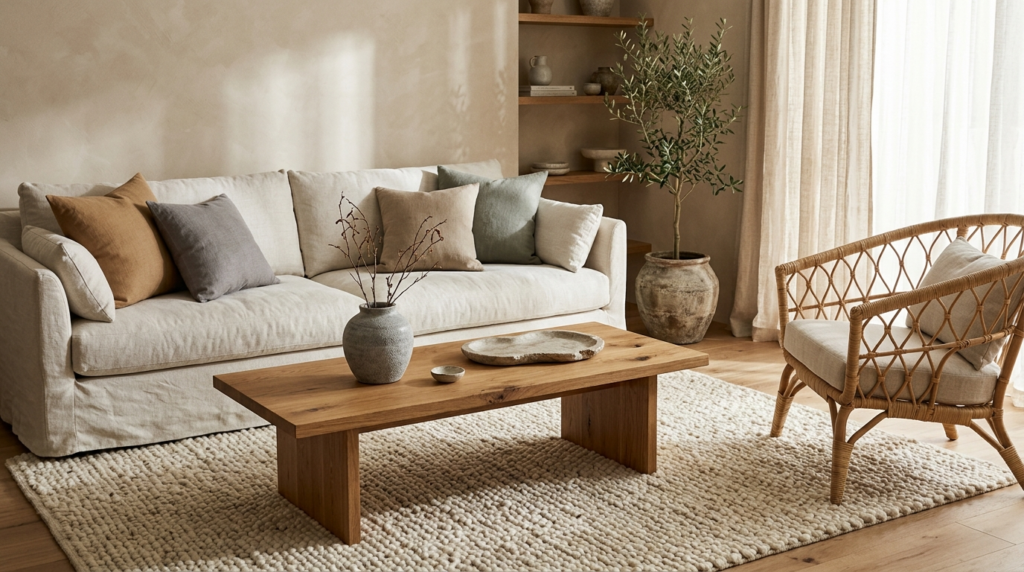
A rug can instantly make a minimalist room feel warmer and more comfortable. Choose natural materials such as wool, jute, cotton, or textured flatweaves.
For extra depth, consider layering a smaller patterned or textured rug over a larger neutral base
17. Bring in Natural Wall Art
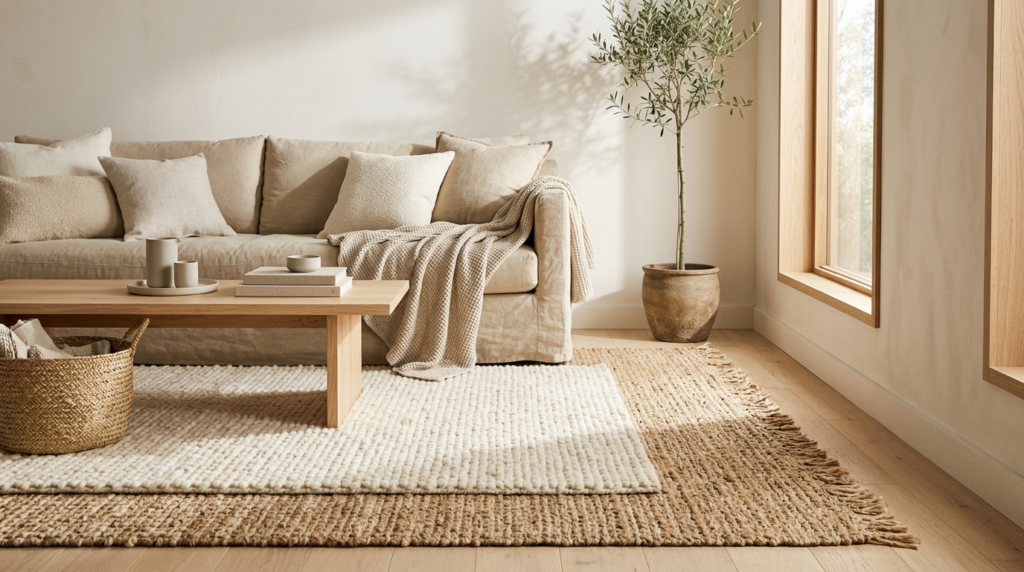
Choose artwork inspired by landscapes, botanical forms, architecture, or organic shapes. Soft neutral photography and simple abstract pieces also work beautifully.
Keep the frames simple, using natural wood, black, or understated neutral finishes to maintain the clean aesthetic.
18. Style Open Shelves Sparingly
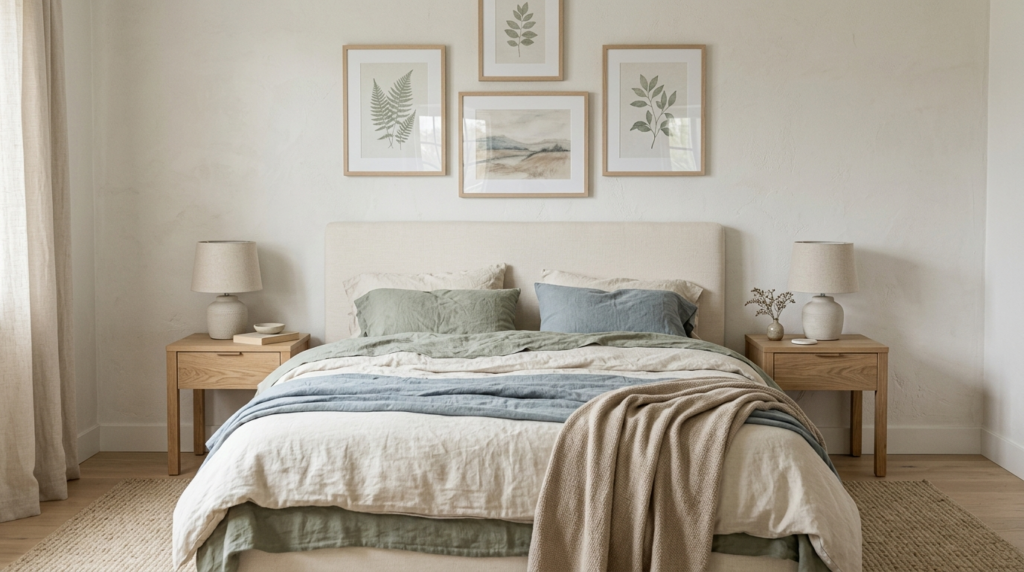
Open shelving can look beautiful in a natural minimalist home when it is carefully edited. Display a combination of books, ceramics, small plants, and meaningful objects rather than filling every shelf.
Leave intentional empty areas between groups of objects. This creates balance and keeps the shelves from looking cluttered.
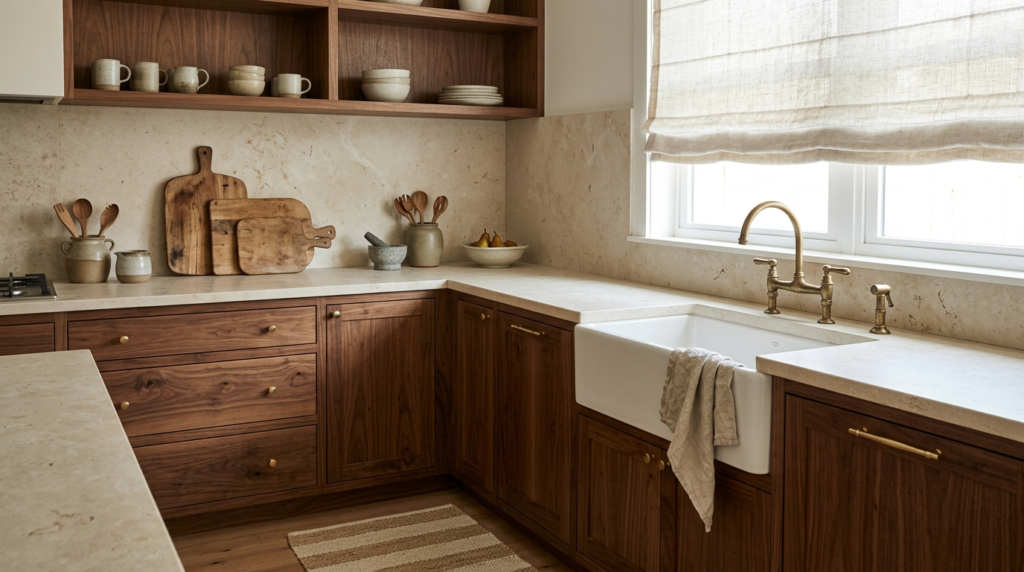
19. Use Warm Wood in the Kitchen
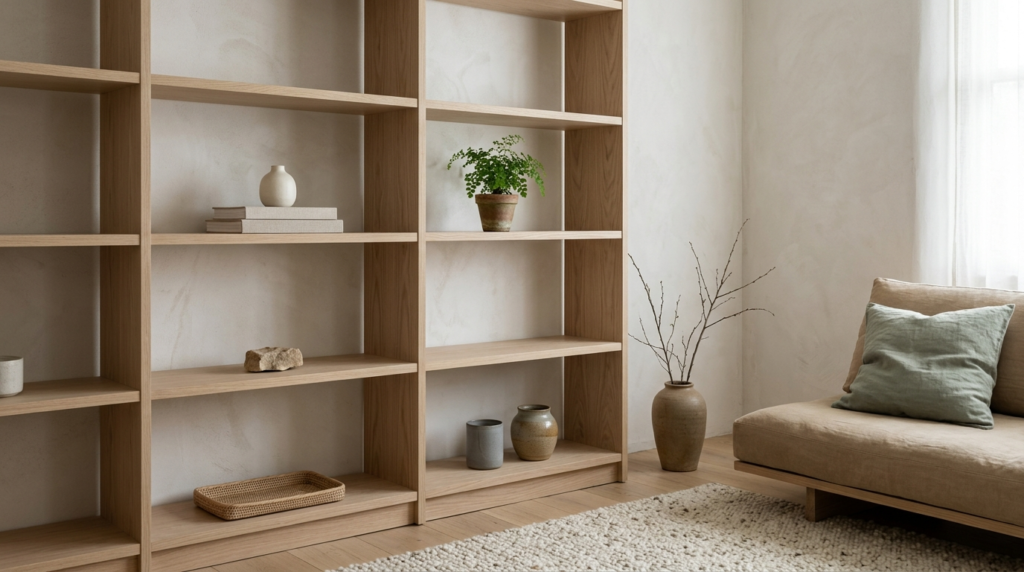
Natural wood cabinetry, cutting boards, stools, shelves, and serving pieces can make a minimalist kitchen feel warm and welcoming.
Pair wood with cream, white, stone, or soft beige surfaces for a timeless kitchen that feels simple but not sterile.
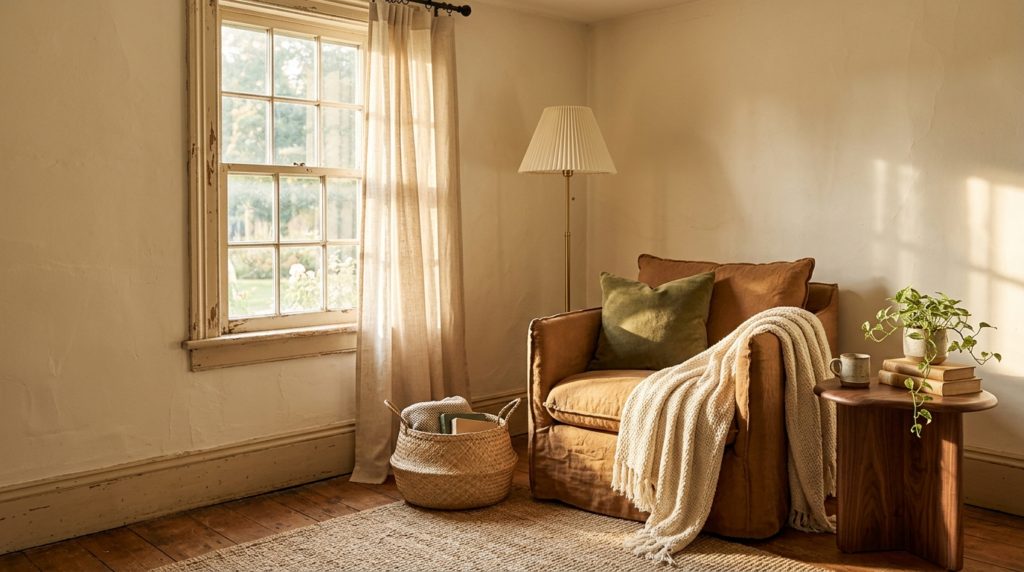
20. Create a Cozy Reading Corner
A small reading corner can add warmth and personality without compromising minimalism. Place a comfortable upholstered chair near a window with a small wood side table and a warm floor lamp.
Add one soft throw, a few favorite books, and perhaps a small plant to make the corner feel inviting without overdecorating it.
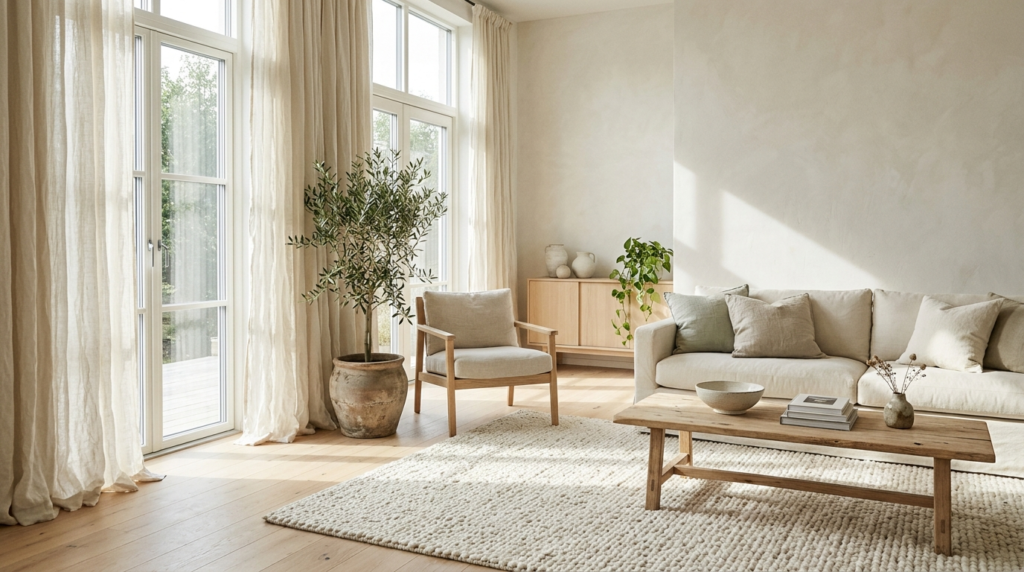
21. Let Natural Light Take Center Stage
Natural light is one of the most important elements of a calm minimalist home. Keep windows relatively unobstructed and choose lightweight linen or cotton curtains that allow daylight to filter through.
Arrange furniture so the room feels open and connected to the outdoors. Natural light paired with warm materials creates an effortlessly peaceful atmosphere.
What Is Natural Minimalist Home Decor?
Natural minimalist home decor combines minimalist design principles with organic materials, earthy colors, comfortable textures, and simple forms. The goal is to create a home that feels intentional without feeling empty.
Instead of focusing on having as few things as possible, the style focuses on having fewer but more meaningful and functional pieces.
What Colors Work Best for Natural Minimalist Interiors?
The best colors include warm white, ivory, cream, beige, taupe, greige, oatmeal, soft brown, and muted earthy tones. Sage green, olive, terracotta, and dusty blue can also be used as subtle accents.
Warm undertones are especially helpful because they prevent minimalist rooms from feeling cold or overly stark.
How Do You Make a Minimalist Home Feel Cozy?
Focus on texture rather than adding lots of decorations. Linen curtains, wool rugs, knitted throws, soft cushions, warm wood, woven baskets, and ceramic accessories can make a simple room feel inviting.
Warm lighting and natural greenery also help create a comfortable atmosphere without adding clutter.
How Can I Add Natural Materials Without Overdecorating?
Choose a few materials and repeat them throughout the room. For example, combine light wood furniture with linen textiles, woven accents, and ceramic decor.
Rather than adding many accessories, let the texture and character of the materials provide visual interest.
Is Natural Minimalist Decor Good for Small Homes?
Yes. Natural minimalist decor can work especially well in small homes because it emphasizes open space, functional furniture, and thoughtful storage.
Choose furniture with simple silhouettes, keep surfaces clear, and use baskets or closed cabinets to hide everyday clutter.
FAQs
What is natural minimalist home decor?
Natural minimalist home decor combines simple, functional design with natural materials, earthy colors, organic shapes, and cozy textures.
How do I make my minimalist home feel warmer?
Add warm wood, linen, wool, woven materials, indoor plants, earthy colors, and warm ambient lighting to make minimalist rooms feel more inviting.
What colors are best for a natural minimalist home?
Warm white, cream, beige, taupe, oatmeal, greige, soft brown, sage, and muted earthy tones work particularly well.
Can natural minimalist decor work with modern furniture?
Yes. Modern furniture with clean lines can be softened with natural wood, textured fabrics, greenery, handmade ceramics, and warm neutral colors.
How do I avoid making minimalist decor look boring?
Use a variety of natural textures and subtle color variations. Mixing wood, linen, stone, wool, ceramic, and woven materials adds depth without creating clutter.
Are plants important in natural minimalist interiors?
Plants are not essential, but they are an easy way to introduce color, texture, and a connection to nature while keeping the overall design simple.
Final Thoughts
Natural minimalist decor proves that a simple home can still feel warm, personal, and inviting. By combining natural materials, soft neutrals, cozy textures, greenery, and intentional styling, you can create rooms that feel peaceful without looking empty.
The key is to choose fewer pieces that genuinely add comfort or beauty. Let natural wood, soft fabrics, earthy colors, and plenty of breathing room create a calm and cozy home that feels effortless.