 Uncategorized
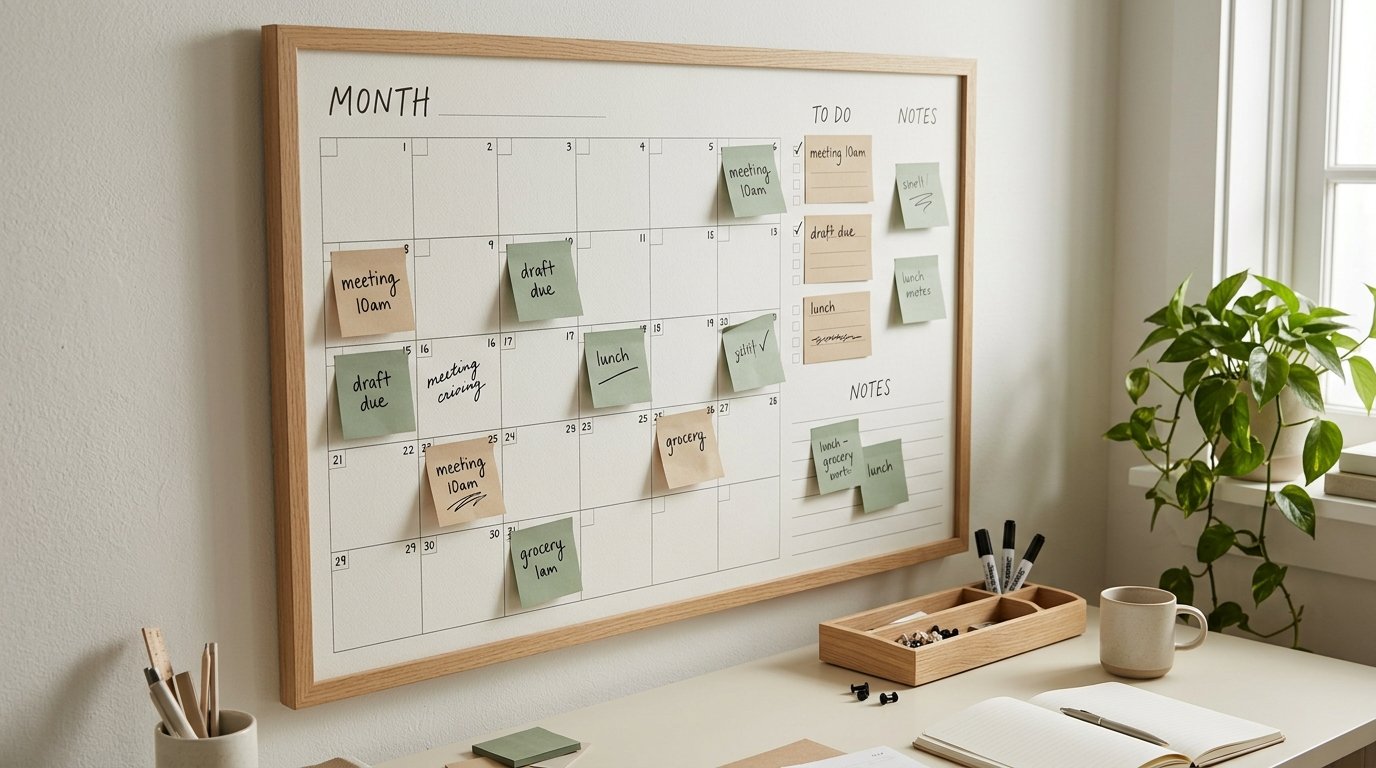
A monthly planning board is a simple way to organize your schedule, remember important dates, track goals, and make everyday life feel more manageable. Whether you prefer a traditional wall calendar, a magnetic whiteboard, or a beautifully styled command center, the right setup can help you see your entire month at a glance.
The best monthly planning boards combine practicality with a design that fits your home and routine. You can use yours to plan family activities, organize work deadlines, track habits, manage household tasks, or keep personal goals in sight.
If you’re looking for a setup that is both useful and attractive, these monthly planning board ideas will help you create an organized space that makes planning easier.
1. Create a Simple Monthly Calendar Board
A classic monthly calendar board is one of the easiest ways to keep your schedule organized. Divide the board into seven columns for the days of the week and enough rows to accommodate the dates of the month.
Use it to record appointments, deadlines, birthdays, and important events. Keep the layout simple so you can read everything quickly without feeling overwhelmed by too much information.
2. Design a Minimalist Whiteboard Planner
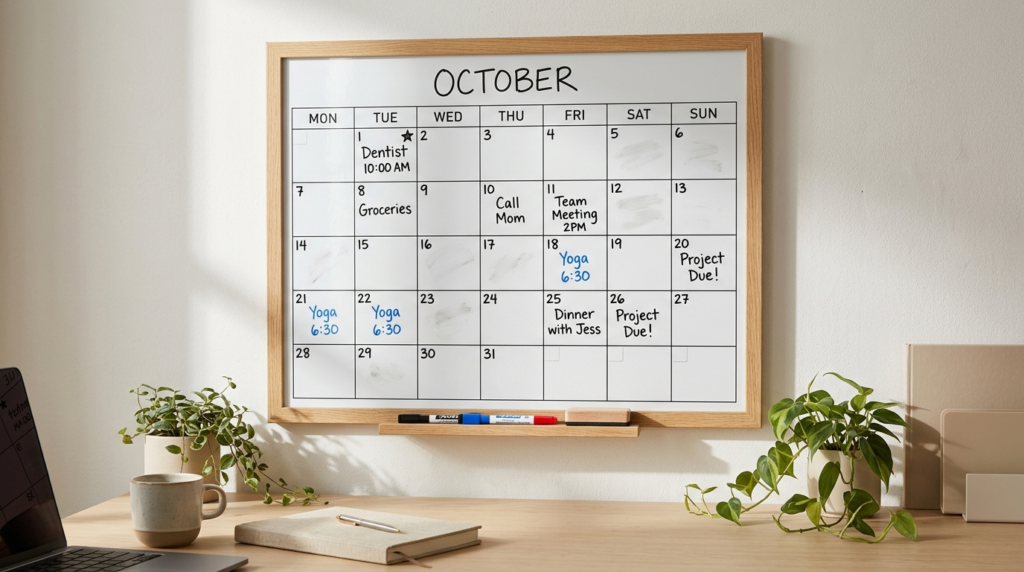
A minimalist whiteboard planner works well if you like a clean, uncluttered look. Choose a whiteboard with thin borders and use black or neutral-colored markers for a simple, easy-to-read layout.
Add only the sections you genuinely need, such as monthly goals, important dates, and upcoming tasks. This makes the board easy to maintain and quick to update.
3. Make a Color-Coded Monthly Planning Board
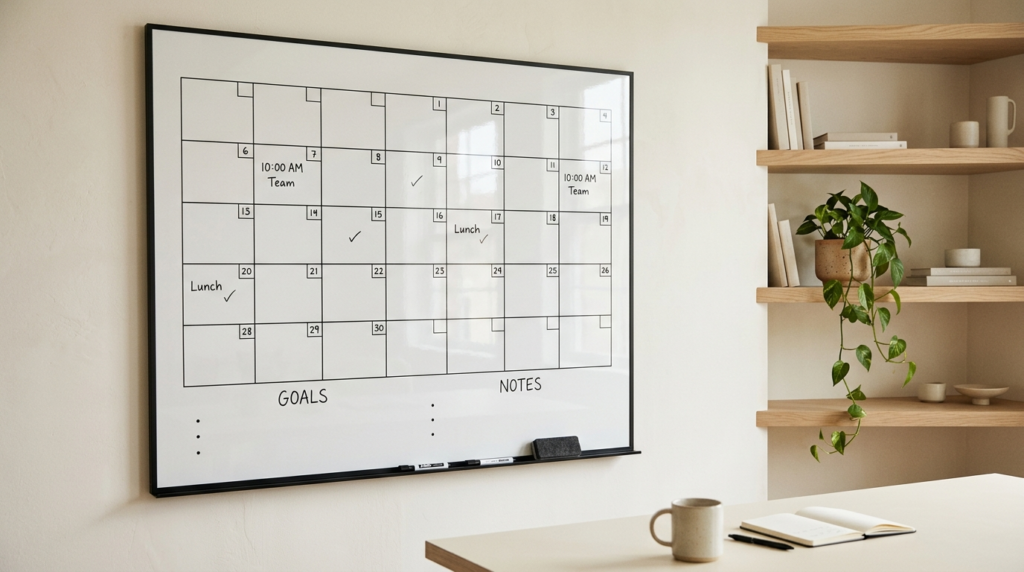
Color coding can help you distinguish different responsibilities at a glance. Assign one color to work, another to family commitments, and separate colors for personal appointments or household tasks.
Use colored markers, sticky notes, or small labels to keep the system consistent. Avoid using too many colors, as a limited palette is usually easier to understand.
4. Create a Family Command Center Board
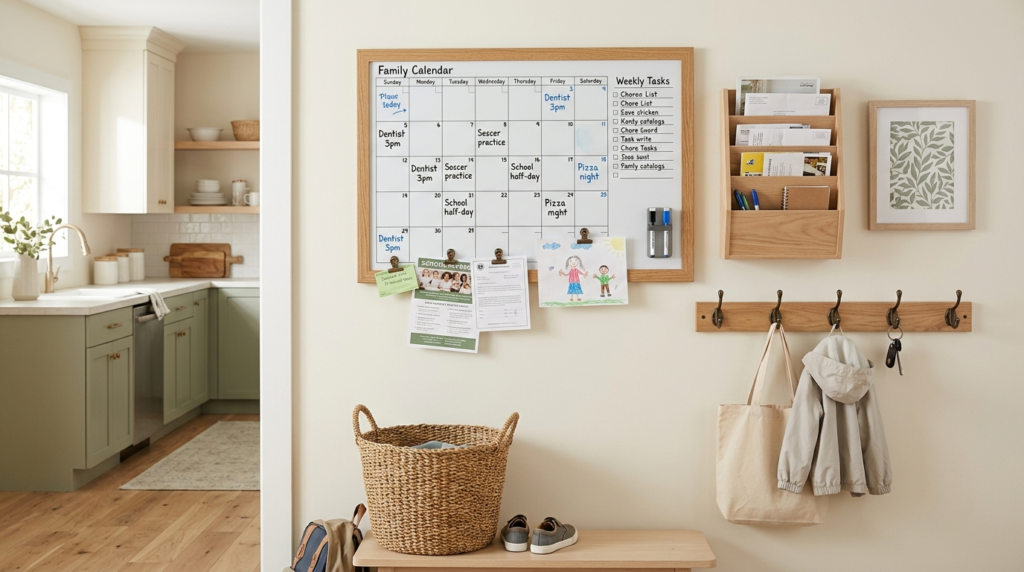
A family command center brings everyone’s schedules together in one convenient place. Include a monthly calendar, school events, appointments, household reminders, and upcoming family activities.
Position the board in a kitchen, hallway, or another shared area where everyone can see it. Add a small basket for papers or a section for weekly reminders to make the space even more functional.
5. Use a Magnetic Monthly Planning Board
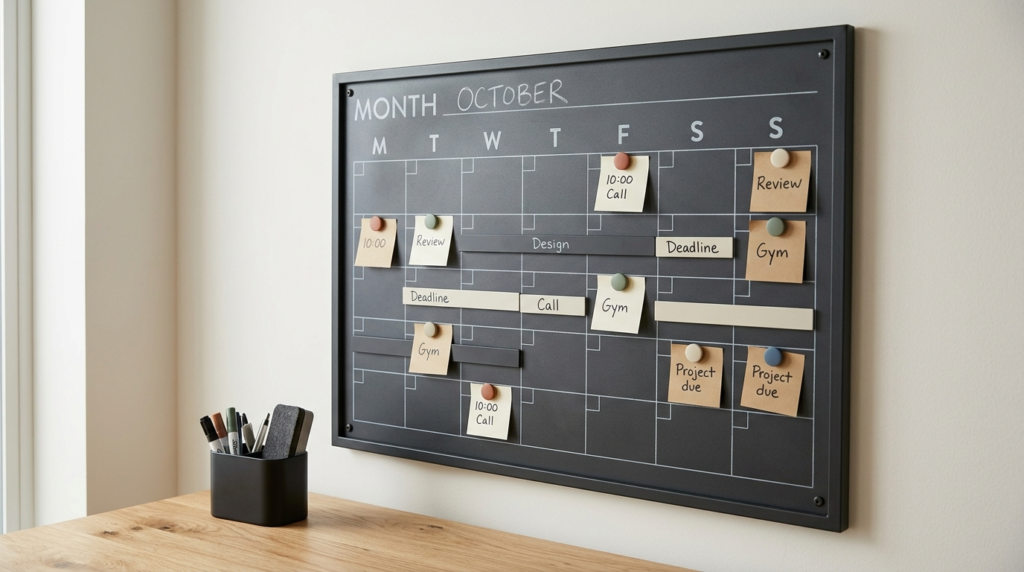
A magnetic planning board is ideal for people who want flexibility without rewriting everything. Use magnetic labels for recurring activities, movable notes for appointments, and small markers for important dates.
You can rearrange tasks as plans change throughout the month. Choose a simple metal board with a clean finish to keep your planning area looking organized.
6. Try a Dry-Erase Acrylic Calendar
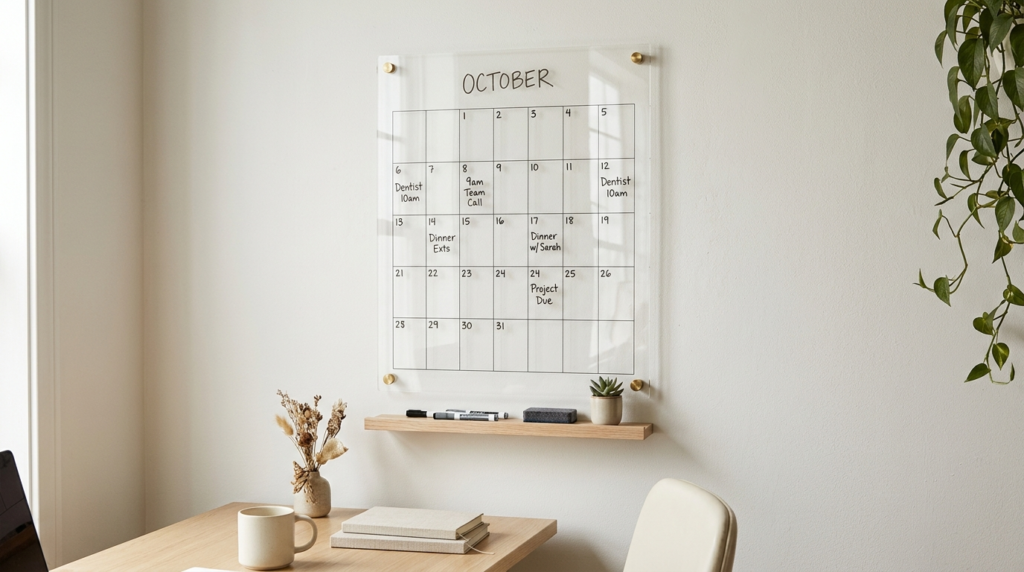
An acrylic monthly calendar offers a modern, lightweight look that works beautifully in home offices and contemporary interiors. Clear acrylic panels can make the planning board feel less visually bulky than a traditional framed calendar.
Use a marker that is suitable for the specific surface and easy to erase. Keep the lettering dark and readable, especially if the board is mounted against a bright wall.
7. Build a Monthly Goal-Tracking Board
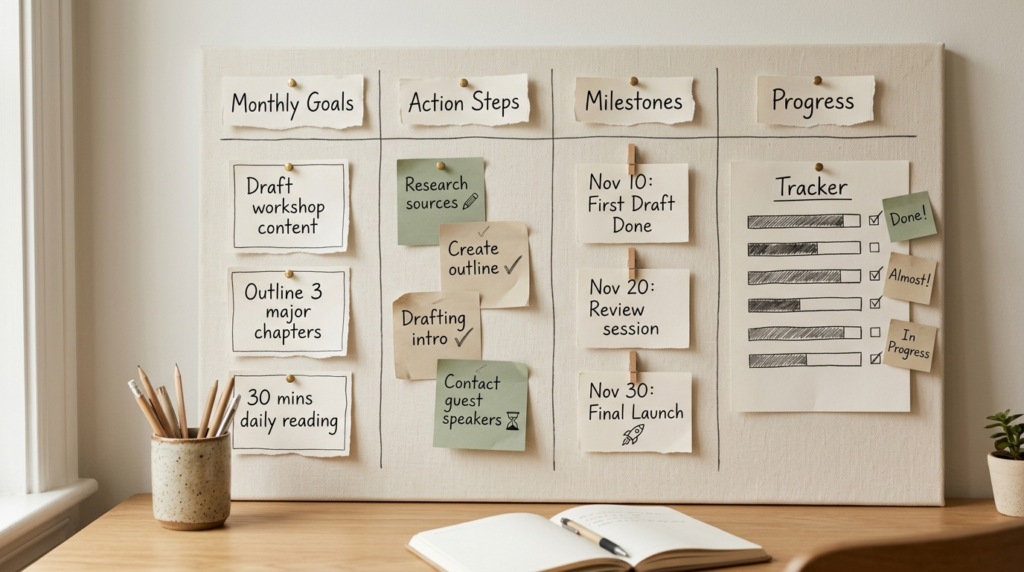
A goal-tracking board helps you connect your monthly schedule with the bigger things you want to accomplish. Create sections for your top three goals, action steps, milestones, and progress notes.
Break large goals into smaller tasks that can be completed throughout the month. This makes your goals feel more achievable and helps you see what deserves your attention first.
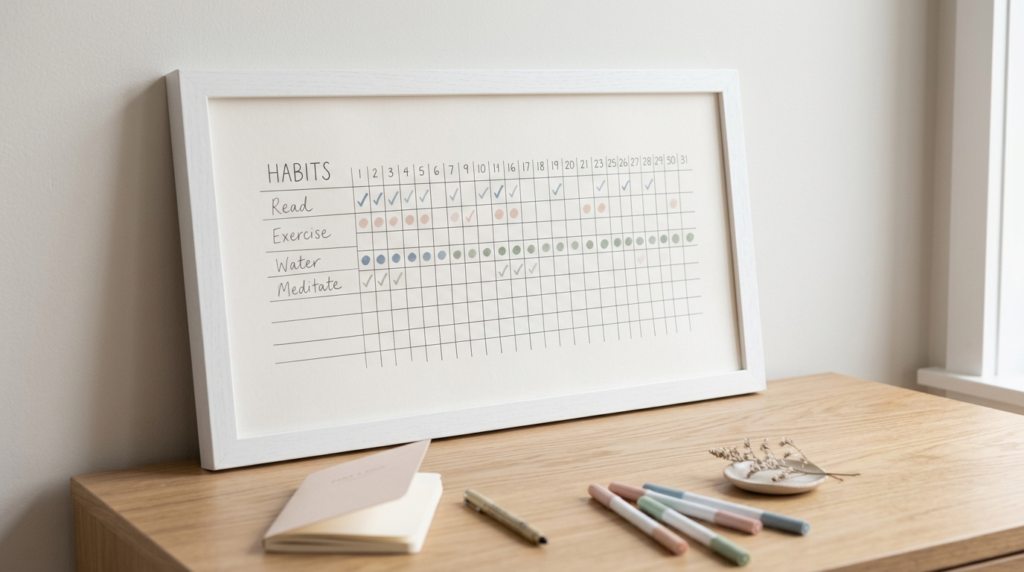
8. Add a Monthly Habit Tracker
A habit tracker makes it easier to notice patterns in your routine and stay consistent with personal goals. Create a grid with your chosen habits down one side and the days of the month across the top.
You might track reading, exercise, drinking enough water, stretching, or maintaining a regular bedtime. Focus on a handful of realistic habits instead of trying to track everything at once.
9. Create a Work and Productivity Board
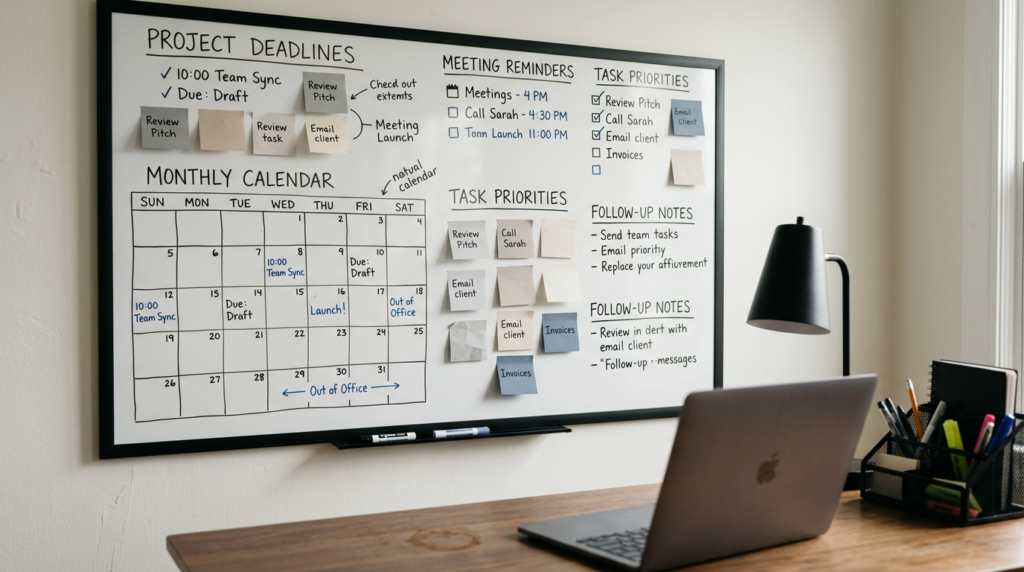
A monthly productivity board is useful for freelancers, remote workers, students, and busy professionals. Divide the board into sections for deadlines, projects, meetings, priorities, and tasks that need follow-up.
Use the monthly calendar to identify busy periods before they arrive. Pairing dates with project milestones helps you plan your workload more realistically.
10. Design a Monthly Meal Planning Board
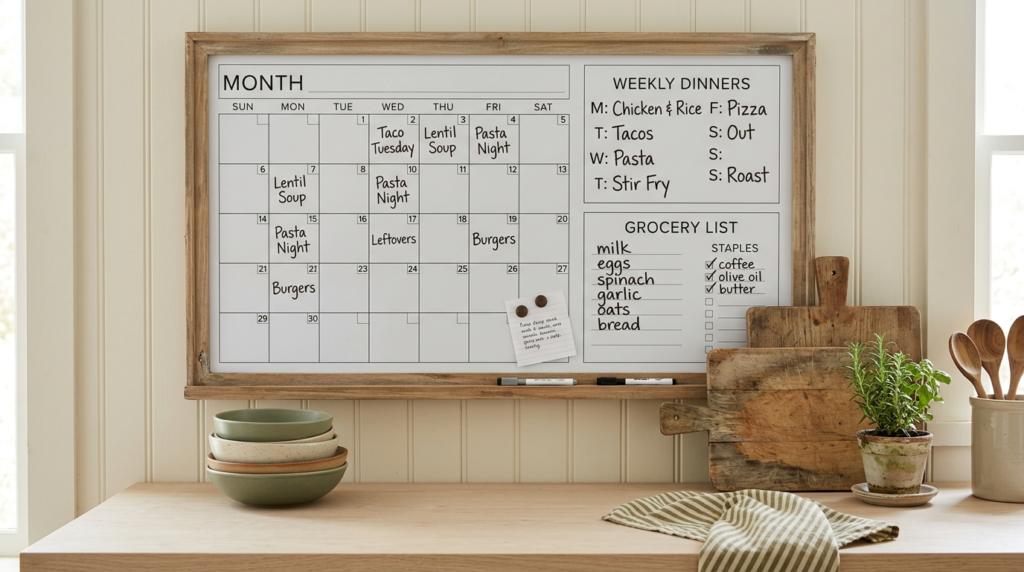
A meal planning board can make grocery shopping and everyday cooking much easier. Create spaces for weekly dinners, meal-prep reminders, grocery essentials, and ingredients you already have at home.
Place the board in or near your kitchen so you can update it while planning meals. A simple layout can help reduce last-minute decisions and make it easier to use food before it expires.
11. Make a Budget and Bill Payment Board
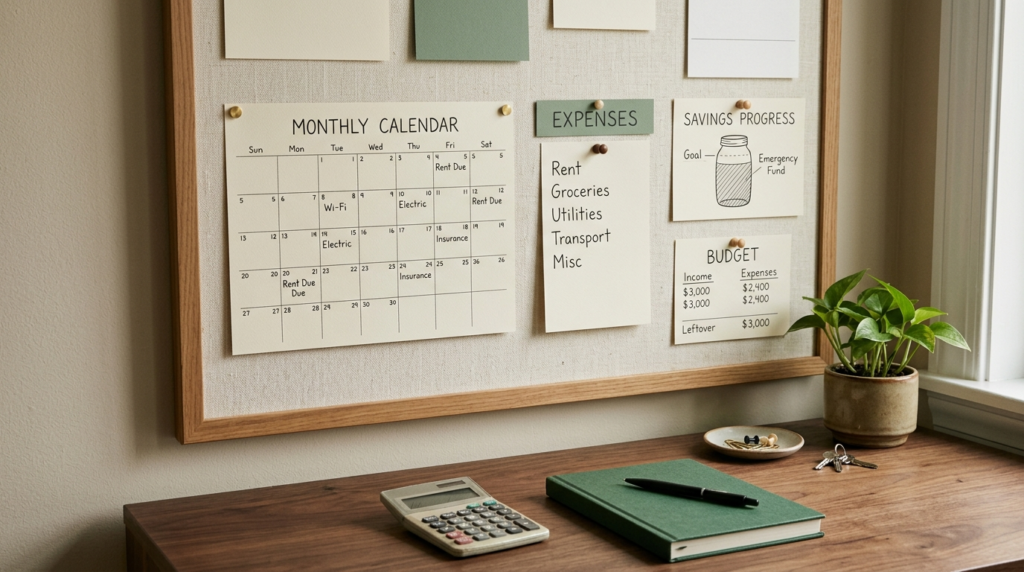
A monthly finance board helps you keep track of bill due dates, savings goals, and planned expenses. Include categories for recurring bills, payment reminders, savings progress, and upcoming financial commitments.
For privacy, keep sensitive account details, passwords, and financial identifiers off a visible household board. You can record general reminders without displaying confidential information.
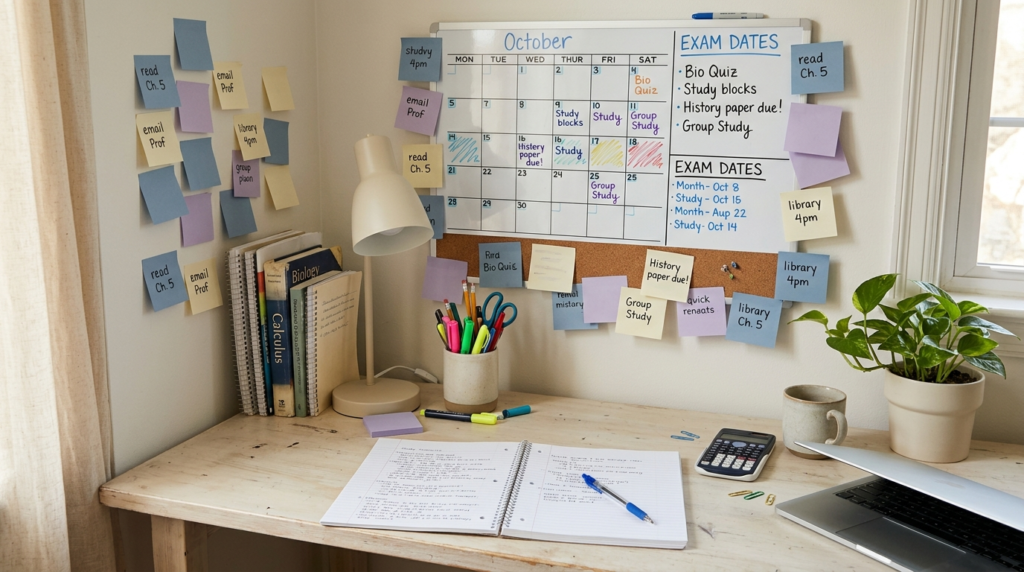
12. Create a Student Study Planning Board
A student planning board can help organize assignments, exams, study sessions, and project deadlines. Use the monthly calendar to mark important dates and add a separate area for the week’s highest-priority tasks.
Keep the design easy to update as coursework changes. A few clear categories are often more useful than a complicated system with too many sections.
13. Use a Chalkboard Monthly Planner
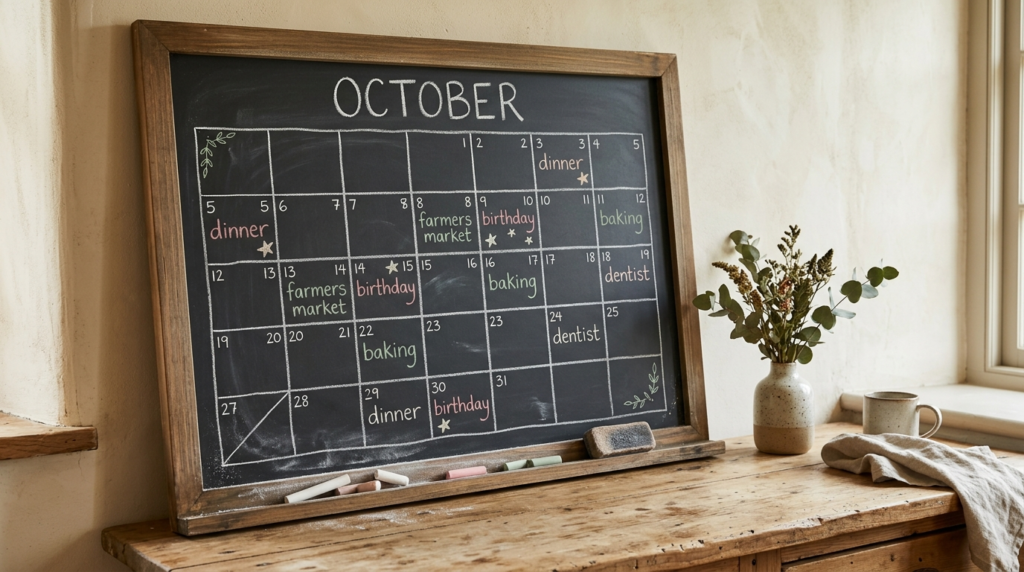
A chalkboard planner adds a warm, decorative touch to a kitchen, home office, or family room. Draw a monthly grid using chalk markers or suitable chalk, then add dates and reminders in clear lettering.
You can use different chalk colors to distinguish appointments and activities. If the board is mainly decorative, keep important information large enough to read from a distance.
14. Create a Rustic Framed Planning Board
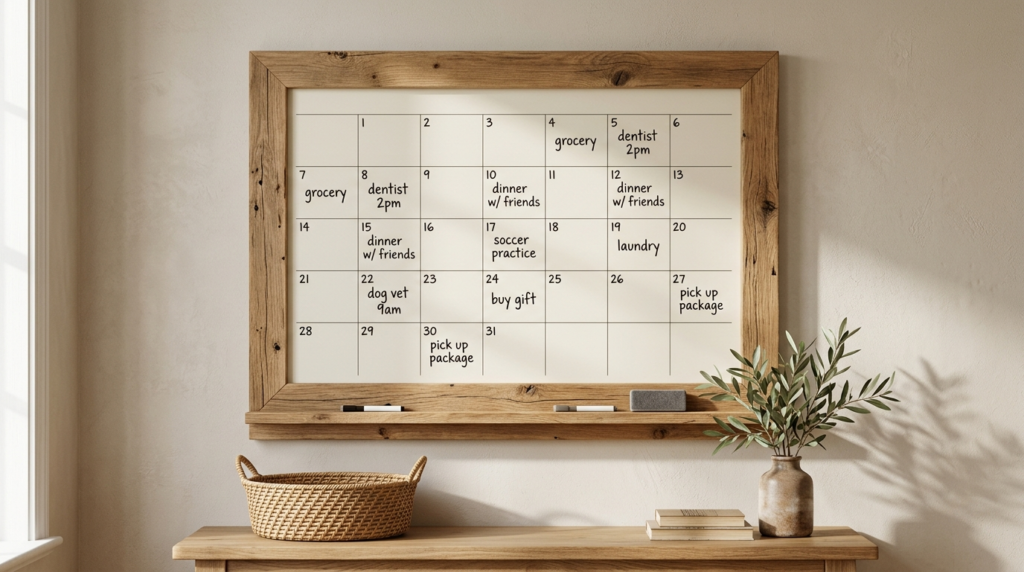
A rustic framed planning board combines everyday organization with natural home decor. Choose a board with a wooden frame, neutral background, and a simple calendar layout that complements your room.
Pair it with a small tray for markers and a few discreet organizational accessories. This style works particularly well in farmhouse-inspired kitchens, mudrooms, and home offices.
15. Design a Monthly Planning Board With Sticky Notes
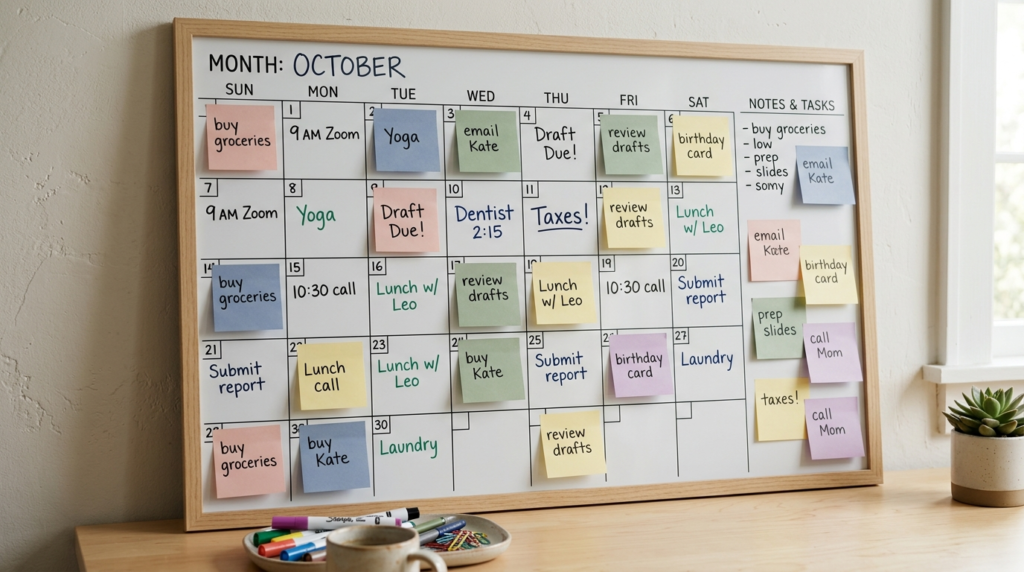
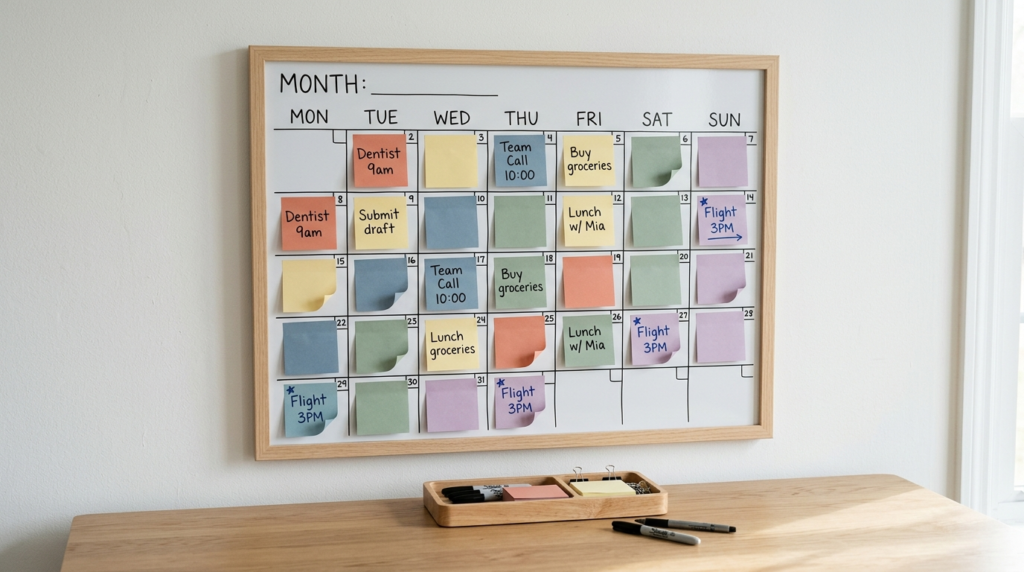
Sticky notes are perfect for people whose plans change frequently. Create a monthly grid and use movable notes for appointments, errands, project tasks, and flexible deadlines.
Choose a consistent color system and write one task or event per note. When plans change, you can move the notes instead of rewriting the entire calendar.
16. Make a Home Office Planning Wall
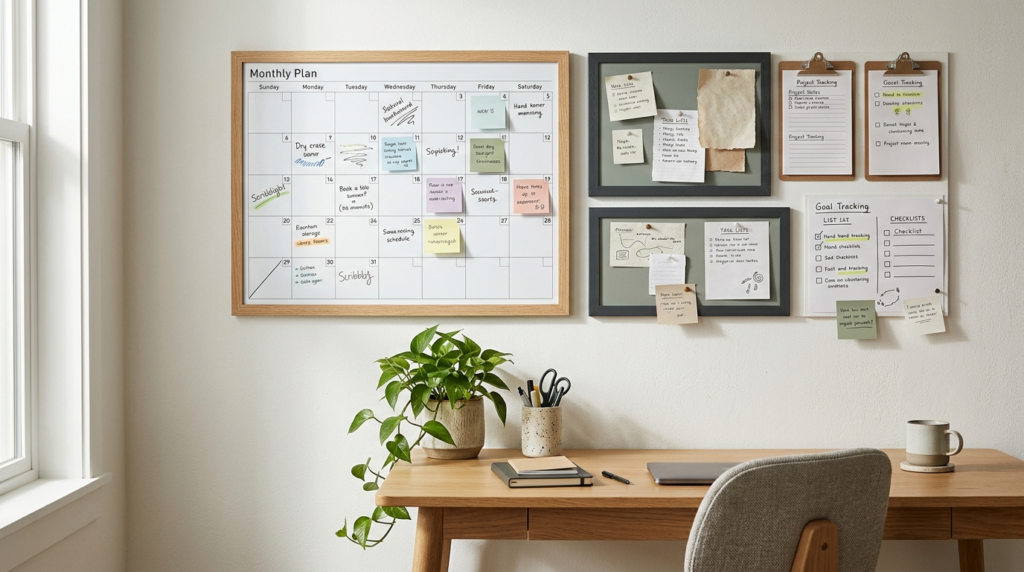
A planning wall can turn an unused section of your home office into a practical organizational hub. Combine a monthly calendar with a small task board, goal section, and space for project notes.
Keep the most important information near eye level and group related tasks together. A well-organized wall makes it easier to see what needs attention without filling your desk with papers.
17. Create a Monthly Cleaning Schedule Board
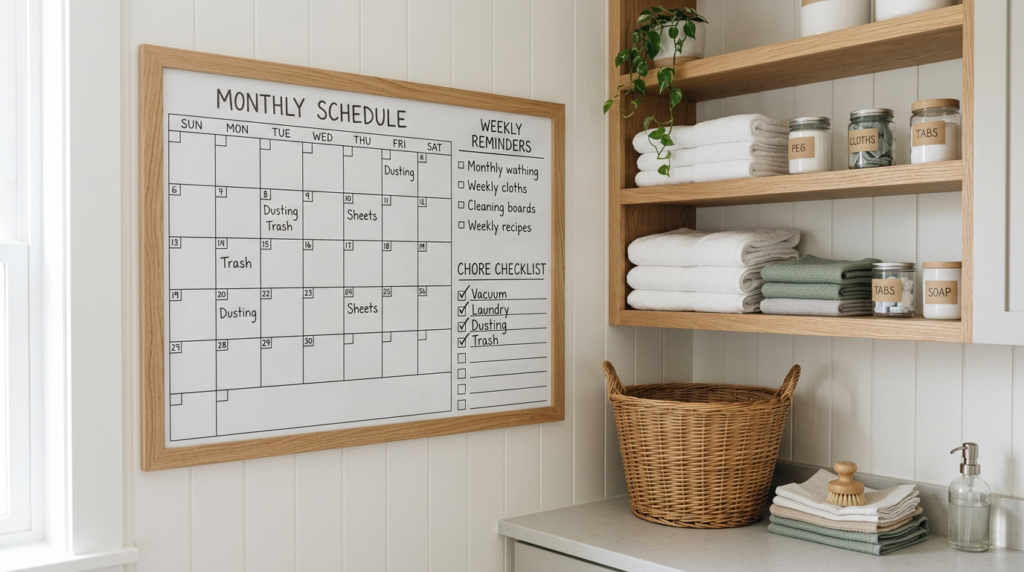
A cleaning schedule board helps divide household chores into manageable tasks. Organize the month into weekly cleaning priorities and include recurring jobs such as laundry, changing bedding, cleaning appliances, or tidying storage areas.
For shared households, assign responsibilities clearly so everyone knows what needs to be done. Keep the workload realistic to avoid turning the board into another source of stress.
18. Build a Monthly Content Planning Board
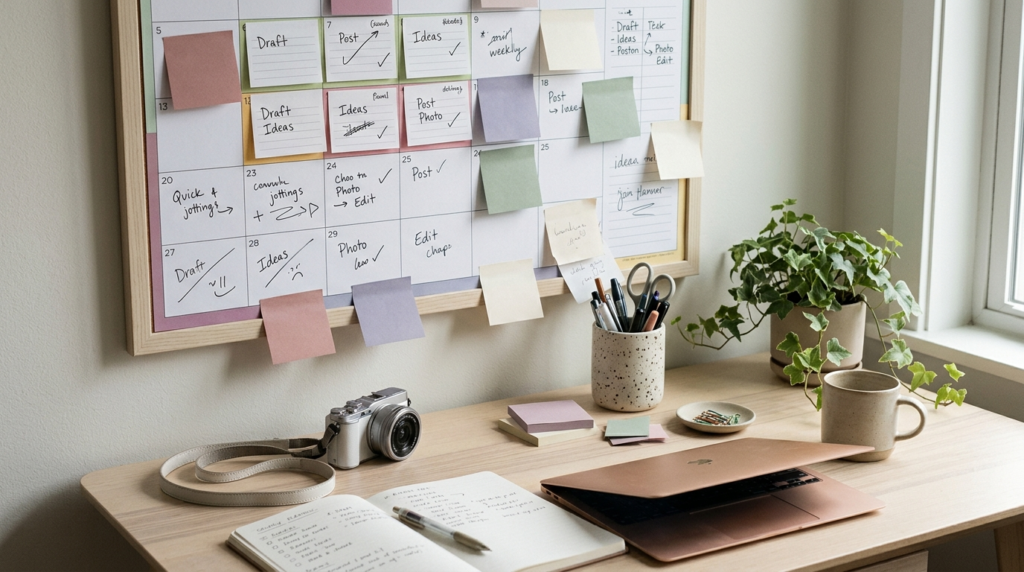
A content planning board is especially useful for bloggers, creators, and small business owners. Create sections for content ideas, planned publishing dates, drafts in progress, scheduled posts, and completed projects.
Use different markers or sticky notes for each platform if you manage multiple channels. This visual overview helps you balance your workload and avoid leaving everything until the last minute.
19. Add a Monthly Wellness and Self-Care Board
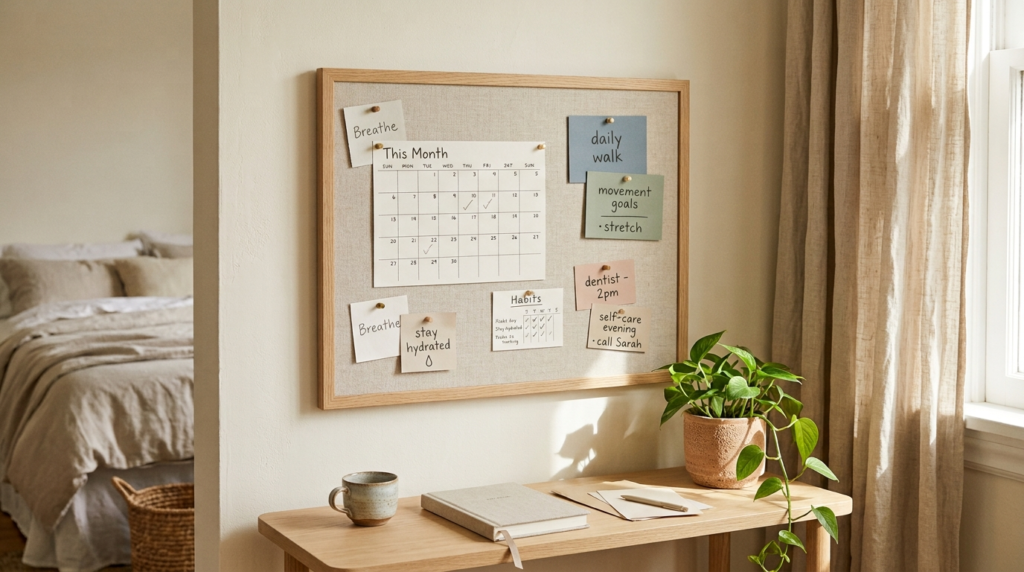
A wellness board gives personal routines a place alongside work and household responsibilities. Include reminders for movement, relaxation, personal appointments, hobbies, and activities that help you recharge.
Keep the focus on realistic intentions rather than perfection. A few gentle reminders can encourage a healthier balance without making self-care feel like another demanding checklist.
20. Create a Small-Space Monthly Planning Board
You don’t need a large wall to organize your month. A compact magnetic board, framed dry-erase calendar, or small planner mounted near your desk can provide plenty of useful space.
Choose a vertical layout or a slim frame if you’re working with limited wall space. Keep only your most important dates and reminders visible, and store extra notes in a notebook or digital planner.
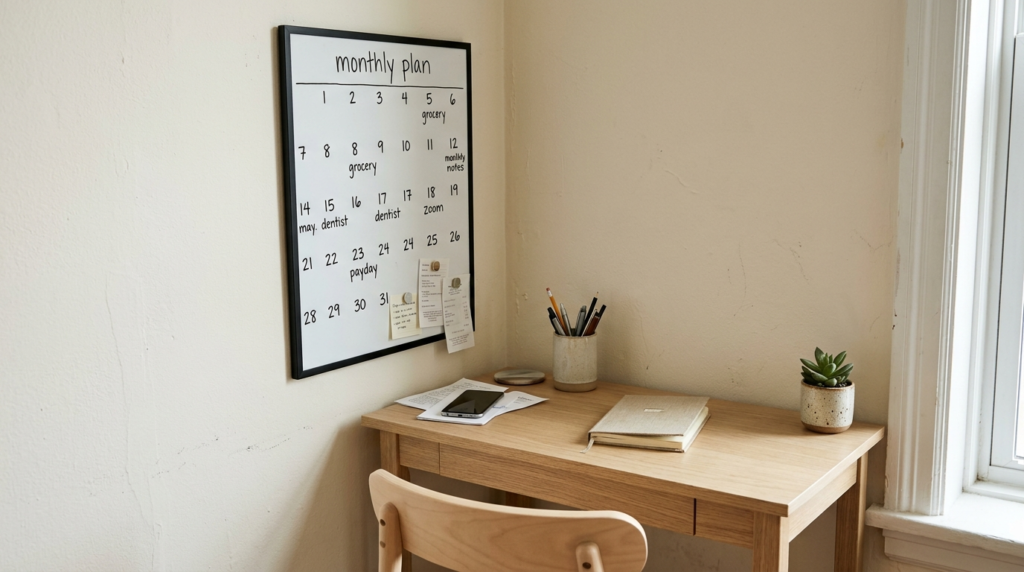
21. Design a Beautiful Monthly Planning Board That Matches Your Decor
Your planning board is more likely to become part of your daily routine if you enjoy looking at it. Choose a frame, background, and marker colors that coordinate with the room, whether your style is modern, minimalist, farmhouse, or colorful and creative.
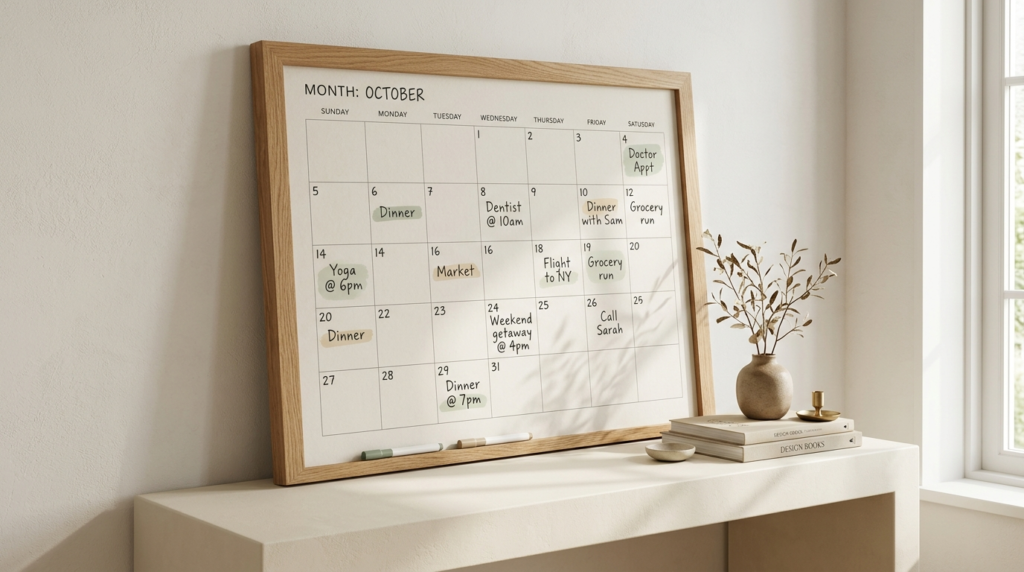
Try a light wood frame with neutral lettering, a black frame with white writing, or a soft pastel palette for a more playful look. Make sure the design remains readable and functional rather than prioritizing decoration over organization.
What Should You Include on a Monthly Planning Board?
A useful monthly planning board should show the information you need most often. Depending on your lifestyle, it may include:
- A monthly calendar with dates and days of the week
- Appointments, birthdays, and important deadlines
- Work, school, or family commitments
- Monthly goals and priority tasks
- Bill reminders and household responsibilities
- Habit tracking or wellness reminders
- A small section for notes and upcoming events
Start with the essentials and add more sections only when you find that you need them.
How Do You Keep a Monthly Planning Board Organized?
The easiest way to maintain your board is to establish a simple routine. Review the upcoming month before it begins, add important dates, and update the board briefly each week.
Use consistent colors and short phrases so information remains easy to scan. At the end of the month, remove completed tasks, transfer unfinished items, and prepare a fresh layout.
What Is the Best Material for a Monthly Planning Board?
The best material depends on how you plan to use the board. Whiteboards are practical for frequent updates, acrylic calendars offer a modern appearance, magnetic boards make rearranging tasks easy, and chalkboards provide a decorative alternative.
Corkboards are useful when you prefer paper notes, printed calendars, or pinned reminders. Choose a surface that suits your writing habits and is easy to maintain.
How Can You Make a Planning Board Look Stylish?
Choose a design that complements the surrounding room without making the information difficult to read. Simple frames, consistent lettering, coordinated marker colors, and an uncluttered layout can make even a basic board look attractive.
You can add a small shelf for supplies or place a basket nearby for paperwork. Keep decorative extras minimal so the calendar remains the main focus.
FAQs
What is a monthly planning board used for?
A monthly planning board helps organize appointments, deadlines, goals, household tasks, events, and other responsibilities in one visible place.
How do I set up a monthly planning board?
Start with a monthly calendar grid, label the days of the week, add important dates, and create small sections for goals or reminders if needed. Keep the layout simple enough to update regularly.
Is a whiteboard or chalkboard better for monthly planning?
A whiteboard is usually easier to update frequently and works well for busy schedules. A chalkboard offers a decorative appearance, while magnetic boards are useful when you need to move notes around.
How often should I update my monthly planning board?
Review it at least once a week and whenever a major appointment or deadline changes. A quick daily glance can also help you stay aware of upcoming responsibilities.
How can I make my planning board less overwhelming?
Limit the board to essential information, use a small number of colors, and avoid adding every minor task. Keep detailed to-do lists elsewhere if the monthly view becomes too crowded.
Can I use a monthly planning board for work and personal life?
Yes. You can use separate colors or sections for work, family, and personal commitments. This helps you see your overall schedule while maintaining a clearer balance between responsibilities.
Final Thoughts
A monthly planning board can make everyday life feel more organized by bringing important dates, responsibilities, and goals into one clear view. Whether you prefer a minimalist whiteboard, a family command center, a magnetic calendar, or a decorative framed planner, the best setup is the one you’ll actually use.
Start with a simple monthly calendar and add features that support your routine. With a little consistency, your planning board can become a practical tool for managing your time, reducing last-minute stress, and making room for the things that matter most.