 Home Decor & Interior Design
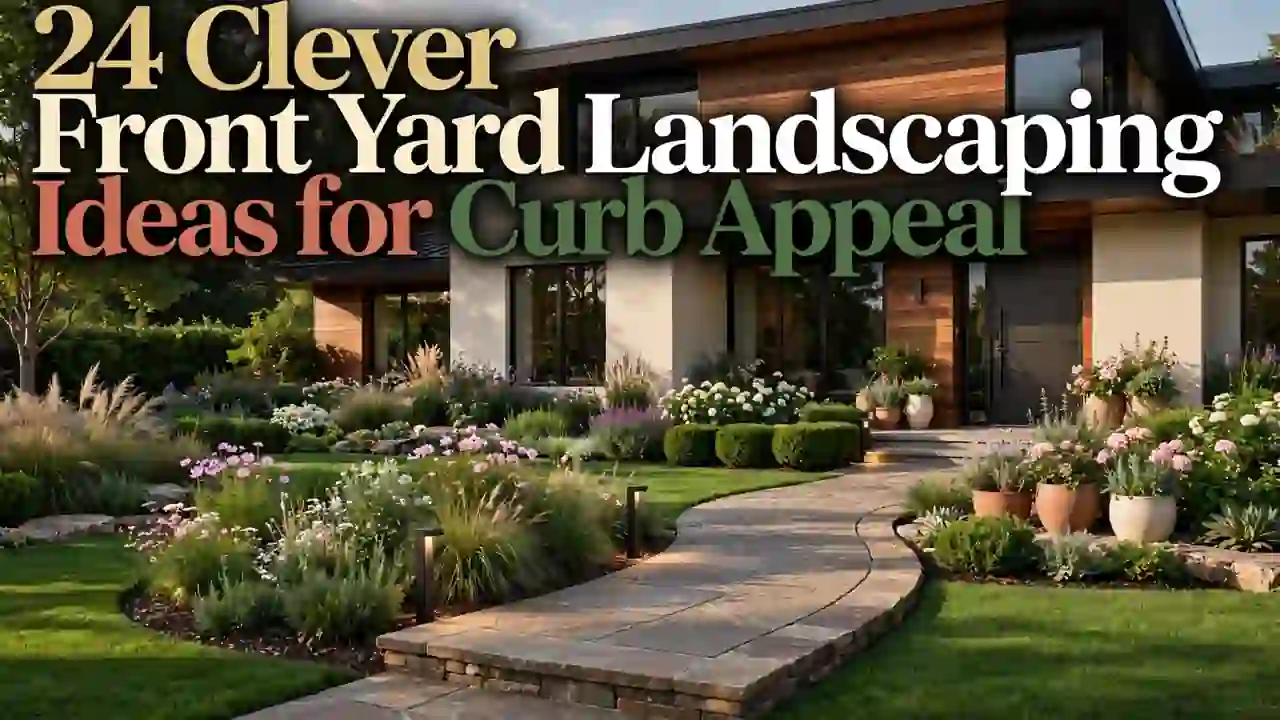
Your front yard is the first part of your home visitors see, but creating good curb appeal does not mean covering every inch with flowers.
The best front yard landscaping ideas usually combine a few thoughtful elements: attractive plants, defined pathways, well-placed lighting, interesting textures, and a layout that complements the house.
Even a small front yard can look polished with the right combination of greenery and hardscaping. A larger yard gives you more room to create layers, but the same basic principles apply.
If your front yard feels a little plain, these 24 landscaping ideas can help you turn it into a welcoming and attractive entrance without making it look overly complicated.
1. Frame the Front Walkway With Plants
A simple walkway can look much more inviting when it is framed with plants.
Use low-growing shrubs, ornamental grasses, flowering perennials, or neat ground covers along both sides of the path. Keep the plants slightly lower near the entrance so they do not block the view of the front door.
For a classic look, repeat the same plant on both sides. For a more relaxed garden, mix several varieties while keeping the overall color palette consistent.
2. Add Large Statement Planters
Large planters are an easy way to add structure to a front yard.
Place matching containers beside the front door, garage entrance, or beginning of the walkway. Oversized pots can also fill an awkward corner where planting directly in the ground is difficult.
Terracotta works beautifully with warm traditional homes, while charcoal, concrete, or stone planters suit contemporary exteriors.
Choose plants that fit the amount of sunlight the area receives.
3. Create a Layered Planting Bed
Flat planting beds can make a front yard feel unfinished.
Instead, create layers with taller shrubs at the back, medium-height plants in the middle, and low-growing flowers or ground covers toward the edge.
This gives the landscape more depth and helps the garden look interesting from the street.
Repeat a few plants throughout the bed so the design feels intentional rather than random.
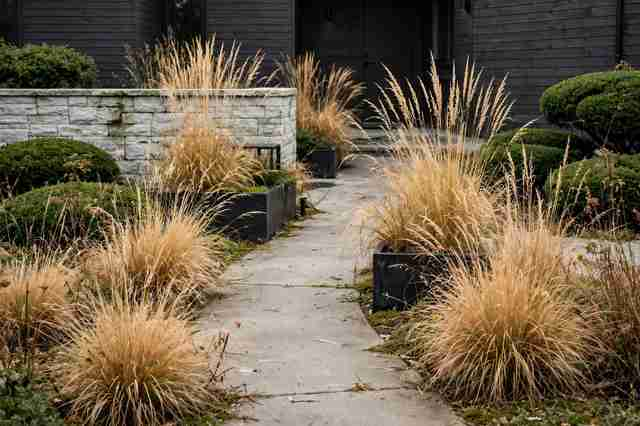
4. Use Ornamental Grasses
Ornamental grasses can add movement and texture without requiring a complicated planting scheme.
Their soft, flowing shapes contrast nicely with brick, stone, concrete, and straight architectural lines.
Try planting groups of grasses beside a walkway or mixing them with flowering perennials.
For a modern front yard, use grasses with simple architectural plants and dark mulch or gravel.
5. Make the Front Door the Focal Point
Good landscaping should guide attention toward the entrance.
Keep the area around the front door visually clear, then use plants, containers, lighting, or a pathway to draw the eye toward it.
A pair of planters can create symmetry, while a curved planting bed can make the entrance feel softer.
Think about the view from the street. The front door should remain easy to see rather than disappearing behind plants.
6. Add a Curved Garden Border
Straight garden beds can look formal, while gentle curves create a softer appearance.
A curved planting bed can follow the shape of the walkway or lawn and make a small yard feel more natural.
Keep curves broad rather than creating lots of tiny bends. One well-designed sweeping border usually looks more polished than several narrow curves.
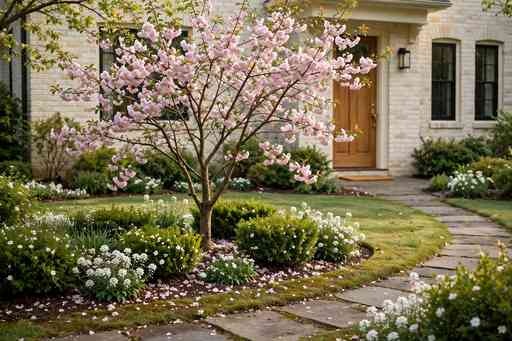
7. Plant a Small Flowering Tree
A small ornamental tree can completely change the character of a front yard.
Choose a variety that suits your climate and the mature size available in your space. Flowering trees can provide seasonal color, while smaller evergreen trees offer year-round structure.
Position the tree so it complements the house without blocking windows, pathways, utility access, or important sightlines.
8. Try a Low Maintenance Gravel Garden
If you want attractive landscaping without a large lawn or demanding flower beds, consider gravel.
A gravel garden can combine decorative stone with drought-tolerant plants, grasses, shrubs, and architectural foliage.
Use larger rocks or edging to define the planting areas and prevent the gravel from spreading onto the walkway.
This style works especially well with contemporary and desert-inspired homes.
9. Add Stepping Stones to the Entrance
Stepping stones can make a front garden feel more welcoming.
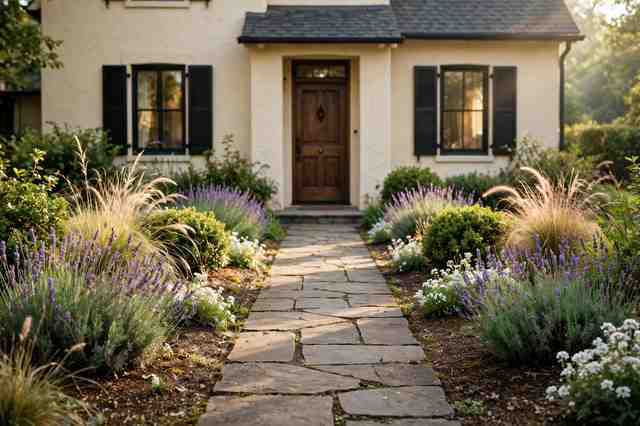
Use natural stone, concrete pavers, or large-format slabs depending on the style of the house. Leave consistent spacing between the stones and surround them with gravel, ground cover, or low plants.
For a modern look, choose large rectangular slabs. Irregular natural stones work better for cottage and informal gardens.
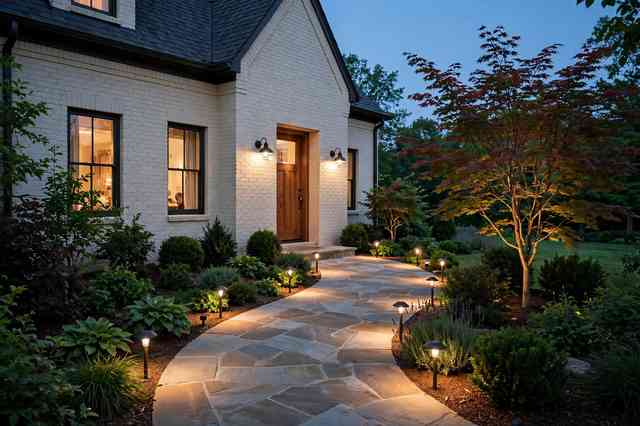
10. Install Low Landscape Lighting
Front yard lighting can make a huge difference after sunset.
Small path lights can define walkways, while uplights can highlight trees, textured walls, or architectural features.
Keep the lighting subtle. The goal is to make the entrance safer and more attractive, not to flood the entire yard with bright light.
Warm-toned lighting generally creates a softer residential atmosphere.
11. Combine Shrubs With Seasonal Flowers
Shrubs provide structure while seasonal flowers add color.
Use evergreen or long-lasting shrubs as the foundation, then add flowers that can be changed or refreshed throughout the year.
This approach means the front yard still looks intentional when the flowers are not blooming.
Choose a limited color palette for each planting bed rather than mixing every available flower color.
12. Use a Low Hedge for Definition
A low hedge can give a front yard a clean, finished edge.
Boxwood-style shrubs, compact evergreens, or other suitable plants can separate the lawn from the sidewalk or driveway.
Keep the hedge low enough to preserve visibility and avoid creating a wall between the house and street.
For a more relaxed appearance, allow the plants to grow naturally rather than trimming every edge perfectly.
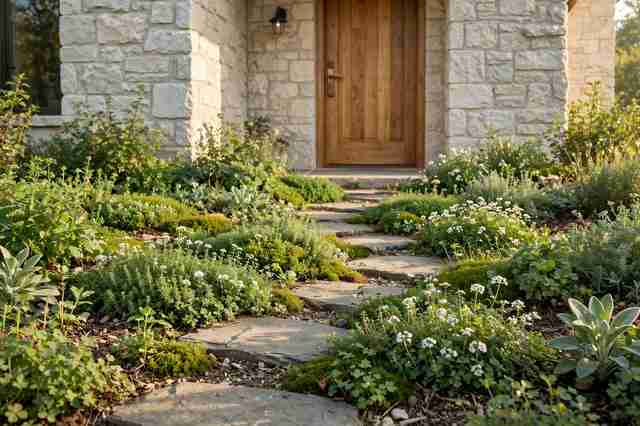
13. Replace Some Lawn With Ground Cover
Large expanses of lawn are not always necessary for good curb appeal.
Ground covers can add texture while reducing the amount of grass that needs regular maintenance. Depending on your climate, options may include low-growing perennials, creeping plants, ornamental ground covers, or other landscape-suitable species.
Use them around trees, between stepping stones, or along planting borders.
Always choose species appropriate for your local conditions and avoid invasive plants.
14. Create a Front Yard Seating Spot
If your front yard has enough space, a small seating area can make it feel more connected to the home.
A simple bench beneath a small tree or beside a planting bed can create a charming resting spot.
Choose weather-resistant furniture and position it where it does not interfere with the main walkway.
This works particularly well for wide front porches and larger suburban yards.
15. Use Natural Stone Edging
Natural stone can give planting beds a more established appearance.
Place stones along the edge of a lawn, flower bed, or pathway to create a visual transition between different materials.
Choose stone that complements the home’s exterior rather than introducing a completely unrelated color.
For a cohesive design, repeat the same stone somewhere else in the landscape.

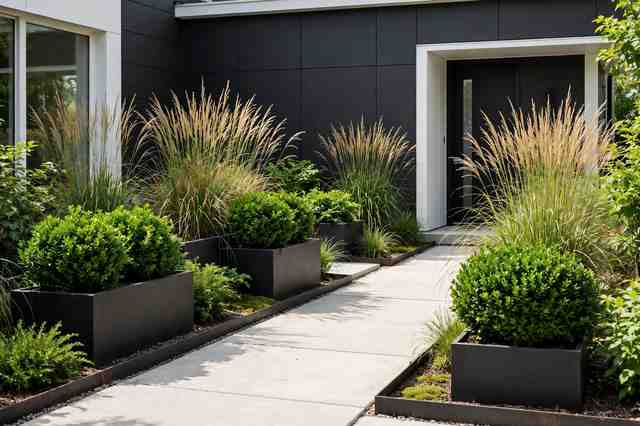
16. Add a Modern Black-and-Green Palette
A simple black-and-green combination can make contemporary landscaping look striking.
Use dark planters, black metal edging, or charcoal gravel with different shades of green foliage.
Plants with bold shapes work especially well here.
The dark elements provide contrast while the greenery keeps the design from feeling too severe.
17. Create a Cottage-Style Front Garden
For a softer and more romantic look, mix flowering plants at different heights.
Use a combination of shrubs, perennials, grasses, and climbing plants around the entrance. Avoid making every plant identical or perfectly spaced.
Soft pinks, whites, lavender, pale yellow, and green foliage can create a classic cottage palette.
The garden should feel abundant without blocking windows or paths.
18. Highlight the Mailbox With Landscaping
The mailbox is easy to overlook, but it can become part of the overall curb appeal.
Surround it with a small planting bed containing low flowers, ornamental grasses, or compact shrubs.
Keep plants away from the actual mailbox opening and make sure the area remains easy for mail delivery.
A simple planting design is usually more effective than an oversized arrangement.
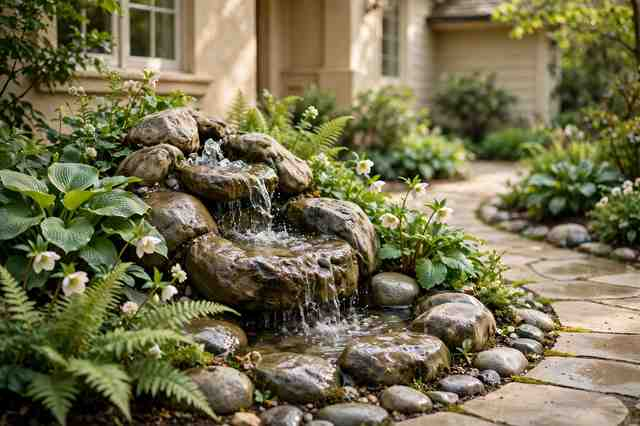
19. Add a Small Water Feature
A water feature can create a focal point in a larger front yard.
Consider a small bubbling fountain, stone basin, or simple wall-mounted feature rather than something that dominates the entire landscape.
Surround it with greenery and natural stone so it feels integrated with the garden.
Think about maintenance requirements before installing one, especially if the feature will collect leaves or require regular cleaning.
20. Use Repetition for a More Expensive Look
One of the easiest landscaping tricks is repetition.
Instead of planting dozens of unrelated species, repeat the same shrub, grass, flower, or planter several times.
For example, a row of matching shrubs along the walkway can create rhythm, while repeated grasses can connect separate planting areas.
Repetition makes even a modest landscaping project feel more deliberate.
21. Landscape Around a Mature Tree
A mature tree is already a major asset, so make it part of the design.
Create a simple planting bed around the tree using shade-tolerant plants where appropriate. Add a clean border and keep the planting scheme relatively restrained.
Avoid piling soil against the trunk or disturbing the tree’s root system.
A mature tree surrounded by a thoughtfully designed garden can become the strongest feature in the front yard.
22. Mix Evergreen and Seasonal Plants
A front yard should not rely entirely on plants that look good for one season.
Evergreen shrubs and trees provide structure throughout the year, while flowering plants bring seasonal changes.
This combination can keep the garden attractive during both flowering and quieter periods.
When planning, think about how the yard will look in different seasons rather than judging everything by its summer appearance.
23. Match Landscaping to the House Style
Your landscaping will look more cohesive when it relates to the architecture.
A modern house might pair well with geometric planting beds, ornamental grasses, large concrete planters, and restrained greenery.
A traditional home can work beautifully with symmetrical shrubs, brick paths, flowering borders, and classic containers.
For a cottage-style house, softer curves, natural stone, and abundant planting may feel more appropriate.
There is no single best front yard style. The house itself is your starting point.
24. Create a Simple Layered Front Yard
When in doubt, keep the design simple and build it in layers.
Start with the major elements: driveway, walkway, lawn, trees, and planting beds. Then add shrubs, smaller plants, containers, lighting, and decorative details.
Give each element enough breathing room.
A front yard does not need dozens of features to look impressive. A clean layout with healthy plants and a clear path to the front door can create excellent curb appeal.
How to Plan a Front Yard Landscaping Makeover
Before buying plants or digging new beds, spend some time looking at the space.
Start by identifying the areas that need the most attention. Is the walkway unattractive? Does the entrance disappear from the street? Is the lawn too large? Does the front yard lack color?
Then consider sunlight, drainage, soil, mature plant size, and maintenance.
A plant that looks beautiful at the garden center may become a problem if it grows too large for the space.
It also helps to take a photograph of your front yard and sketch the major planting areas over it. This makes it easier to see where repetition, height, and focal points are needed.
Easy Front Yard Landscaping Ideas on a Budget
You do not need a complete landscape renovation to improve curb appeal.
Try a few smaller projects first:
- Refresh the mulch or gravel
- Add two matching planters near the entrance
- Define the walkway with low plants
- Add solar or low-voltage path lights
- Trim overgrown shrubs
- Replace tired annual flowers
- Paint or refresh a garden bench
- Add a small flowering tree
- Create a clean edge around planting beds
- Replace patchy lawn with suitable ground cover
Start with the changes that are most visible from the street.
Front Yard Landscaping Mistakes to Avoid
Beautiful landscaping is often as much about what you leave out as what you add.
Avoid planting trees too close to the house or choosing shrubs without considering their mature size. Do not block the front door with tall plants, and avoid creating narrow pathways that are difficult to navigate.
Too many different materials can also make a small front yard feel busy.
Finally, do not choose plants only because they look good in photos. Climate, sunlight, water needs, soil conditions, and maintenance should all influence your choices.
Frequently Asked Questions
What is the easiest way to improve front yard curb appeal?
Start with the entrance. Clean up the walkway, trim overgrown plants, add attractive containers, refresh planting beds, and improve lighting around the front door.
How can I make a small front yard look bigger?
Keep the layout simple, use fewer but better-proportioned plants, create clear pathways, and use vertical elements such as small trees or narrow shrubs. Avoid filling every available space.
What plants are best for front yard landscaping?
The best plants depend on your climate, soil, sunlight, and maintenance preferences. Choose plants that naturally thrive in your area rather than selecting solely based on appearance.
How do I make my front yard look expensive?
Use repetition, consistent materials, defined planting beds, quality-looking containers, attractive lighting, and a restrained color palette. A simple, well-maintained design often looks more polished than an overcrowded one.
Should I remove my front lawn?
Not necessarily. If you use the lawn and it suits your climate, keep it. If it requires excessive maintenance or leaves little room for useful planting, replacing part of it with suitable ground cover, shrubs, or garden beds may make more sense.
Final Thoughts
Great curb appeal does not require a huge budget or an elaborate landscape plan.
The most successful front yards usually have a clear entrance, healthy plants, thoughtful proportions, and a few memorable details. Start with the structure, then add color and personality gradually.
Whether you prefer a neat modern garden, a relaxed cottage landscape, or a classic front yard filled with shrubs and flowers, the goal is the same: create an entrance that feels welcoming and looks naturally connected to your home.
Choose a few of these ideas that suit your space, rather than trying to use all 24 at once. A simple plan executed well will always look better than a yard packed with every trend