 Home Decor & Interior Design
Coastal style does not have to mean seashell decorations, bright blue walls, or a room that looks like a beach souvenir shop. In 2026, the most beautiful coastal interiors feel calmer, warmer, and more sophisticated, with natural textures, relaxed furniture, soft colors, and just enough ocean-inspired detail.
The best part is that you can bring this look into almost any home, even if you live far from the coast.
Think creamy walls, pale oak, linen curtains, woven lighting, weathered finishes, soft blue accents, and rooms that feel comfortable rather than overly decorated. These 23 coastal interior design ideas show how to create that relaxed luxury while keeping the space practical for everyday living.
1. Layered Cream and Sand Tones
Start with a palette inspired by sand, shells, driftwood, and warm sunlight.
Cream walls, beige upholstery, oatmeal linen, and pale wood create a soft foundation. Instead of using several shades of bright white, mix warm neutrals with slightly different undertones.
The result feels coastal without being obviously themed.
2. Natural Light With Linen Curtains
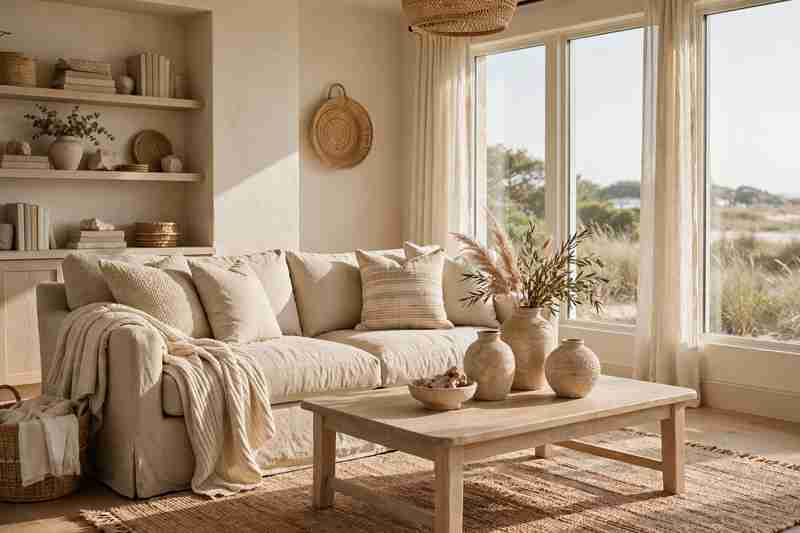
Natural light does much of the decorating in a coastal home.
Choose lightweight linen or linen-look curtains that soften the sunlight without completely blocking it. Hang them high and wide around larger windows to make the room feel more open.
Keep the window area relatively uncluttered so daylight remains one of the room’s strongest features.
3. Pale Oak Coastal Kitchens
Pale wood brings warmth to a coastal kitchen without making it feel rustic.
Pair light oak cabinets with creamy stone counters, off-white walls, and simple hardware. A woven pendant above the island can reinforce the relaxed atmosphere.
For more contrast, add muted blue or sage green to the island.
4. Soft Blue Accent Walls
Coastal interiors do not need bright turquoise.
Dusty blue, blue-gray, faded denim, and muted sea-glass shades feel much more refined. Use one of these colors on an accent wall, kitchen island, built-in shelving, or upholstered chair.
Pair blue with warm cream instead of stark white for a softer result.
5. Oversized Woven Pendant Lights
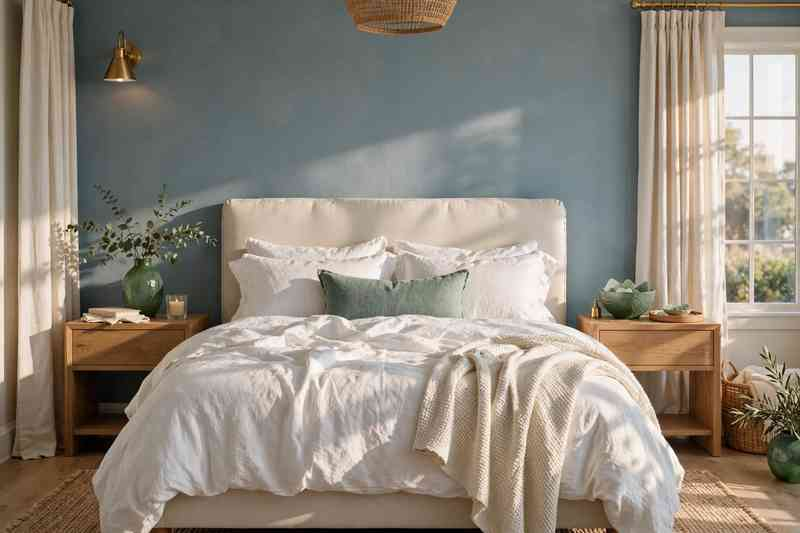
A large woven pendant can become the focal point of a coastal room without introducing another strong color.
Look for natural rattan, seagrass, cane, or woven fiber finishes. Their irregular texture adds warmth to otherwise simple rooms.
One oversized fixture often looks more sophisticated than several small decorative lights.
6. Coastal Living Rooms With Tailored Sofas
Comfort is essential, but coastal furniture does not have to look oversized or sloppy.
A tailored linen sofa in ivory, cream, or warm beige creates a clean foundation. Add relaxed cushions in blue, striped fabric, or natural woven materials.
A substantial coffee table in pale wood or stone can anchor the seating area.
7. Natural Stone as a Coastal Feature
Stone introduces an earthy element that works beautifully with coastal colors.
Limestone, travertine, light marble, and other natural-looking stones can be used for fireplaces, countertops, side tables, or accent walls.
Let the natural variation show rather than choosing a perfectly uniform finish.
8. Relaxed Coastal Bedrooms
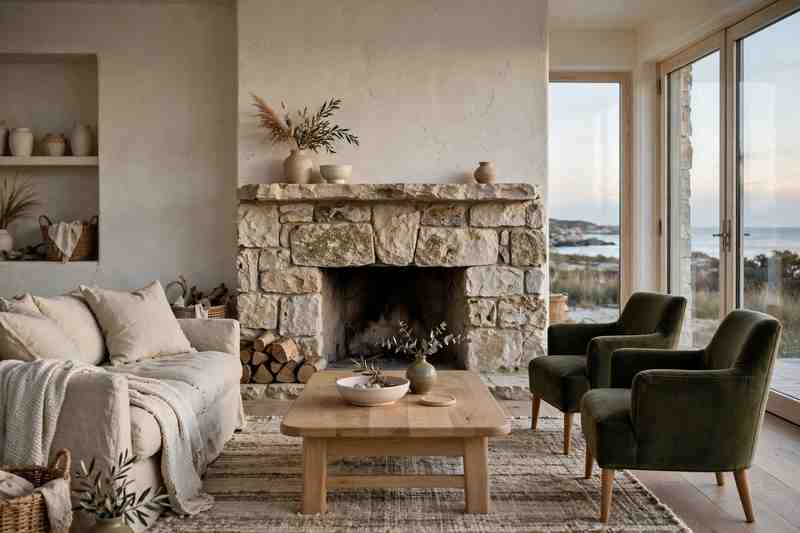
A coastal bedroom should feel restful before anything else.
Use breathable-looking bedding in cream or white, a natural wood bed, soft blue cushions, and lightweight curtains. A woven bench at the foot of the bed adds texture without making the room feel crowded.
Keep bedside styling simple so the room retains its calm atmosphere.
9. Coastal Stripes Used Sparingly
Stripes are a classic coastal pattern, but they work best when they are not everywhere.
Try a striped accent chair, lumbar pillow, rug, or pair of curtains. Blue and cream stripes are an easy choice, while taupe, gray, or muted green can create a less traditional look.
Combine stripes with solid fabrics and natural textures.
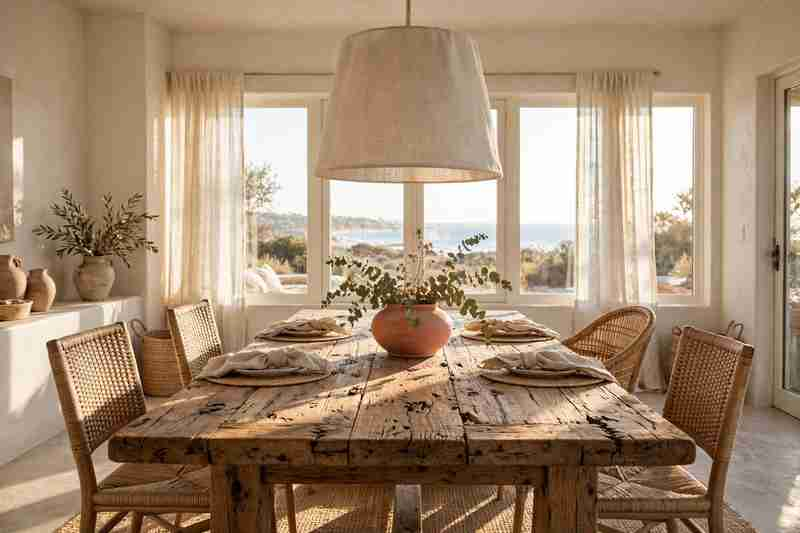
10. Warm Coastal Dining Rooms
A coastal dining room can feel elegant without becoming formal.
Start with a natural wood table and comfortable upholstered or woven chairs. Add a large pendant overhead and keep the centerpiece simple.
A bowl of greenery, a few candles, or a simple ceramic vessel can be enough.
11. Arched Doorways and Soft Shapes
Curves can soften the clean lines often found in modern homes.
Arched doorways, rounded coffee tables, curved sofas, and circular mirrors introduce a more relaxed architectural rhythm.
If your home does not have arches, use curved furniture or lighting to bring in the same feeling without construction.
12. Woven Textures Everywhere
Texture is one of the easiest ways to make neutral coastal interiors interesting.
Try mixing:
- Jute rugs
- Rattan chairs
- Cane cabinet doors
- Woven baskets
- Linen cushions
- Seagrass accessories
- Textured throws
Do not use every texture in one room. Choose two or three and repeat them naturally.
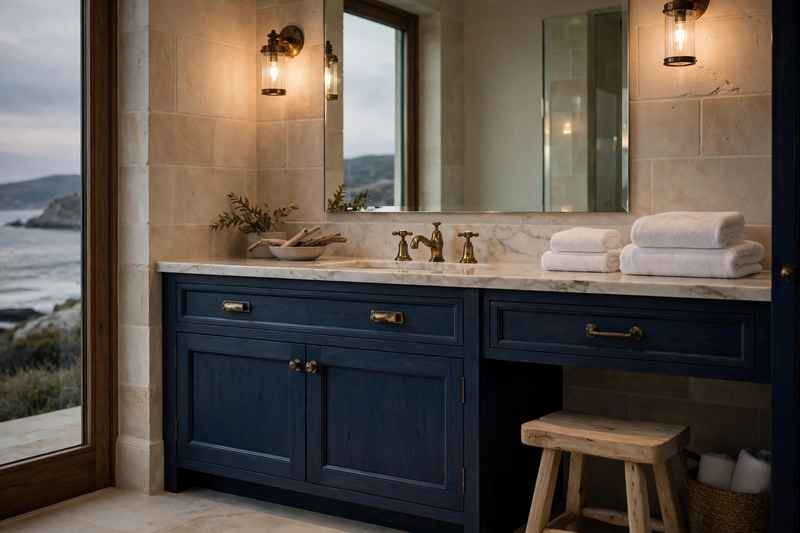
13. Moody Coastal Bathrooms
Coastal bathrooms do not have to be bright white.
Deep navy, blue-green, charcoal, or muted green can create a dramatic contrast with pale stone and warm metal fixtures.
A dark vanity paired with creamy tile and brass hardware can feel coastal without looking predictable.
14. Coastal Home Offices
A home office can borrow coastal elements without looking like a vacation room.
Use a pale wood desk, comfortable upholstered chair, linen window treatments, and a soft neutral wall color. A landscape photograph or abstract artwork in ocean-inspired colors can provide a subtle focal point.
Keep storage practical and surfaces relatively clear.
15. Blue Kitchen Islands
If you want color in a coastal kitchen, the island is a good place to use it.
Deep navy creates contrast and feels classic. Dusty blue or muted blue-gray produces a lighter look.
Keep the perimeter cabinetry neutral and let the island become the room’s visual anchor.
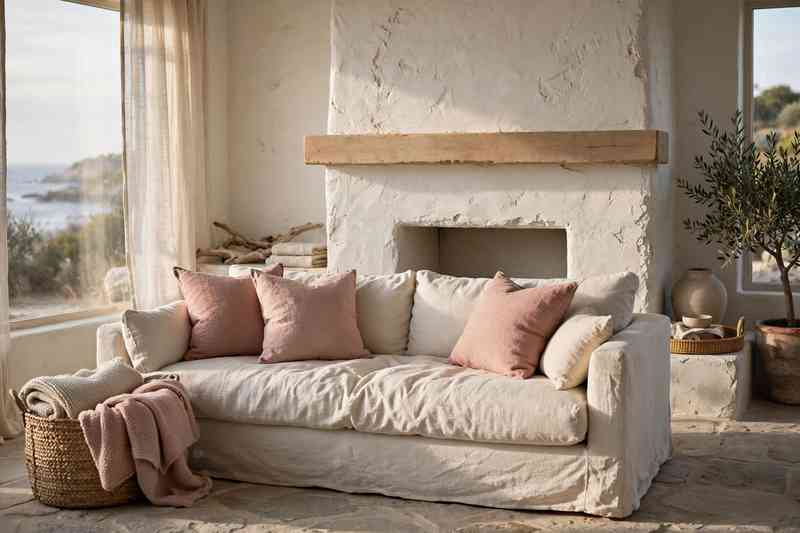
16. Coastal Fireplaces With Texture
A fireplace can make a coastal living room feel grounded and cozy.
Limewashed brick, textured plaster, pale stone, or simple white masonry can work beautifully. Add a substantial wood mantel if the architecture allows it.
Keep the mantel styling restrained with one large artwork, ceramic vessels, or a few natural branches.
17. Soft Green Coastal Interiors
Green is a beautiful alternative to the usual blue-and-white coastal palette.
Sage, eucalyptus, seafoam, and muted olive can work with cream, natural wood, and stone.
This combination is particularly useful if you want the room to feel connected to both the ocean and surrounding landscape.
18. Coastal Entryways With Character
The entryway sets the tone before anyone reaches the living room.
A natural wood console, oversized mirror, woven basket, ceramic lamp, and simple artwork can create a relaxed first impression.
Add a small bench if space allows. It gives the area a practical purpose while adding another layer of texture.
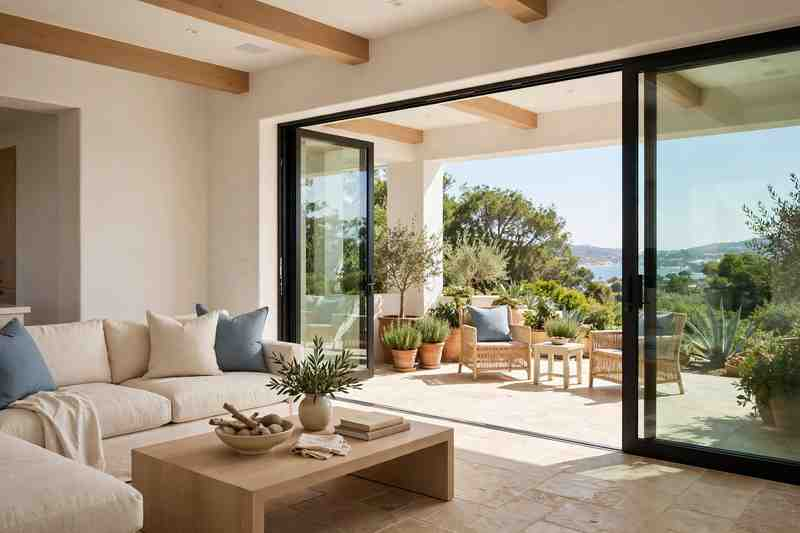
19. Indoor-Outdoor Coastal Living
When architecture allows it, make the transition between indoors and outdoors feel effortless.
Large glass doors, similar flooring, natural furniture, and repeated colors can visually connect the living room to a patio or terrace.
Even without a seaside view, this approach can make a home feel brighter and more open.
20. Coastal Decor With Vintage Pieces
New furniture can sometimes make a coastal home feel too polished.
Bring in one or two older-looking pieces instead. A weathered wood stool, vintage chest, old frame, antique mirror, or aged ceramic can give the room a sense of history.
Mixing old and new is often more interesting than buying everything from one collection.
21. Minimal Coastal Kitchens
For a cleaner interpretation of coastal style, reduce the number of decorative elements and focus on materials.
Cream cabinets, pale wood, simple stone, understated hardware, and a few ceramic pieces can be enough.
This approach works especially well in smaller kitchens because visual simplicity can make the room feel more spacious.
22. Coastal-Inspired Artwork
You do not need pictures of seashells or lighthouses to bring the coast into a room.
Look for artwork with soft blue, sand, cream, gray, or muted green tones. Abstract landscapes, textured canvases, ocean photography, and simple line drawings can all work.
Choose artwork that complements the room instead of making the theme obvious.
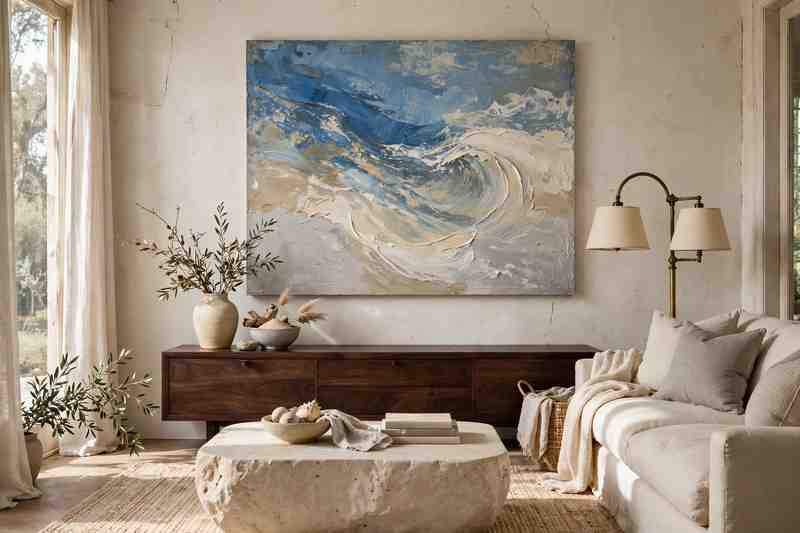
23. The Collected Luxe Coastal Living Room
The most successful coastal rooms usually combine several ideas rather than relying on one obvious theme.
Picture a cream linen sofa, pale oak coffee table, woven pendant, soft blue cushions, natural rug, textured artwork, and a few weathered accessories. Everything feels connected, but nothing looks like it came as a matching set.
That balance is what makes coastal design feel luxurious instead of predictable.
How to Make Coastal Style Feel Luxe Instead of Themed
The difference often comes down to restraint.
Instead of decorating around a literal beach theme, focus on the qualities you associate with a beautiful coastal home: light, natural materials, comfortable furniture, relaxed colors, and plenty of texture.
Choose Warm Neutrals First
Start with cream, ivory, sand, oatmeal, taupe, or warm beige.
Then introduce blue or green as an accent. This creates a more sophisticated base than starting with bright blue and white.
Mix Textures
A neutral room needs variation.
Combine linen with wood, jute with stone, rattan with cotton, or ceramic with aged metal. The colors can remain quiet while the textures provide visual interest.
Use Coastal Colors as Accents
Instead of painting every wall blue, consider:
- A navy armchair
- Blue kitchen island
- Sea-glass cushions
- Muted green curtains
- Coastal artwork
- Blue-gray bathroom vanity
This makes it easier to update the room later.
Coastal Design Mistakes to Avoid
Too Many Nautical Accessories
Anchors, ropes, shells, and signs can quickly make a room feel themed. Choose one subtle reference instead of decorating every surface.
Too Much Bright White
Pure white can sometimes make coastal rooms feel cold. Cream and warm off-white often create a softer atmosphere.
Matching Every Natural Texture
A room full of rattan, jute, wicker, seagrass, and bamboo can start to look repetitive. Mix natural materials with painted cabinetry, stone, metal, and upholstered furniture.
Ignoring Comfort
A coastal home should look relaxed because it actually feels comfortable. Choose sofas, chairs, rugs, and bedding that work for everyday use.
Forgetting Contrast
A completely pale room can lose definition. Add darker wood, navy, black accents, or aged brass to give the eye somewhere to rest.
A Quick Luxe Coastal Checklist
Before finishing your room, save this checklist:
- Use a warm neutral foundation
- Add one coastal accent color
- Include natural wood
- Layer at least two or three textures
- Choose comfortable furniture
- Let natural light lead the design
- Add one statement light fixture
- Mix old-looking and new pieces
- Use artwork instead of obvious beach decor
- Add contrast with darker accents
- Keep nautical accessories limited
- Leave some empty space
Frequently Asked Questions
What is luxe coastal interior design?
Luxe coastal design combines the relaxed feeling of coastal interiors with more refined materials, tailored furniture, sophisticated lighting, natural stone, quality-looking textiles, and a restrained color palette.
What colors are best for a coastal home in 2026?
Warm creams, sand, beige, pale blue, navy, muted green, soft gray, and natural wood tones are versatile choices. The best combination depends on the home’s lighting and existing finishes.
How can I make coastal decor look expensive?
Focus on natural-looking materials, good proportions, layered textures, warm lighting, and fewer decorative objects. A simple room with beautiful linen, wood, stone, and thoughtful lighting can feel more sophisticated than one filled with accessories.
Does coastal decor have to be blue and white?
No. Blue and white are classic, but modern coastal interiors can use cream, beige, green, taupe, terracotta, brown, and soft gray. Natural materials can create the coastal feeling without relying heavily on color.
Can I use coastal style in a non-beach house?
Absolutely. Focus on the atmosphere rather than literal seaside references. Natural textures, relaxed furniture, warm neutrals, soft colors, and plenty of light can work in almost any home.
Final Thoughts
The most appealing coastal interiors of 2026 are less about decorating for the beach and more about creating a home that feels light, comfortable, natural, and quietly polished.
Start with warm neutrals and natural materials, then add a little blue or green, plenty of texture, and one or two pieces with personality. You do not need to change the entire room. Sometimes a linen curtain, woven pendant, pale wood table, or muted blue chair is enough to shift the atmosphere.