 Home Decor & Interior Design
Quiet luxury interior design is less about having expensive-looking furniture and more about creating a home that feels thoughtful, comfortable, and beautifully understated. Instead of flashy finishes or rooms packed with trendy decor, this style relies on quality materials, soft colors, classic shapes, natural textures, and plenty of breathing room.
The best part is that you do not need a huge budget to get the look. A well-chosen linen curtain, an aged wood table, a beautiful lamp, or a vintage rug can often do more for a room than a collection of expensive accessories.
If you love elegant interiors that feel warm rather than showy, these quiet luxury interior design ideas are worth saving.
1. Start With a Warm Neutral Color Palette
Quiet luxury interiors often begin with a restrained color palette. Cream, ivory, taupe, warm beige, soft brown, greige, and muted stone tones create a calm foundation without making the room feel flat.
Rather than using one shade everywhere, layer several closely related colors. A warm ivory sofa can sit against a creamy wall with a taupe rug and caramel leather chair.
The subtle differences between these shades give the room depth while keeping the overall look peaceful.
2. Choose Furniture With Classic Silhouettes
Trendy furniture can date a room quickly. Quiet luxury works better with pieces that have simple, recognizable shapes.
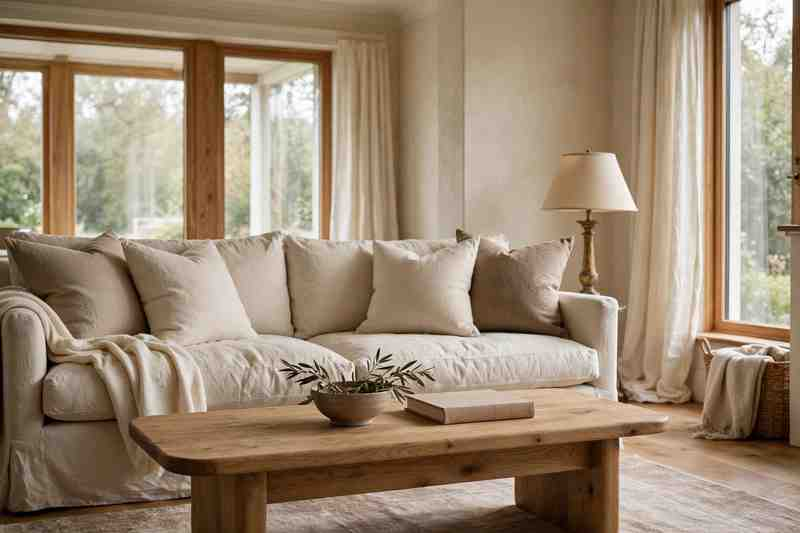
Look for deep comfortable sofas, curved occasional chairs, substantial wooden tables, upholstered benches, and traditional armchairs. The goal is not to make everything look old-fashioned. Instead, choose furniture that could still look beautiful years from now.
A classic linen sofa paired with a solid wood coffee table is an easy place to begin.
3. Bring in Natural Wood
Natural wood adds warmth to neutral rooms and keeps quiet luxury interiors from feeling sterile.
Oak, walnut, ash, and aged woods all work beautifully. Look for visible grain and natural variations rather than perfectly uniform finishes.
A walnut console, antique side table, oak dining table, or wooden bed frame can instantly give a room more character.
4. Layer Linen and Other Natural Fabrics
Texture matters just as much as color in a refined interior.
Linen bedding, cotton curtains, wool throws, boucle accent chairs, and soft woven cushions create visual interest without relying on bold patterns.
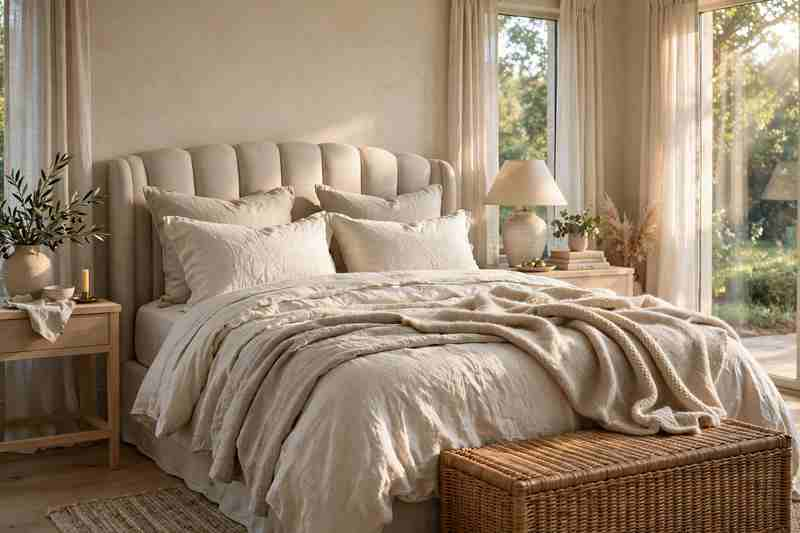
Try combining several natural fabrics in slightly different shades. A cream linen duvet, oatmeal throw, and ivory cotton pillows can make a bedroom feel luxurious without looking overly decorated.
5. Add an Oversized Vintage-Style Rug
A beautiful rug can make an entire room feel more established.
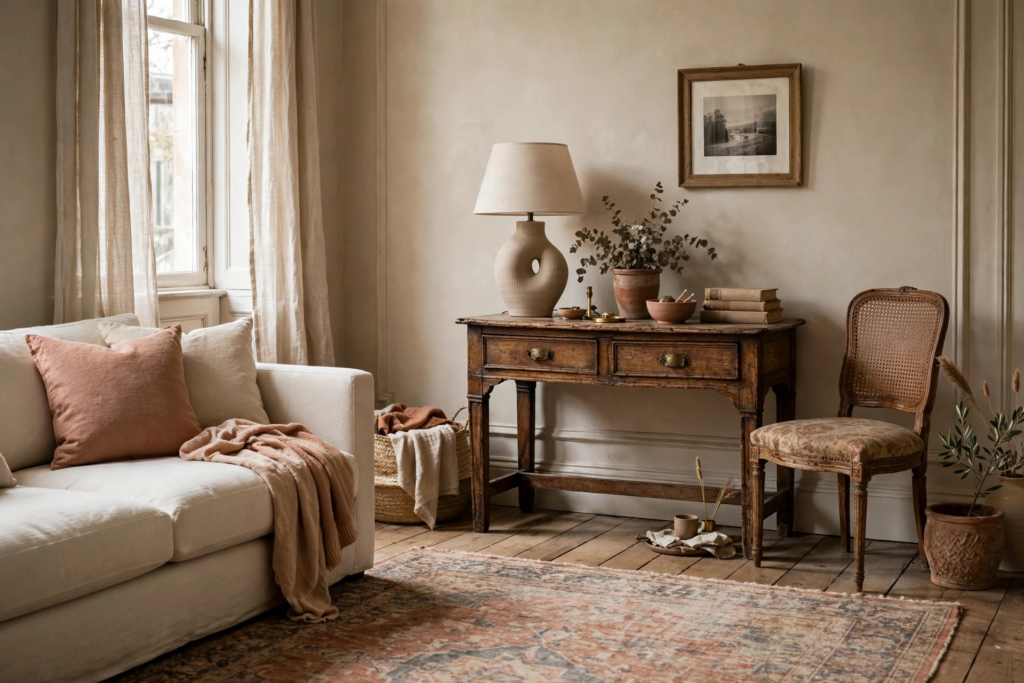
For quiet luxury, consider faded Persian-inspired patterns, subtle traditional motifs, or muted geometric designs. Avoid rugs that look overly bright or perfectly new.
A large rug should usually extend beneath the main furniture rather than sitting like a small island in the middle of the room. This helps the space feel connected and intentional.
6. Use Aged Brass Instead of Shiny Metals
Small metal details can dramatically change the feeling of a room.
Aged brass, antique brass, and softly brushed finishes tend to work especially well with quiet luxury interiors. Consider them for cabinet hardware, lamps, faucets, mirrors, curtain rods, or picture frames.
The slightly imperfect appearance of aged metal adds warmth and prevents the room from looking like a showroom.
7. Make Lighting Part of the Decor
Good lighting is one of the easiest ways to make an ordinary room feel sophisticated.
Instead of relying on one bright ceiling fixture, combine table lamps, floor lamps, wall sconces, and soft overhead lighting.
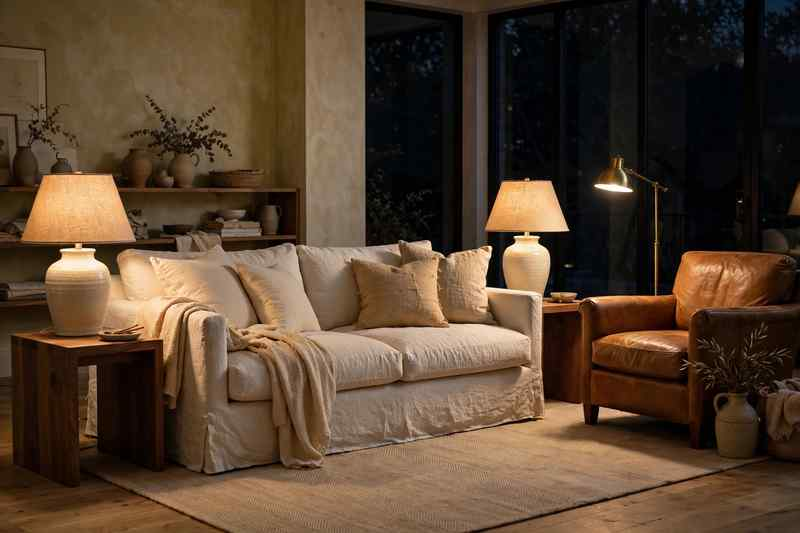
Choose lamps with ceramic, linen, aged brass, stone, or dark wood details. Warm bulbs are particularly helpful in neutral rooms because they make creams and wood tones feel richer in the evening.
8. Create a Tailored Bedroom
A quiet luxury bedroom should feel restful rather than overly styled.
Choose a substantial upholstered or wooden bed, high-quality-looking neutral bedding, matching or coordinated bedside tables, and simple lamps.
Layer the bed with two or three textures rather than a dozen decorative pillows. A linen duvet, folded wool blanket, and a pair of larger pillows can be enough.
9. Add One Beautiful Stone Element
Stone brings an architectural quality to a room.
Travertine, marble, limestone, and soapstone can all work beautifully, but you do not need to cover an entire room in expensive stone.
One substantial piece can have more impact. Try a travertine coffee table, marble side table, limestone fireplace, or stone tray.
Natural variation is part of the appeal, so veining and small imperfections can make the material feel more authentic.
10. Keep Window Treatments Soft and Full
Window treatments are easy to overlook, but they have a major effect on the finished room.
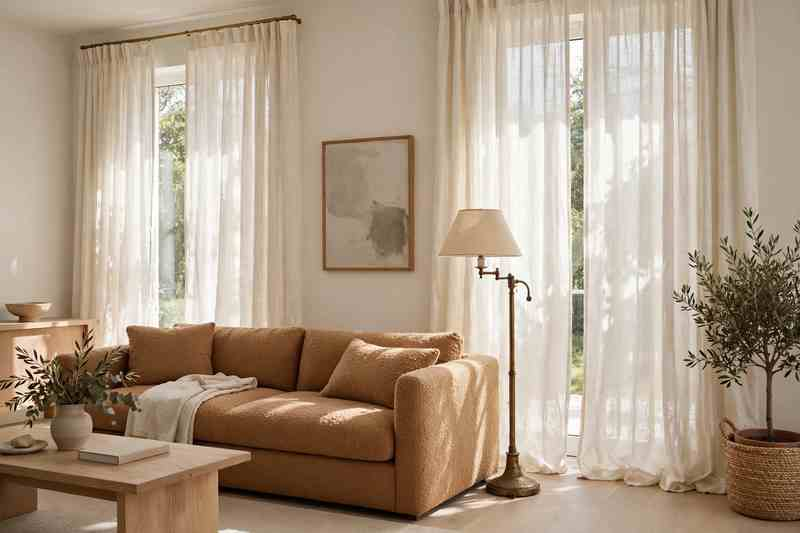
Floor-length linen or cotton curtains in cream, oatmeal, ivory, or warm white create softness without demanding attention.
Hang them higher and wider than the window when possible. This can make the room feel taller and allow more natural light into the space when the curtains are open.
11. Style Shelves With Breathing Room
Quiet luxury is not about filling every available surface.
When styling bookshelves, leave some open space between objects. Combine books with ceramics, framed artwork, small sculptures, wooden boxes, and meaningful-looking vintage pieces.
Vary the height of objects while keeping the color palette controlled. A shelf that looks collected over time generally feels more sophisticated than one where every accessory matches.
12. Use Dark Wood for Contrast
A room filled entirely with pale colors can sometimes feel washed out.
Dark walnut, espresso, or stained oak furniture creates contrast and gives neutral spaces a more grounded appearance.
Try a dark wood dining table, console, writing desk, or bed frame against lighter walls and upholstery.
13. Mix Old Pieces With New Ones
One of the easiest ways to make a home feel genuinely refined is to avoid buying everything from the same collection.
Pair a modern sofa with an antique side table. Place a contemporary lamp on a vintage console. Mix a new dining chair with an older wooden table.
These combinations make the room feel personal and collected instead of staged.
14. Choose Art With a Muted Palette
Art does not have to shout to become a focal point.
Landscape paintings, still lifes, botanical artwork, architectural sketches, and muted abstract pieces can work beautifully with quiet luxury interiors.
Look for artwork that complements the room’s existing colors rather than competing with them. A vintage-looking frame can also add depth and character.
15. Create a Sophisticated Dining Room
A refined dining room does not need elaborate decoration.
Start with a substantial wooden table, comfortable upholstered or wooden chairs, and one beautiful light fixture. Add linen napkins, simple ceramics, and a low arrangement of branches or greenery.
The room should feel ready for an everyday dinner as easily as it would for a special occasion.
16. Bring Greenery Into Neutral Rooms
Plants introduce color and life without disturbing a restrained palette.
An olive tree, fiddle leaf fig, eucalyptus branches, or simple leafy stems can work particularly well.
Use simple ceramic, terracotta, stone, or woven planters instead of highly decorative containers. The greenery should feel like part of the room rather than an accessory placed there simply to fill space
17. Give the Kitchen a Furniture-Like Feel
Quiet luxury kitchens tend to look more like beautifully furnished rooms than commercial cooking spaces.
Warm painted cabinetry, natural wood, marble or stone surfaces, aged brass hardware, traditional lighting, and carefully chosen accessories can create this effect.
Keep countertop styling restrained. A wooden cutting board, ceramic bowl, linen towel, and a vase of greenery may be enough.
18. Use Architectural Details Where Possible
Simple architectural details can make a room feel far more considered.
Wall paneling, crown molding, arches, ceiling beams, built-in bookcases, and traditional door trim all add visual structure.
If permanent renovations are not practical, removable molding, picture ledges, or carefully styled built-ins can create a similar sense of character.
19. Keep Decorative Objects Minimal
The quiet luxury approach works best when every object has a reason to be there.
Instead of placing small accessories across every surface, choose a few pieces with interesting shapes or materials.
A stone bowl, vintage vase, ceramic lamp, stack of beautiful books, or sculptural object can have much more impact when surrounded by empty space.
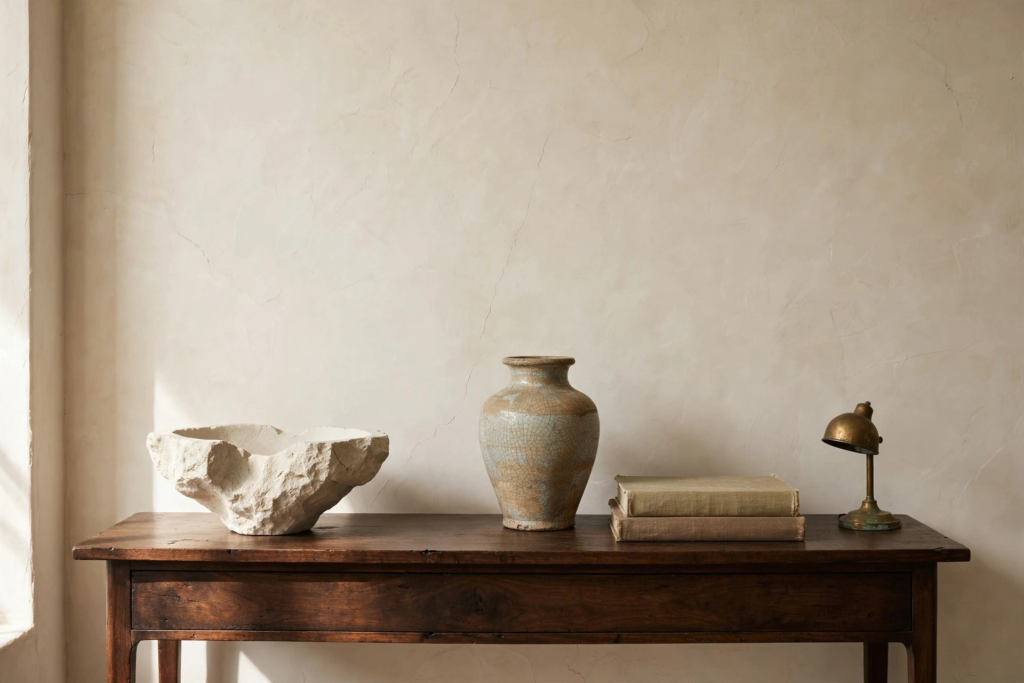
20. Make the Whole Home Feel Collected
The final ingredient is consistency without making every room identical.
Repeat a few materials throughout the home, such as walnut, linen, aged brass, stone, or warm cream. Carry similar tones from the living room into the bedroom and kitchen while allowing each space to have its own personality.
A quiet luxury home should feel as though it developed naturally over time. That is what makes the style feel sophisticated instead of overly coordinated.
How to Create a Quiet Luxury Interior on a Budget
You do not need to replace your entire home to get this look.
Start with the pieces that have the biggest visual impact:
- Replace overly bright or mismatched textiles with warm neutrals.
- Add full-length curtains in linen-look fabric.
- Upgrade lamps before replacing major furniture.
- Look for secondhand solid wood tables and vintage rugs.
- Use fewer accessories, but choose pieces with better texture.
- Add one aged brass detail to a kitchen or bathroom.
- Bring in natural greenery.
- Frame inexpensive artwork in substantial-looking frames.
- Remove unnecessary clutter from open shelves and countertops.
- Mix affordable new pieces with vintage or secondhand finds.
The goal is not to make everything expensive. It is to make the room feel considered.
Quiet Luxury Color Combinations to Try
If you are unsure where to start, these combinations are easy to work with:
Cream + walnut + aged brass
Warm, traditional, and especially good for living rooms and dining spaces.
Taupe + ivory + soft brown
A gentle combination for bedrooms and relaxed sitting rooms.
Warm white + olive green + natural wood
Fresh without becoming overly colorful.
Stone gray + cream + dark oak
A slightly more contemporary take on quiet luxury.
Navy + camel + ivory
Classic and sophisticated, especially for studies, libraries, and living rooms.
Quiet Luxury Interior Design Mistakes to Avoid
Quiet luxury can quickly lose its charm when the room becomes too carefully staged.
Avoid buying matching furniture sets
A coordinated collection can make a room feel more like a showroom. Mix materials, shapes, and periods instead.
Do not use too many beige shades without texture
Neutral colors need variation. Add wood, stone, linen, wool, leather, or ceramics to keep the room interesting.
Avoid excessive decorative objects
Empty space is part of the design. Give your favorite pieces room to stand out.
Do not make everything look brand new
Vintage pieces, aged finishes, and natural imperfections give a home personality.
Avoid chasing every luxury trend
Quiet luxury is strongest when it focuses on timeless elements rather than whatever happens to be popular for one season.
Quiet Luxury Home Checklist
Use this quick checklist when refreshing a room:
☐ Warm neutral base color
☐ Classic furniture silhouette
☐ Natural wood element
☐ Linen, cotton, wool, or another natural textile
☐ Aged brass or warm metal detail
☐ Layered lighting
☐ Large, well-proportioned rug
☐ One substantial stone or ceramic piece
☐ Vintage or collected accent
☐ Muted artwork
☐ Natural greenery
☐ Plenty of visual breathing room
☐ Minimal countertop and shelf clutter
Frequently Asked Questions
What is quiet luxury interior design?
Quiet luxury interior design focuses on timeless furniture, natural materials, muted colors, quality-looking textures, and understated details. It favors comfort and longevity over obvious branding or flashy decoration.
What colors are best for quiet luxury interiors?
Warm whites, cream, ivory, taupe, beige, camel, soft brown, muted green, navy, and stone gray are all excellent choices. The key is layering related shades instead of relying on one flat neutral.
Can quiet luxury work in a small home?
Absolutely. In smaller rooms, focus on proportion and restraint. Choose fewer but more useful pieces, keep the palette calm, use mirrors strategically, and avoid filling every surface with decor.
Is quiet luxury the same as traditional interior design?
Not exactly. Quiet luxury can include traditional elements, but it can also be contemporary. The common thread is understated design, natural materials, timeless forms, and a lack of visual clutter.
How can I make my home look luxurious without spending a lot?
Start with lighting, textiles, decluttering, and furniture arrangement. A well-placed lamp, full-length curtains, vintage rug, natural wood piece, or carefully styled shelf can make a noticeable difference without requiring a complete renovation.
Final Thoughts
The beauty of quiet luxury interior design is that it does not depend on showing how much you spent. It comes from choosing pieces carefully, using beautiful textures, keeping the color palette calm, and allowing a room to breathe.
Start small. Swap a few overly trendy accessories for natural materials, introduce warmer lighting, add a vintage piece, or invest in one timeless item you genuinely love.
When those choices build on each other, your home can feel polished, comfortable, and personal without ever feeling overdone.